York and Carrier are two of the most trusted names in central air conditioning, known for high efficiency, long-lasting performance, and advanced technology. Both brands offer a wide range of models suitable for different climates and budgets, making them popular choices among homeowners. Whether you’re replacing an old unit or installing a new system, understanding their strengths can help you make a confident decision.
Key Takeaways
- Energy Efficiency: Both York and Carrier offer ENERGY STAR® certified models with high SEER ratings, helping reduce utility bills and environmental impact.
- Reliability & Durability: These brands are built to last, with robust components and comprehensive warranties that give homeowners peace of mind.
- Wide Model Selection: From compact window units to large central systems, both companies provide options for every home size and layout.
- Innovative Features: Smart thermostats, variable-speed compressors, and quiet operation are common in modern York and Carrier units.
- Professional Installation Matters: Proper setup by certified technicians ensures optimal performance, efficiency, and longevity of your air conditioner.
- Customer Support: Both brands have extensive dealer networks and customer service support across North America.
📑 Table of Contents
- Introduction: Staying Cool with Confidence
- History and Brand Reputation
- Energy Efficiency: Saving Money While Staying Cool
- Smart Technology and Home Integration
- Noise Levels and Indoor Comfort
- Installation and Maintenance Best Practices
- Comparing York vs. Carrier: Which Should You Choose?
- Warranty Coverage and Customer Support
- Environmental Impact and Sustainability Effras
- Final Thoughts: Stay Cool, Stay Informed
Introduction: Staying Cool with Confidence
When summer heat rolls in and temperatures soar, having a reliable air conditioner becomes essential. For decades, homeowners across North America have turned to trusted brands like York and Carrier to keep their homes cool, comfortable, and energy-efficient. These two giants in the HVAC industry share a legacy of innovation, durability, and performance—but they also have distinct differences that can influence your choice.
Whether you’re building a new home, upgrading an old system, or simply looking for a more efficient way to beat the heat, understanding how York and Carrier air conditioners compare can help you make an informed decision. In this guide, we’ll explore everything you need to know—from energy efficiency and smart features to installation tips and long-term reliability—so you can stay cool without breaking the bank.
History and Brand Reputation

Visual guide about York and Carrier Air Conditioners
Image source: imgnn.seoul.co.kr
Both York and Carrier have deep roots in the heating, ventilation, and air conditioning (HVAC) world. Carrier Corporation was founded in 1902 by Willis Haviland Carrier, often credited as the inventor of modern air conditioning. Over more than a century, Carrier has grown into one of the largest HVAC manufacturers globally, known for pioneering advancements like the first room air conditioner and today’s smart climate control systems.
York International, originally part of Johnson Controls, began as a division focused on commercial HVAC systems but expanded into residential markets in the late 20th century. Though York may not be as widely recognized as Carrier by name alone, it has earned a strong reputation for engineering excellence and dependable performance—especially in demanding environments.
Today, both brands are owned by United Technologies Corporation (now part of Raytheon Technologies), which allows them to share some technological resources while maintaining their unique identities. This shared ownership means they benefit from cutting-edge research and development, yet each brand continues to differentiate itself through design philosophy, product lines, and customer focus.
Energy Efficiency: Saving Money While Staying Cool
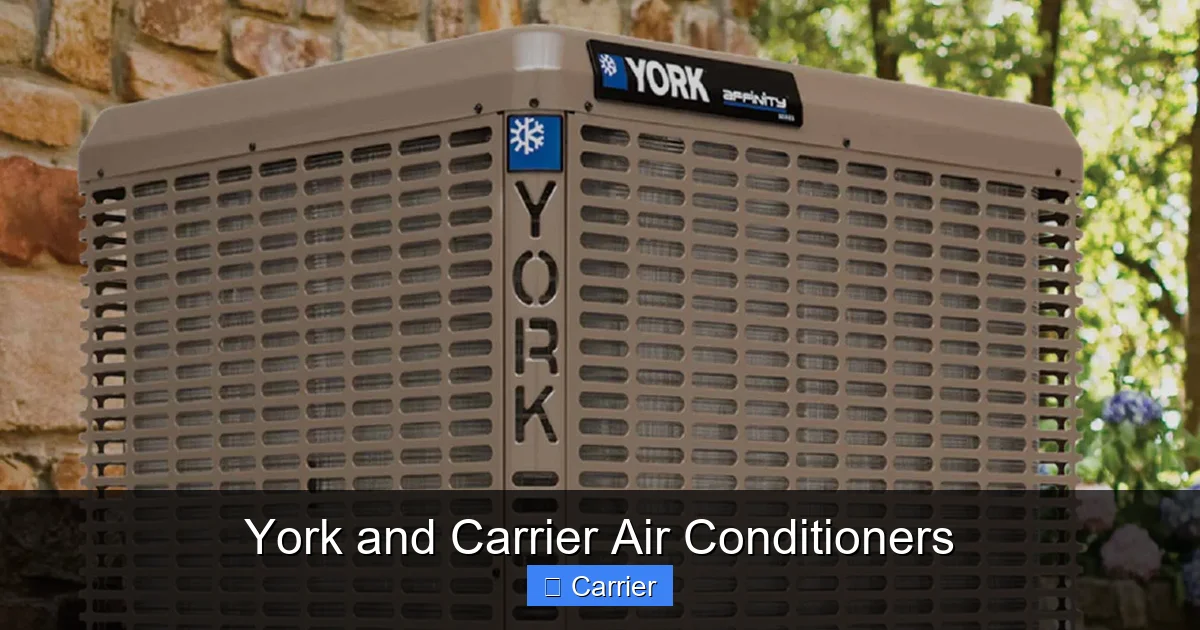
Visual guide about York and Carrier Air Conditioners
Image source: static.homeguide.com
One of the biggest factors influencing air conditioner purchases is energy efficiency. The Seasonal Energy Efficiency Ratio (SEER) measures how effectively an AC unit converts electricity into cooling power. Higher SEER ratings mean lower energy bills and less strain on the environment.
Carrier’s Focus on Innovation
Carrier consistently leads the industry in SEER ratings, with many of its top-tier models achieving up to 26 SEER. Their Infinity series, for example, uses inverter-driven scroll compressors and variable-speed motors that adjust output based on real-time demand. This means the unit runs at full capacity only when needed and scales down during milder conditions—resulting in significant energy savings over time.
Carrier also integrates features like Comfort Heat technology, which allows seamless switching between electric and gas heat sources depending on outdoor temperatures. This flexibility improves comfort while reducing energy waste.
York’s Commitment to Performance
York doesn’t fall behind when it comes to efficiency. Many York air conditioners boast SEER ratings ranging from 14 to 21, with select models reaching the upper end of the scale. Their YX and YC series use dual-stage compressors and intelligent controls that monitor humidity levels and adjust airflow accordingly.
What sets York apart is its emphasis on “whole-home comfort.” Instead of just focusing on temperature, York systems optimize indoor air quality by managing humidity and filtration—something that makes a real difference during humid summers.
Real-World Savings Example
Let’s say you replace a 10-year-old 10-SEER unit with a new 20-SEER model. Assuming you run your AC for 1,200 hours per year and pay $0.12 per kWh, you could save nearly $200 annually on your cooling bill. That adds up quickly over the 15+ year lifespan of an air conditioner.
Smart Technology and Home Integration
Modern air conditioners aren’t just about blowing cold air—they’re about creating smarter, more responsive living spaces. Both York and Carrier offer integration with popular smart home ecosystems, allowing you to control your thermostat from your phone, set schedules, and even receive maintenance alerts.
Carrier’s Connected Solutions
Carrier’s Evolution Thermostat is a standout feature in many of their systems. It learns your habits, detects occupancy, and adjusts settings automatically. With Wi-Fi connectivity, you can monitor energy usage, track filter status, and get notified when it’s time for service.
Additionally, Carrier offers integration with Amazon Alexa, Google Assistant, and Apple HomeKit, making voice control simple and intuitive. Some models even include geofencing, which detects when you’re approaching home and starts cooling before you arrive.
York’s Intelligent Controls
While York doesn’t always bundle its own branded thermostats, many of its systems are compatible with third-party smart devices. The York Communicating System uses open protocols like Modbus and BACnet, enabling seamless integration with building automation platforms.
For homeowners who want simplicity, York’s YC series includes basic programmable timers and remote sensors that help balance temperatures throughout larger homes. Advanced users can upgrade to smart thermostats like the Nest or Ecobee for added convenience.
Example: A Family Using Smart AC
Imagine a family with kids coming home from school at 3 p.m. They use a smartphone app to check if the house is still warm from the afternoon sun. One tap later, the AC kicks on, and by the time they walk in the door, the home feels perfectly cooled and fresh. No forgotten schedules, no hot rooms—just comfort on demand.
Noise Levels and Indoor Comfort
Nobody wants a loud air conditioner disrupting their quiet evenings or morning routines. Fortunately, both York and Carrier prioritize low noise operation, especially in their premium models.
How Quiet Is “Quiet”?
Most residential air conditioners operate between 50 and 70 decibels (dB), roughly equivalent to a normal conversation or background music. However, newer variable-speed units can drop below 50 dB—comparable to a whisper.
Carrier’s Comfort Series and Infinity models use sound-dampening materials and redesigned fan blades to minimize vibration and airflow noise. The company even tests units in anechoic chambers to fine-tune acoustics.
York’s YC and YX series incorporate similar strategies, including insulated cabinets and optimized compressor placement. Their multi-stage compressors also contribute to quieter performance by avoiding frequent cycling, which creates those annoying on/off hums.
Tips for Quieter Operation
– Install the unit away from windows and doors to reduce noise transmission.
– Keep outdoor fins clean and free of debris to prevent airflow resistance and humming.
– Schedule annual maintenance to ensure fans and motors are running smoothly.
Installation and Maintenance Best Practices
Even the most advanced air conditioner won’t perform well if installed incorrectly. Professional installation is critical for safety, efficiency, and warranty validity.
Why DIY Isn’t Always the Answer
While window units and portable ACs can be self-installed, central air systems require handling refrigerant, electrical wiring, ductwork modifications, and precise calibration. Mistakes can lead to poor airflow, reduced efficiency, or even carbon monoxide risks in extreme cases.
Always hire an HVAC technician certified by NATE (North American Technician Excellence) or ACCA (Air Conditioning Contractors of America). Ask for references and verify licensing before signing any contract.
Maintenance Checklist
To keep your York or Carrier AC running smoothly:
– Replace or clean filters every 1–3 months, especially during peak use.
– Clear debris around the outdoor condenser unit monthly.
– Schedule professional tune-ups twice a year—once in spring before cooling season, once in fall for heating prep.
– Check refrigerant levels and inspect ducts for leaks during service visits.
Proper maintenance can extend your system’s life by 5–10 years and maintain up to 15% of its original efficiency.
Comparing York vs. Carrier: Which Should You Choose?
Deciding between York and Carrier isn’t always easy—both offer excellent products. Here’s how to think about it:
If You Value Innovation and Smart Features…
Choose Carrier. Its integrated thermostats and deep ecosystem compatibility make it ideal for tech-savvy homeowners who want full control over their environment.
If You Prioritize Humidity Control and Whole-Home Comfort…
Go with York. Its focus on dehumidification and air purification gives you fresher, healthier indoor air—a major plus in humid climates.
If Budget Is a Primary Concern…
Both brands offer budget-friendly options. Look for ENERGY STAR models in the mid-SEER range (14–18). Avoid ultra-low-end units—they may save upfront but cost more over time.
If You Want Maximum Longevity…
Consider Carrier’s Infinity line or York’s YX series. These are built with commercial-grade components designed to withstand years of heavy use.
Ultimately, the best choice depends on your specific needs, local climate, and installer recommendations. Don’t hesitate to ask dealers to show side-by-side comparisons of models.
Warranty Coverage and Customer Support
Warranties are a key indicator of a manufacturer’s confidence in their product. Both York and Carrier back their air conditioners with solid protection plans.
Carrier Warranties
Standard warranties typically cover:
– Compressor: 10 years (limited)
– Parts: 5 years
– Labor: Not included (must be purchased separately)
Extended labor warranties and lifetime compressor coverage are available through authorized dealers for an added fee.
York Warranties
York usually provides:
– Compressor: 10 years (prorated)
– Parts: 5 years
– Labor: Optional add-on
Like Carrier, York encourages customers to purchase extended service agreements for longer protection.
Customer Service Experience
Both brands have strong dealer networks across the U.S. and Canada. Response times vary by region, but most customers report satisfactory support when issues arise. Online portals allow you to schedule service, track appointments, and access manuals easily.
Tip: Always register your appliance online immediately after purchase to activate warranty benefits.
Environmental Impact and Sustainability Effras
As awareness grows about climate change, HVAC manufacturers are stepping up their green initiatives.
Refrigerant Choices
Both York and Carrier now standardize on R-410A, a hydrofluorocarbon (HFC) refrigerant with zero ozone depletion potential. While not perfect due to high global warming potential, it’s currently the best available option until natural refrigerants like R-32 or CO₂ become mainstream.
Some newer models use R-32, which has 68% less global warming impact than R-410A. Check specifications before buying if environmental footprint is a top concern.
Manufacturing and Recycling
Carrier has committed to carbon neutrality by 2030 and invests heavily in sustainable manufacturing processes. York emphasizes recyclable packaging and energy-efficient production facilities.
At end-of-life, old AC units should never go in the trash. Many municipalities offer appliance recycling programs, and HVAC contractors often dispose of units responsibly for a small fee.
Final Thoughts: Stay Cool, Stay Informed
Choosing between York and Carrier air conditioners comes down to your priorities—whether it’s smart technology, humidity control, energy savings, or overall reliability. Both brands deliver quality, and with proper installation and maintenance, either will serve you well for many years.
Before making a final decision, consult multiple licensed contractors, request detailed quotes, and don’t rush the process. Investing in the right air conditioner today means fewer headaches tomorrow and a cooler, more comfortable home all summer long.
Remember: the best AC isn’t always the fanciest—it’s the one that fits your lifestyle, climate, and budget while keeping you comfortable and saving you money.
Frequently Asked Questions
Are York and Carrier air conditioners reliable?
Yes, both brands are known for durability and long service lives. Many York and Carrier units last 15–20 years with proper maintenance. Their reputations rest on robust engineering and widespread availability of replacement parts.
Which brand has better energy efficiency?
Carrier generally leads in maximum SEER ratings, with models reaching 26. However, York offers competitive efficiency, especially in its higher-end series. For most homes, either brand provides significant savings over older units.
Can I install a York or Carrier AC myself?
It’s strongly discouraged for central air systems. Refrigerant handling, ductwork changes, and electrical work require certification. Improper installation voids warranties and can create safety hazards. Hire a licensed HVAC contractor instead.
Do York and Carrier use the same refrigerant?
Most current models use R-410A, though some newer Carrier units employ R-32 for lower environmental impact. Always confirm refrigerant type when purchasing or servicing.
How often should I service my air conditioner?
Twice yearly—once before cooling season and once before heating season. Regular cleaning of filters and coils improves efficiency and extends equipment life.
Is it worth paying extra for a smart thermostat?
Yes, if you value convenience, energy savings, and remote control. Smart thermostats can reduce cooling costs by 10–15% annually and send alerts when filters need changing or problems arise.