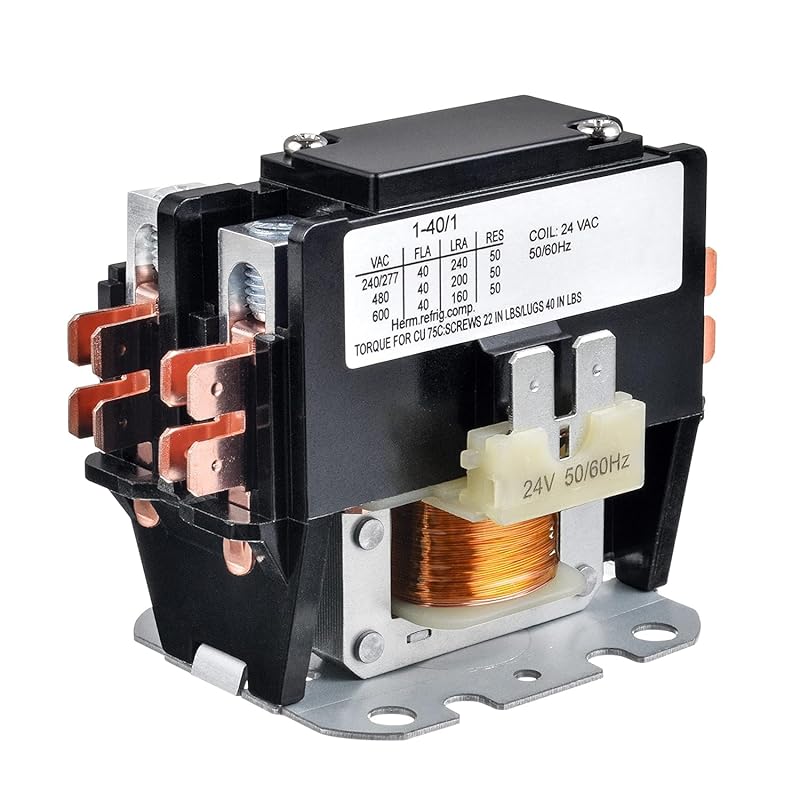
Willis Carrier transformed modern living with the invention of mechanical refrigeration. His groundbreaking work laid the foundation for today’s energy-efficient air conditioners. From the first electric air conditioner to global HVAC dominance, Carrier’s journey is a story of innovation and impact.
Key Takeaways
- Invention of Modern Air Conditioning: Willis Carrier developed the first electrical air conditioning system in 1902, solving humidity issues at a printing plant—marking the birth of modern climate control.
- Founding of Carrier Corporation: In 1915, Carrier established his own company, which grew into a global leader in heating, ventilation, and air conditioning (HVAC) systems.
- Global Expansion and Innovation: Over decades, Carrier introduced breakthrough technologies like variable refrigerant flow (VRF), smart thermostats, and eco-friendly refrigerants.
- Impact on Society: Carrier’s inventions enabled year-round comfort, boosted productivity, and transformed industries from textiles to healthcare.
- Sustainability Leadership: Today, Carrier leads in sustainable HVAC solutions, including solar-powered units and carbon-neutral designs.
- Legacy of Precision Engineering: Carrier remains synonymous with reliability, efficiency, and cutting-edge research in climate technology.
- Ongoing Influence: The Willis Carrier air conditioner timeline continues with smart home integration, AI-driven controls, and net-zero building standards.
📑 Table of Contents
- The Willis Carrier Air Conditioner Timeline: A Journey Through Innovation
- Early Life and Education: Laying the Foundation
- The Birth of Modern Air Conditioning
- Founding the Carrier Corporation
- Technological Milestones in the Willis Carrier Air Conditioner Timeline
- Impact on Society and Industry
- Modern Innovations and Future Outlook
- Lessons from the Willis Carrier Air Conditioner Timeline
- Conclusion: A Legacy That Keeps Cooling Lives
The Willis Carrier Air Conditioner Timeline: A Journey Through Innovation
Imagine walking into a bustling printing plant in early 1900s Philadelphia. The air is thick, damp, and heavy—perfect conditions for paper to absorb moisture. Pages warp. Prints blur. Productivity plummets. This was the reality until one man changed everything: Willis Haviland Carrier. His breakthrough wasn’t just about cooling—it was about controlling humidity with precision. That moment in 1902 gave birth to modern air conditioning and launched a revolution that still shapes our world today.
The story of the Willis Carrier air conditioner timeline isn’t just a technical history—it’s a human story of problem-solving, courage, and vision. Carrier didn’t set out to change the world. He just wanted to fix a frustrating issue at a local printing shop. But his methodical approach, scientific mindset, and relentless curiosity led him down a path that would redefine comfort, industry, and even urban life. As we explore this timeline, you’ll see how one idea sparked a chain reaction of innovation that now powers homes, offices, hospitals, and data centers across the globe.
Early Life and Education: Laying the Foundation
A Curious Mind from Upstate New York
Willis Carrier was born in 1876 in Angola, New York—a small town near Lake Erie. Growing up during the Industrial Revolution, he witnessed firsthand how rapidly technology was changing the world. Fascinated by machines and their inner workings, Carrier attended Cornell University, where he earned a degree in architectural engineering. It was here that he began combining creativity with science—skills that would define his future.
Visual guide about Willis Carrier Air Conditioner Timeline
Image source: e-alve.com
After graduating in 1901, Carrier joined the Buffalo Forge Company as a draftsman and engineer. While working there, he noticed something troubling: despite constant efforts to keep temperatures stable, humidity levels in industrial buildings fluctuated wildly. For many manufacturers—especially those producing paper or textiles—this meant ruined products and lost profits. Carrier saw an opportunity: what if temperature and humidity could be controlled precisely?
The Spark of an Idea
In 1902, Carrier was assigned to help solve a critical problem at the Sackett-Wilhelms Lithographing & Publishing Company in Brooklyn, New York. Paper sheets were absorbing moisture from the air, causing them to expand and distort. Ink wouldn’t adhere properly, leading to costly reprint jobs.
Carrier studied weather patterns, airflow, and evaporation rates. Then came his “aha!” moment: instead of just cooling air, he realized it could also remove moisture through condensation. Using a coil filled with cold water, he circulated warm, humid air over it. When the air touched the cooler surface, moisture condensed out—dry air returned to the room. Voilà: the world’s first artificial climate control system was born.
The Birth of Modern Air Conditioning
The 1902 Breakthrough
By July 17, 1902, Carrier had installed his experimental unit at the Sackett-Wilhelms plant. Within days, paper production stabilized. Quality improved dramatically. The client reported savings of thousands of dollars annually. Word spread quickly among other manufacturers facing similar challenges.
Visual guide about Willis Carrier Air Conditioner Timeline
Image source: perfumedirect.com
This wasn’t just about comfort—it was about precision engineering applied to real-world problems. Carrier called his system “Apparatus for Treating Air,” but soon shortened it to “air conditioning.” The term stuck because it described exactly what it did: conditioning the air for optimal results.
From Concept to Commercial Success
Impressed by the results, several companies approached Carrier for custom installations. He soon realized he needed more than just ad-hoc fixes—he needed a systematic approach. By 1906, he had published his findings in a landmark paper titled “The Problem of Cooling and Drying Air”, which outlined principles still used in HVAC today.
But commercial adoption lagged due to skepticism and high costs. Many believed artificial cooling was impractical for everyday use. However, during the hot summer of 1914, demand surged when people started seeking relief from oppressive heat in theaters and department stores. Suddenly, public comfort became part of the conversation.
Founding the Carrier Corporation
From Engineer to Entrepreneur
Seeing untapped potential, Willis Carrier left Buffalo Forge in 1915 and founded the Carrier Engineering Corporation in New York City. With just $1,000 in startup capital and a team of five engineers, he aimed to make climate control accessible, reliable, and scalable.
His first major contract was installing air conditioning in the Madison Square Garden in Manhattan—a venue hosting concerts, sports events, and political rallies. The result? Fans stayed cool and comfortable regardless of outdoor conditions. It proved that large-scale climate control was possible and desirable.
Expanding Horizons
Throughout the 1920s, Carrier expanded into residential markets, though initial units were bulky and expensive. Early models required separate boiler rooms and ductwork, limiting accessibility. Still, wealthy homeowners and businesses embraced the novelty. Movies depicting air-conditioned luxury became popular—further fueling public interest.
Carrier also invested heavily in research. His team developed standardized load calculations, psychrometric charts (essential for understanding air properties), and better refrigerant techniques. These tools made designing efficient systems faster and more accurate.
Technological Milestones in the Willis Carrier Air Conditioner Timeline
1928: Introduction of the Window Unit
While central systems dominated early adoption, window units revolutionized home access to cooling. Though not invented by Carrier himself, his company played a key role in refining compact, affordable models. By the late 1930s, window ACs allowed middle-class families to escape summer heat without remodeling their homes.
1938: First Residential Central System
Carrier unveiled the first truly residential central air conditioning system designed specifically for homes. Instead of adapting industrial equipment, engineers created smaller, quieter units compatible with standard HVAC infrastructure. This milestone opened the door for widespread domestic use.
1960s–1970s: Energy Efficiency Advances
As energy prices rose post-1973 oil crisis, Carrier responded by developing high-efficiency compressors, insulated coils, and programmable thermostats. Their SEER (Seasonal Energy Efficiency Ratio) ratings set new benchmarks. Consumers could now enjoy comfort while reducing utility bills.
1980s–1990s: Digital Controls and Smart Features
Carrier integrated microprocessors into thermostats and controllers, enabling remote operation and scheduling. Early smart features included timers, humidity sensors, and adaptive defrost cycles. These improvements boosted reliability and user convenience.
2000s–Present: Green Technology and Sustainability
Today, Carrier leads in eco-conscious design. Innovations include:
- Hydrofluoroolefin (HFO) refrigerants with near-zero global warming potential
- Solar-ready systems compatible with rooftop panels
- AI-powered predictive maintenance via connected devices
- Net-zero certified buildings using Carrier equipment
For example, the Carrier Infinity Series uses advanced algorithms to adjust cooling based on occupancy patterns, saving up to 20% energy versus older models.
Impact on Society and Industry
Transforming Work Environments
Before air conditioning, factories and offices often operated only seasonally or relied on open windows and fans. With Carrier’s systems, workers could focus better, reduce heat-related illnesses, and maintain consistent output year-round. Textile mills, laboratories, and call centers all benefited.
Advancing Public Health
By reducing indoor humidity, Carrier’s systems helped combat mold growth and respiratory issues linked to damp environments. Hospitals adopted climate control to protect sensitive patients and preserve medical supplies requiring dry storage.
Shaping Urban Development
Cities like Phoenix, Las Vegas, and Dubai owe much of their growth to reliable cooling. Office towers, shopping malls, and public transit systems depend on continuous climate management. Without it, these cities might look very different today.
Boosting Economic Output
Studies show that every degree of cooling above 75°F can increase worker productivity by 2%. In hot climates, this translates to billions in economic gains annually. Agriculture also benefited—grain silos used dehumidification to prevent spoilage.
Modern Innovations and Future Outlook
Integration with Smart Homes
Today’s Carrier units connect seamlessly with Alexa, Google Assistant, and Apple HomeKit. Users can pre-cool homes before returning from work or receive alerts when filters need replacement. Machine learning helps predict usage trends and optimize performance.
Modular and Scalable Designs
Newer systems are designed for easy expansion. Businesses can start small and add capacity as needed. Residential users benefit from flexible zoning options, allowing different areas of a house to be cooled independently.
Focus on Circular Economy
Carrier is piloting take-back programs for old units and recycling components like copper and aluminum. Their goal: minimize waste and support sustainable manufacturing practices.
Preparing for Climate Change
As extreme weather increases, so does demand for resilient cooling. Carrier’s latest models feature hurricane-resistant exteriors, backup power compatibility, and rapid response capabilities during grid outages.
Lessons from the Willis Carrier Air Conditioner Timeline
Innovation Starts with Observation
Carrier didn’t invent cooling—he observed a problem others overlooked. His success teaches us that great ideas often come from paying attention to everyday frustrations.
Persistence Pays Off
Early critics doubted air conditioning’s feasibility. But Carrier kept refining his designs, publishing papers, and proving value through real-world results. Tenacity turned skepticism into acceptance.
Technology Serves People
At its core, Carrier’s work was about improving quality of life. Every advancement since has carried that same mission—making comfort safer, smarter, and more sustainable.
Collaboration Drives Progress
From partnering with architects to working with utilities on rebate programs, Carrier understood that solving complex problems requires teamwork. Today’s HVAC industry still thrives on interdisciplinary cooperation.
Conclusion: A Legacy That Keeps Cooling Lives
The Willis Carrier air conditioner timeline is more than dates and milestones—it’s a testament to human ingenuity and determination. What began as a solution to warped paper evolved into a cornerstone of modern civilization. Carrier’s vision turned stifling heat into refreshing relief, silent offices into productive hubs, and seasonal discomfort into year-round well-being.
As we face new challenges like rising temperatures, aging infrastructure, and environmental responsibility, Carrier’s spirit lives on. Whether through ultra-efficient chillers in data centers or whisper-quiet mini-splits in suburban homes, their technology adapts while staying true to the original promise: precise, reliable climate control for everyone.
Next time you press “cool” on your thermostat, remember: you’re tapping into a legacy built by a quiet engineer who asked, “What if?” And because of him, the air around us feels just right.
Frequently Asked Questions
Who invented the first air conditioner?
Willis Carrier invented the first electrical air conditioning system in 1902. His innovation solved humidity problems at a printing plant, marking the beginning of modern climate control technology.
When was the Willis Carrier air conditioner timeline established?
The timeline begins in 1902 with Carrier’s breakthrough at the Sackett-Wilhelms Lithographing & Publishing Company. This event launched over a century of continuous innovation in HVAC systems.
What company did Willis Carrier found?
In 1915, Willis Carrier founded the Carrier Engineering Corporation (now simply Carrier), which became the world’s largest manufacturer of air conditioning and heating systems.
How did Willis Carrier’s invention impact society?
Carrier’s air conditioner enabled year-round comfort, increased worker productivity, supported public health by reducing mold and humidity-related illnesses, and fueled urban development in hot climates worldwide.
What are some modern advancements from Carrier?
Today, Carrier leads in smart HVAC technology, including AI-powered thermostats, solar-compatible units, eco-friendly refrigerants, and net-zero certified building systems.
Is air conditioning still evolving thanks to Willis Carrier’s legacy?
Absolutely. The Willis Carrier air conditioner timeline continues with innovations in sustainability, connectivity, energy efficiency, and resilience—all rooted in Carrier’s original mission of precise environmental control.