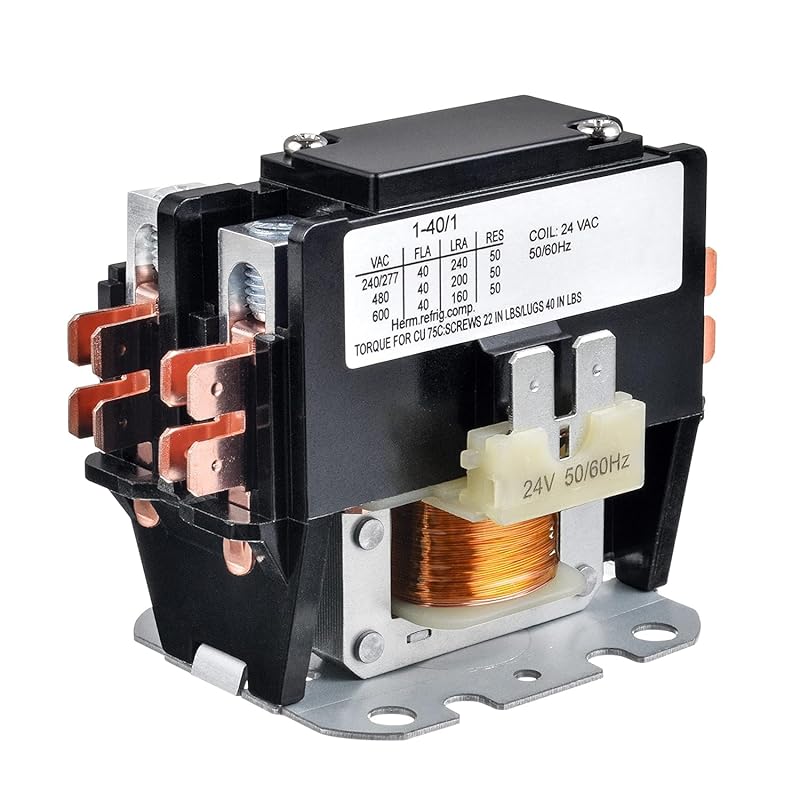
Willis Haviland Carrier invented the first practical air conditioning system in 1902, transforming how we live and work. His innovation solved a major industrial problem by controlling humidity and temperature in a printing plant, laying the foundation for modern HVAC systems. Today, Carrier remains a leader in cooling technology, shaping comfort worldwide.
Key Takeaways
- Invention Year: Willis Carrier developed the first modern air conditioner in 1902, marking a pivotal moment in engineering history.
- Original Purpose: He designed it to solve humidity issues at a Brooklyn printing plant, ensuring consistent paper quality.
- First Commercial Use: The system was installed at the Sackett-Wilhelms Lithographing and Publishing Company, proving its real-world value.
- Modern Impact: Carrier’s invention led to widespread adoption of air conditioning in homes, offices, hospitals, and data centers.
- Legacy & Growth: Today, Carrier Corporation continues to innovate with energy-efficient, smart, and sustainable HVAC solutions.
- Global Influence: Over a century later, air conditioning is essential to daily life, especially in hot climates and during extreme weather events.
📑 Table of Contents
- The Birth of Modern Air Conditioning: A Revolutionary Moment in History
- Who Was Willis Carrier? The Man Behind the Invention
- The Problem That Sparked Innovation
- How Carrier’s Air Conditioner Worked
- The Ripple Effect: How Air Conditioning Changed the World
- Carrier Corporation: Continuing the Legacy
- Fun Facts About Willis Carrier and His Invention
- Tips for Choosing and Maintaining Your Air Conditioning System
- Conclusion: A Lasting Legacy
The Birth of Modern Air Conditioning: A Revolutionary Moment in History
Imagine a world without air conditioning—no cool breeze on a sweltering summer day, no chilled hospital rooms, no climate-controlled server farms keeping our digital lives running. Sounds uncomfortable, right? Yet, before the early 20th century, that’s exactly how life was for millions. Then came a quiet engineer named Willis Haviland Carrier, whose curiosity and ingenuity changed everything.
In 1902, Carrier didn’t set out to invent a machine for personal comfort. Instead, he tackled a very specific industrial problem: controlling humidity in a Brooklyn printing plant. The issue was that rising humidity caused paper to expand and ink to bleed, ruining expensive prints. Carrier’s breakthrough wasn’t just about making people feel cooler—it was about precision control of temperature and moisture in the air. That moment, on July 17, 1902, marked the birth of the modern air conditioner.
This invention wasn’t just a mechanical fix—it was a cultural, economic, and technological turning point. It paved the way for suburban sprawl, enabled the growth of industries like food preservation and healthcare, and even influenced global migration patterns. So, when did Willis Carrier invent the air conditioner? Let’s dive into the story behind this game-changing innovation.
Who Was Willis Carrier? The Man Behind the Invention
A Curious Mind from Buffalo
Willis Haviland Carrier was born in 1876 in Angola, New York, near Buffalo. From an early age, he showed a knack for understanding how things worked. He attended Cornell University, where he studied electrical engineering—a field then still in its infancy. After graduation, Carrier took a job as a design engineer at the Buffalo Forge Company, a manufacturer of heating and ventilation equipment.
It was here that Carrier began experimenting with airflow and humidity control. He wasn’t content with just selling existing products; he wanted to understand the science behind them. His curiosity led him to ask questions like, “What if we could control both temperature and humidity independently?” That question would eventually lead to his most famous invention.
From Idea to Reality
By the late 1890s, Carrier had become so fascinated by environmental control that he started his own consulting firm in 1902. This firm, which would eventually become the Carrier Engineering Corporation, was dedicated to solving complex climate challenges in industrial settings.
Carrier’s approach was methodical. He used mathematical models and laboratory testing to predict how air would behave under different conditions. This scientific rigor set him apart from many of his contemporaries and laid the groundwork for modern HVAC (Heating, Ventilation, and Air Conditioning) engineering.
The Problem That Sparked Innovation
Humidity Ruined Print Quality
The catalyst for Carrier’s invention was a pressing issue at the Sackett-Wilhelms Lithographing and Publishing Company in Brooklyn. The company printed high-end wallpaper and other detailed materials. But when summer arrived, humidity levels rose, causing paper to absorb moisture, swell, and distort. This made it nearly impossible to maintain consistent print quality—especially for fine lines and colors.
Visual guide about When Did Willis Carrier Invent the Air Conditioner
Image source: sitebk.com
The company’s engineers tried everything—desiccants, fans, and dehumidifiers—but nothing worked reliably. They needed a solution that could precisely control both temperature and humidity. That’s when they called in Willis Carrier.
Carrier’s First System
Carrier designed a system that cooled air, removed moisture, and circulated it through the building. He used a refrigeration cycle involving chilled coils and air circulation—essentially the blueprint for every air conditioner today. On July 17, 1902, the system went live. For the first time, the plant could maintain stable humidity levels year-round.
The results were immediate. Paper shrinkage stopped. Ink registration improved. Product quality soared. Within months, the plant reported a dramatic increase in output and a significant reduction in waste. This success proved that controlled climate wasn’t just useful—it was profitable.
How Carrier’s Air Conditioner Worked
The Science Behind the Cool
At its core, Carrier’s system relied on the principle of latent heat removal—the process of removing moisture from the air by cooling it below its dew point. Here’s how it worked:
- Air Intake: Warm, humid air from the printing room was drawn into the system.
- Cooling Coils: The air passed over chilled water coils. As it cooled, moisture condensed onto the coils and dripped away.
- Temperature Control: By adjusting the temperature of the cooling coils, Carrier could regulate both humidity and air temperature.
- Air Circulation: A fan pushed the now-cool, dry air back into the room.
This wasn’t just a fan blowing cold air—it was active climate management. Carrier’s innovation allowed for precise control, something previous systems couldn’t achieve.
Practical Applications Beyond Printing
While the printing plant was the first customer, Carrier quickly realized the broader potential of his invention. Soon, his systems were being used in textile mills, meatpacking plants, and pharmaceutical labs—anywhere sensitive materials or processes required stable environments.
For example, in textile factories, humidity control prevented fabric from stretching or shrinking during production. In meatpacking plants, it helped preserve food by slowing bacterial growth. These applications showed that climate control wasn’t limited to one industry—it was a universal need.
The Ripple Effect: How Air Conditioning Changed the World
Urbanization and Suburban Growth
Before air conditioning, cities in hot climates were often uninhabitable in summer. Office workers suffered in stuffy buildings, and families avoided moving to warmer regions. With AC, cities like Phoenix, Las Vegas, and Atlanta became not just livable—but desirable places to live and work.
This shift fueled suburban expansion. People could now build homes in previously unthinkable locations. Shopping malls, movie theaters, and office parks sprouted up, all centered around comfort and convenience. The rise of the American suburb, especially post-World War II, owes much to air conditioning.
Healthcare and Public Safety
In hospitals, air conditioning protects vulnerable patients. It prevents mold growth in medical equipment, reduces airborne pathogens, and keeps operating rooms at ideal temperatures. During heatwaves, AC units act as lifelines, preventing heatstroke and reducing strain on emergency rooms.
Even disaster response has been transformed. Mobile AC units are now standard in emergency shelters after hurricanes or wildfires, helping communities recover faster.
The Digital Age and Data Centers
Today, air conditioning powers the digital world. Data centers—where billions of internet searches and transactions happen every second—generate massive heat. Without advanced cooling systems, servers would overheat and crash. Carrier’s legacy lives on in these mission-critical environments, where precision climate control ensures uptime and efficiency.
Carrier Corporation: Continuing the Legacy
From One Man to a Global Leader
After his initial success, Willis Carrier founded the Carrier Engineering Corporation in 1915. The company grew rapidly, developing new technologies like automatic controls, variable refrigerant flow, and energy-efficient systems.
Today, Carrier Corporation is part of United Technologies Corporation (now Raytheon Technologies), but it remains one of the world’s largest manufacturers of HVACR (Heating, Ventilation, Air Conditioning, and Refrigeration) equipment. Its products are used in everything from homes to skyscrapers, airports, and hospitals.
Innovations That Define Modern Comfort
Carrier hasn’t rested on its laurels. Recent innovations include:
- Smart Thermostats: Wi-Fi-enabled devices that learn your habits and adjust temperatures automatically.
- Variable Speed Compressors: These adjust cooling output based on demand, saving energy.
- Sustainable Refrigerants: Moving away from ozone-depleting chemicals toward eco-friendly alternatives.
- Geothermal Systems: Using underground temperatures to heat and cool buildings efficiently.
These advancements reflect Carrier’s original spirit: solving real-world problems with intelligent, scalable solutions.
Fun Facts About Willis Carrier and His Invention
- Carrier held over 30 patents related to air conditioning and climate control.
- He never married and lived modestly, focusing entirely on his work.
- The first public demonstration of air conditioning was at the 1939 New York World’s Fair, where visitors marveled at “cooling” exhibits.
- Carrier received the John Fritz Medal, one of engineering’s highest honors, in recognition of his contributions.
- His birthday, November 26, is celebrated annually by the American Society of Heating, Refrigerating and Air-Conditioning Engineers (ASHRAE).
Tips for Choosing and Maintaining Your Air Conditioning System
Energy Efficiency Matters
If you’re considering installing or upgrading your AC system, look for ENERGY STAR® certified models. These use 15% less energy than standard units and can save you hundreds on utility bills over time.
Regular Maintenance Is Key
Just like any machine, air conditioners need care. Change filters every 1–3 months, clean coils annually, and schedule professional tune-ups twice a year. Neglecting maintenance can reduce efficiency and shorten the unit’s lifespan.
Consider Zoning
Zoned systems allow different areas of your home to be cooled independently. This means you only condition rooms that are occupied, saving energy and improving comfort.
Upgrade to Smart Controls
Smart thermostats like those from Carrier allow remote access via smartphone apps. You can turn off the AC when you’re away or pre-cool your home before arriving. Some models even monitor indoor air quality.
Think Long-Term
While upfront cost matters, consider total lifetime cost. A slightly more expensive, highly efficient unit may pay for itself in energy savings within a few years.
Conclusion: A Lasting Legacy
When we ask, “When did Willis Carrier invent the air conditioner?” we’re not just looking for a date—we’re uncovering a story of innovation, persistence, and vision. On July 17, 1902, Willis Haviland Carrier didn’t just create a machine to cool a room. He invented a system that would redefine human comfort, enable new industries, and shape the modern world.
Today, as we face challenges like climate change, energy consumption, and urban heat islands, Carrier’s work reminds us that thoughtful engineering can have profound positive impacts. His story encourages us to look beyond immediate problems and imagine long-term solutions.
So the next time you step into a cool, comfortable space—whether it’s your home, office, or favorite café—take a moment to appreciate the quiet genius behind it all. Thanks to Willis Carrier, we don’t just survive the heat. We thrive in it.
Frequently Asked Questions
Did Willis Carrier really invent the first air conditioner?
Yes, Willis Carrier invented the first practical, electrically powered air conditioning system in 1902. While others had experimented with cooling and dehumidification, Carrier’s system was the first to offer precise control of both temperature and humidity, making it suitable for commercial use.
What was the first place Willis Carrier installed his air conditioner?
The first installation was at the Sackett-Wilhelms Lithographing and Publishing Company in Brooklyn, New York. Carrier designed the system to solve humidity-related issues that were damaging paper and ink during the printing process.
How did Willis Carrier’s air conditioner work?
Carrier’s system worked by cooling air to remove moisture (humidity) through condensation on chilled coils. A fan then circulated the dry, cool air throughout the building. This process allowed precise control of both temperature and humidity.
Is Carrier still making air conditioners today?
Yes, Carrier Corporation is still a leading global manufacturer of HVAC and refrigeration systems. Founded by Willis Carrier himself, the company continues to innovate with energy-efficient, smart, and sustainable climate control solutions.
Why is Willis Carrier considered the father of air conditioning?
Carrier is called the “father of air conditioning” because his 1902 invention was the first to combine temperature and humidity control in a practical, scalable system. His work laid the foundation for all modern air conditioning and refrigeration technology.
Can I still see Willis Carrier’s original air conditioning system?
No, Carrier’s original 1902 system is no longer functional. However, some historical photos and documents exist, and parts of the Sackett-Wilhelms building may still show traces of the installation. The Smithsonian Institution and other museums hold artifacts related to his work.