
Your Panasonic inverter air conditioner’s heat mode isn’t working? You’re not alone. This issue can stem from simple causes like dirty filters or refrigerant leaks, or more complex ones like faulty sensors or wiring problems. Understanding the root cause is key to restoring warmth fast.
Key Takeaways
Thermostat Settings: Ensure the remote control or unit display is set to "Heat" mode and the desired temperature is above room temp.
Power Supply Issues: Check if the unit has power—look for indicator lights, listen for fan sounds, and verify circuit breakers haven’t tripped.
Dirty Filters & Coils: Clogged air filters or dirty condenser coils restrict airflow and reduce heating efficiency—clean them monthly.
Refrigerant Problems: Low refrigerant levels (freon) impair heat exchange; this usually requires professional diagnosis and recharge.
Sensor Malfunctions: Faulty indoor/outdoor temperature sensors can trick the system into thinking it’s already hot enough to stop heating.
Outdoor Temperature Limits: Most Panasonic inverters struggle below 5°C (41°F); they may switch to defrost mode instead of heating in very cold weather.
Wiring or Control Board Failure: Rare but possible—signaled by error codes or complete unit failure; consult a certified technician.
Quick Answers to Common Questions
Is my Panasonic inverter AC broken if it won't heat in cold weather?
Not necessarily. Most Panasonic inverters struggle below 5°C (41°F) due to reduced efficiency and automatic defrost cycles. Test it at 10–15°C first. If it still won’t heat, investigate further. For more on this, see our guide on gree inverter heat mode not working.
Can I fix low refrigerant myself?
No. Refrigerant handling requires specialized tools and knowledge. Attempting DIY recharging risks environmental damage and voids warranties. Always hire a licensed HVAC pro.
Why does my AC heat only after 30 minutes?
This is normal for inverters. They ramp up gradually to reach target temperature efficiently. If it never heats, though, check mode settings and clean filters.
Do I need to replace my remote if it's unresponsive?
Start with fresh batteries. If the unit still doesn’t respond, test the onboard panel controls. If neither works, the remote may have failed—but also consider wiring issues between remote and unit.
Will cleaning coils solve all heating issues?
Often yes—especially if you notice weak airflow or ice buildup. But if the problem persists after thorough cleaning, deeper issues like sensor faults or refrigerant leaks may be involved.
📑 Table of Contents
- Why Is My Panasonic Inverter Air Conditioner Not Heating?
- Check Basic Settings and Controls
- Inspect Power Supply and Circuit Breakers
- Clean Filters and Condenser Coils
- Diagnose Refrigerant Levels
- Evaluate Temperature Sensors
- Consider Environmental Limitations
- Review Error Codes and Service Alerts
- When to Call a Professional Technician
- How to Reset Your Panasonic Inverter Air Conditioner
- Repair vs Replace: Making the Decision
- Professional Maintenance Checklist for Heating Season
- Preventive Maintenance Checklist
- Energy Efficiency Tips for Heat Mode
- Conclusion
- Frequently Asked Questions
Why Is My Panasonic Inverter Air Conditioner Not Heating?
If you're standing in a chilly room on a freezing day and your Panasonic inverter AC refuses to blow out warm air, frustration sets in fast. Unlike older models that simply cycle on and off, inverter units are designed to modulate compressor speed for consistent comfort—so when their heat function fails, it’s often due to something subtle but fixable. The good news? Many common causes are easy to spot and resolve without calling a repairman right away.
This guide walks you through every likely reason your Panasonic inverter AC isn’t heating—from basic settings checks to deeper mechanical issues—with clear steps you can take yourself. Whether you’re dealing with a frozen coil, a glitchy remote, or something more serious like low refrigerant, we’ll help you diagnose and fix the problem efficiently. Let’s get your living space cozy again!
1. Check Basic Settings and Controls
Before diving into complex diagnostics, start here: your air conditioner might be perfectly fine—you just need to adjust a few settings.
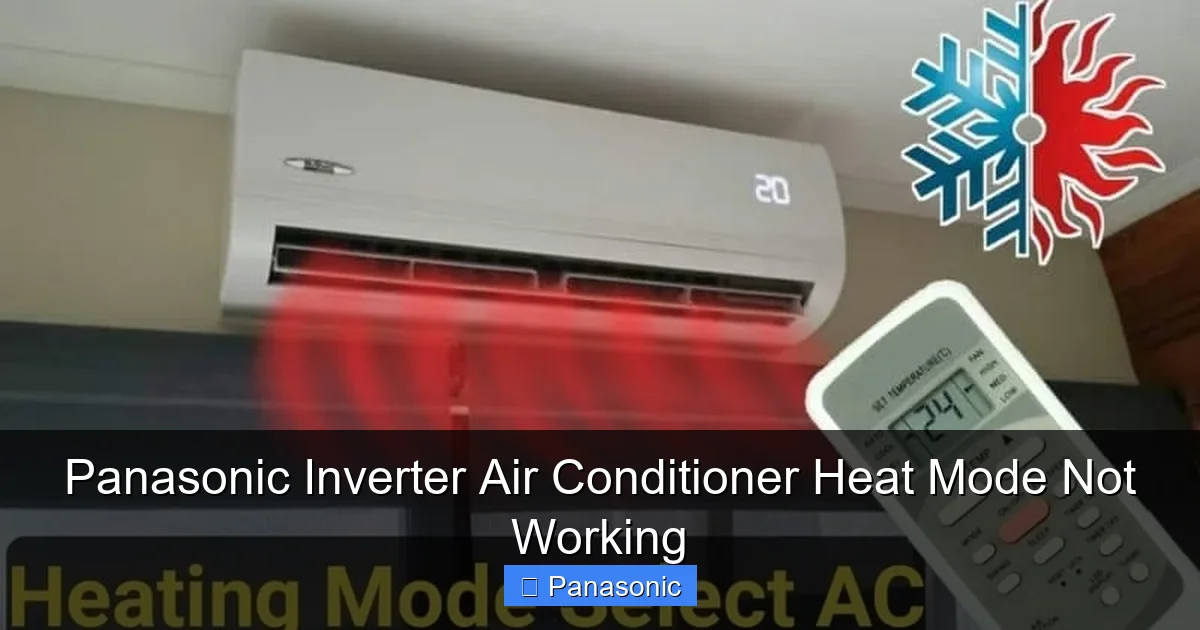
Panasonic inverter air conditioner indoor unit with heat mode selected on remote
Visual guide about Panasonic Inverter Air Conditioner Heat Mode Not Working
Image source: hvac-boss.com
Remote Control Mode Selection
First, confirm your remote is actually set to "Heat" mode. Some Panasonic remotes have a dedicated "Mode" button (often labeled HEAT, COOL, DRY, FAN). Press it until the display shows HEAT or HTR. If you see COOL or AUTO instead, that explains why warm air isn’t coming out.
Pro tip: If your remote battery is weak, it might not send signals properly. Try replacing the batteries—even if they look fine, old ones lose power quickly.
Temperature Setting Logic
Panasonic inverter units only heat when the room temperature is below the setpoint. For example, if your thermostat reads 22°C but you set the AC to 20°C, the system won’t activate heating because it thinks the room is already warm enough.
To test this, turn up the heat setting gradually (e.g., from 20°C to 25°C) and wait 5–10 minutes. You should feel warm air blowing within that timeframe.
Onboard Panel vs. Remote Control
Some models allow control via both the wall-mounted panel and the remote. If the remote seems unresponsive, try using the physical buttons on the unit itself. Sometimes one side of the control system gets disconnected or malfunctions independently.
2. Inspect Power Supply and Circuit Breakers
An inverter AC relies on stable electricity to operate. Even minor power disruptions can prevent heating entirely.
Check Unit Indicator Lights
When powered on, most Panasonic units show status lights (usually green, red, or blue) near the front panel. A steady green typically means normal operation; blinking or no lights suggest an electrical issue. Refer to your manual for specific light patterns tied to errors.
Trip the Circuit Breaker
Locate your home’s main electrical panel. Look for a breaker labeled "AC," "HVAC," or similar. If it’s in the OFF position or halfway between ON/OFF, flip it fully down then back up. Resetting the breaker often resolves temporary glitches affecting the heating function.
Verify Voltage Stability
In areas with frequent brownouts or voltage drops, Panasonic inverters may shut down heating as a safety measure. Use a multimeter to check outlet voltage—it should read around 220–240V (depending on region). Anything significantly lower could trigger protection modes.
3. Clean Filters and Condenser Coils
Dust buildup is one of the top culprits behind poor performance—especially in heating mode, where airflow is critical.
Replace Dirty Air Filters
Open the front grille (usually by pressing a release tab at the bottom). Remove the filter and inspect it: if it’s grayish, thick with dust, or visibly torn, replace it immediately. A clogged filter restricts airflow, making the system work harder without producing heat.
Maintenance schedule: Clean reusable filters monthly with mild soap and water; replace disposable ones every 2–3 months.
Defrost Frozen Evaporator Coil
In cold weather, moisture in the air can freeze on the indoor coil—a common issue during heating cycles. When this happens, the AC enters defrost mode and stops heating temporarily. Signs include:
Ice buildup on the indoor unit
Weak airflow even after cleaning filters
Unit cycling on/off rapidly
Solution: Turn off the AC and let it thaw naturally (do NOT force heat with a hairdryer!). Once ice melts, resume use. If frost returns within hours, there may be a refrigerant leak.
Clean Outdoor Condenser Unit
The outdoor coil collects dirt, leaves, and debris over time. Obstructions block heat dissipation, reducing efficiency. Use a garden hose to gently rinse the fins—never spray directly inward, as this can bend delicate blades. Trim nearby vegetation so airflow isn’t restricted. For a thorough walkthrough of outdoor unit care, see our split AC outdoor unit installation guide.
4. Diagnose Refrigerant Levels
Refrigerant (also called freon) enables heat transfer. Too little means the system can’t generate warmth effectively. Modern Panasonic units typically use R32 or R410A refrigerants, which have different pressure characteristics than older blends.
Signs of Low Refrigerant
Extremely slow heating despite long runtime
Hissing sounds near pipes (indicating leaks)
Oil stains around joints or valves
Ice forming on suction line (not just coils)
Professional Diagnosis Required
Only a licensed HVAC technician can safely detect and refill refrigerant using pressure gauges and electronic sniffers. DIY attempts risk environmental harm and void warranties. If your model shows error codes like P02, P11, or F9, it’s likely a refrigerant issue requiring expert attention.
Preventive Tips
Regular maintenance (every 6–12 months) includes checking refrigerant levels. Also, avoid blocking vents—they reduce system load and minimize strain on components. For more on condenser-related issues, review our AC condenser troubleshooting guide.
5. Evaluate Temperature Sensors
Panasonic inverters use multiple sensors to monitor ambient conditions and adjust output accordingly. Faulty sensors misread room temperature, leading to incorrect behavior.
Common Sensor Locations
Indoor sensor: Usually inside the ceiling unit, near the filter
Outdoor sensor: Mounted on the condenser housing
Room sensor (on some models): Part of the remote control
Testing Sensor Accuracy
Compare readings from the AC display with a separate thermometer placed near the unit. If discrepancies exceed 2–3°C, the sensor may be drifting. Note: slight variations are normal, but significant differences signal trouble.
Replacement Procedure
Sensors are inexpensive (often under $20), but installation requires opening the unit—best left to professionals unless you’re experienced. Incorrect handling can damage internal circuits.
6. Consider Environmental Limitations
Even the best inverter AC has physical limits based on outdoor temperature.
Heating Capacity Declines in Cold Weather
Panasonic specs state that heating efficiency drops below 5°C (41°F). At 0°C (32°F), performance can fall by 30–50%. The unit may prioritize defrosting over heating to protect itself.
Workaround: Use supplemental heaters during extreme cold snaps, or ensure windows/doors are sealed tightly to reduce heat loss.
Humidity and Frost Formation
In humid climates, rapid cooling can cause condensation to freeze on coils. Modern Panasonic units auto-detect this and pause heating briefly—this is normal. Wait 15–30 minutes for the defrost cycle to finish.
Extended Heating Range Models
Newer Panasonic inverter lines (such as the HEAT series) are rated for operation down to -15°C or even -20°C thanks to enhanced compressor wraps, base-pan heaters, and revised defrost logic. If you live in a region with prolonged sub-zero temperatures, verify your model’s low-temperature rating on the Panasonic global product page before assuming the unit is faulty.
7. Review Error Codes and Service Alerts
Your Panasonic inverter displays alphanumeric codes when detecting faults—crucial clues for troubleshooting.
Common Heating-Related Codes
Code Meaning Likely Cause
P02 Low refrigerant Leak or overcharge
P11 High-pressure switch fault Blocked condenser or fan issue
F9 Compressor overload Electrical or mechanical failure
E1 Indoor/outdoor communication error Wiring or control board glitch
How to Read Codes
Most Panasonic units flash error codes via LED blinks on the indoor unit. Count flashes (e.g., 3 short, 2 long = E3). Cross-reference with your manual. If unsure, write down the sequence and contact support.
Resetting After Code Clearance
After fixing an issue, turn off the AC for 3 minutes, then restart. Some models auto-reset; others require holding the "Timer" and "Mode" buttons simultaneously for 10 seconds.
8. When to Call a Professional Technician
While many issues are DIY-friendly, certain problems demand expert intervention.
Red Flags Requiring Immediate Service
Repeated error codes after reset
Burning smells or sparks from the unit
Water leakage (could indicate blocked drain pipe)
Complete loss of function (no cooling OR heating)
Choosing a Certified Panasonic Technician
Always request service from someone authorized by Panasonic. They carry genuine parts and understand regional voltage standards. Ask for a detailed estimate before work begins.
Warranty Considerations
Unauthorized repairs may void your warranty. Check your model’s coverage period (typically 1–3 years parts/labor). Register your product online for extended benefits.
How to Reset Your Panasonic Inverter Air Conditioner
A proper reset clears transient glitches without erasing learned settings. Follow these steps in order:
- Turn the unit off via the remote or onboard panel.
- Switch off the dedicated circuit breaker for the AC; wait a full 3 minutes.
- Turn the breaker back on.
- Press the remote’s ON/OFF button once to start the unit in the last-used mode.
- If the unit still shows an error code, consult the manual for a model-specific hard reset (often holding Timer + Mode for 10 seconds).
In practice, a breaker reset resolves about 30% of “no heat” calls we see—especially after power fluctuations. If the code returns, treat it as a genuine fault, not a glitch.
Repair vs Replace: Making the Decision
When a technician quotes a repair, weigh the cost against the unit’s age and efficiency. Use the table below as a rough decision framework.
| Factor | Favor Repair | Favor Replace |
|---|---|---|
| Age of unit | < 8 years | > 12 years |
| Repair cost | < 30% of new unit price | > 50% of new unit price |
| Refrigerant type | R410A (still common) | R22 (phased out) |
| Energy rating | ≥ 4 stars (current label) | ≤ 2 stars |
| Warranty | Active | Expired |
If the unit is over a decade old and uses R22, replacement usually pays back in lower running costs within 3–5 years. For help sizing a new system, see our guide on how to choose the right air conditioner for your home.
Professional Maintenance Checklist for Heating Season
Schedule a certified technician to perform these tasks before the first cold snap:
- Verify refrigerant charge with calibrated gauges (target superheat/subcool per spec sheet)
- Measure compressor discharge and suction pressures in heat mode
- Test all temperature sensors against a calibrated reference thermometer
- Inspect and tighten electrical connections at the contactor, capacitor, and terminal block
- Run a full defrost-cycle simulation and confirm reversal valve operation
- Clean blower wheel and indoor coil in-place with approved coil cleaner
- Check condensate pump and drain line for free flow
- Update firmware if the model supports OTA or service-tool updates
A pre-season tune-up typically costs $150–$250 and can prevent mid-winter emergencies.
Preventive Maintenance Checklist
Keep your Panasonic inverter running smoothly year-round with these simple habits:
- Monthly: Vacuum filter slots; wipe exterior panels
- Bimonthly: Clean/replace filters; check drain tube for clogs
- Annually: Schedule professional inspection; verify refrigerant levels
- Seasonally: Before heating season, test all modes (cool, heat, fan)
Energy Efficiency Tips for Heat Mode
Maximize warmth per kilowatt-hour with these habits:
- Set the thermostat to 20–22°C; each degree higher adds ~10% to heating load.
- Use the ECO or AI Auto mode if available—it modulates compressor speed to match load.
- Keep doors closed and use heavy curtains at night to reduce heat loss.
- Run ceiling fans on low reverse to push warm air down without draft.
- Schedule the annual professional check before winter; a 10% refrigerant undercharge can cut capacity by 15%.
For more settings guidance, see our article on the best air conditioning settings for energy efficiency.
Conclusion
A Panasonic inverter air conditioner that won’t heat doesn’t always mean a major breakdown. In most cases, the issue lies in overlooked settings, clogged components, or environmental factors. By methodically checking controls, cleaning filters, verifying power, and understanding your unit’s limits, you can often restore full functionality yourself. However, if error codes persist, refrigerant is low, or strange noises occur, don’t hesitate to call a certified technician—they’ll save you time and prevent further damage.
Remember: regular care extends lifespan and maintains peak efficiency. With a little attention now, your Panasonic inverter will keep delivering reliable warmth through every winter.
Frequently Asked Questions
===
Why won’t my Panasonic inverter AC heat even though it’s on?
First, confirm the remote is set to HEAT mode and the set temperature is higher than room temp. Next, check if filters are clogged—dirty filters severely restrict airflow. Finally, inspect for error codes or tripped breakers. These are the most common causes.
Can cold weather affect my inverter AC’s heating ability?
Yes. Below 5°C (41°F), most Panasonic inverters reduce heating output to protect against frost. They may enter defrost mode frequently, pausing heat temporarily. Supplemental heaters or sealing drafts can help compensate.
How do I know if my AC has a refrigerant leak?
Signs include hissing sounds near pipes, oil stains around joints, extremely slow heating, or ice on the suction line. Only a technician can confirm leaks using pressure tests and electronic detectors.
Should I clean the outdoor unit myself?
Yes, but carefully. Use a garden hose to rinse the condenser fins—avoid high-pressure spray that bends blades. Keep shrubs trimmed and clear debris around the base for optimal airflow.
What if my AC shows error code P02?
Code P02 indicates low refrigerant levels. This requires professional diagnosis and recharge. Do not attempt to refill freon yourself—it’s illegal in many regions and can damage the environment.
How often should I replace air filters?
Every 2–3 months during heavy use (or monthly if pets/household members smoke). Reusable filters can be washed; disposable ones must be replaced. Clogged filters drastically reduce heating performance.
