
Panasonic ducted air conditioners offer powerful, energy-efficient cooling for your entire home with quiet operation and smart climate control. Designed for seamless integration, these systems deliver consistent comfort while reducing energy bills and environmental impact.
Key Takeaways
- Understanding panasonic ducted air conditioners: Provides essential knowledge
Additional highlights: Panasonic’s inverter technology can cut electricity use by up to 40% versus non‑inverter units, and their R32 refrigerant has less than half the global warming potential of R410A. Many models integrate with Google Assistant, Alexa, and Apple HomeKit for voice and app control. Professional installation and annual servicing are essential to maintain warranty coverage and peak performance. For a broader overview of central cooling options, see our guide on central air conditioning installation.
Quick Answers to Common Questions
Do Panasonic ducted ACs require special ductwork?
Yes, professional duct installation is required. Existing ducts may be usable, but new builds often need custom-designed, insulated ductwork for optimal airflow and efficiency.
Can I control my Panasonic ducted system remotely?
Many modern models support Wi-Fi connectivity and smartphone apps, allowing you to adjust temperature, view usage stats, and schedule cycles from anywhere with an internet connection.
Are ducted systems noisy?
No—Panasonic prioritizes quiet operation. Indoor units operate below 25 dB (whisper-quiet), and outdoor units are engineered to minimize neighborhood disturbance.
How long do Panasonic ducted ACs last?
With proper care, most units function reliably for 15+ years. Regular filter cleaning and annual servicing significantly extend lifespan and maintain performance.
Is R32 refrigerant safe?
Yes. R32 is non-toxic, flammable only at extremely high concentrations, and has a much lower environmental impact than older refrigerants. Panasonic follows strict handling protocols.
📑 Table of Contents
- The Ultimate Guide to Panasonic Ducted Air Conditioners
- What Are Panasonic Ducted Air Conditioners?
- Why Choose Panasonic?
- Types of Panasonic Ducted Systems
- Installation & Design Considerations
- Top Panasonic Ducted Models to Consider
- Maintenance & Troubleshooting
- Cost Breakdown & ROI
- Final Thoughts: Is It Right for You?
The Ultimate Guide to Panasonic Ducted Air Conditioners
Imagine walking into your home after a scorching summer day, only to feel a gentle, refreshing breeze from hidden vents in the ceiling. No noisy outdoor units clanking in the yard. No bulky indoor units taking up space. Just pure, consistent comfort from room to room. That’s the magic of Panasonic ducted air conditioners —designed not just to cool your home, but to do it quietly, efficiently, and with style.
Whether you're building a new home or upgrading your current HVAC system, Panasonic offers some of the most reliable and innovative ducted solutions on the market. In this guide, we'll walk you through everything you need to know—from how ducted systems work to why Panasonic stands out, what features to look for, and even how to choose the right model for your space. Let’s dive in!
What Are Panasonic Ducted Air Conditioners?
A ducted air conditioning system is a central cooling (and heating) solution that uses a network of insulated ducts to distribute conditioned air throughout your home. Unlike split or window units, which cool one room at a time, ducted systems provide uniform temperature control across multiple zones—ideal for larger homes or properties with high ceilings.
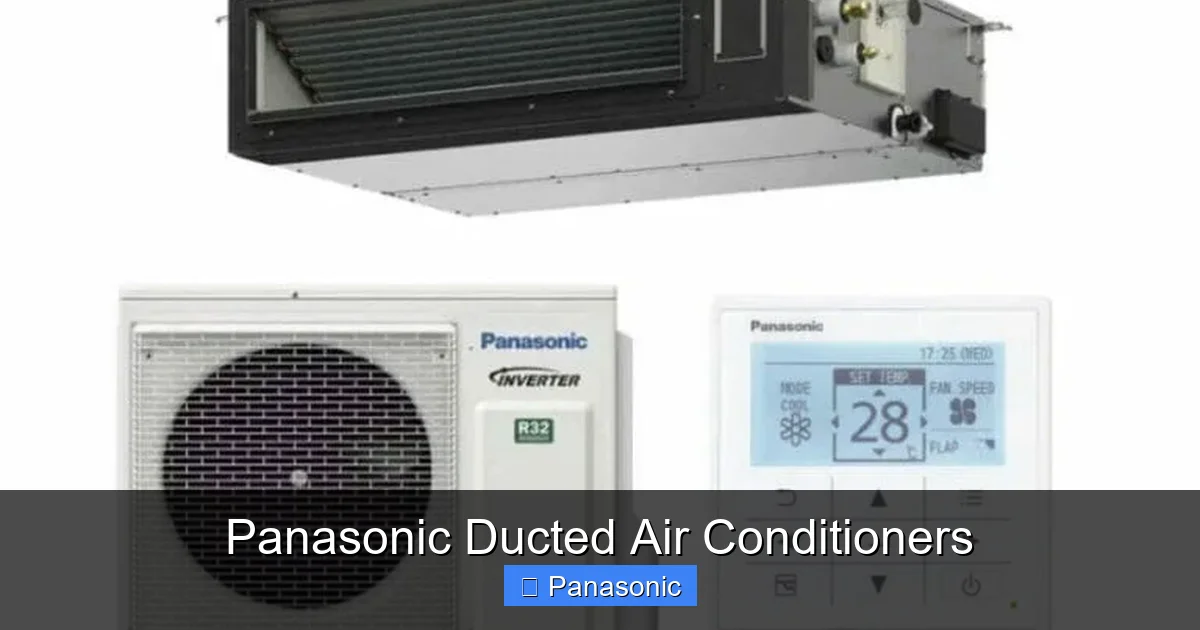
Panasonic ducted system showing indoor unit and ductwork layout
Image source: airconditioning-online.com.au
Panasonic’s ducted models are built on several key principles: energy efficiency, silent operation, smart technology, and long-term reliability. They come in various configurations—single-zone, multi-zone, and even VRF (Variable Refrigerant Flow) systems—depending on your needs. Most feature inverter compressors that adjust cooling output based on real-time demand, avoiding constant on/off cycles that waste energy.
How Do They Work?
At the heart of every Panasonic ducted unit is an outdoor condensing unit connected via refrigerant lines to one or more indoor head units. These heads are typically mounted inside the roof space and linked by insulated ducts running through walls and ceilings. From there, air is gently blown through ceiling grilles into each room.
For example, if you're hosting a movie night in the living room and want cooler air, the system can prioritize airflow to that zone without overcooling the bedrooms upstairs. This zoning capability is powered by dampers within the ductwork that open or close based on thermostat input—all managed by a central control panel or smart app.
System components at a glance: The outdoor condenser houses the compressor and heat‑exchange coil; the indoor air‑handler contains the evaporator coil, blower fan, and control board; insulated supply and return ducts carry conditioned air; motorized dampers regulate airflow per zone; and a central controller (wired or wireless) coordinates operation. Understanding these parts helps when discussing design with your installer.
Why Choose Panasonic?
With so many brands offering ducted systems, you might wonder: what makes Panasonic different? The answer lies in decades of innovation, Japanese engineering precision, and a commitment to sustainability. Here’s why homeowners and contractors trust Panasonic year after year.
1. Inverter Technology That Saves Money
Most Panasonic ducted units use inverter-driven compressors. Instead of turning on and off like older models, they modulate their speed to match cooling demand. So if your house is already cool, the compressor slows down—using only what’s needed. This reduces wear and tear and cuts electricity bills by up to 40% compared to non-inverter systems.
Let’s say you set your thermostat to 22°C. On a mild evening, the system might run at 30% capacity. On a hot afternoon, it ramps up to 80%. But because it never fully shuts off, it avoids those energy spikes associated with startup cycles.
In practice: Inverter systems also maintain tighter temperature control (±0.5°C) which improves comfort and reduces humidity swings. A common mistake is oversizing the outdoor unit; an oversized inverter will short‑cycle at low loads, negating efficiency gains.
2. Whisper-Quiet Performance
Nobody wants a noisy air conditioner disrupting their sleep or conversation. Panasonic excels here. Their indoor fan motors are engineered for minimal vibration, and sound-dampening materials line the ductwork. Many models operate below 25 decibels—quieter than a library or a soft whisper. Even the outdoor unit is designed with acoustic foam and optimized fan blades to reduce noise pollution outside your home.
3. Eco-Friendly Refrigerants
Environmental responsibility matters. That’s why newer Panasonic ducted models use R32 refrigerant—a next-gen option that has a global warming potential (GWP) less than half that of older refrigerants like R410A. R32 is also non-toxic and highly efficient, meaning lower emissions and better performance per watt.
Industry context: According to the U.S. EPA’s Significant New Alternatives Policy (SNAP) program, R32 is approved for use in residential and light commercial AC equipment and offers a GWP of 675 versus 2,088 for R410A. Panasonic’s adoption aligns with the global phase‑down of high‑GWP refrigerants under the Kigali Amendment.
4. Smart Home Integration
Modern life calls for modern controls. Panasonic offers Wi-Fi-enabled models compatible with Google Assistant, Amazon Alexa, and Apple HomeKit. You can adjust temperatures, schedule cycles, or check filters from your phone—even when you’re halfway across the world. Some systems even learn your habits and auto-adjust settings for maximum comfort and savings.
Smart features deep dive: Beyond basic on/off and temperature, the Panasonic Comfort Cloud app provides real‑time energy consumption graphs, filter‑clean reminders, geofencing (auto‑adjust when you leave/arrive), and multi‑user access with role‑based permissions. Integration with IFTTT allows custom automations like “turn on cooling when outdoor temp exceeds 30°C.” For more on optimizing settings, see best air conditioning settings for energy efficiency.
5. Long-Term Durability
Panasonic builds its equipment to last. Stainless steel heat exchangers resist corrosion. High-quality insulation protects internal components from moisture and temperature swings. And with proper maintenance, many owners report systems functioning smoothly for 15+ years. Plus, Panasonic backs most models with comprehensive warranties covering parts, labor, and compressor failures.
Warranty snapshot (typical for 2026 models): 10‑year compressor limited warranty, 5‑year parts limited warranty, and 1‑year labor warranty when installed by a Panasonic‑certified contractor. Extended labor coverage up to 10 years is often available for purchase. Always register the product within 60 days of installation to activate full coverage.
Energy Efficiency Ratings and Certifications
When comparing models, look for these metrics:
- SEER2 (Seasonal Energy Efficiency Ratio 2): The 2023 DOE test procedure; higher is better. Panasonic ducted units range from 16 to 22+ SEER2.
- EER2 (Energy Efficiency Ratio 2): Measures efficiency at peak load; useful for hot climates.
- HSPF2 (Heating Seasonal Performance Factor 2): For heat‑pump models; 8.5+ is strong.
- ENERGY STAR® Most Efficient: Recognizes the top tier; several Panasonic series qualify.
- AHRI Certification: Verifies performance ratings; check the AHRI Directory for matched‑system data.
Choosing an ENERGY STAR Most Efficient model can unlock utility rebates (see Rebates section) and ensures the system meets rigorous real‑world performance criteria.
Types of Panasonic Ducted Systems
Not all ducted air conditioners are created equal—and Panasonic offers several types tailored to different home sizes, layouts, and budgets. Understanding the differences helps you pick the perfect fit.
Single-Zone vs. Multi-Zone Systems
Single-zone systems serve one area—like a large open-plan living room or basement rec room. They’re simpler, cheaper to install, and ideal if you don’t need climate control elsewhere.
Multi-zone systems , on the other hand, allow independent temperature control in up to six or more rooms. Each zone has its own thermostat and damper, so you can keep the kids’ playroom at 20°C while maintaining 24°C in the master suite. This flexibility comes at a higher upfront cost but pays off in comfort and energy savings over time.
VRF (Variable Refrigerant Flow) Technology
For ultra-premium setups—think luxury homes or commercial spaces—Panasonic offers VRF systems. These can simultaneously heat and cool different zones using a single outdoor unit. For instance, the kitchen might be cooled while the sunroom is warmed by reclaimed heat from elsewhere in the house. VRF is incredibly efficient but requires professional engineering and is best suited for larger installations.
Ceiling-Recessed vs. Floor-Mounted Head Units
Indoor head units usually sit in the ceiling recess, blending seamlessly with your decor. But some models offer floor-mounted options for homes where ceiling height is limited or architectural constraints exist. Both types perform identically, so choose based on aesthetics and layout.
Comparing Panasonic Ducted Series: Quick Reference Table
| Series | Zoning | Typical Capacity Range | SEER2 Range | Key Features | Best For |
|---|---|---|---|---|---|
| CS-CZ | Multi (up to 4) | 2–5 tons | 18–21 | QuietMode™, auto‑clean, Comfort Cloud app | Medium homes, 3–4 zones |
| CS-CX | Single | 1.5–3 tons | 16–19 | Compact, humidity control, slim profile | Add‑on rooms, small homes |
| CU-EZ (VRF) | Multi (8+) | 3–20+ tons | 20–24+ | Simultaneous heat/cool, heat recovery | Large homes, light commercial |
Data based on 2026 North American specifications; consult local dealer for exact model numbers.
Installation & Design Considerations
Installing a ducted air conditioner isn’t a DIY project—it requires certified HVAC technicians familiar with both electrical and ductwork systems. Improper installation can lead to leaks, uneven cooling, or even system failure.
Step-by-Step Installation Process
Site Assessment: Technicians evaluate ceiling space, load requirements, and existing ductwork (if any).
Ductwork Planning: Custom ducts are designed to minimize bends and length for optimal airflow. Insulation prevents condensation and heat loss.
Unit Placement: Outdoor condenser is positioned away from windows/doors; indoor heads are strategically placed for balanced distribution.
Electrical & Control Wiring: Safely connects power, thermostats, and smart controls.
Testing & Balancing: System runs under load to ensure even airflow and correct refrigerant charge.
Tips for Optimal Performance
Keep Ceiling Grilles Clean: Dust buildup restricts airflow. Vacuum or wipe grilles monthly.
Schedule Annual Servicing: Technicians clean coils, check refrigerant levels, and inspect electrical connections.
Use Programmable Thermostats: Set schedules to reduce runtime during peak hours.
Seal Duct Leaks: Even small gaps cause energy loss. Use mastic sealant or metal tape.
Common Mistakes to Avoid
Underestimating Load Requirements: An undersized unit struggles to cool, leading to short cycling.
Poor Duct Sizing: Too-narrow ducts create pressure drops and noise; too-wide ones waste space.
Ignoring Return Air Pathways: Every room needs return vents—otherwise, the system pulls air from hallways instead.
Common Installation Challenges and How to Avoid Them
| Challenge | Symptom | Prevention |
|---|---|---|
| Insufficient ceiling clearance | Indoor unit won’t fit; ducts crushed | Verify plenum height early; consider floor‑mounted heads |
| Long refrigerant line runs | Capacity loss, oil return issues | Keep lines < 50 ft equivalent; size per manual |
| Inadequate electrical service | Breaker trips, voltage drop | Run dedicated circuit; confirm panel capacity |
| Poor condensate drainage | Water leaks, mold | Slope drain line ¼″/ft; add safety switch |
| Zoning damper wiring errors | Zones don’t respond | Label wires; test each damper before close‑up |
Pro tip: Ask your installer for a Commissioning Report documenting airflow (CFM) per zone, refrigerant pressures, and electrical readings. This becomes your baseline for future maintenance.
Top Panasonic Ducted Models to Consider
While exact availability varies by region, here are some standout Panasonic ducted series favored by professionals:
CS-CZ Series (Multi-Zone)
Perfect for medium-sized homes, this series supports up to four indoor units per outdoor model. Features include:
- QuietMode™ for nighttime operation
- Auto-clean function prevents mold growth
- Compatible with Panasonic Comfort Cloud app
CS-CX Series (Single-Zone)
Ideal for compact spaces or auxiliary rooms like garages or offices. Compact design fits tight roof cavities and includes humidity control for added comfort.
VRF CU-EZ Series
A premium option with simultaneous heating/cooling capabilities. Used in upscale residences and boutique hotels for zoned climate control without compromising efficiency.
Always consult a local Panasonic dealer or certified installer to confirm model availability and suitability for your specific needs.
Maintenance & Troubleshooting
Like any major appliance, ducted air conditioners need regular care to perform well. Fortunately, Panasonic designs are user-friendly and low-maintenance.
Routine Maintenance Checklist
Every 3 Months: Replace or clean washable filters (wash with mild soap and water).
Twice a Year: Schedule professional servicing—especially before summer and winter.
Annually: Inspect duct joints for leaks or pests (rodents love warm attics!).
Monthly: Listen for unusual noises; check for cold spots indicating airflow issues.
When to Call a Professional vs. DIY
| Task | DIY? | Notes |
|---|---|---|
| Filter cleaning/replacement | Yes | Follow manual; turn off power first |
| Grille vacuuming | Yes | Use soft brush attachment |
| Thermostat battery swap | Yes | Use alkaline batteries |
| Coil cleaning | No | Requires specialized chemicals and tools |
| Refrigerant pressure check | No | EPA 608 certification required |
| Duct leakage test | No | Needs calibrated blower door/duct blaster |
| Control board firmware update | Maybe | Some via app; others need technician laptop |
If you encounter error codes (e.g., H11, F91), note the code and contact a Panasonic‑authorized technician—attempting a reset without diagnosis can mask underlying faults.
Troubleshooting Common Issues
Problem: Uneven cooling Solution: Check damper positions via control panel. Ensure all vents are unobstructed.
Problem: High energy bills Solution: Verify thermostat isn’t near direct sunlight or heat sources. Consider upgrading to a smart model with geofencing.
Problem: Water dripping indoors Solution: Likely due to clogged drain pipe or dirty evaporator coil. Call a technician—don’t attempt repairs yourself.
Problem: Remote not working Solution: Replace batteries first. If persistent, reset the system by holding the power button for 10 seconds.
Related reading: For brand‑specific fault guides, see troubleshoot AC blowing warm air and AC condenser troubleshooting.
Cost Breakdown & ROI
Installing a Panasonic ducted system involves significant upfront investment—typically $5,000 to $15,000 depending on size and complexity. However, long-term savings often justify the cost.
Factor Estimated Cost Range
Single-zone basic system $5,000 – $7,000
Multi-zone mid-range system $9,000 – $12,000
Premium VRF system $15,000+
Over 10 years, you could save $2,000–$4,000 in utility bills alone thanks to inverter efficiency and smart scheduling. Additionally, some regions offer rebates for ENERGY STAR® certified units—check with your utility provider.
Rebates, Incentives, and Financing Options
- Federal tax credit (25C): Up to $600 for qualified ENERGY STAR Most Efficient central AC/heat pumps (2023‑2032). Confirm eligibility with your tax advisor.
- Utility rebates: Many utilities offer $200‑$1,000 for high‑SEER2 ducted systems; applications often require AHRI certificate and contractor invoice.
- State/ local programs: Examples include NYS Clean Heat, CA TECH Clean California, Mass Save®. Visit DSIRE for a searchable database.
- Manufacturer promotions: Panasonic occasionally runs seasonal rebates (e.g., $300 back on select VRF systems). Ask your dealer.
- Financing: 0% APR for 12‑60 months through partnered lenders (e.g., GreenSky, Synchrony). Compare total cost vs. paying cash.
Action step: Request a written rebate estimate from your contractor before signing; some rebates require pre‑approval.
Final Thoughts: Is It Right for You?
If you value quiet operation, consistent comfort, and cutting-edge tech in your home, Panasonic ducted air conditioners are worth serious consideration. They’re especially great for:
- New constructions or major renovations
- Homes with high ceilings or open layouts
- People sensitive to noise or dust
- Those aiming for net-zero energy goals
Just remember: proper installation and maintenance are non-negotiable. Never skip professional service—it ensures safety, warranty validity, and peak performance. And always get multiple quotes before committing.
With rising temperatures and growing demand for sustainable living, investing in a reliable ducted system isn’t just about comfort—it’s about future-proofing your home. Panasonic delivers on all fronts: innovation, durability, and eco-conscious design. Whether you’re cooling a suburban mansion or upgrading a downtown loft, their lineup has something to fit your vision.
Ready to take the next step? Find a Panasonic‑certified installer near you and schedule a free in‑home load calculation today.
Frequently Asked Questions
What’s the difference between single-zone and multi-zone ducted systems?
Single-zone systems cool one area, while multi-zone allows independent temperature control in multiple rooms using separate thermostats and dampers. Multi-zone is ideal for larger homes needing tailored comfort.
Can I install a ducted AC myself?
No. Ducted systems involve complex electrical, refrigeration, and structural considerations. Always hire a licensed HVAC contractor experienced with Panasonic products for safe, code-compliant installation.
How often should I replace the filters?
Washable filters should be cleaned every 1–3 months during heavy use. Replace disposable filters every 60–90 days. Dirty filters reduce airflow and increase energy consumption.
Will a ducted system work in a humid climate?
Absolutely. Many Panasonic models include built-in dehumidification modes that extract excess moisture without overcooling—perfect for tropical or coastal regions.
Are Panasonic ducted units compatible with solar panels?
Yes, their high-efficiency inverter design pairs well with renewable energy systems. Combined with battery storage, you can achieve near-total grid independence during peak cooling hours.
What maintenance does a ducted AC need?
Monthly filter cleaning, biannual professional servicing (coil cleaning, refrigerant check), and annual duct inspections are recommended. Also ensure ceiling grilles aren’t blocked by furniture or decorations.
What is the typical warranty on a Panasonic ducted system?
Most 2026 models carry a 10‑year compressor limited warranty, 5‑year parts limited warranty, and 1‑year labor warranty when installed by a certified contractor. Extended labor plans are available.
Can I add zones later if I start with a single‑zone system?
Only if the outdoor unit and ductwork were originally sized for expansion. Many single‑zone units cannot support additional indoor heads; discuss future‑proofing with your designer upfront.
How does Panasonic ducted compare to Mitsubishi or Daikin?
All three are top‑tier Japanese brands. Panasonic often leads on price‑to‑performance and smart‑app maturity; Mitsubishi excels in hyper‑heating for cold climates; Daikin offers the widest VRF portfolio. Get quotes for each to compare.
Where can I find a certified Panasonic installer?
Use the “Find a Contractor” tool on Panasonic’s official site or ask for a Panasonic‑authorized dealer referral. Verify they hold EPA 608 certification and local licensing.
