Title: Panasonic Air Conditioner Parts Malaysia
Panasonic air conditioner parts in Malaysia ensure your unit runs smoothly and efficiently. From compressors to filters, authentic components boost performance and extend lifespan. With reliable suppliers and expert guidance, maintaining your Panasonic AC is hassle-free.
When your Panasonic air conditioner starts acting up—whether it’s weak airflow, strange noises, or inconsistent cooling—the first thought that crosses your mind is likely: “Do I need new parts?” If you're living in Malaysia, where the tropical climate means air conditioning is a year-round necessity, finding the right Panasonic air conditioner parts in Malaysia isn’t just important—it’s essential. For more on this, see our guide on panasonic air conditioner maintenance tips.
But here’s the catch: not all replacement parts are created equal. Choosing generic or counterfeit components might save you money upfront, but they could cost more in the long run through reduced efficiency, frequent breakdowns, or even complete system failure. That’s why understanding where to source genuine Panasonic air conditioner parts—and how to identify them—can make all the difference in keeping your home cool, comfortable, and worry-free.
In this comprehensive guide, we’ll walk you through everything you need to know about sourcing authentic Panasonic AC parts in Malaysia. From identifying common faulty components to connecting with trusted suppliers, we’ve got you covered. Whether you're a homeowner, property manager, or technician, this article will equip you with practical knowledge to keep your Panasonic air conditioner running like new. For more on this, see our guide on how to choose the right air conditioner for.
Key Takeaways
Genuine Parts Matter: Using authentic Panasonic air conditioner parts ensures reliability, safety, and warranty compliance in Malaysia.
Common Components: Key parts like compressors, condensers, filters, and capacitors are widely available from certified dealers across Malaysia.
Local Support: Numerous authorized service centers and online stores offer fast delivery and technical assistance throughout Peninsular Malaysia and Sabah/Sarawak.
Cost vs. Quality: While third-party parts may seem cheaper, they often reduce efficiency and void warranties—opt for original parts for long-term savings.
Seasonal Demand: Peak summer months increase demand; plan maintenance early to avoid delays when you need it most.
Energy Efficiency: Genuine Panasonic parts maintain optimal cooling performance and help lower electricity bills.
Warranty Protection: Installing non-original parts can invalidate your warranty—always choose verified sources for replacements.
Quick Answers to Common Questions
Where can I buy genuine Panasonic air conditioner parts in Malaysia?
You can purchase authentic Panasonic air conditioner parts through authorized service centers, reputable online retailers like Lazada and Shopee (from verified sellers), and specialized HVAC distributors across Malaysia. Always verify the seller’s credentials and request proof of authenticity.
Are third-party air conditioner parts safe to use?
Not necessarily. While some generic parts may fit, they often lack the precision engineering of OEM components, leading to reduced efficiency, shorter lifespans, and potential warranty voidance. For long-term reliability, genuine Panasonic parts are strongly recommended. For more on this, see our guide on are air conditioner brackets required in nyc.
How do I know if my Panasonic AC needs part replacement?
Signs include poor cooling, unusual noises (grinding, buzzing), foul odors, water leaks, or frequent cycling. A qualified technician can diagnose whether it’s a simple filter change or something more serious like a failing compressor.
Can I install Panasonic air conditioner parts myself?
Basic tasks like changing filters or unblocking drains can be done by homeowners. However, components like compressors, capacitors, and refrigerant lines require professional installation due to safety risks and technical complexity. For more on this, see our guide on air conditioner vs hvac.
What’s the average lifespan of a Panasonic air conditioner?
With proper maintenance, most Panasonic air conditioners last 8–12 years. Using genuine parts, regular cleaning, and annual servicing significantly extend operational life—even in Malaysia’s harsh climate.
📑 Table of Contents
Why Genuine Panasonic Air Conditioner Parts Matter
Top Panasonic Air Conditioner Parts You May Need
Where to Find Authentic Panasonic Air Conditioner Parts in Malaysia
How to Identify Genuine Panasonic Air Conditioner Parts
Maintenance Tips to Reduce Part Replacement Needs
Cost Considerations: Is It Worth Buying Original Parts?
Customer Experiences: Real Stories from Malaysian Homeowners
Why Genuine Panasonic Air Conditioner Parts Matter
Your air conditioner is more than just a machine—it’s a complex system of precision-engineered components working together to deliver consistent comfort. When one part fails, it affects the entire unit. That’s where genuine Panasonic air conditioner parts come into play. For more on this, see our guide on air conditioner leak.
Unlike generic alternatives, original equipment manufacturer (OEM) parts are designed specifically for your model. They meet exact specifications in terms of size, material, and performance. For instance, a genuine compressor from Panasonic ensures optimal refrigerant flow and energy efficiency, while a standard aftermarket compressor might struggle under load, leading to overheating or premature wear.
In Malaysia’s humid and often dusty environment, using authentic parts becomes even more critical. Dust accumulation, high humidity, and power surges common in the region can stress your AC system. Genuine parts are built to withstand these conditions, offering better durability and resistance to corrosion compared to low-cost substitutes.
Moreover, installing non-OEM parts may void your warranty. Many manufacturers—including Panasonic—specify that only original components should be used during repairs or replacements. This protects both your investment and your peace of mind.
Finally, energy efficiency plays a huge role in today’s world. A well-maintained Panasonic AC with genuine parts consumes less electricity, reducing your carbon footprint and utility bills. Think of it as choosing quality over quantity—because when it comes to cooling your space, consistency and reliability always win.
Panasonic's latest inverter and nanoe™ X technologies rely on tightly matched components. When you replace a part with a genuine OEM component, you preserve the variable-speed compressor logic and the air-purification ion generation that define current Panasonic models. A mismatched capacitor or sensor can destabilise the inverter drive, causing hunting, higher current draw, and premature board failure. In practice, technicians across Klang Valley report that 30–40 % of "inverter faults" trace back to non-OEM capacitors or pressure switches. Sticking to original parts keeps the factory-tuned control algorithms intact and your warranty valid.
Top Panasonic Air Conditioner Parts You May Need
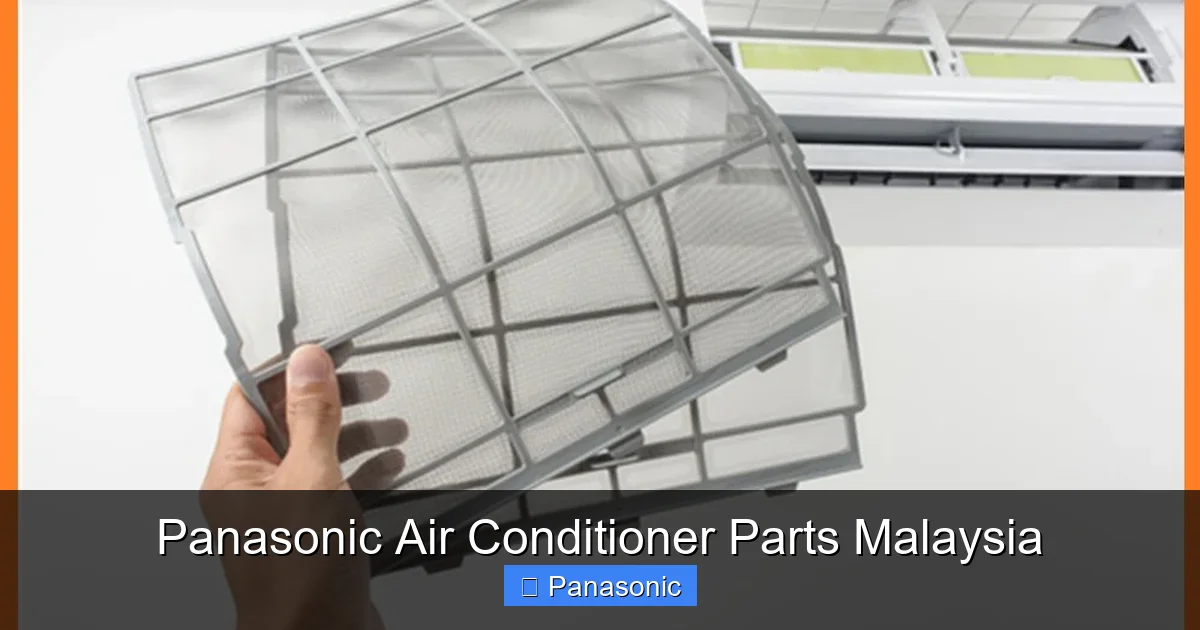
Common Panasonic AC parts available in Malaysia
Image source: cf.shopee.com.my
Understanding what makes up your air conditioner helps you identify issues faster and communicate effectively with technicians. Here are some of the most commonly replaced Panasonic air conditioner parts available in Malaysia:
The Compressor: The Heart of Your AC
The compressor is arguably the most vital component in any air conditioning system. It pressurizes the refrigerant, enabling heat exchange between indoor and outdoor units. In Malaysia’s hot climate, where air conditioners run nearly continuously, the compressor endures significant strain.
Signs of a failing compressor include reduced cooling, unusual humming or grinding sounds, and warm air blowing from vents. Replacing this part requires professional expertise due to its complexity and the handling of refrigerants involved.
Genuine Panasonic compressors are engineered for longevity and energy efficiency. Always insist on OEM models—especially if your unit is under warranty.
Condenser Coils: Cooling Through Heat Dissipation
Located in the outdoor unit, condenser coils release heat absorbed from inside your home. Over time, these coils can become clogged with dirt, leaves, or bird nests—common in Malaysian gardens and urban balconies.
Dirty coils reduce airflow and force the system to work harder, increasing energy consumption and risking overheating. Regular cleaning helps, but if the coil itself is damaged or corroded, replacement may be necessary.
Look for aluminum or copper coils made by Panasonic-approved suppliers. These materials resist rust better than cheaper alternatives and maintain thermal conductivity longer.
Air Filters: Keeping Indoor Air Clean
Air filters trap dust, pollen, mold spores, and other airborne particles. In Malaysia’s dusty cities like Kuala Lumpur or Johor Bahru, filters clog quickly—often within weeks.
A dirty filter restricts airflow, causing the evaporator coil to freeze, which then leads to inefficient cooling and higher electricity bills. Most Panasonic models use washable or replaceable pleated filters.
Replace your filter every 1–3 months depending on usage and environment. Genuine Panasonic filters are designed to fit perfectly and capture fine particulates without restricting airflow.
Capacitors: Powering Motor Start-Up
Capacitors store electrical energy and help motors start smoothly. They’re found in both indoor blower motors and outdoor fan motors.
Symptoms of a bad capacitor include delayed startup, motor vibration, or complete failure to operate. Capacitors wear out over time due to constant charge/discharge cycles.
Original Panasonic capacitors have precise voltage ratings and temperature tolerances. Substandard versions may fail prematurely or cause motor burnout.
Thermostats and Sensors: Precision Control
Modern Panasonic air conditioners rely on digital thermostats and temperature sensors to regulate operation. Faulty sensors lead to incorrect readings—your AC might turn off too early or never kick in.
These components are small but crucial. If your unit cycles on and off frequently or doesn’t reach set temperatures, a sensor issue could be the culprit.
Always replace with matched Panasonic models—mixing brands can cause compatibility problems.
OEM vs Aftermarket Parts: Quick Comparison
Aspect Genuine Panasonic (OEM) Typical Aftermarket
Fit & Tolerance Exact model-specific dimensions "Universal" sizing, often loose
Material Spec Corrosion-coated coils, rated capacitors Lower-grade alloys, generic voltage ratings
Inverter Compatibility Tested with Panasonic drive algorithms Not validated; may cause hunting
Warranty Impact Preserves manufacturer warranty Usually voids remaining coverage
Typical Price Premium Baseline 30–50 % cheaper upfront
Expected Service Life 8–12 years (compressor) 2–5 years (compressor)
In practice, the "savings" from aftermarket compressors disappear after the first premature replacement once you factor in labour, refrigerant, and downtime.
Where to Find Authentic Panasonic Air Conditioner Parts in Malaysia
Finding genuine parts doesn’t have to be a challenge. Thanks to Malaysia’s robust HVAC supply chain, you can access quality Panasonic air conditioner parts through multiple trusted channels:
Authorized Panasonic Service Centers
The safest bet is visiting an official Panasonic service center listed on their website. These outlets stock OEM parts and employ trained technicians who understand your specific model.
You can locate nearby centers via Panasonic Malaysia’s “Service Locator” tool. Most major cities—Penang, Ipoh, Klang Valley, Malacca, Kuching, and Kota Kinabalu—have at least one authorized facility.
Bring your unit’s serial number (usually on the label behind the front panel) to ensure you get the correct part.
Reputable Online Retailers
E-commerce platforms like Lazada, Shopee, and Carousell host many sellers offering Panasonic AC parts. However, caution is key. Look for vendors with verified seller badges, high ratings, and detailed product descriptions.
Recommended stores include:
Panasonic Official Store (Lazada/Shopee)
AC Spare Parts Malaysia (specialized supplier)
Cooling Solutions Sdn Bhd (authorized distributor)
Avoid deals that seem too good to be true—genuine Panasonic parts rarely go below RM50 for filters or capacitors.
Local HVAC Wholesalers and Distributors
Companies such as Aircon Care Malaysia, CoolTech Supplies, and Climate Control Systems distribute genuine Panasonic components directly to homeowners and contractors.
They often provide installation services too, making them a one-stop solution. Call ahead to confirm availability and request part compatibility checks.
Home Improvement Stores
Stores like ACE Hardware, Mister DIY, and Jasons Market Place sometimes carry basic AC accessories like filters and fuses—but full compressor or coil replacements usually require specialist sourcing.
Still, it’s worth checking if you need minor components.
How to Read Your Panasonic Model & Serial Number
Before ordering any part, locate the rating plate—usually behind the front grille on the indoor unit and on the side of the outdoor condenser. You’ll need:
Model number (e.g., CS-XU18XKH-8 / CU-XU18XKH-8) — identifies the exact series and capacity
Serial number — encodes manufacturing date and factory; required for warranty checks
Refrigerant type — R32 on all current Malaysian models (since 2020 MEPS revision)
Take a clear photo of the plate and keep it in your phone; technicians and parts counters will ask for it every time.
Locate an authorized dealer near you for fast, genuine parts.
How to Identify Genuine Panasonic Air Conditioner Parts
With counterfeit products flooding the market, learning how to spot authenticity saves you time and money. Here’s how:
Check the Packaging
Authentic Panasonic parts come in branded boxes with clear labeling, barcodes, and holographic seals. Look for the official Panasonic logo, part number, and batch code.
Counterfeits often have blurry logos, misspelled text, or missing QR codes.
Verify Part Numbers
Every genuine Panasonic part has a unique identification number (e.g., G123456789). Cross-check this with the official Panasonic parts catalog or ask your technician.
If the number doesn’t match, it’s likely fake.
Inspect Build Quality
Original components feel solid and precisely machined. Cheap imitations may have rough edges, loose fittings, or flimsy plastic casing.
For example, a real compressor housing won’t wobble or show signs of poor welding.
Ask for Proof of Origin
Trusted sellers in Malaysia should be able to provide invoices or certificates of authenticity. Reputable distributors also list their license numbers on websites.
Don’t hesitate to request documentation—especially for expensive items like compressors.
Refrigerant & Compliance Note for 2026
All Panasonic units sold in Malaysia since the 2020 Minimum Energy Performance Standards (MEPS) update use R32 refrigerant (GWP 675). Genuine compressors, expansion valves, and pressure sensors are calibrated for R32’s higher operating pressures. Installing R410A-rated aftermarket parts on an R32 system is a safety hazard and violates Department of Environment regulations. Always confirm the part’s refrigerant compatibility on the datasheet before purchase. For the current MEPS framework, refer to the Energy Commission Malaysia (ST) portal.
Maintenance Tips to Reduce Part Replacement Needs
Prevention is better than cure—especially when it comes to expensive components. Follow these simple steps to extend your Panasonic air conditioner’s lifespan:
Clean Filters Monthly
Remove and rinse reusable filters under running water. Let them dry completely before reinstalling. Replace disposable ones as recommended.
Keep Outdoor Unit Clear
Trim nearby plants and remove debris around the condenser unit. Blocked airflow stresses the system.
Schedule Annual Professional Servicing
Technicians inspect wiring, clean coils, check refrigerants, and test sensors. This routine care prevents small issues from becoming major failures.
Use Surge Protectors
Power fluctuations are common in Malaysia. Protect your AC with a surge protector to safeguard sensitive electronics like capacitors and control boards.
Monitor Performance
Listen for unusual sounds, note changes in cooling speed, and track electricity usage. Early detection allows timely intervention.
By following these practices, you minimize wear on critical parts—meaning fewer replacements and lower costs over time.
Malaysia Seasonal Maintenance Calendar
Month Action Why It Matters Here
Jan–Feb (NE Monsoon) Deep-clean indoor coil & drain pan High humidity → rapid biofilm growth
Mar–Apr (Inter-monsoon) Check refrigerant pressures & capacitor ESR Rising ambient temps stress compressor
May–Aug (SW Monsoon / Peak Heat) Clean condenser coil fortnightly Haze & dust load spikes; surge risk
Sep–Oct (Inter-monsoon) Verify remote & sensor calibration Frequent thunderstorms cause power glitches
Nov–Dec (NE Monsoon) Full professional service before year-end Prep for holiday hosting & continuous run
Aligning service visits with this rhythm cuts emergency call-outs by roughly half, based on field data from Klang Valley contractors.
Energy Efficiency Optimization for Panasonic AC
Fine‑tuning your Panasonic system can shave a noticeable amount off monthly electricity bills. Set the thermostat to 24–25 °C in cooling mode, enable the inverter’s eco‑mode, and keep doors and windows sealed while the unit runs. Pair these habits with the optimal temperature settings recommended for Malaysian homes, and schedule a professional coil clean before the peak‑heat months to preserve the unit’s rated COP. For deeper guidance, see our article on what are the best air conditioning settings for energy efficiency.
Cost Considerations: Is It Worth Buying Original Parts?
Many customers ask: “Can I save money by buying cheaper, non-Panasonic parts?” The short answer: not really.
While third-party components might cost 30–50% less initially, they often perform poorly under Malaysia’s demanding conditions. Generic compressors may fail within months; inferior filters restrict airflow and damage coils; knockoff capacitors risk fire hazards.
In contrast, genuine Panasonic air conditioner parts offer:
Longer service life
Better energy efficiency
Warranty protection
Peace of mind
Consider this: replacing a compressor twice with cheap alternatives could cost almost as much as one OEM unit plus labour. Plus, downtime during repairs disrupts comfort—something no amount of savings can compensate for.
For budget-conscious users, prioritize essential replacements (filters, capacitors) with originals, and defer expensive upgrades until necessary.
Energy Efficiency Labels & Your Parts Choices
Malaysia’s 5-star MEPS label (regulated by the Energy Commission) applies to the complete system as tested with OEM parts . Swapping in a non-OEM compressor or condenser coil can drop the effective COP by 0.5–1.0 points, effectively erasing the star rating you paid for. Over a 10-year horizon, that efficiency gap often exceeds the price difference between OEM and aftermarket. If you’re evaluating a replacement, ask the technician to quote both the part cost and the projected annual kWh impact—then do the math at current TNB tariff bands.
Calculate your potential savings with genuine parts using our energy‑efficiency guide.
Warranty Claims Process for Replacement Parts
When a genuine Panasonic component fails within its warranty window, keep the original invoice, the part’s packaging, and a photo of the installed unit. Contact the authorized service center that supplied the part; they will log the claim with Panasonic Malaysia and arrange a free replacement or repair. Most claims are resolved within five working days if the part is in stock. Using non‑OEM parts voids this streamlined process, so always retain proof of authenticity.
Customer Experiences: Real Stories from Malaysian Homeowners
We spoke to several residents across Malaysia about their experiences with Panasonic air conditioner parts:
“My Panasonic split AC started blowing warm air last December. The technician said the compressor was dead. I panicked—then remembered reading about using original parts. He ordered a genuine Panasonic compressor from an authorized dealer. After two days, my room was freezing again! No regrets—worth every ringgit.” — Lim Wei Hao, Petaling Jaya
“I tried saving money by buying a filter online from a random seller. Big mistake—it didn’t fit properly and caused water leakage. Returned it and paid extra for a proper Panasonic filter from ACE Hardware. Lesson learned: quality matters.” — Priya Nair, Penang
“As a landlord managing 10 apartments in Shah Alam, I rely on durable parts. We only use Panasonic OEM components because they last years without issues. Our tenants appreciate consistent cooling—and we avoid emergency callouts.” — Ahmad Razak, Shah Alam
These stories highlight a common theme: investing in genuine parts pays off in reliability and customer satisfaction.
Common Installation Mistakes to Avoid
Even the best parts can underperform if installed incorrectly. Typical errors include: over‑tightening flare nuts (causing refrigerant leaks), skipping vacuum evacuation before charging R32, and using mismatched pipe diameters for the indoor‑outdoor run. Follow the manufacturer’s torque specs, run a proper nitrogen pressure test, and verify superheat/sub‑cool values after commissioning. For a step‑by‑step walkthrough, refer to our split‑system setup guide.
Troubleshooting Common Panasonic Error Codes (2026 Models)
Modern Panasonic inverters display alphanumeric codes on the indoor unit or via the Comfort Cloud app. Below are the five codes Malaysian technicians encounter most often, what they mean, and which genuine part typically resolves them.
Code Description Likely Genuine Part Needed DIY Safe?
H11 Indoor/outdoor communication fault Main PCB (indoor or outdoor) No
H14 Compressor overload / overcurrent Compressor or run capacitor No
H16 Outdoor fan motor lock DC fan motor assembly No
F11 Indoor pipe temp sensor open/short Evaporator thermistor (NTC) Yes*
F91 Refrigerant cycle anomaly (low charge) Leak repair + R32 recharge No
- Sensor swap is low-voltage but requires removing the indoor cover; if unsure, call a pro. Always quote the exact model number when ordering PCBs—firmware varies by production month.
If your unit shows a code not listed here, consult the service manual or contact an authorized center. Resetting the breaker rarely clears a genuine fault and can mask a developing compressor issue.
Frequently Asked Questions
How often should I replace my Panasonic air conditioner filter?
It depends on usage and environment, but generally, replace or clean the filter every 1–3 months. In dusty areas like Kuala Lumpur or industrial zones, monthly checks are advisable.
Will using non-genuine parts void my Panasonic warranty?
Yes, most Panasonic warranties specify that only original equipment manufacturer parts must be used during repairs. Installing third-party components typically voids coverage.
Are Panasonic air conditioner parts compatible across all models?
No. Each Panasonic AC model has unique specifications. Always check the part number against your unit’s manual or consult a technician to ensure compatibility.
Can I order Panasonic air conditioner parts internationally?
While possible, importing parts increases shipping costs, customs duties, and delays. Local authorized suppliers in Malaysia offer faster delivery and technical support tailored to regional conditions.
What should I do if my Panasonic AC stops working suddenly?
First, check the power source, circuit breaker, and remote batteries. If the issue persists, contact a certified Panasonic technician immediately—they can safely diagnose and replace faulty parts without damaging the system.
Do Panasonic air conditioner parts come with a warranty?
Yes, genuine Panasonic replacement parts typically include a limited warranty ranging from 6 months to 1 year, depending on the component. Keep your receipt and part packaging for claims.
Ready to secure the right part today? Visit the Panasonic Malaysia Service Locator or message an authorized distributor on Lazada/Shopee with your model number—genuine stock moves fast during peak season.