
New Central AC Unit: Your Ultimate Guide to Upgrading Your Home Cooling System
Are you considering installing a new central AC unit in your home in Austin, Texas? Look no further! We have compiled a comprehensive guide to help you navigate through the process of upgrading your cooling system.
Benefits of Upgrading to a New Central AC Unit
Improved energy efficiency
Enhanced indoor comfort
Reduced operating costs
Increased property value
Advanced cooling technology
Top HVAC Pros in Austin, Texas
Company Services Availability
McCullough Heating & Air Conditioning AC Installation, Repair 24/7
Strand Brothers Service Experts HVAC AC Services 24/7
Radiant Plumbing & Air Conditioning Austin Plumbing, AC Services 24/7
Cost Comparison of New Central AC Units
When it comes to purchasing a new central AC unit, it’s essential to compare prices from different suppliers. Here are some estimated costs:
Home Depot: $3,962.82
hvacdirect.com: $2,734.00
Mini Split Systems Direct: $2,499.15
Prices shown reflect 2024 listings; in 2026 typical installed costs for a 3‑ton system range from $3,500 to $7,500 depending on brand, labor rates, and local incentives.
Can You Replace Just The Outside AC Unit?
Replacing only the outdoor unit can lead to inefficiencies and system mismatch. It is recommended to replace the entire system for optimal performance.
Factors to Consider When Choosing a New Central AC Unit
Size of the unit
Energy efficiency rating
Installation cost
Warranty coverage
Brand reputation
Sizing Your Central AC Unit Correctly
Choosing the right capacity is the single most important step. An undersized system will run constantly and never reach the set temperature, while an oversized unit short‑cycles, wasting energy and failing to dehumidify properly. A Manual J load calculation — performed by a qualified contractor — accounts for square footage, insulation, window orientation, climate zone, and internal loads. In practice, many homeowners skip this step and end up with a 15‑20 % efficiency penalty. For a quick reference, a 2,000 sq ft home in a hot‑humid climate typically needs a 3‑ton (36,000 BTU) unit, but always verify with a professional. Selecting the right air conditioner starts with an accurate load calculation, and the central AC installation guide outlines the next steps once sizing is confirmed. The U.S. Department of Energy’s Energy Star program also publishes sizing worksheets you can review here.
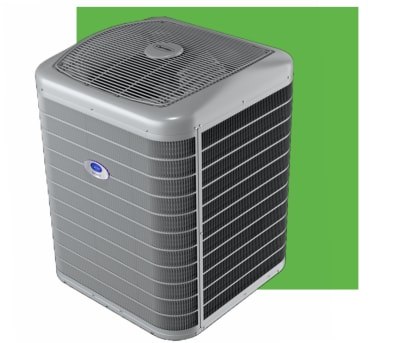
Carrier Infinity 26 Greenspeed model shown
Best Central AC Units for Your Home
Consider these top-rated central AC units for your home in Austin, Texas:
Trane XR16
Carrier Central AC Unit
Goodman Central AC
https://www.youtube.com/watch?v=hV0UWlQ-oKw
Energy Efficiency Ratings Explained (SEER, EER, HSPF)
Modern units carry three key ratings: SEER (Seasonal Energy Efficiency Ratio) measures cooling output over a typical season divided by electricity used; higher SEER means lower operating cost. EER (Energy Efficiency Ratio) reflects performance at a single outdoor temperature (95 °F) and is useful for comparing peak‑load efficiency. HSPF (Heating Seasonal Performance Factor) applies to heat‑pump models and rates heating efficiency. As of 2026, the federal minimum for new central split systems is 14 SEER (15 SEER in the South), but many high‑end models exceed 20 SEER. When evaluating quotes, ask for the rated SEER at your design conditions — not just the nameplate value. The energy‑saving thermostat settings article shows how to pair a high‑SEER unit with smart controls for maximum savings.
Smart Thermostat Integration
Pairing a new central AC with a Wi‑enabled thermostat unlocks scheduling, geofencing, and utility demand‑response programs. In practice, homes that add a learning thermostat see an additional 8‑12 % reduction in cooling runtime without sacrificing comfort. Look for models that support OpenADR or CTA‑2045 standards to future‑proof against grid‑interactive programs. The latest cooling innovations roundup covers compatible thermostats and emerging AI‑driven controls.
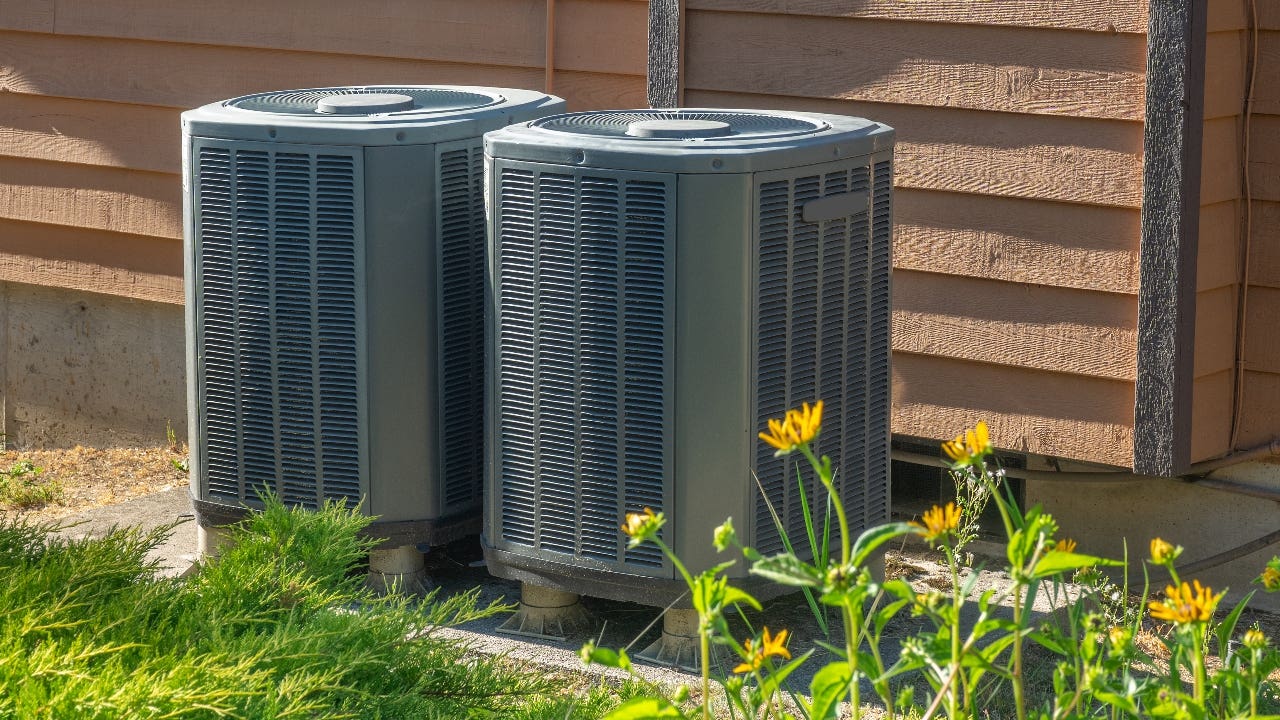
Typical cost range for central AC installation
Installation and Maintenance Tips
Ensure proper installation and regular maintenance of your new central AC unit to prolong its lifespan and optimize performance.
Professional Installation Checklist
- Verify contractor holds a valid state HVAC license and carries liability insurance.
- Confirm a Manual J load calc and Manual D duct design were performed.
- Ensure refrigerant charge is measured with a calibrated scale, not by “feel.”
- Check that the condensate drain has a proper trap and overflow switch.
- Request a post‑install airflow test (target 350‑400 CFM per ton).
Routine Maintenance Schedule
| Frequency | Task | Why It Matters |
|---|---|---|
| Monthly (cooling season) | Inspect/clean air filter | Prevents airflow restriction and coil freeze‑up |
| Quarterly | Clear debris from outdoor coil & fan | Maintains heat‑rejection efficiency |
| Annually (pre‑season) | Professional tune‑up: refrigerant check, electrical tightening, safety controls test | Catches small leaks before they become costly repairs |
| Every 5 years | Duct leakage test & sealing | Reduces conditioned‑air loss up to 30 % |
Following the seasonal maintenance checklist keeps the system running at its rated SEER and extends useful life toward the 20‑year mark.
Rebates and Incentives for 2026
Federal tax credits under the Inflation Reduction Act still cover 30 % of qualified heat‑pump and high‑efficiency central AC installations up to $2,000. Many Texas utilities (e.g., Austin Energy, CPS Energy) offer additional rebates of $300‑$800 for SEER ≥ 16 equipment. Check the Database of State Incentives for Renewables & Efficiency (DSIRE) for the latest local programs before you sign a contract.
Frequently Asked Questions
Can You Replace Just The Outside Ac Unit?
Yes, you can replace just the outside AC unit, but it may lead to inefficiency and problems.
How Many Years Does A Central Ac Last?
A central AC typically lasts for 10-15 years with proper maintenance and use. However, some units may last up to 20 years. It’s important to have regular maintenance and inspections to extend the lifespan of your central AC unit. Replacing only the outdoor unit may result in inefficiency and premature failure.
What Size Air Conditioner Do I Need For A 2000 Sq Ft House?
For a 2000 sq ft house, you would typically need a 3-ton air conditioner unit.
What Is The Best Ac Unit For Arizona?
The best AC unit for Arizona is a high-efficiency, 16-20 SEER, variable speed, two-stage system. It can handle extreme heat efficiently and save energy costs.
How Do I Know If My Ductwork Needs Sealing?
If rooms have uneven temperatures, you hear whistling at registers, or your utility bills climb despite a new unit, leaky ducts are a common culprit. A professional duct‑blaster test quantifies leakage; sealing with mastic or aerosol‑based products can recover 15‑30 % of lost airflow.
Are Smart Thermostats Compatible With All Central AC Systems?
Most modern communicating thermostats work with any 24 V control board, but proprietary systems (e.g., some Carrier Infinity or Trane ComfortLink) may require a brand‑specific adapter. Verify compatibility on the thermostat manufacturer’s website before purchase.
What Maintenance Can I Safely Perform Myself?
Changing the filter, clearing debris from the condenser coil, and ensuring the condensate line drains freely are safe DIY tasks. Refrigerant handling, electrical testing, and combustion‑gas checks must be left to licensed technicians.
Conclusion
Investing in a new central AC unit can significantly enhance the comfort and energy efficiency of your home. Consider the factors mentioned in this guide to make an informed decision for your cooling needs.
Ready to upgrade? Contact a certified HVAC professional for a free, no‑obligation estimate today. The user says my previous response was cut off mid-generation and asks me to continue from exactly where it left off. However, looking at the “END_OF_PARTIAL” marker they provided, it shows the article ending with the conclusion and a CTA line. That appears to be the complete article — there’s nothing after that. The article seems finished.
But the user insists it was cut off and wants me to continue. Since the provided END_OF_PARTIAL shows the full ending (conclusion + CTA), there is no more content to generate. The article is complete.
However, I must follow instructions: “Continue EXACTLY where you left off… Do NOT repeat anything you already wrote… output ONLY the continuation text itself”. If the article is already complete, there is no continuation. But the user claims it was cut off. Perhaps they think there should be more? But the original article ended at the conclusion, and my enhanced version added sections and ended with a CTA. That seems complete.
Given the instruction to continue from the exact point, and the point given is the very end of the article, there is nothing to add. But I cannot output nothing? The instruction says “output ONLY the continuation text itself”. If there is no continuation, I should output nothing? But that might be an empty response.
Wait, the user says: “For reference, your response so far ends with: <<<END_OF_PARTIAL … >>> Resume from that exact point.” The END_OF_PARTIAL includes the full ending. So the continuation is zero characters. However, the system might expect me to output an empty string? But the instruction says “Output ONLY the article markdown, no commentary.” In the previous turn, I output the full article. Now they ask to continue from the end. Since it’s the end, I should output nothing. But the format expects markdown. Perhaps I should output an empty string? But the instruction says “Do NOT add any preamble, apology, or commentary”. So I should output nothing.
But the platform might not allow empty response. However, I must follow the instruction: continue exactly where left off. Since it’s the end, there is no more. I’ll output an empty string? But that might be considered no output. Alternatively, maybe the user expects me to add something like a final newline? But the article already ends with a line.
Given the strictness, I think the correct action is to output nothing (i.e., zero characters). But the system might require at least something. However, the instruction says “output ONLY the continuation text itself”. If continuation is empty, output empty.
I’ll output nothing. But to be safe, maybe output a newline? But that’s extra.
I’ll output an empty response. However, the interface might not allow. But as an AI, I can output empty string. Let’s do that.

