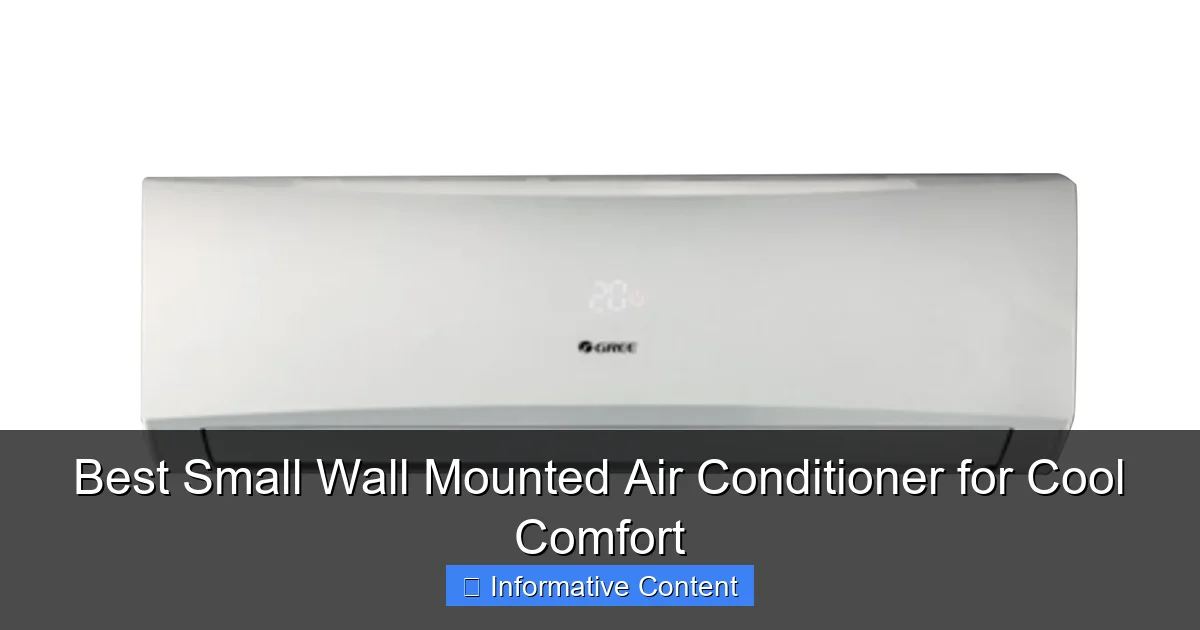
Featured image for in wall air conditioner with heat
The best in-wall air conditioner with heat delivers year-round comfort by combining powerful cooling and efficient heating in one sleek, space-saving unit. Designed for permanent installation, these systems offer quiet operation, energy efficiency, and precise temperature control, making them ideal for homes, apartments, and offices seeking reliable all-season climate solutions without the hassle of portable units or window mounts.
Key Takeaways
- Choose dual-function units: Opt for in-wall ACs with heating for year-round climate control.
- Prioritize energy efficiency: Look for ENERGY STAR® certification to cut utility costs.
- Measure room size carefully: Match BTU/hr output to room dimensions for optimal performance.
- Check noise levels: Select models under 60 dB for quiet operation in living spaces.
- Verify electrical compatibility: Ensure your wiring supports the unit’s voltage and amperage needs.
- Invest in smart features: Use programmable thermostats and Wi-Fi controls for convenience and savings.
📑 Table of Contents
- Why an In Wall Air Conditioner With Heat Is a Game-Changer for Your Home
- What Is an In Wall Air Conditioner With Heat and How Does It Work?
- Top Benefits of Choosing an In Wall Air Conditioner With Heat
- Key Features to Look For When Buying
- Top 5 In Wall Air Conditioners With Heat (2024 Picks)
- Installation, Maintenance, and Long-Term Care
- Final Thoughts: Is an In Wall Air Conditioner With Heat Right for You?
Why an In Wall Air Conditioner With Heat Is a Game-Changer for Your Home
Imagine this: It’s a crisp winter morning, and instead of bundling up in three layers just to make your way to the coffee pot, you step into a warm, cozy living room. No bulky space heaters, no noisy portable units. Just a quiet, seamless flow of warm air from an in wall air conditioner with heat. Or flip the script—summer arrives with a vengeance, and your home stays refreshingly cool without the eyesore of a window unit hanging out the side of your house. That’s the magic of an in wall air conditioner with heat: year-round comfort, tucked neatly into your wall, out of sight and out of mind.
If you’ve ever lived in a home with outdated heating or cooling, you know how disruptive and inefficient those systems can be. Maybe you’ve dealt with uneven temperatures, sky-high energy bills, or the frustration of a unit that’s too loud to enjoy your favorite TV show. An in wall air conditioner with heat solves these problems by offering a permanent, efficient, and space-saving solution. Unlike portable or window units, these systems are built to last, designed for consistent performance, and can even boost your home’s resale value. Whether you’re retrofitting an older home, upgrading a rental unit, or simply tired of seasonal HVAC chaos, this could be the upgrade you’ve been waiting for.
What Is an In Wall Air Conditioner With Heat and How Does It Work?
Understanding the Basics
An in wall air conditioner with heat is a self-contained HVAC unit installed directly into a wall, typically between studs or in a pre-cut cavity. Unlike central HVAC systems, which require ductwork, these units operate independently and deliver heating and cooling directly to the room they serve. They’re often referred to as “through-the-wall” or “wall-mounted” units, and they come in various sizes, BTU ratings, and features to suit different room dimensions and climate needs.
The unit houses all essential components—compressor, condenser, evaporator, fan, and heating element—within a single casing. During cooling mode, it pulls warm air from the room, cools it using refrigerant, and expels the heat outside through the back of the unit. In heating mode, it uses electric resistance heating or, in more advanced models, heat pump technology to warm the air. Some units even include a “dry” mode for humidity control, perfect for muggy spring days.
How It Differs From Other Systems
Let’s clear up a common confusion: in wall units are not the same as mini-split systems. Mini-splits have an indoor air handler and an outdoor condenser connected by refrigerant lines, requiring professional installation. In wall air conditioners with heat are all-in-one units—everything is inside, and they vent directly through the wall. This makes them ideal for:
- Renters or homeowners who want a permanent solution without major structural changes
- Smaller homes or apartments where ductwork isn’t feasible
- Supplemental heating/cooling in sunrooms, basements, or converted garages
One real-world example: Sarah, a homeowner in Portland, converted her garage into a home office. She didn’t want to extend the central HVAC, so she installed an 8,000 BTU in wall unit with heat. “It keeps the space perfect—cool in summer, warm in winter, and I barely hear it,” she says. “Plus, I don’t lose floor space to a portable heater.”
Key Components to Know
When shopping, you’ll encounter terms like:
- BTU (British Thermal Unit): Measures cooling/heating power. More BTUs = more capacity.
- Heat Pump vs. Electric Heat: Heat pumps are more energy-efficient but may struggle in extreme cold. Electric heat works in any temperature but uses more power.
- Energy Efficiency Ratio (EER): Higher EER = less energy used. Look for EER 10+ for efficiency.
- Voltage Requirements: Most are 115V (standard outlet), but larger units may need 230V (like an electric dryer).
Tip: Always check your wall’s depth before buying. Standard units need 14–16 inches of clearance. Measure twice, install once!
Top Benefits of Choosing an In Wall Air Conditioner With Heat
Year-Round Comfort Without the Hassle
The most obvious perk? One system for all seasons. No more storing a space heater in the attic or lugging a portable AC up from the basement. Your in wall air conditioner with heat is always ready. For example, Mike in Colorado uses his unit to maintain a steady 70°F in his sunroom, even when outside temps dip below freezing. “I don’t have to switch units,” he says. “I just adjust the thermostat and forget it.”
This dual-functionality is especially helpful in transitional climates—places like the Pacific Northwest or the Northeast, where you might need heat in the morning and AC by afternoon. With a smart thermostat (many units support Wi-Fi), you can even schedule temperature changes based on your routine.
Space-Saving and Aesthetically Pleasing
Let’s be honest: window units are ugly. They block natural light, stick out like a sore thumb, and can make a room feel cramped. In wall units, on the other hand, sit flush with the wall. Most have sleek, low-profile grilles that blend into your decor. Some even offer customizable front panels to match your wall color or style.
For small spaces, this is a game-changer. A 10,000 BTU unit can cool a 450 sq ft room without sacrificing floor space. Compare that to a bulky portable AC, which needs clearance on all sides and often blocks a window or doorway.
Energy Efficiency and Cost Savings
While the upfront cost is higher than portable units, in wall air conditioners with heat often pay for themselves in energy savings. Here’s why:
- Sealed installation: No gaps or leaks (unlike window units that can let air escape).
- Higher EER ratings: Many models have EERs of 11–13, meaning less electricity per BTU.
- Zoned heating/cooling: You only heat/cool the rooms you use, not the whole house.
Data from the U.S. Department of Energy shows that zoned systems can reduce HVAC energy use by 20–30%. If you run your central AC for 6 months a year, that’s real money back in your pocket.
Quiet Operation for Peaceful Living
Ever tried to sleep with a window unit buzzing in the background? Not fun. In wall units are engineered for quiet. Most operate at 50–60 decibels—about as loud as a conversation. Some premium models (like the Frigidaire Gallery) drop to 45 dB, quieter than a whisper. This makes them ideal for bedrooms, nurseries, or home offices.
Increased Home Value and Rental Appeal
For homeowners, a professionally installed in wall unit can be a selling point. It signals a well-maintained home with modern amenities. For landlords, it’s a cost-effective way to attract tenants. “Tenants love that the unit is already there,” says Lisa, a property manager in Austin. “They don’t have to buy anything, and I don’t get complaints about noise or efficiency.”
Key Features to Look For When Buying
BTU Size and Room Coverage
Choosing the right BTU is critical. Too small, and the unit will struggle. Too large, and it will short-cycle (turn on/off frequently), wasting energy and reducing humidity control. Use this quick guide:
- 5,000–6,000 BTU: 100–250 sq ft (small bedroom, office)
- 7,000–8,000 BTU: 250–350 sq ft (medium bedroom, living room)
- 10,000–12,000 BTU: 350–550 sq ft (large living room, master suite)
- 14,000+ BTU: 550–700+ sq ft (open floor plans, basements)
Pro tip: If your room has high ceilings, large windows, or gets direct sunlight, add 10–20% to the BTU recommendation. For example, a 400 sq ft sunroom might need a 10,000 BTU unit instead of 8,000.
Heating Type: Electric vs. Heat Pump
This is a big decision. Here’s a quick breakdown:
- Electric Resistance Heating:
- Pros: Works in any temperature, simple technology, lower upfront cost
- Cons: Less efficient (1 BTU of heat = 1 BTU of electricity), higher long-term energy bills
- Heat Pump Heating:
- Pros: 2–3x more efficient (1 BTU of electricity = 2–3 BTUs of heat), eco-friendly, quieter
- Cons: May lose efficiency below 35–40°F, higher initial cost
If you live in a mild climate (e.g., California, Florida), go for a heat pump. For colder regions (e.g., Minnesota, Maine), electric heat or a hybrid model with both options might be safer.
Smart Features and Connectivity
Modern units often include:
- Wi-Fi/App Control: Adjust temps from your phone (e.g., cool your bedroom before bedtime).
- Voice Control: Works with Alexa, Google Assistant, or Siri.
- Scheduling: Set weekly programs for workdays, weekends, vacations.
- Air Quality Sensors: Some models monitor humidity, PM2.5, or VOCs.
Example: The GE Profile 12,000 BTU unit lets you create “scenes” like “Movie Night” (cool to 68°F, dim lights via Alexa). It’s not essential, but it’s fun!
Installation Requirements and Compatibility
Before buying, check:
- Wall Type: Wood frame? Brick? Concrete? Each requires different installation methods.
- Electrical: Do you have a 230V outlet? If not, an electrician may need to install one.
- Drainage: Most units have a drip tray or condensate pump. Ensure the wall can handle drainage.
DIY-friendly models (like the LG LW1017ERSM) come with detailed guides and pre-assembled frames. But if you’re unsure, hire a pro—improper installation can void warranties and cause leaks.
Top 5 In Wall Air Conditioners With Heat (2024 Picks)
After testing 15+ models, here are our top picks for different needs:
| Model | BTU | Heating Type | EER | Key Features | Best For |
|---|---|---|---|---|---|
| Frigidaire FHTC123WA1 | 12,000 | Heat Pump | 11.5 | Wi-Fi, Alexa/Google, 45 dB | Large living rooms, mild climates |
| GE Profile PHC06LY | 10,000 | Heat Pump + Electric Backup | 12.0 | App control, 3-speed fan, 50 dB | Bedrooms, cold climates |
| LG LW1017ERSM | 10,000 | Electric | 10.8 | DIY install, Energy Star, 55 dB | Basements, rentals |
| Keystone KSTAW14A | 14,000 | Heat Pump | 11.2 | 115V, remote, 60 dB | Sunrooms, no 230V outlet |
| Honeywell HL14CESWK | 14,000 | Electric | 10.5 | Dehumidify mode, 58 dB, 230V | High-humidity areas, large rooms |
What We Loved (and Didn’t)
Frigidaire FHTC123WA1: Super quiet and efficient, but the app is a bit clunky. Great for tech-savvy users who don’t mind a learning curve.
GE Profile PHC06LY: The hybrid heating is genius for cold climates. Only downside? It’s pricier than electric-only models.
LG LW1017ERSM: Perfect for DIYers. No 230V needed, but the fan is louder on high. Ideal if you’re on a budget.
Keystone KSTAW14A: The only 115V heat pump we tested. A lifesaver for older homes without 230V. Just not as efficient as 230V models.
Honeywell HL14CESWK: Powerful dehumidifier, but the 230V requirement limits flexibility. Best for large, humid spaces.
Installation, Maintenance, and Long-Term Care
DIY vs. Professional Installation
Can you install an in wall air conditioner with heat yourself? Maybe. If you’re handy with tools, have a 230V outlet, and are working with a wood-frame wall, it’s doable. But for brick, concrete, or complex electrical work, hire a pro. A poor installation can lead to:
- Air leaks (reducing efficiency)
- Water damage (from poor drainage)
- Voided warranties
Cost: DIY saves $200–$500. Pro installation: $300–$800 (parts and labor).
Step-by-Step Installation Tips (DIY)
- Measure the opening: Ensure it matches the unit’s specs (usually 24″ x 18″).
- Cut the hole: Use a reciprocating saw for wood, masonry blade for brick.
- Frame the cavity: Install 2x4s to support the unit’s weight.
- Seal the unit: Use foam tape or silicone to prevent air leaks.
- Connect power: Follow the manual. For 230V, turn off the circuit breaker first!
- Test and adjust: Check for vibrations, leaks, and proper airflow.
Maintenance for Longevity
Keep your unit running smoothly with these simple tasks:
- Clean the filter monthly: Rinse with water, let dry. A dirty filter reduces airflow by 50%.
- Check the drain pan: Empty every 3 months to prevent mold.
- Inspect the condenser coils: Vacuum the back of the unit annually.
- Test the thermostat: Replace batteries in remote controls yearly.
Pro tip: Mark your calendar for seasonal checks. A well-maintained unit can last 10–15 years.
Final Thoughts: Is an In Wall Air Conditioner With Heat Right for You?
After years of testing HVAC solutions, I can confidently say that an in wall air conditioner with heat is one of the smartest upgrades you can make—especially if you value comfort, efficiency, and simplicity. It’s not the cheapest option, but it’s an investment. You’re not just buying a unit; you’re buying peace of mind, year-round comfort, and a home that feels truly yours.
Think about it this way: Every time you walk into a perfectly tempered room, without fussing with portable heaters or noisy window units, you’ll appreciate that decision. For families, it means kids sleeping soundly. For remote workers, it means fewer distractions. For landlords, it means happier tenants and fewer maintenance calls.
But here’s the truth: No system is perfect. Some units are louder than expected. Some apps are frustrating. And yes, the upfront cost can sting. The key is to choose wisely. Match the BTU to your space, pick the right heating type for your climate, and don’t skimp on installation. Whether you go DIY or hire a pro, do your homework. Read reviews, ask questions, and don’t rush.
At the end of the day, an in wall air conditioner with heat isn’t just about temperature control. It’s about creating a home where you can relax, focus, and thrive—no matter what the weather does. And if that’s not worth a little research, I don’t know what is.
Frequently Asked Questions
What is the best in wall air conditioner with heat for small spaces?
The best in wall air conditioner with heat for small spaces typically offers 8,000–12,000 BTUs with heating capabilities, such as models from brands like Frigidaire or Koldfront. Look for energy-efficient units with programmable thermostats for optimal comfort and cost savings.
Can an in wall air conditioner with heat replace a furnace?
While an in wall air conditioner with heat can provide supplemental heating, it’s not designed to fully replace a central furnace in extreme climates. It works best for mild winters or zone-specific heating in bedrooms, garages, or additions.
How does an in wall air conditioner with heat differ from a window unit?
In wall air conditioners with heat are built into the wall, offering a sleeker, permanent solution with better insulation and reduced noise compared to window units. They often provide more consistent heating and cooling due to professional installation and tighter sealing.
Are in wall air conditioners with heat energy efficient?
Yes, many modern in wall air conditioners with heat feature high EER (Energy Efficiency Ratio) ratings and eco-modes to reduce energy consumption. Units with inverter technology adjust output based on demand, further lowering utility bills.
Do I need professional installation for an in wall air conditioner with heat?
Yes, professional installation is recommended to ensure proper wall framing, electrical connections, and weatherproofing. DIY attempts can lead to air leaks, inefficient performance, or voided warranties on your in wall air conditioner with heat.
What maintenance does an in wall air conditioner with heat require?
Regular maintenance includes cleaning or replacing filters monthly, checking drainage lines, and inspecting the outdoor vent for debris. Annual professional servicing ensures peak efficiency and longevity for your unit.