Turn your LG portable air conditioner into a powerful dehumidifier with simple settings adjustments. This guide shows you how to reduce indoor humidity, improve comfort, and protect your home from mold and mildew—all without buying extra equipment.
Key Takeaways
- Most LG portable AC units have a built-in dehumidifier mode that removes excess moisture from the air efficiently.
- Using dehumidifier mode saves energy compared to cooling mode, as the compressor runs less frequently.
- Proper placement and ventilation are essential for optimal dehumidification performance.
- Regular maintenance like cleaning filters and emptying the water tank ensures long-term efficiency.
- Ideal humidity levels should stay between 30% and 50% for comfort and health.
- Dehumidifier mode works best in warm, humid climates and may be less effective in very cold environments.
- Smart features on newer LG models allow remote control and scheduling via the LG ThinQ app.
How to Use LG Portable Air Conditioner as Dehumidifier
If you live in a humid climate or have noticed dampness, musty odors, or condensation on windows, you’re not alone. High indoor humidity can lead to mold growth, dust mites, and discomfort—even when the temperature feels fine. While many people invest in standalone dehumidifiers, you might be surprised to learn that your LG portable air conditioner can do double duty. In fact, most LG portable AC units come with a dedicated dehumidifier mode designed specifically to remove excess moisture from the air.
In this comprehensive guide, we’ll walk you through everything you need to know about using your LG portable air conditioner as a dehumidifier in 2026. Whether you own an older model or one of the latest smart-enabled units, you’ll learn how to activate dehumidifier mode, optimize performance, maintain your unit, and troubleshoot common issues. By the end, you’ll be able to enjoy a healthier, more comfortable home environment—without spending extra on additional appliances.
Why Use Your LG Portable AC as a Dehumidifier?
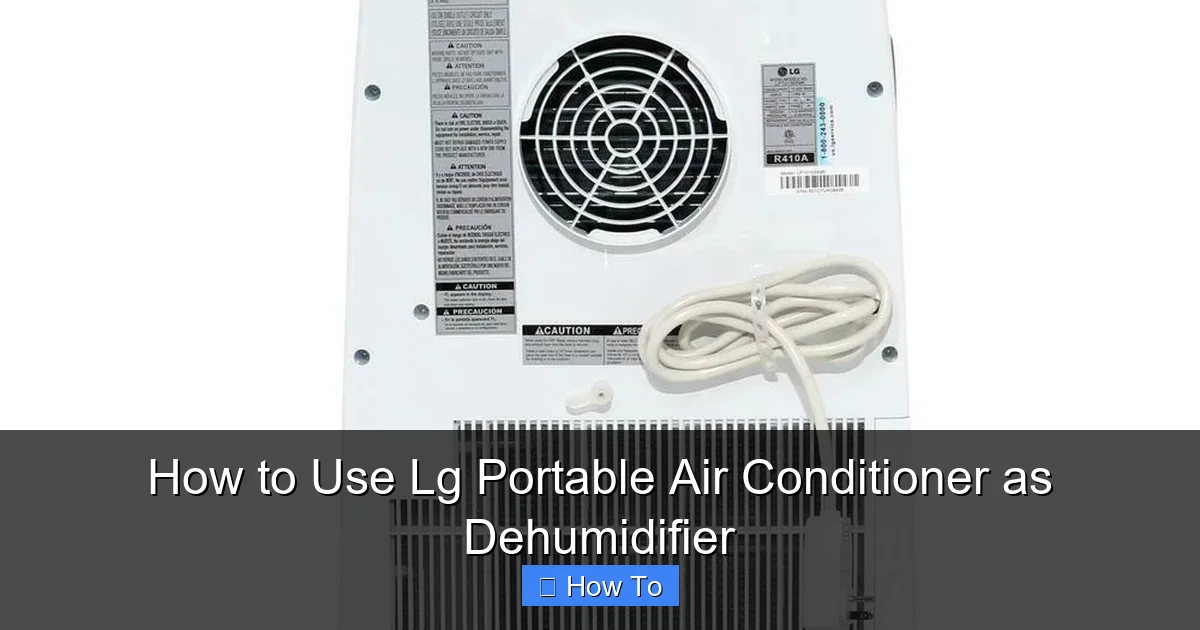
Visual guide about How to Use Lg Portable Air Conditioner as Dehumidifier
Image source: econosuperstore.com
Before diving into the how-to steps, it’s important to understand why this feature is so valuable. Humidity levels above 60% create the perfect breeding ground for mold, mildew, and allergens. Even if your home doesn’t feel “hot,” high moisture content can make it feel sticky and uncomfortable. Traditional air conditioning cools the air, which indirectly reduces humidity—but it’s not as efficient or targeted as a true dehumidifying function.
LG portable air conditioners are designed with multi-functionality in mind. Many models, including the popular LG LP1419IVSM and LP0821WSR, include a dedicated dehumidifier mode that focuses solely on removing moisture. This mode uses the same refrigeration cycle as cooling but adjusts fan speed and compressor operation to maximize water extraction while minimizing energy use.
Using dehumidifier mode offers several advantages:
– Energy efficiency: The compressor cycles on and off based on humidity levels, using less power than continuous cooling.
– Cost savings: You avoid purchasing a separate dehumidifier, which can cost $150–$300.
– Space-saving: One appliance handles both cooling and dehumidifying.
– Improved air quality: Lower humidity reduces allergens and prevents structural damage from moisture.
In 2026, LG has continued to refine its portable AC technology, integrating smart sensors and AI-driven climate control. This means your unit can now automatically detect humidity levels and adjust performance accordingly—making dehumidification easier and more effective than ever.
Step 1: Check If Your LG Portable AC Has Dehumidifier Mode
Not all portable air conditioners are created equal. Before you begin, confirm that your LG model supports dehumidifier functionality. Most LG portable ACs manufactured from 2018 onward include this feature, but it’s always best to verify.
How to Identify Dehumidifier Mode
Look at the control panel on your unit. You should see a button labeled “Mode,” “Function,” or something similar. Press it repeatedly to cycle through the available settings. Typical modes include:
– Cool
– Fan
– Dry (this is the dehumidifier mode)
– Auto (on some models)
If you see “Dry” or “Dehumidify” as an option, your unit supports this function. Some newer models may display an icon of a water droplet or use the term “Dry Mode” on the LCD screen.
Check the User Manual
If you’re unsure, consult your user manual. You can usually find a digital copy on the LG support website by entering your model number. Look for sections titled “Operation Modes” or “Dehumidifying Function.”
Model Examples with Dehumidifier Mode
Here are a few LG portable AC models confirmed to have dehumidifier mode:
– LG LP1419IVSM (14,000 BTU, Wi-Fi enabled)
– LG LP0821WSR (8,000 BTU, compact design)
– LG LP1217WSR (12,000 BTU, energy-efficient)
– LG LP1021BHSM (10,000 BTU, with heater)
If your model isn’t listed, don’t worry—many other LG units from the past five years include this feature. When in doubt, try pressing the mode button and watching for the “Dry” indicator.
Step 2: Prepare Your LG Portable Air Conditioner
Once you’ve confirmed your unit has dehumidifier mode, it’s time to prepare it for use. Proper setup ensures maximum efficiency and prevents common issues like water overflow or poor airflow.
Position the Unit Correctly
Place your LG portable AC in the center of the room or near the area with the highest humidity. Avoid corners or behind furniture, as this restricts airflow. The unit needs space to draw in moist air and expel dry air effectively.
For best results:
– Leave at least 18–24 inches of clearance around the unit.
– Keep it away from heat sources like ovens, radiators, or direct sunlight.
– Ensure the exhaust hose can reach a window or vent without sharp bends.
Install the Exhaust Hose
Even in dehumidifier mode, your LG portable AC still needs to vent hot air outside. This is done through the included exhaust hose and window kit.
Follow these steps:
1. Attach one end of the hose to the back of the unit.
2. Connect the other end to the window slider kit.
3. Secure the kit in your window using the provided brackets or foam tape.
4. Make sure the hose is not kinked or compressed.
Note: In dehumidifier mode, the unit produces less heat than in cooling mode, but ventilation is still essential to maintain efficiency.
Check the Water Tank
LG portable ACs collect condensed water in an internal tank. Before starting dehumidifier mode, check the tank level. Most models have a transparent window or indicator light that shows when the tank is full.
If the tank is full:
– Turn off the unit and unplug it.
– Remove the drain plug or tank (location varies by model).
– Empty the water into a sink or bucket.
– Reinsert the tank and secure the drain plug.
Some newer LG models feature continuous drainage options. If yours has a drain hose port, you can attach a garden hose to route water directly outside or into a floor drain—eliminating the need to empty the tank manually.
Step 3: Activate Dehumidifier Mode
Now that your unit is set up, it’s time to turn on dehumidifier mode. The process is simple and takes just a few seconds.
Using the Control Panel
1. Press the Power button to turn on the unit.
2. Press the Mode button repeatedly until the display shows “Dry” or a water droplet icon.
3. Use the Fan Speed button to select low, medium, or high. For dehumidification, medium or high is recommended for faster moisture removal.
4. Press the Timer button if you want the unit to run for a set number of hours (e.g., 2, 4, or 8 hours).
The unit will now begin extracting moisture from the air. You’ll notice the fan running and occasional compressor cycles as it works to reduce humidity.
Using the Remote Control
If your LG portable AC came with a remote, you can activate dehumidifier mode from across the room:
– Point the remote at the unit.
– Press the Mode button until “Dry” appears on the display.
– Adjust fan speed and timer as needed.
Using the LG ThinQ App (2026 Smart Models)
For LG portable ACs with Wi-Fi connectivity (like the LP1419IVSM), you can control dehumidifier mode remotely using the LG ThinQ app:
1. Download and install the LG ThinQ app on your smartphone (iOS or Android).
2. Create an account and log in.
3. Add your portable AC by scanning the QR code or entering the model number.
4. Once connected, open the app and select your unit.
5. Tap the “Mode” icon and choose “Dry.”
6. Set your desired humidity level (if supported) or adjust fan speed and schedule.
In 2026, LG has enhanced the ThinQ app with AI-powered suggestions. The app can analyze local weather data and indoor conditions to recommend optimal dehumidifier settings—helping you save energy and maintain comfort.
Step 4: Monitor and Maintain Humidity Levels
Activating dehumidifier mode is just the first step. To get the best results, you’ll need to monitor humidity levels and make adjustments as needed.
Use a Hygrometer
A hygrometer is a small, inexpensive device that measures relative humidity (RH). You can find digital hygrometers at hardware stores or online for under $20.
Place the hygrometer in the room where your LG portable AC is running. Ideal indoor humidity should be between 30% and 50%. Levels above 60% promote mold growth, while levels below 30% can cause dry skin and respiratory irritation.
Check the hygrometer every few hours during the first day of use. If humidity remains high, consider:
– Running the unit longer
– Increasing fan speed
– Closing windows and doors to prevent outside moisture from entering
Adjust Settings Based on Conditions
Dehumidifier mode works best in warm, humid environments. If the room temperature drops below 65°F (18°C), the unit may struggle to extract moisture efficiently. In colder conditions, the coils can frost over, reducing performance.
If you notice reduced airflow or ice buildup:
– Switch to fan mode for 10–15 minutes to defrost the coils.
– Avoid using dehumidifier mode in unheated basements during winter unless the unit has a low-temperature operation feature.
Schedule Regular Use
For ongoing humidity control, run your LG portable AC in dehumidifier mode daily—especially during humid seasons or after activities that add moisture (like showering, cooking, or laundry).
Use the timer function to automate operation. For example:
– Set it to run for 4 hours in the morning and 4 hours in the evening.
– Use the ThinQ app to create a weekly schedule based on your routine.
Consistent use prevents moisture buildup and keeps your home feeling fresh.
Step 5: Maintain Your LG Portable Air Conditioner
Like any appliance, your LG portable AC needs regular maintenance to perform well in dehumidifier mode. Neglecting upkeep can lead to reduced efficiency, unpleasant odors, and even mechanical failure.
Clean the Air Filter Monthly
The air filter traps dust, pollen, and other particles. Over time, it becomes clogged, restricting airflow and reducing dehumidification performance.
To clean the filter:
1. Turn off and unplug the unit.
2. Locate the filter panel (usually on the side or back).
3. Slide out the filter and rinse it under warm water.
4. Let it air dry completely before reinserting.
For heavily soiled filters, use a mild detergent. Never use harsh chemicals or put the filter in the dishwasher.
Empty the Water Tank Regularly
Even with continuous drainage, check the tank weekly. Stagnant water can breed bacteria and cause odors.
If you’re using the manual tank:
– Empty it when the indicator light turns on or the display shows “Full.”
– Wipe the interior with a cloth and mild disinfectant.
For continuous drainage:
– Inspect the hose for clogs or leaks.
– Ensure the hose slopes downward to allow proper water flow.
Inspect the Exhaust Hose and Vent
Over time, dust and debris can accumulate in the exhaust hose, reducing airflow. Every few months:
– Disconnect the hose from the unit and window.
– Use a vacuum or brush to remove buildup.
– Reattach securely.
Also, check the window seal for gaps. Poor sealing allows humid outdoor air to enter, counteracting your dehumidification efforts.
Store Properly During Off-Seasons
If you won’t be using your LG portable AC for several months (e.g., during winter), store it properly:
– Clean the filter and empty the water tank.
– Run the unit in fan mode for 30 minutes to dry internal components.
– Cover the unit with a breathable cloth or original packaging.
– Store in a cool, dry place away from direct sunlight.
Troubleshooting Common Issues
Even with proper use, you may encounter problems when using your LG portable AC as a dehumidifier. Here are solutions to the most common issues.
Unit Won’t Start in Dehumidifier Mode
– Ensure the water tank is not full. A full tank triggers an automatic shutoff.
– Check that the exhaust hose is properly connected and not blocked.
– Verify the unit is plugged into a working outlet.
Low Moisture Removal
– Clean the air filter—clogged filters reduce airflow.
– Increase fan speed to high.
– Close windows and doors to prevent humid air from entering.
– Make sure the room temperature is above 65°F (18°C).
Water Tank Fills Too Quickly
– This is normal in very humid conditions. Empty the tank more frequently.
– Consider using continuous drainage if your model supports it.
– Reduce indoor moisture sources (e.g., cover pots while cooking, use exhaust fans in bathrooms).
Unit Makes Loud Noises
– Check for loose parts or obstructions in the fan.
– Ensure the unit is on a level surface.
– If the compressor is unusually loud, contact LG support—it may indicate a refrigerant issue.
Error Codes on Display
LG portable ACs display error codes to indicate problems. Common codes include:
– E1: Water tank full—empty the tank.
– E2: Sensor error—restart the unit or contact support.
– E3: Drain pump issue (on models with pumps)—check for clogs.
Refer to your user manual for a complete list of error codes and solutions.
Tips for Maximum Efficiency in 2026
As we move through 2026, energy efficiency and smart home integration are more important than ever. Here are advanced tips to get the most out of your LG portable AC’s dehumidifier mode.
Use Smart Scheduling
With the LG ThinQ app, create custom schedules based on your daily routine. For example:
– Run dehumidifier mode from 7 AM to 9 AM and 6 PM to 8 PM.
– Sync with weather forecasts to activate during high-humidity days.
Pair with a Smart Thermostat
If you have a smart thermostat (like Nest or Ecobee), integrate it with your LG unit. Some systems can coordinate cooling and dehumidification for optimal comfort and energy savings.
Upgrade to a High-Efficiency Model
If your current unit is over five years old, consider upgrading to a newer LG model with improved SEER ratings and advanced humidity sensors. Newer units use up to 30% less energy while delivering better performance.
Use in Conjunction with Ventilation
Improve air circulation by using ceiling fans or opening interior doors. This helps the dehumidifier work more evenly throughout the space.
Conclusion
Using your LG portable air conditioner as a dehumidifier is a smart, cost-effective way to improve indoor air quality and comfort. With built-in dehumidifier mode, energy-efficient operation, and smart features, your LG unit can tackle excess moisture without the need for a separate appliance.
By following this guide—checking your model, setting up correctly, activating dehumidifier mode, monitoring humidity, and maintaining your unit—you’ll enjoy a healthier, more comfortable home environment. Whether you’re dealing with summer humidity, basement dampness, or post-flood recovery, your LG portable AC is ready to help.
In 2026, with advancements in AI and smart home technology, managing indoor humidity has never been easier. Take control of your climate today and breathe easier tomorrow.