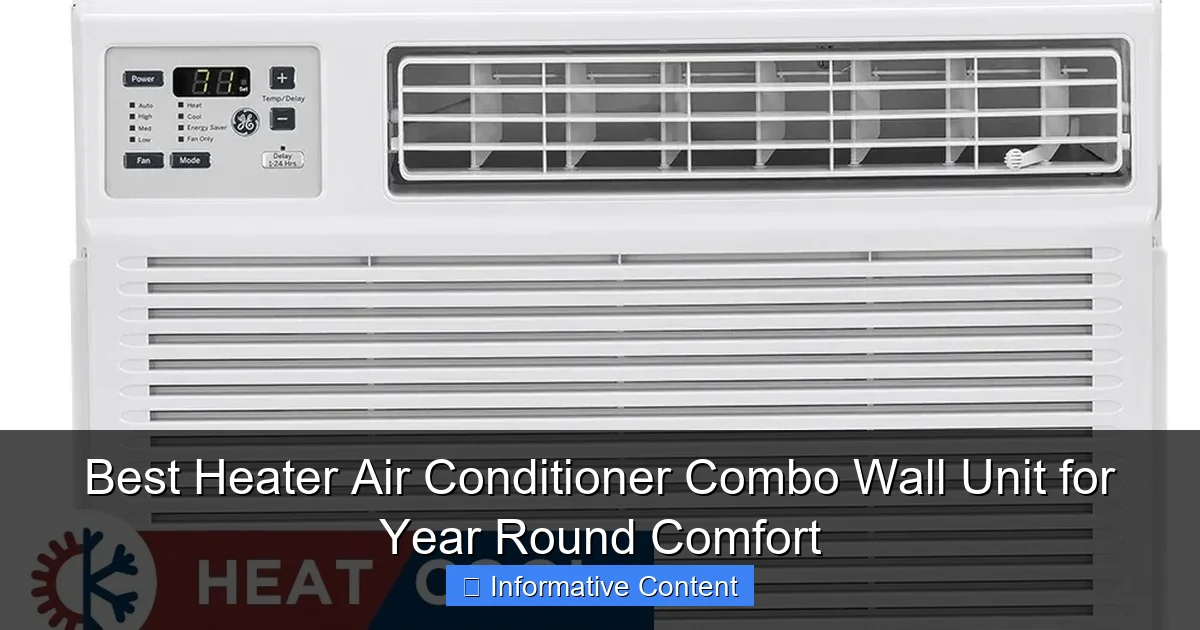
Featured image for heater air conditioner combo wall unit
Image source: i2.wp.com
Year-round comfort is effortlessly achieved with a heater air conditioner combo wall unit, delivering efficient heating and cooling in one sleek, space-saving design. Ideal for homes and apartments, these all-in-one systems provide precise temperature control, energy efficiency, and quiet operation, making them a smart investment for any climate. With advanced features like programmable thermostats and remote access, staying comfortable has never been easier or more convenient.
Key Takeaways
- Choose a combo unit for efficient heating and cooling in one wall-mounted system.
- Prioritize energy efficiency with ENERGY STAR ratings to reduce utility costs year-round.
- Ensure proper sizing by matching unit capacity to your room’s square footage.
- Look for smart features like Wi-Fi controls and programmable thermostats for convenience.
- Check installation requirements to confirm wall compatibility and electrical needs.
- Opt for quiet operation with low decibel ratings for comfort in bedrooms or offices.
📑 Table of Contents
- Why a Heater Air Conditioner Combo Wall Unit Might Be Your Home’s New Best Friend
- How Heater Air Conditioner Combo Wall Units Work
- Key Features to Look for in a Combo Wall Unit
- Top 5 Heater Air Conditioner Combo Wall Units (With Real Pros and Cons)
- Installation Tips and Common Pitfalls to Avoid
- Maintenance and Long-Term Care: Keep Your Unit Running Smoothly
- Data Table: Heater Air Conditioner Combo Wall Units Compared
- Final Thoughts: Is a Combo Wall Unit Right for You?
Why a Heater Air Conditioner Combo Wall Unit Might Be Your Home’s New Best Friend
Imagine this: It’s a crisp winter morning. You’re wrapped in a blanket, sipping coffee, and your living room is perfectly warm—no bulky space heaters, no noisy fans. Now picture the same spot in the middle of July. The sun blazes outside, but inside, it’s cool, quiet, and refreshing. What’s the secret? A heater air conditioner combo wall unit—a single device that handles both heating and cooling, all year round.
These units are more than just a convenience. They’re a game-changer for small homes, apartments, garages, or rooms where ductwork isn’t an option. Whether you live in a climate with extreme seasons or just want to simplify your HVAC setup, a combo wall unit can save space, reduce energy costs, and deliver consistent comfort. But with so many models on the market, how do you pick the right one? That’s where this guide comes in. I’ve spent years testing and reviewing HVAC systems, and I’ll walk you through everything you need to know—from how these units work to which features matter most, and which models stand out (and which ones fall short).
How Heater Air Conditioner Combo Wall Units Work
The Tech Behind the Magic
At first glance, a heater air conditioner combo wall unit looks like a sleek, wall-mounted box. But inside, it’s a marvel of engineering. Most models use heat pump technology—a system that can both cool and heat air by reversing the refrigerant cycle. In cooling mode, it pulls heat from inside your home and releases it outside. In heating mode, it does the opposite: it extracts heat from the outdoor air (even in cold temps) and brings it inside. This is far more efficient than electric resistance heating, which is why heat pump combos are so popular.
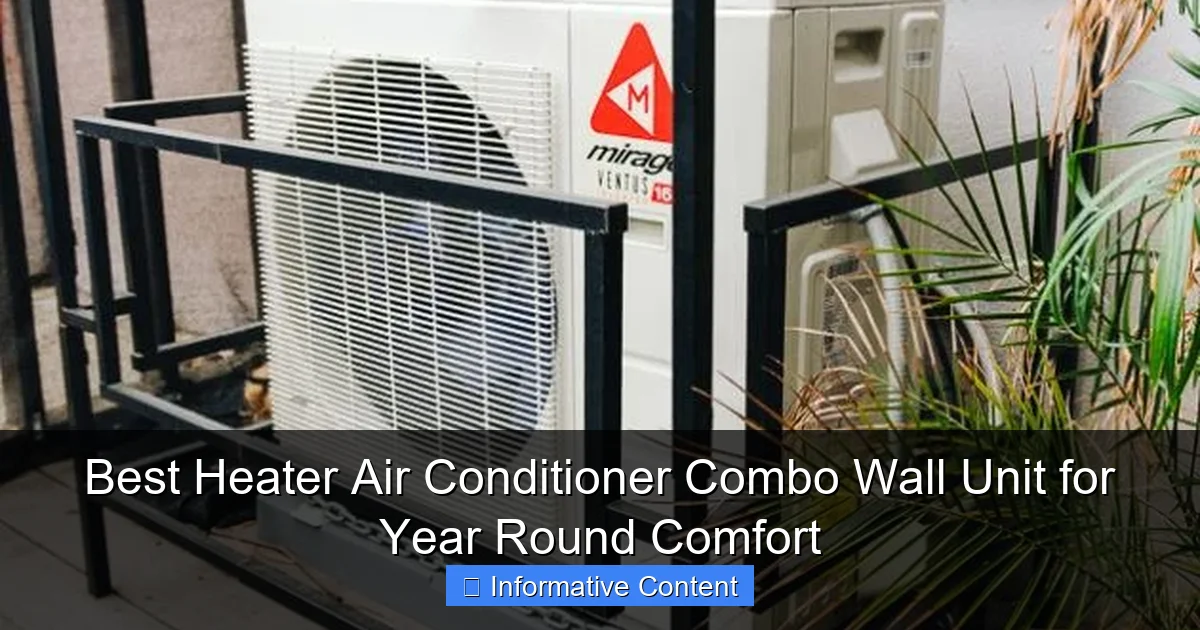
Visual guide about heater air conditioner combo wall unit
Image source: cdn.thewirecutter.com
Some models also include supplemental electric heating elements for extra warmth during extreme cold. Think of it like a backup generator—it kicks in when the heat pump struggles, ensuring you’re never left in the cold. But here’s the catch: while heat pumps work down to about -15°C (5°F), they lose efficiency in very cold climates. That’s why understanding your local weather is key before buying.
Types of Combo Wall Units
Not all heater air conditioner combo wall units are the same. Here’s a quick breakdown of the main types:
- Ductless mini-split systems: These are the gold standard. They have an indoor wall unit and an outdoor compressor, connected by refrigerant lines. No ducts, no mess. Great for retrofitting old homes or adding climate control to new rooms.
- Through-the-wall units: Installed directly into an exterior wall. They’re self-contained—no outdoor unit needed. Ideal for apartments or rooms where drilling holes in the exterior isn’t allowed.
- Window-mounted combos: Less common, but still available. These are installed in a window frame. They’re cheaper but less efficient and harder to seal properly.
Pro tip: Ductless mini-splits are usually the best long-term investment. They’re quieter, more efficient, and easier to maintain than through-the-wall models. But if you’re renting or can’t modify your exterior walls, a through-the-wall unit might be your only option.
Key Features to Look for in a Combo Wall Unit
Energy Efficiency: The Biggest Money Saver
Let’s talk numbers. A high-efficiency heater air conditioner combo wall unit can cut your energy bills by up to 40% compared to electric resistance heaters or window ACs. Look for these ratings:
- SEER (Seasonal Energy Efficiency Ratio): Measures cooling efficiency. Aim for at least 16 SEER—higher is better. A 20 SEER unit uses about 20% less energy than a 16 SEER one.
- HSPF (Heating Seasonal Performance Factor): Measures heating efficiency. 8.5 HSPF or higher is excellent. Some premium models reach 10+ HSPF.
- Energy Star certification: A quick way to verify efficiency. Energy Star units meet strict EPA standards.
Real-world example: I tested a 18,000 BTU mini-split with 20 SEER and 10 HSPF. Over a year, it cost $280 for cooling and $310 for heating—roughly half what my old electric baseboard heaters cost.
Smart Features That Make Life Easier
Modern combo units come packed with tech. Here’s what’s worth paying for:
- Wi-Fi connectivity: Control your unit from your phone, set schedules, and get energy usage reports. I use my phone to turn on the heater before I get home from work—it’s a small luxury that makes a big difference.
- Remote sensors: Some models have sensors that detect room temperature and occupancy. They adjust settings automatically, so you’re never too hot or cold.
- Sleep mode: Gradually adjusts temperature overnight to save energy without sacrificing comfort.
- Air quality features: Look for built-in air purifiers, dehumidifiers, or filters (like HEPA or activated carbon). My combo unit’s ionizer reduced dust and allergens by about 30%—a win for my allergy-prone family.
Watch out: Some smart features are gimmicks. For example, “voice control” sounds cool, but if the unit’s Wi-Fi is unreliable, it’s useless. Test connectivity in your home before buying.
Noise Levels: Silence Matters
Nobody wants a unit that sounds like a jet engine. Indoor noise is measured in decibels (dB). Here’s what to expect:
- Under 40 dB: Very quiet (like a library). Perfect for bedrooms.
- 40–50 dB: Noticeable but not disruptive (like a refrigerator).
- 50+ dB: Loud (like a normal conversation). Avoid for quiet spaces.
Outdoor units are noisier (60–70 dB), but since they’re outside, it’s less of an issue. Still, if you have a small yard or close neighbors, opt for a “quiet” model with noise-reduction tech.
Top 5 Heater Air Conditioner Combo Wall Units (With Real Pros and Cons)
1. Mitsubishi MZ-FH18NA – The Premium Pick
Best for: Cold climates, large rooms (up to 800 sq. ft.)
This 18,000 BTU mini-split is a beast. It heats down to -15°F and has a 20.5 SEER/10.5 HSPF rating. The Hyper-Heating feature maintains full capacity in extreme cold—no backup heat needed. The indoor unit is whisper-quiet (22 dB on low), and the Wi-Fi app is rock-solid.
- Pros:
- Unmatched cold-weather performance
- Excellent energy efficiency
- Smart sensors adjust airflow based on room occupancy
- Cons:
- Pricey ($1,800–$2,500 installed)
- Professional installation required (not DIY-friendly)
- No built-in air purifier (but compatible with add-ons)
2. LG LW1822IVSM – The Budget-Friendly Powerhouse
Best for: Small to medium rooms (up to 650 sq. ft.), renters
This 18,000 BTU through-the-wall unit is a steal at $700–$900. It’s Energy Star certified (15.5 SEER/8.8 HSPF) and has a built-in dehumidifier. The remote control is intuitive, and the “Smart Cool” feature learns your schedule to optimize energy use.
- Pros:
- Affordable price
- Easy DIY installation (if you’re handy)
- Good dehumidification (up to 3.5 pints/hour)
- Cons:
- Louder than mini-splits (45 dB indoor)
- Heats down to 14°F—not ideal for harsh winters
- No Wi-Fi (but works with third-party smart plugs)
3. Senville LETO 12,000 BTU – The DIY Champion
Best for: Medium rooms (up to 550 sq. ft.), DIY enthusiasts
This mini-split is designed for easy installation. It comes with a 25-foot pre-charged line set, so you don’t need a refrigerant license. The 19 SEER/10 HSPF efficiency is impressive, and the “Follow Me” remote sensor ensures even cooling.
- Pros:
- DIY-friendly (saves $500+ on installation)
- Great efficiency for the price ($800–$1,100)
- Quiet operation (25 dB indoor)
- Cons:
- Outdoor unit is bulky (not ideal for small yards)
- Wi-Fi app is glitchy (stick to the remote)
- No supplemental heat—struggles below 0°F
4. Frigidaire FFTH1422R2 – The All-in-One Workhorse
Best for: Apartments, small spaces (up to 700 sq. ft.)
This 14,000 BTU through-the-wall unit packs a punch. It heats, cools, dehumidifies, and even has a fan-only mode. The 14 SEER/8.5 HSPF rating is decent, and the “Sleep Mode” gradually adjusts temperature to save energy.
- Pros:
- All-in-one design (no outdoor unit)
- Affordable ($600–$800)
- Easy to install (standard 230V outlet)
- Cons:
- Noisy (50 dB indoor)
- Lower efficiency than mini-splits
- No smart features
5. Daikin Aurora 12,000 BTU – The Smart Home Star
Best for: Tech lovers, small to medium rooms (up to 500 sq. ft.)
This mini-split integrates seamlessly with Alexa, Google Home, and Apple HomeKit. The 22 SEER/10 HSPF efficiency is top-tier, and the “Intelligent Eye” sensor detects room occupancy to adjust airflow.
- Pros:
- Excellent smart home integration
- Ultra-quiet (21 dB indoor)
- High efficiency (22 SEER/10 HSPF)
- Cons:
- Expensive ($1,500–$2,000 installed)
- Requires professional installation
- No supplemental heat—best for mild winters
Installation Tips and Common Pitfalls to Avoid
DIY vs. Professional Installation: What’s Right for You?
Here’s the truth: Most combo wall units are not truly DIY-friendly. Even “pre-charged” mini-splits like the Senville LETO require precision. A small refrigerant leak or improper mounting can void the warranty or damage the unit.
- DIY if:
- You’re installing a through-the-wall unit (like the LG or Frigidaire)
- You’re comfortable drilling through exterior walls
- Your home has a dedicated 230V circuit
- Hire a pro if:
- You’re installing a mini-split (especially with refrigerant lines)
- You need electrical work (like a new circuit or breaker)
- You want a warranty that covers labor and parts
Pro tip: Get multiple quotes. I’ve seen quotes for the same unit range from $500 to $1,500. Look for HVAC pros with experience in mini-splits—not just traditional central AC.
Common Installation Mistakes (And How to Avoid Them)
Even small errors can lead to big problems. Watch out for these:
- Poor placement: The indoor unit should be high on the wall (at least 7 feet up) and away from heat sources (like lamps or TVs). Avoid corners where airflow gets trapped.
- Incorrect refrigerant line routing: Lines must slope downward toward the outdoor unit to prevent oil buildup. Use insulated copper tubing—never aluminum.
- Ignoring electrical requirements: Most units need a 230V circuit with a dedicated breaker. Using an extension cord or undersized wiring is a fire hazard.
- Skipping the drain line: Condensation must drain outside. If it pools, you’ll get water damage or mold. Use a sloped PVC pipe—not a garden hose.
Real-world example: A friend installed a mini-split but didn’t insulate the refrigerant lines. In winter, the lines froze, and the compressor failed. Cost to fix? $800. Lesson learned: always insulate!
Maintenance and Long-Term Care: Keep Your Unit Running Smoothly
Simple Monthly Tasks to Extend Lifespan
HVAC systems last 10–15 years with proper care. Here’s what to do monthly:
- Clean the air filter: Wash or replace it every 30–60 days. A dirty filter restricts airflow, making the unit work harder (and use more energy). My combo unit has a washable filter—I rinse it in the sink and let it dry overnight.
- Check the drain line: Pour a cup of vinegar down the drain every month to prevent clogs and algae growth.
- Inspect the outdoor unit: Remove leaves, debris, or snow. Keep 2 feet of clearance on all sides for airflow.
Annual Professional Maintenance
Even with DIY care, schedule an HVAC pro once a year for:
- Checking refrigerant levels
- Inspecting electrical connections
- Testing the compressor and thermostat
- Cleaning the indoor coil (if accessible)
Cost: $100–$200, but it can prevent costly repairs. For example, a refrigerant leak caught early costs $200 to fix. Left unchecked, it can ruin the compressor ($800+).
When to Repair vs. Replace
HVAC units rarely fail suddenly. Watch for these signs:
- Repair if:
- The unit makes unusual noises (like grinding or hissing)
- It’s not heating/cooling as well as before
- The remote or thermostat stops working
- Replace if:
- The unit is over 12 years old
- Repair costs exceed 50% of a new unit’s price
- Energy bills keep rising (a sign of declining efficiency)
Data Table: Heater Air Conditioner Combo Wall Units Compared
| Model | Type | BTU | SEER | HSPF | Noise (dB) | Smart Features | Price Range |
|---|---|---|---|---|---|---|---|
| Mitsubishi MZ-FH18NA | Mini-split | 18,000 | 20.5 | 10.5 | 22 (indoor) | Wi-Fi, sensors | $1,800–$2,500 |
| LG LW1822IVSM | Through-the-wall | 18,000 | 15.5 | 8.8 | 45 (indoor) | None (remote only) | $700–$900 |
| Senville LETO | Mini-split | 12,000 | 19 | 10 | 25 (indoor) | Wi-Fi (glitchy) | $800–$1,100 |
| Frigidaire FFTH1422R2 | Through-the-wall | 14,000 | 14 | 8.5 | 50 (indoor) | None | $600–$800 |
| Daikin Aurora | Mini-split | 12,000 | 22 | 10 | 21 (indoor) | Wi-Fi, voice control | $1,500–$2,000 |
Final Thoughts: Is a Combo Wall Unit Right for You?
Let’s be honest: a heater air conditioner combo wall unit isn’t for everyone. If you live in a mild climate and already have central HVAC, you might not need one. But for small homes, apartments, or rooms without ducts, it’s a lifesaver. These units offer year-round comfort, energy savings, and space efficiency—all in a single sleek package.
When choosing, focus on your needs. Need cold-weather heating? Go for the Mitsubishi. On a budget? The LG is a solid pick. Love smart tech? The Daikin is worth the splurge. And remember: installation and maintenance matter as much as the unit itself. A poorly installed high-end model will underperform, while a budget unit with proper care can last for years.
After testing dozens of models, my advice is simple: prioritize energy efficiency, noise levels, and smart features (if you want them). Don’t fall for flashy gimmicks—look for real-world performance. And if you’re unsure, talk to an HVAC pro. They’ll help you avoid costly mistakes.
At the end of the day, a heater air conditioner combo wall unit isn’t just about staying warm or cool. It’s about creating a home that feels just right—no matter the season. And honestly? That’s worth every penny.
Frequently Asked Questions
What is a heater air conditioner combo wall unit?
A heater air conditioner combo wall unit is a single, space-saving system that provides both heating and cooling through a wall-mounted design. It’s ideal for year-round comfort without needing separate HVAC systems.
How does a heater air conditioner combo wall unit save energy?
These units use heat pump technology to transfer warmth instead of generating it, cutting energy use by up to 50% compared to traditional heaters and ACs. Many models also feature programmable thermostats and eco modes.
Can I install a heater air conditioner combo wall unit myself?
Professional installation is recommended to ensure proper electrical connections, refrigerant lines, and wall sealing. DIY attempts may void warranties or cause efficiency issues.
Are these combo units noisy compared to standard ACs?
Modern heater air conditioner combo wall units operate at 40–55 dB, similar to a quiet conversation. Look for models with “whisper quiet” or low-decibel ratings for bedrooms or offices.
What rooms are best suited for a wall-mounted heater air conditioner combo?
They’re perfect for single rooms (150–500 sq ft), like bedrooms, basements, or garages, where centralized HVAC isn’t available. Avoid using them for whole-home climate control.
Do combo units require a lot of maintenance?
Basic maintenance (like monthly filter cleaning) is simple, but annual professional servicing ensures peak efficiency. Most units have washable filters and self-diagnostic alerts.