Carrier air conditioners offer top-tier cooling performance but come with varying price tags depending on size, efficiency, and features. From budget-friendly window units to high-end central systems, understanding the cost of Carrier air conditioners helps you make smart investment decisions. This guide breaks down everything from upfront prices to long-term savings, so you can choose the right model without overspending.
Key Takeaways
- Understanding cost of carrier air conditioners: Provides essential knowledge
Quick Answers to Common Questions
How much does a Carrier window air conditioner cost?
Carrier window ACs typically cost between $250 and $600, depending on BTU capacity and energy efficiency. Models with higher BTUs or ENERGY STAR ratings tend to be on the upper end of this range.
Are Carrier air conditioners worth the higher price?
Yes, especially for central systems. Carrier units offer top-tier efficiency, longer lifespans, and excellent warranties, making them a smart long-term investment despite higher upfront costs.
Do I need professional installation for a Carrier AC?
Yes, for central and ductless systems, professional installation is recommended to ensure safety, efficiency, and warranty compliance. Window units can be DIY-installed, but hiring a pro ensures proper fit and sealing.
Can I finance a Carrier air conditioner?
Many Carrier dealers offer 0% APR financing for 12–36 months. Check with your local installer or visit Carrier’s official website for current financing partners and terms.
How often should I maintain my Carrier AC?
At minimum, clean or replace filters monthly during cooling season. Schedule a professional inspection and tune-up once a year to keep performance optimal and prevent costly repairs.
📑 Table of Contents
- The Real Cost of Carrier Air Conditioners: What You Need to Know
- Understanding Carrier Air Conditioner Pricing
- Breaking Down the Cost of Central Carrier Air Conditioners
- Window and Portable Carrier AC Costs Explained
- Hidden Costs and Additional Expenses
- Energy Efficiency and Long-Term Savings
- Tips to Reduce the Overall Cost of Carrier Air Conditioners
- Comparing Carrier to Other Brands
- Final Thoughts: Is a Carrier Air Conditioner Right for You?
The Real Cost of Carrier Air Conditioners: What You Need to Know
If you’re shopping for a new air conditioner, chances are Carrier is one of the brands that popped into your mind. Known for reliability, innovation, and top-notch performance, Carrier has been a trusted name in HVAC for over a century. But before you fall in love with their sleek designs or whisper-quiet operation, it’s important to understand the cost of Carrier air conditioners—not just the sticker price, but the full picture of what owning and operating one really means.
This guide walks you through every aspect of Carrier AC pricing, from entry-level window units to whole-home central systems. Whether you’re replacing an old unit or building a new home, we’ll help you avoid surprises and find a system that fits both your comfort needs and your wallet. By the end, you’ll know exactly what to expect when it comes to the cost of Carrier air conditioners, including hidden fees, long-term savings, and how to maximize value.
Understanding Carrier Air Conditioner Pricing
When people ask about the cost of Carrier air conditioners, they usually mean two things: the purchase price and the total cost of ownership. The sticker price is just the beginning. A Carrier AC isn’t a one-time expense—it’s part of a larger financial commitment that includes installation, maintenance, repairs, and energy bills.
What Influences the Base Price?
Several key factors determine how much a Carrier air conditioner will cost:
- Capacity (BTU): Measured in British Thermal Units, this tells you how much cooling power the unit has. Larger rooms or homes need higher BTUs, which increases cost.
- Efficiency Rating (SEER): The Seasonal Energy Efficiency Ratio measures how efficiently the unit uses electricity. Higher SEER ratings mean better performance but also higher upfront costs.
- Type of Unit: Window, portable, ductless mini-split, or central air—each type has a different price point.
- Features & Technology: Smart thermostats, Wi-Fi controls, dehumidifiers, and variable-speed compressors add value and cost.
- Brand Reputation: As a premium brand, Carrier often charges more than generic or lesser-known manufacturers.
Typical Price Ranges by Type
Let’s break down average costs for common Carrier AC types:
- Window Units: $250 – $600
- Portable Air Conditioners: $400 – $900
- Ductless Mini-Splits: $1,200 – $3,500 (unit only)
- Central Air Systems: $3,000 – $7,000+ (including installation)
These numbers are averages. Your final price could be higher or lower depending on where you live, your home’s layout, and whether you need additional components like thermostats or electrical upgrades.
Breaking Down the Cost of Central Carrier Air Conditioners
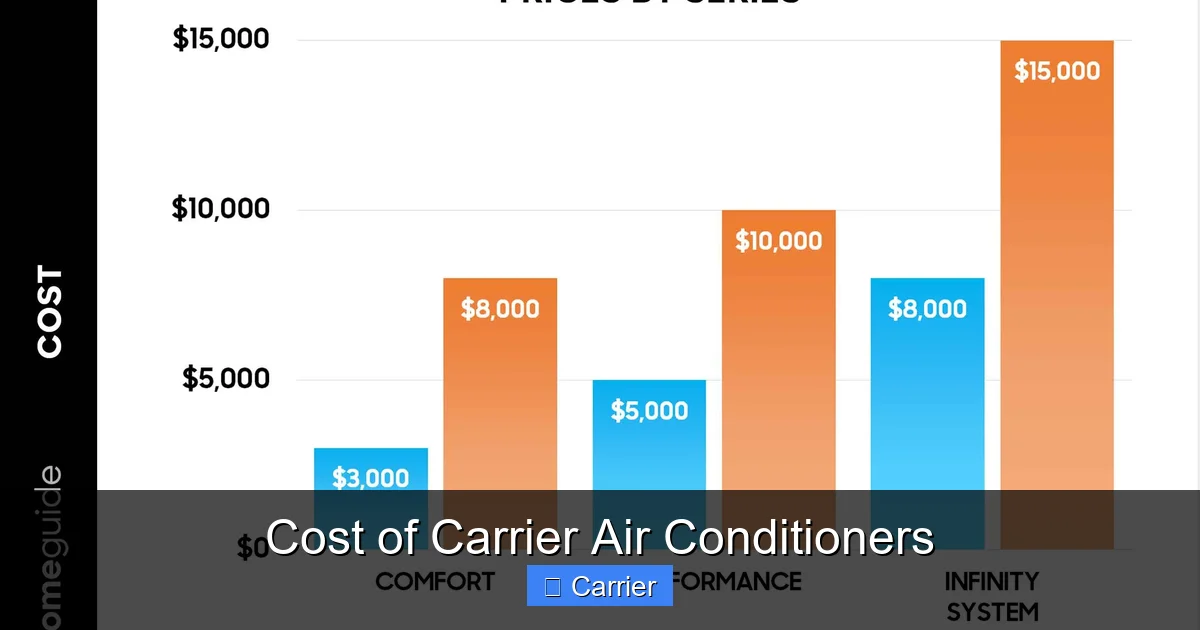
If you’re considering a central air system, you’re likely looking at the most expensive option—but also the most effective for cooling entire homes. The cost of Carrier air conditioners in this category includes not just the outdoor condenser and indoor evaporator coil, but also ductwork, zoning systems, and advanced controls.
Visual guide about Cost of Carrier Air Conditioners
Image source: static.homeguide.com
Component-by-Component Breakdown
A typical central Carrier system includes:
- Outdoor Condenser Unit: $1,800 – $4,000
- Indoor Air Handler or Furnace: $1,200 – $3,000
- Ductwork Modifications: $500 – $2,000 (if existing ducts aren’t suitable)
- Smart Thermostat: $150 – $400
- Installation Labor: $1,000 – $3,000
Total: Often between $4,650 and $12,400. High-efficiency models with variable-speed motors and multi-zone capabilities can push prices even higher.
Why Carrier Central Systems Are Worth the Investment
Yes, Carrier systems are pricier than some competitors, but they offer unmatched durability and efficiency. Their Infinity series, for example, features a 20+ SEER rating—among the highest available. That means lower monthly bills and fewer breakdowns over time.
Plus, Carrier offers excellent warranties: up to 10 years on parts and compressors for residential units. Compare that to 5-year warranties on many budget brands, and the long-term value becomes clear.
Window and Portable Carrier AC Costs Explained
For renters or smaller spaces, window and portable Carrier air conditioners provide affordable cooling. While they don’t match the performance of central systems, they’re perfect for single rooms or apartments.
Window Unit Pricing
Carrier window ACs typically range from $300 to $700. Here’s what affects the price:
- BTU Capacity: A 5,000 BTU unit might cost $299, while a 14,000 BTU model could be $650.
- Energy Star Certification: More efficient models cost more but save on electricity.
- Additional Features: Remote control, timer functions, or washable filters add $50–$100.
Example: A Carrier 8,000 BTU Window Air Conditioner with Energy Star rating sells for around $429. Installation is DIY-friendly, so no extra labor cost—just secure mounting hardware ($10–$20).
Portable Air Conditioners: Convenience vs. Cost
Carrier portable ACs usually run $500–$900. They include wheels for mobility, built-in exhaust hoses, and self-evaporating technology (no drain bucket needed). However, they’re less efficient than fixed-window units and work best in well-insulated rooms.
Pro tip: Look for models with dual hose systems. They pull air from outside, reducing room humidity and improving efficiency—but add $50–$100 to the price.
Hidden Costs and Additional Expenses
Beware! The cost of Carrier air conditioners doesn’t stop at the store checkout. Several hidden expenses can sneak up on you if you’re not prepared.
Installation Fees
Even simple installations aren’t free. Expect to pay:
- $100–$300 for basic window unit setup
- $500–$1,500 for ductless mini-split installation
- $1,000–$3,000+ for central air system labor
Complex jobs—like retrofitting old homes without ducts or upgrading electrical panels—can easily double these estimates.
Permits and Inspections
In many cities, installing an air conditioner requires a permit. These typically cost $50–$200 and ensure your system meets safety codes. Some contractors include permits in their quotes; others charge separately.
Electrical Upgrades
Older homes may lack the wiring needed for modern ACs. If your circuit breaker can’t handle the load, you might need:
- A new 240-volt line
- Upgraded breaker panel
- Professional electrician visit
All of which add $200–$800 to the total.
Warranty and Service Plans
While Carrier offers strong standard warranties, extended protection plans can cost $15–$30 per month. Annual maintenance contracts run $100–$300/year. These aren’t mandatory, but they prevent surprise repair bills and keep your system running smoothly.
Energy Efficiency and Long-Term Savings
This is where Carrier truly shines. Yes, their units cost more upfront—but they also save you money every month. Let’s do the math.
How SEER Ratings Affect Your Bill
SEER stands for Seasonal Energy Efficiency Ratio. The higher the number, the less electricity the unit uses. Here’s a rough comparison:
- SEER 13: Older standard models
- SEER 16: Mid-range efficiency
- SEER 20+: Top-tier Carrier Infinity systems
Assuming 1,200 cooling hours per year and $0.12/kWh electricity:
- A SEER 13 unit uses ~1,090 kWh annually → $131 bill
- A SEER 20 unit uses ~720 kWh → $86 bill
Over 10 years, that’s a savings of $450—even after paying for the more efficient model.
Rebates and Incentives
Many utilities and governments offer rebates for high-efficiency Carrier ACs. For example:
- Federal tax credit: Up to $600 for qualifying heat pumps
- State programs: California’s SMART program pays up to $1,500 for ENERGY STAR units
- Utility company incentives: Some offer $200–$500 off
Check your local energy office website to see what’s available near you.
Tips to Reduce the Overall Cost of Carrier Air Conditioners
You don’t have to spend a fortune to stay cool. Try these smart strategies to lower the cost of Carrier air conditioners without sacrificing comfort.
1. Get a Professional Load Calculation
An HVAC technician can perform a Manual J load calculation to size your system correctly. An oversized unit runs short cycles, wastes energy, and wears out faster. Proper sizing ensures optimal performance and longevity.
2. Choose the Right Size Unit
For window or portable ACs, match the BTU rating to your room size:
- 100–250 sq ft: 5,000–6,000 BTU
- 250–350 sq ft: 8,000–9,000 BTU
- 350–500 sq ft: 10,000–12,000 BTU
Too big? Too small? Either way, you’ll regret it. Use Carrier’s online sizing tool or consult a dealer.
3. Bundle Services
Some HVAC companies offer package deals: purchase + install + thermostat for a flat fee. This can save 10–15% versus paying separately.
4. Time Your Purchase
Buy in spring or fall when demand is lower. Dealers often discount leftover winter inventory in April or offer spring rebates in March/April.
5. Consider Financing Options
Many Carrier dealers partner with third-party lenders to offer 0% APR financing for 12–36 months. No interest means spreading payments over time without extra charges.
6. Maintain It Regularly
Clean filters every month, clear debris from outdoor units, and schedule annual tune-ups. Neglecting maintenance can cut efficiency by 15% and shorten lifespan by 5–10 years.
Comparing Carrier to Other Brands
Is Carrier worth the premium? Let’s compare briefly:
| Brand | Avg. Central AC Price | SEER Range | Warranty | Pros | Cons |
|---|---|---|---|---|---|
| Carrier | $4,000–$7,000 | 16–26 | 10 years parts/compressor | Top efficiency, durable, excellent support | Higher initial cost |
| Lennox | $4,500–$8,000 | 18–26 | 10 years | Silent operation, strong resale value | Very expensive |
| Trane | $3,800–$6,500 | 14–21 | 10 years | Reliable, good warranties | Slightly lower efficiency than top-tier |
| Rheem | $3,200–$5,500 | 14–18 | 5–10 years | Affordable, decent performance | Less consistent quality control |
Bottom line: If budget allows, Carrier delivers the best balance of efficiency, reliability, and customer service. But if you’re on a tight budget, look at Trane or Rheem for similar quality at lower prices.
Final Thoughts: Is a Carrier Air Conditioner Right for You?
The cost of Carrier air conditioners reflects their position as a premium brand. You’re paying for cutting-edge technology, superior build quality, and peace of mind knowing your system will last for decades. While entry-level models start around $300, full central systems can exceed $10,000 when installation is included.
But remember: the cheapest option isn’t always the best. A slightly more expensive Carrier unit with a 20 SEER rating could save you hundreds in energy bills over its lifetime. And with robust warranties and nationwide dealer support, you’re not just buying an appliance—you’re investing in comfort and reliability.
If you’re ready to upgrade, start by getting quotes from 3–5 local HVAC contractors. Ask about financing, rebates, and maintenance packages. With careful planning, you can enjoy powerful, quiet, and efficient cooling without breaking the bank.
Frequently Asked Questions
What is the average cost of a Carrier central air conditioner?
The average cost ranges from $4,000 to $7,000 installed, depending on system size, efficiency, and home requirements. High-end models with variable-speed technology can exceed $10,000.
Does Carrier offer rebates or incentives?
Yes, Carrier participates in federal, state, and utility rebate programs. Check your local energy office or Carrier’s website for current offers on ENERGY STAR-certified units.
How long do Carrier air conditioners last?
With proper maintenance, Carrier central systems typically last 15–20 years. Window and portable units may last 8–12 years, depending on usage and care.
Should I buy a Carrier AC during off-season?
Yes, purchasing in spring or early summer often leads to discounts, better availability, and lower labor rates compared to peak summer demand.
Can I install a Carrier AC myself?
Window units can be DIY-installed with basic tools, but central and ductless systems require licensed professionals for safety, code compliance, and warranty validity.
Is a higher SEER rating worth the extra cost?
Absolutely. A higher SEER rating reduces energy use by 20–30%, saving hundreds on electricity bills over the system’s lifetime—offsetting the initial price difference.