Replacing a Carrier air conditioner coil can cost anywhere from $400 to over $1,200 depending on the model and labor involved. The cost of Carrier air conditioner coil includes both parts and professional installation, with SEER-rated units typically priced higher than standard models. Understanding your system’s specifications helps you budget accurately and avoid unnecessary expenses.
Key Takeaways
- Replacement Cost Range: Expect to pay between $400 and $1,300+ for a Carrier AC coil, including parts and labor.
- SEER Rating Impact: Higher-efficiency coils (16 SEER or above) cost more but offer long-term energy savings.
- Location Matters: Labor costs vary significantly by region—urban areas often charge more than rural ones.
- DIY vs. Professional: While DIY may seem cheaper, improper installation can void warranties and damage your system.
- Warranty Coverage: Some Carrier warranties cover coil replacement if failure is due to manufacturing defects.
- Preventative Maintenance: Regular cleaning and filter changes extend coil life and reduce emergency replacement needs.
- Energy Efficiency Incentives: Check for local rebates on high-efficiency coils to offset upfront costs.
Quick Answers to Common Questions
How much does a Carrier air conditioner coil cost?
The average cost ranges from $400 to $1,300, including parts and labor. Prices depend on coil type, SEER rating, and installation complexity.
Is it safe to replace a Carrier AC coil myself?
No. Improper installation can damage your system, void warranties, and pose safety risks. Always hire a certified HVAC technician.
Do I need to replace both coils if one fails?
Often yes. Replacing only one coil creates imbalance, leading to uneven cooling and faster wear on the remaining unit.
Are there tax credits for upgrading to a high-SEER Carrier coil?
Federal and state incentives exist for high-efficiency HVAC upgrades. Check with your installer or local utility for current rebates.
How long do Carrier air conditioner coils last?
With proper maintenance, Carrier coils typically last 10–15 years. Poor airflow or neglect can shorten this lifespan significantly.
📑 Table of Contents
- Understanding Carrier Air Conditioner Coils: What Are They and Why Do They Matter?
- The Average Price Breakdown: How Much Does a Carrier AC Coil Really Cost?
- Factors That Influence the Final Cost
- Can You Save Money by Doing It Yourself?
- Signs It’s Time to Replace Your Carrier AC Coil
- Choosing Between OEM and Aftermarket Coils
- Financing and Payment Options for Coil Replacements
- Environmental and Safety Considerations
- Conclusion: Invest Smart in Your Carrier System
Understanding Carrier Air Conditioner Coils: What Are They and Why Do They Matter?
When your home’s cooling system starts acting up—especially during those hot summer months—you might hear about something called an “air conditioner coil.” But what exactly is it? And why does replacing one from a trusted brand like Carrier come with a price tag that can surprise even savvy homeowners?
At its core, the air conditioner coil is a critical heat exchanger in your HVAC system. It’s part of the evaporator coil (inside your home) or the condenser coil (outside). These coils absorb heat from indoor air and release it outdoors. Over time, especially in humid climates or with poor maintenance, they can corrode, clog, or freeze—leading to reduced efficiency or complete breakdown.
Carrier, a leader in HVAC innovation since 1973, designs coils built to last and perform efficiently across various environments. But even the best components have a lifespan. When yours needs replacing, knowing the cost of Carrier air conditioner coil helps you plan wisely and avoid costly surprises.
The Average Price Breakdown: How Much Does a Carrier AC Coil Really Cost?
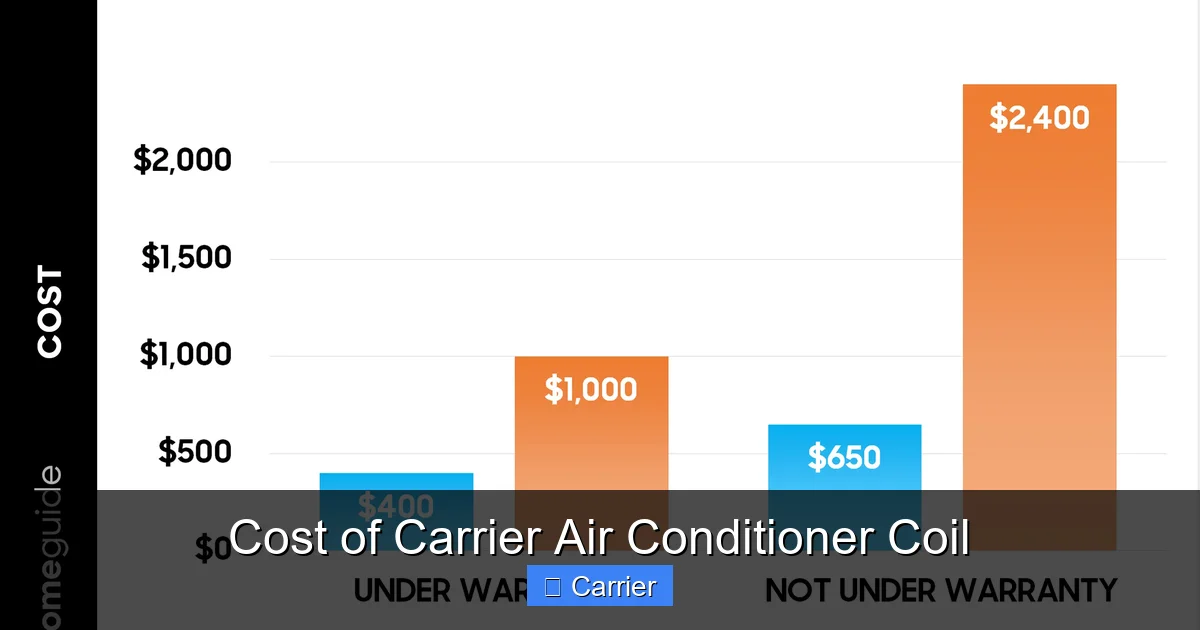
Visual guide about Cost of Carrier Air Conditioner Coil
Image source: static.homeguide.com
Let’s cut to the chase: how much will replacing your Carrier air conditioner coil set you back?
On average, you should expect to spend between **$400 and $1,300** total—this includes both the part and professional installation. Here’s a quick look at typical ranges:
– **Evaporator Coil Only:** $250–$600
– **Condenser Coil Only:** $300–$800
– **Labor Costs:** $100–$400 (depending on complexity and location)
– **Total Replacement (Parts + Labor):** $400–$1,300
Keep in mind that these numbers are estimates. Your actual cost of Carrier air conditioner coil depends on several variables we’ll explore next.
For example, a standard 3-ton Carrier unit with a 13 SEER rating might require an evaporator coil priced around $450, while a high-efficiency 18 SEER model could push the coil cost near $800. Add labor, and you’re looking at a full-service job well under $1,200—unless complications arise.
Regional Variations in Pricing
HVAC labor isn’t uniform across the country. In cities like New York or San Francisco, hourly rates for licensed technicians often exceed $120/hour. Meanwhile, rural areas may see charges closer to $80–$90/hour. This directly impacts your final bill.
Additionally, some regions have higher demand during peak cooling seasons, which can drive up prices temporarily. Always get multiple quotes from certified Carrier dealers in your area before committing.
SEER Ratings and Their Effect on Cost
SEER stands for Seasonal Energy Efficiency Ratio—a measure of how efficiently your AC cools per watt of electricity used. Higher SEER means better performance and lower utility bills over time.
However, higher SEER = higher upfront cost—including the coil itself.
| SEER Rating | Typical Evaporator Coil Cost |
|————-|——————————-|
| 13 | $250–$500 |
| 14 | $350–$600 |
| 16 | $500–$800 |
| 18 | $700–$1,000+ |
If you’re considering upgrading for long-term savings, investing in a high-SEER coil now might make financial sense—even if the initial cost of Carrier air conditioner coil is steeper.
Factors That Influence the Final Cost
Several key factors determine exactly how much you’ll pay when replacing your Carrier air conditioner coil. Understanding them helps you prepare financially and choose the right solution for your home.
1. Type of Coil: Evaporator vs. Condenser
Your HVAC system has two main coils:
– The **evaporator coil** sits inside your furnace or air handler, absorbing heat from indoor air.
– The **condenser coil** is located outside, releasing heat into the atmosphere.
Both are essential, but replacing the evaporator coil is usually less invasive—and sometimes less expensive—than the condenser coil, which requires outdoor access and potential structural work.
In most cases, if only one coil fails, technicians recommend replacing both to ensure balanced operation and prevent future issues. This “coil pair” approach adds to the overall cost of Carrier air conditioner coil but improves system longevity.
2. System Size and Model Compatibility
Not all Carrier units use the same coil dimensions or refrigerant types. A 2-ton system needs different components than a 5-ton model. Mismatched coils lead to poor performance or system damage.
Always confirm compatibility with your existing Carrier unit. Using non-OEM (Original Equipment Manufacturer) coils may save money short-term but risks voiding warranty coverage and reducing efficiency.
3. Refrigerant Type and Regulations
Modern Carrier systems often use R-410A refrigerant, which replaced older R-22 models due to environmental concerns. Replacing coils on R-410A systems requires specialized handling and certification.
In some states, regulations restrict who can install or service certain refrigerants. This can add time (and cost) to your project if the technician isn’t fully licensed.
4. Accessibility and Installation Complexity
If your furnace is tucked away in a tight basement or crawlspace, removing and installing a new coil takes longer. Similarly, condensing units on second-story rooftops or hard-to-reach yards increase labor hours.
Accessibility affects not just time but safety protocols too—ladder work, confined space entry, or electrical disconnections all factor into the final quote.
5. Additional Repairs Needed
Sometimes, replacing a coil reveals other problems—like a failing compressor, dirty ductwork, or worn fan belts. Technicians may recommend addressing these during the same visit to prevent repeat failures.
While this increases the immediate cost of Carrier air conditioner coil, it protects your investment in the long run. Ignoring hidden issues often leads to bigger bills down the line.
Can You Save Money by Doing It Yourself?
You’ve probably seen videos online showing people swapping out AC coils themselves. At first glance, DIY might seem like a way to slash labor costs and keep more cash in your pocket.
But here’s the reality: HVAC systems are complex, precision-engineered machines. Even small mistakes during coil replacement can cause leaks, refrigerant loss, or system imbalance.
Consider this: a single improperly sealed connection can reduce your AC’s efficiency by 20%. That’s thousands in wasted energy over five years—not to mention potential water damage from leaks.
Plus, most Carrier warranties require installation by certified professionals. Skipping this step voids coverage immediately.
That said, there *are* ways to save without sacrificing safety or performance.
Tips to Reduce Your Overall Expenses
– **Get Multiple Quotes:** Don’t settle for the first estimate. Call 3–4 local Carrier-certified contractors and compare detailed breakdowns.
– **Ask About Diagnostic Fees:** Some companies charge $100+ just to diagnose the issue. Clarify whether this fee applies toward the repair.
– **Check for Rebates:** Many utilities offer incentives for high-efficiency upgrades. For example, replacing a 13 SEER system with an 18 SEER model could earn you $300–$600 back.
– **Bundle Services:** If you need duct cleaning or thermostat upgrades, combine them with your coil replacement to negotiate a package discount.
– **Schedule Off-Peak Work:** Request installation during shoulder seasons (spring or fall) when demand is lower—labor rates drop 10–20%.
By being proactive and informed, you can manage the cost of Carrier air conditioner coil without compromising comfort or reliability.
Signs It’s Time to Replace Your Carrier AC Coil
Knowing *when* to replace your coil saves you from emergency calls and higher fees. Watch for these red flags:
– **Reduced Cooling Capacity:** Warm spots in rooms despite thermostat settings.
– **Frequent Cycling:** The unit turns on/off constantly instead of running steadily.
– **Ice Buildup on Coils:** Frost forms on vents or the indoor unit—a sign of airflow blockage or low refrigerant.
– **Unusual Noises:** Hissing, bubbling, or rattling sounds often indicate coil damage or refrigerant leaks.
– **High Utility Bills:** A sudden spike in cooling costs may point to inefficient heat exchange.
If you notice any of these symptoms, schedule a diagnostic inspection with a Carrier dealer. Early detection prevents minor issues from becoming major repairs.
Preventative Maintenance Tips to Extend Coil Life
Regular care makes a huge difference. Here’s what every homeowner should do:
– **Change Air Filters Monthly:** Clogged filters restrict airflow, forcing coils to work harder and freeze.
– **Clean Vents and Registers:** Dust buildup reduces efficiency and strains the system.
– **Schedule Annual Tune-Ups:** Technicians inspect coils, check refrigerant levels, and clean internal components.
– **Trim Nearby Plants:** Vegetation touching the outdoor unit blocks airflow and raises coil temperature.
– **Use Smart Thermostats:** Programmable controls prevent unnecessary runtime and overworking.
With proper maintenance, Carrier coils can last 10–15 years—far beyond the typical 8–10 year lifespan of the entire unit.
Choosing Between OEM and Aftermarket Coils
Once you know you need a replacement, the next decision is: should you go with an OEM (original equipment manufacturer) coil or a cheaper aftermarket alternative?
OEM Advantages
– Designed specifically for your Carrier model
– Guaranteed compatibility and performance
– Backed by Carrier warranty (usually 1–5 years)
– Meets exact refrigerant and pressure specifications
Aftermarket Risks
– May not fit perfectly or operate efficiently
– Warranty coverage often limited or nonexistent
– Quality varies widely—some are excellent, others subpar
– Could void existing system warranties
While aftermarket coils can shave $100–$200 off the cost of Carrier air conditioner coil, the risk of reduced performance or premature failure isn’t worth it for most homeowners.
Unless you’re experienced with HVAC systems and willing to accept potential trade-offs, stick with OEM parts through a certified Carrier dealer.
Financing and Payment Options for Coil Replacements
Replacing a coil doesn’t always mean paying full price upfront. Many Carrier dealers offer flexible financing plans to ease the burden.
Common options include:
– **0% APR Promotional Financing:** Available for qualified buyers over 12–36 months.
– **Leasing Programs:** Spread payments over 24–60 months with low monthly installments.
– **Home Equity Loans:** Lower interest rates if you own your home outright.
– **Utility Rebate Loans:** Some programs cover upgrade costs and repay via future rebates.
Before signing anything, read the fine print. Watch out for hidden fees, balloon payments, or prepayment penalties.
Also consider your credit score—higher scores unlock better terms. Even small improvements (like paying down credit card debt) can qualify you for lower interest rates on HVAC financing.
Environmental and Safety Considerations
Modern HVAC systems must balance performance with environmental responsibility. Carrier leads in sustainable design, using recyclable materials and low-global-warming-potential refrigerants.
When replacing your coil, ask your technician about:
– Proper disposal of old refrigerant (never vent it into the air)
– Recycling metal components instead of sending them to landfills
– Upgrading to eco-friendly models with lower carbon footprints
These choices protect both your wallet and the planet—while aligning with growing consumer demand for green technology.
Conclusion: Invest Smart in Your Carrier System
Replacing your Carrier air conditioner coil is never a “set it and forget it” expense. It’s a strategic investment in your home’s comfort, energy efficiency, and resale value. While the cost of Carrier air conditioner coil may seem high at first glance, thoughtful planning and smart choices help you maximize return on investment.
From understanding regional pricing to exploring rebates and financing, every step brings you closer to a cooler, quieter, and more efficient home. And remember—prevention is always cheaper than cure.
Don’t wait until your AC breaks down on a scorching July afternoon. Schedule a preventive inspection today and breathe easy knowing your system is ready for whatever summer throws at it.
Frequently Asked Questions
===
What causes Carrier air conditioner coils to fail?
Coil failure often results from restricted airflow, low refrigerant levels, or corrosion due to humidity and debris. Regular maintenance prevents most issues.
Can I use a universal coil instead of a Carrier-specific one?
While possible, universal coils may not match your system’s exact specs. Using incompatible parts risks reduced efficiency and voided warranties.
How often should I inspect my AC coils?
During annual tune-ups, technicians clean and inspect both indoor and outdoor coils. Homeowners should also check for ice buildup or unusual odors monthly.
Will insurance cover Carrier coil replacement?
Standard home insurance rarely covers routine HVAC replacements. However, if damage was caused by covered events (e.g., storm), claims may apply.
Where can I buy authentic Carrier coils?
Only through certified Carrier dealers or authorized distributors. Avoid third-party sellers unless they provide proof of OEM sourcing and warranty transferability.
Does coil material affect performance?
Yes. Aluminum fins resist corrosion better than copper in humid climates. Carrier uses advanced coatings and alloys for durability across regions.