The Ultimate Guide to Copper Pipe Swage Tool
If you're in the market for a copper pipe swage tool, you've come to the right place. Swaging copper tubing is a common practice in various industries, including HVAC, plumbing, and refrigeration. This process involves expanding the end of a copper pipe to join it with another pipe or fitting, eliminating the need for additional connectors.
Benefits of Swaging
Swaging offers several advantages, including:
Eliminating the need for couplings
Reducing potential leak points
Improving the overall integrity of the joint
https://www.youtube.com/watch?v=FwBF7kQSx64
Beyond the core benefits, swaged joints also tend to withstand vibration better than mechanical couplings, which is valuable in HVAC line sets that experience compressor shake. In practice, a well‑executed swage can last the life of the system without the periodic re‑tightening that flare fittings sometimes require. For more on this, see our guide on how long does copper pipe last underground.
Tools Needed
To successfully swage copper pipe, you'll need:
Copper pipe swage tool
Reaming tool
Heating equipment
Soldering materials

Demonstration of a copper pipe swage tool in action.
Credit: m.youtube.com
Types of Swaging Tools
Manual swage tools rely on leverage and are ideal for occasional jobs or tight budgets. Hydraulic models deliver consistent force with less operator fatigue, making them the go‑to for high‑volume contractors. Battery‑powered hydraulic units have appeared in the last few years, offering portability without a hose‑connected pump. Choosing between them comes down to how many joints you’ll make per week and whether you need the speed of hydraulic actuation.
Swaging Process
Here's a step-by-step guide to swaging copper pipe:
Ream the pipe end to remove burrs and ensure a smooth surface.
Heat the pipe end to make it more malleable for the swaging process.
Use the copper pipe swage tool to expand the pipe end to the desired size.
Apply solder to create a secure joint.
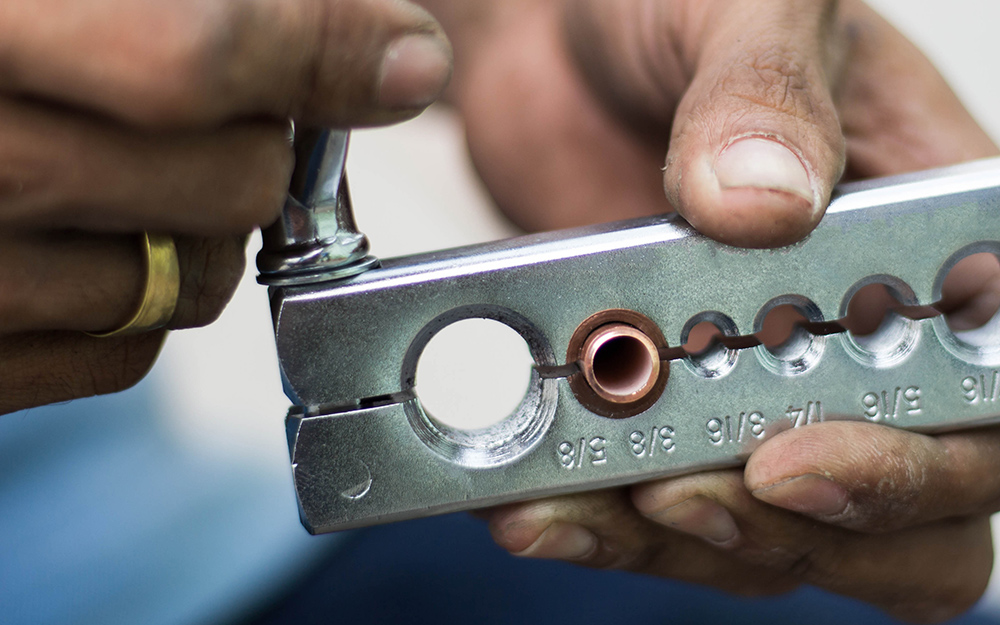
Close‑up of the swaging step using a flaring tool.
Credit: www.homedepot.com
Detailed Swaging Steps and Tips
- Clean thoroughly – any oxidation left on the tube will weaken the solder bond.
- Use the correct die size – a die that’s too large creates a loose fit; too small can split the copper.
- Heat evenly – a torch with a soft flame prevents localized overheating that can anneal the tube unevenly.
- Check alignment – the expanded end should be concentric; a quick visual check saves re‑work.
- Apply flux sparingly – excess flux can cause voids in the solder joint.
A common mistake is skipping the reaming step; the resulting burrs act as stress concentrators and often lead to micro‑leaks under pressure. For more on this, see our guide on ac condenser pipe frozen.
Popular Copper Pipe Swage Tools
There are various copper pipe swage tools available in the market, each offering unique features and price points. Here are some popular options:
Tool Price Retailer
Pittsburgh Double Tube Flaring Tool Kit – Copper $29.99 Harbor Freight Tools
Doyle Premium Ratcheting Tube Bender Kit – Copper $139.99 Harbor Freight Tools
Add more popular tools with their prices and retailers
Comparison Table of Selected Swage Tools
| Tool | Type | Force | Approx. Price | Best For |
|---|---|---|---|---|
| Pittsburgh Double Tube Flaring Kit | Manual | Low | $30 | DIY / occasional use |
| Doyle Premium Ratcheting Kit | Manual‑ratchet | Medium | $140 | Frequent residential jobs |
| RIDGID 38088 Hydraulic Swage Set | Hydraulic | High | $350 | Professional HVAC crews |
| Milwaukee M12 Force Logic | Battery‑hydraulic | High | $420 | Mobile service trucks |
Prices are indicative for 2026 and may vary by retailer.
Where to Buy
You can find copper pipe swage tools at various retailers, including:
Amazon.com
Harbor Freight Tools
Home Depot
Walmart
Grainger Industrial Supply
Maintenance and Care for Swage Tools
- Lubricate moving parts monthly with a light machine oil to prevent corrosion.
- Inspect dies for wear; replace when the cutting edge shows rounding.
- Store in a dry case – moisture accelerates rust on hydraulic seals.
- Calibrate hydraulic pressure annually if the tool has a gauge; drift can produce undersized swages.
Regular upkeep extends tool life and keeps joint quality consistent.
Common Mistakes to Avoid
- Over‑heating the tube – leads to annealing and loss of strength.
- Using the wrong die – creates either a loose or cracked joint.
- Neglecting flux removal – residual flux can cause corrosion over time.
- Skipping pressure testing – a quick nitrogen test at 150 psi catches leaks before refrigerant charge.
Frequently Asked Questions
Which Tool Is Used To Swage The Copper Tube?
A Hydraulic Swaging Tool is used to swage the copper tube for expanding and connecting purposes.
How To Use A Swaging Tool On Copper Pipe?
To use a swaging tool on copper pipe, follow these steps: Ream the pipe, insert it into the tool, heat it, swage, and apply solder bead.
Can You Swage A Copper Water Pipe?
Yes, you can swage a copper water pipe using a hydraulic swaging tool for copper tubing.
What Are The Two Types Of Swaging Tools?
The two types of swaging tools are manual swaging tools and hydraulic swaging tools. These tools are used for expanding and reshaping pipes and tubes. They are essential for various applications in plumbing, HVAC, and other industries. For more on this, see our guide on ac pipe outside is frozen.
Additional Resources
For deeper reference on copper tubing standards, see the copper tubing standards from the Copper Development Association. HVAC design guidelines are outlined by ASHRAE. For more on this, see our guide on ac pipe is frozen.
Conclusion
Investing in a high-quality copper pipe swage tool can streamline your projects, reduce the need for additional fittings, and improve the overall integrity of your piping systems. Whether you're a professional contractor or a DIY enthusiast, having the right swaging tools at your disposal is essential for successful pipe expansions. For more on this, see our guide on ac pipe keeps freezing.
Ready to upgrade your toolkit? Explore our recommended swage tools today.