Carrier Air Conditioner Energy Star units are among the most efficient cooling systems available today. With advanced technology and ENERGY STAR certification, these air conditioners help you save money on utility bills while reducing environmental impact. Whether you’re replacing an old unit or building a new home, choosing a Carrier Energy Star model means investing in long-term comfort and sustainability.
Key Takeaways
- ENERGY STAR Certification: Carrier Air Conditioners with ENERGY STAR labels meet strict government efficiency standards, ensuring superior performance and lower energy use.
- High SEER Ratings: These units typically feature Seasonal Energy Efficiency Ratio (SEER) ratings of 14 or higher, meaning they convert more electricity into cooling power.
- Advanced Compressor Technology: Many models use variable-speed or two-stage compressors that adjust output based on demand, improving comfort and saving energy.
- Lower Utility Bills: Homeowners can expect 10–30% savings on cooling costs compared to standard non-certified models.
- Environmental Benefits: Using less energy reduces greenhouse gas emissions, helping protect the environment.
- Reliable Performance: Carrier is a trusted name in HVAC, known for durable construction and excellent customer service.
- Incentives & Rebates: Many ENERGY STAR units qualify for local, state, or federal rebates and tax credits, further lowering upfront costs.
Quick Answers to Common Questions
What does ENERGY STAR mean for air conditioners?
ENERGY STAR means the air conditioner meets strict efficiency guidelines set by the U.S. EPA. It guarantees lower energy use, reduced bills, and proven performance.
How much can I save with a Carrier ENERGY STAR AC?
Homeowners typically save 10–30% on cooling costs compared to standard units, depending on age and efficiency of the old system.
Do I need special ductwork for a high-efficiency AC?
No special ductwork is required, but sealing and insulating existing ducts improves overall efficiency significantly.
Can I install it myself?
We strongly recommend hiring a licensed HVAC technician for proper installation, sizing, and safety compliance.
Are there tax credits for buying one?
Yes! The federal tax credit offers up to 30% back on eligible ENERGY STAR central air conditioners through 2032.
📑 Table of Contents
- Why Carrier Air Conditioner Energy Star Models Are a Smart Choice
- Understanding ENERGY STAR Certification
- How Carrier Leads the Industry in Efficiency
- Top Features of Carrier Air Conditioner Energy Star Models
- Choosing the Right Carrier Model for Your Home
- Installation and Maintenance Tips
- Environmental Impact and Long-Term Benefits
- Financing and Incentive Programs
- Customer Reviews and Real-Life Experiences
- Conclusion: Invest in Comfort and Savings
Why Carrier Air Conditioner Energy Star Models Are a Smart Choice
When summer heat hits hard, you want an air conditioner that cools fast, works reliably, and doesn’t send your electricity bill through the roof. That’s where Carrier Air Conditioner Energy Star models come in. As one of the most respected names in heating and cooling, Carrier has long been at the forefront of innovation—and their ENERGY STAR certified units are proof of that commitment. But what exactly makes these systems so special? And how do you know if one is right for your home?
In this article, we’ll walk you through everything you need to know about Carrier Air Conditioner Energy Star models. From understanding the benefits of ENERGY STAR certification to comparing features like SEER ratings and compressor types, we’ll help you make an informed decision. Plus, we’ll share tips on installation, maintenance, and how to maximize your energy savings.
Understanding ENERGY STAR Certification
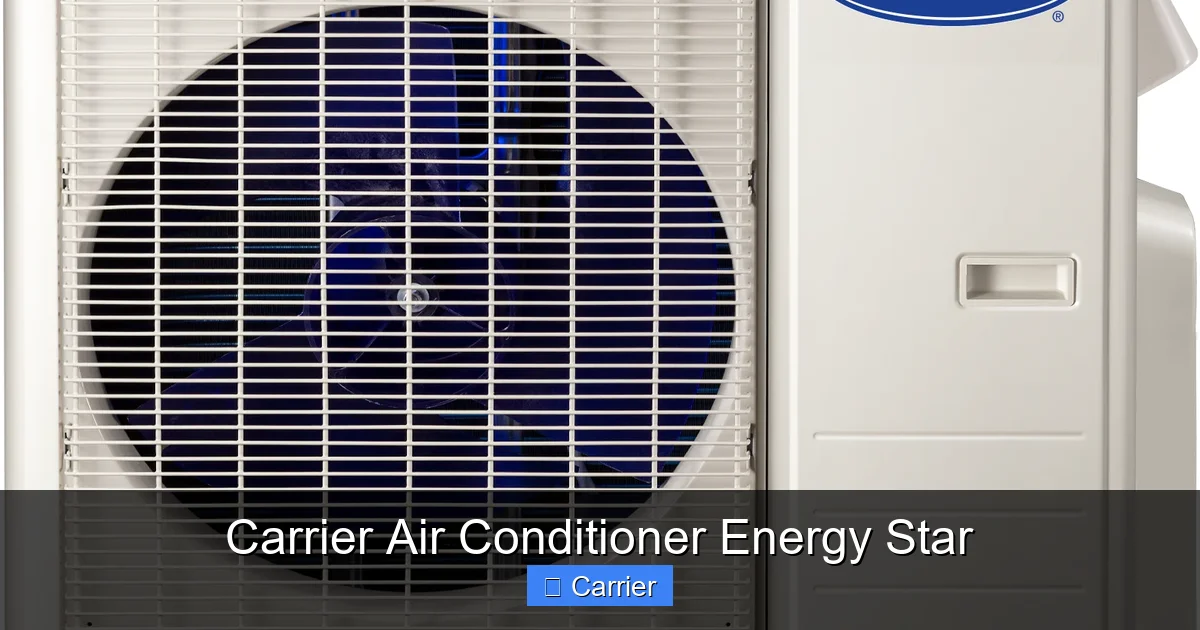
Visual guide about Carrier Air Conditioner Energy Star
Image source: ajmadison.com
Before diving into specific Carrier models, it’s important to understand what ENERGY STAR really means. Launched by the U.S. Environmental Protection Agency (EPA), ENERGY STAR is a voluntary program that identifies products meeting strict energy performance standards set by the government. For air conditioners, this translates into higher efficiency, lower operating costs, and reduced environmental impact.
To earn the ENERGY STAR label, a central air conditioning unit must achieve a minimum SEER (Seasonal Energy Efficiency Ratio) rating of 14. In contrast, older or standard models might only reach SEER levels around 8–10. That’s nearly a 50% improvement in efficiency!
But ENERGY STAR isn’t just about numbers on a spec sheet. It also ensures rigorous testing for durability, reliability, and real-world performance. So when you see the blue-and-yellow ENERGY STAR logo on a Carrier AC, you can trust that it’s been independently verified to deliver top-notch results.
How Carrier Leads the Industry in Efficiency
Visual guide about Carrier Air Conditioner Energy Star
Image source: illust-pocket.com
Carrier has been a pioneer in HVAC technology since its founding in 1915. Today, the company continues to innovate with smart thermostats, eco-friendly refrigerants, and cutting-edge compressor designs. Their ENERGY STAR models reflect this legacy of excellence.
One key area where Carrier stands out is in inverter-driven or variable-speed compressor technology. Unlike traditional single-speed compressors that cycle on and off constantly (which wastes energy and causes temperature swings), variable-speed models adjust their output continuously. This means smoother operation, quieter performance, and up to 30% more energy savings.
For example, the Carrier Infinity series includes models with Greenspeed Intelligence™—a proprietary technology that modulates compressor speed based on cooling demand. During mild weather, the system runs slowly and efficiently; during peak heat, it ramps up precisely to maintain comfort without overworking.
Real-World Savings: What Homeowners Experience
Let’s put numbers to those claims. Suppose your current 10-year-old air conditioner has a SEER of 10 and uses 3,600 kWh annually. By upgrading to a Carrier ENERGY STAR model with a SEER of 16, you could reduce your annual usage to about 2,250 kWh. At average U.S. electricity rates ($0.13 per kWh), that’s a yearly savings of roughly $175—and over the life of the unit, thousands in total.
And it’s not just about cost. Fewer hours of runtime also mean less wear and tear, potentially extending your system’s lifespan by several years.
Top Features of Carrier Air Conditioner Energy Star Models
Not all high-efficiency air conditioners are created equal. Here are some standout features found in Carrier’s ENERGY STAR lineup:
1. Two-Stage or Variable-Speed Compressors
As mentioned earlier, these compressors operate more intelligently than their fixed-speed counterparts. They run at partial capacity most of the time, maintaining consistent indoor temperatures and reducing humidity effectively.
2. ComfortCore™ Technology
Found in select Carrier models, ComfortCore technology optimizes airflow distribution across your entire home. It uses sensors to detect temperature differences and adjusts fan speeds accordingly, eliminating hot spots and drafts.
3. Purifying Filters and Indoor Air Quality Options
Many Carrier ENERGY STAR units include washable antimicrobial filters or optional add-ons like UV germicidal lamps and whole-home air purifiers. These help remove allergens, mold spores, and volatile organic compounds (VOCs), improving indoor air quality.
4. Smart Thermostat Compatibility
Pair your Carrier AC with a Wi-Fi-enabled thermostat like the Carrier Cor smart thermostat, and you gain remote control, scheduling, and energy usage insights via smartphone apps. Some models even learn your habits and automatically adjust settings for maximum efficiency.
5. Quiet Operation
Thanks to sound-dampening materials and optimized fan blade design, Carrier’s best-in-class models operate as quietly as 65 decibels—comparable to normal conversation. No more loud hums disrupting your evening.
Choosing the Right Carrier Model for Your Home
With so many options, how do you pick the right Carrier Air Conditioner Energy Star unit? Start by considering your home’s size and layout. A professional HVAC contractor can perform a Manual J load calculation to determine the correct tonnage—too small, and your system will struggle; too large, and it will short-cycle, wasting energy.
Here’s a quick guide:
- Small homes (under 1,200 sq ft): 1.5 to 2-ton units
- Medium homes (1,200–2,000 sq ft): 2 to 3 tons
- Larger homes (over 2,000 sq ft): 3.5 to 5+ tons
Also ask about zoning systems. If you have multiple floors or rooms used infrequently, a zoned setup lets you cool only what you need, boosting efficiency even further.
Don’t forget ductwork! Older homes often have leaks or poor insulation in ducts, which can cut efficiency by 20–30%. Sealing and insulating ducts before installing a new system is a low-cost way to boost performance.
Installation and Maintenance Tips
Even the most efficient air conditioner won’t perform well if it’s poorly installed. Always hire a licensed HVAC technician—ideally someone certified by NATE (North American Technician Excellence). Proper sizing, correct refrigerant charge, and sealed duct connections are critical for optimal operation.
Once installed, routine maintenance keeps your Carrier ENERGY STAR unit running smoothly:
- Monthly: Replace or clean reusable filters (or vacuum disposable ones)
- Biannually: Schedule professional tune-ups (preferably spring and fall)
- Annually: Clean outdoor condenser coils, check refrigerant levels, and inspect electrical connections
Neglecting maintenance can void warranties and reduce efficiency over time. A well-maintained system lasts longer and performs better year after year.
Environmental Impact and Long-Term Benefits
Switching to a Carrier Air Conditioner Energy Star model does more than save you money—it helps fight climate change. According to the EPA, residential air conditioning accounts for nearly 12% of total household energy consumption nationwide. By choosing an ENERGY STAR unit, you’re directly reducing carbon dioxide emissions associated with fossil-fueled electricity generation.
Moreover, modern Carrier systems use R-410A refrigerant, which has zero ozone-depleting potential—unlike older CFC-based refrigerants such as R-22. This makes them safer for both people and the planet.
Over the lifetime of your system, these environmental benefits compound. One study estimates that replacing an aging, inefficient AC with an ENERGY STAR model prevents over 3,000 pounds of CO₂ emissions annually—equivalent to planting 40 trees each year.
Financing and Incentive Programs
The upfront cost of a high-efficiency Carrier Air Conditioner Energy Star system may seem daunting, but help is available. Many utility companies offer rebates for ENERGY STAR purchases. For instance, PG&E in California offers up to $400 for qualifying installations, while Xcel Energy in Colorado provides $350.
Federal tax credits also apply. Under the Inflation Reduction Act of 2022, homeowners can claim a 30% tax credit (up to $2,000) for ENERGY STAR-certified heat pumps and central air conditioners installed in primary residences through December 31, 2032.
Local governments and nonprofits sometimes run additional programs. Check websites like dsireusa.org or contact your city energy office for current incentives.
Customer Reviews and Real-Life Experiences
Don’t just take our word for it—hear from actual homeowners. Sarah T., a mother of three in Austin, TX, switched from a 15-year-old unit to a Carrier 38YNAV036K with ENERGY STAR certification. “My electric bill dropped by almost $200/month,” she says. “And the house stays perfectly cool even on 100-degree days.”
John M., a retired teacher in Orlando, FL, praises the quiet operation: “I barely hear it running inside my living room. Before, my old unit sounded like a jet engine.”
Of course, no product is perfect. Some users note that initial installation can be disruptive, and premium models require professional servicing. But overall satisfaction remains exceptionally high—especially among those who’ve experienced the difference firsthand.
Conclusion: Invest in Comfort and Savings
Choosing a Carrier Air Conditioner Energy Star model isn’t just a smart financial decision—it’s an investment in your family’s comfort, health, and future. With industry-leading efficiency, innovative features, and strong environmental credentials, these systems represent the best of what modern HVAC has to offer.
Whether you’re motivated by lower bills, quieter operation, cleaner air, or doing your part for the planet, Carrier delivers on all fronts. Add in available rebates, extended warranties, and decades of reliability, and it’s clear why millions of homeowners trust Carrier for their cooling needs.
Ready to make the switch? Consult with a local Carrier dealer today to explore your options and schedule a free home assessment. Summer won’t wait—and neither should you.
Frequently Asked Questions
What is the difference between a single-speed and variable-speed air conditioner?
A single-speed unit runs at full power when on and cycles off completely, causing temperature swings. Variable-speed models adjust compressor output continuously, offering smoother operation and greater efficiency.
How often should I replace my air filter?
Replace or clean reusable filters every 1–3 months, or immediately if you notice reduced airflow or increased dust in your home.
Is a larger air conditioner always better?
No. An oversized unit cools your home quickly but short-cycles frequently, wasting energy and increasing humidity. Correct sizing is essential for optimal performance.
Can I get ENERGY STAR certification for my existing AC?
No. ENERGY STAR certification applies only to new equipment. However, upgrading to a certified model is the best way to improve efficiency.
Does Carrier offer financing options?
Yes. Many Carrier dealers partner with financing companies to offer flexible payment plans, including 0% APR options for qualified buyers.
What warranty comes with Carrier ENERGY STAR models?
Most models include a 10-year parts limited warranty and, for registered owners, a 10-year compressor warranty. Extended protection plans are also available.