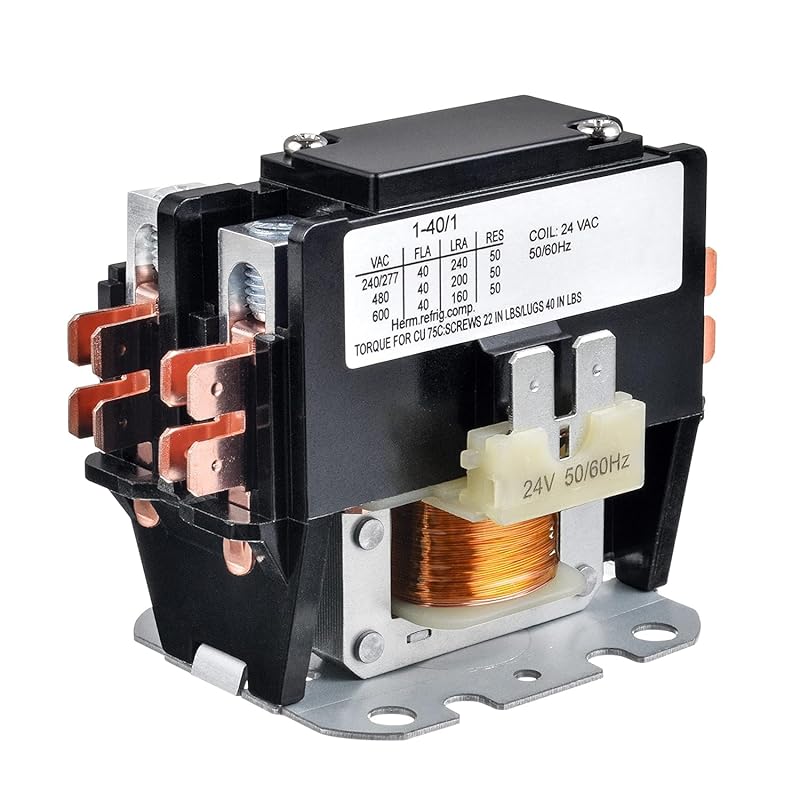
Carrier air conditioner efficiency ratings help you understand how much energy your unit uses versus how much cooling it provides. Knowing these ratings helps you save money and reduce environmental impact. Whether you’re buying a new system or comparing models, understanding efficiency ratings is key to making a smart investment.
Key Takeaways
- SEER Rating: The Seasonal Energy Efficiency Ratio measures cooling output over a typical season. Higher SEER means better efficiency.
- EER Rating: The Energy Efficiency Ratio compares cooling capacity to power input at a specific moment. Useful for peak performance evaluation.
- Energy Star Certification: Carriers with Energy Star labels meet strict government standards for energy savings and environmental protection.
- Higher Ratings = Lower Bills: More efficient units use less electricity, reducing monthly utility costs significantly.
- Proper Sizing Matters: An oversized or undersized AC affects efficiency. Correct sizing ensures optimal performance and longevity.
- Maintenance Impacts Ratings: Dirty filters and coils lower real-world efficiency, no matter how high the rating.
- Smart Thermostats Enhance Efficiency: Pairing your Carrier AC with a smart thermostat can improve comfort and reduce waste.
Quick Answers to Common Questions
What does SEER stand for?
Answer: SEER stands for Seasonal Energy Efficiency Ratio. It measures how much cooling your air conditioner produces compared to the electricity it uses over an entire cooling season.
Is a higher SEER rating always better?
Answer: Not necessarily. While higher SEER means greater efficiency, the added cost may not justify the savings in mild climates. Consider your local climate, utility rates, and usage patterns.
Can I improve my AC’s efficiency without replacing it?
Answer: Yes! Regular maintenance, sealing ducts, upgrading insulation, and using a programmable thermostat can significantly boost real-world efficiency.
How do I find the SEER rating on my Carrier unit?
Answer: Look for a yellow EnergyGuide label on the unit or inside the service panel. You’ll also see it listed in your owner’s manual or on Carrier’s website.
Will a high-efficiency AC cool faster?
Answer: Not necessarily. Efficiency refers to energy use, not speed. However, inverter models maintain consistent temperatures more effectively, improving comfort over time.
📑 Table of Contents
- Understanding Carrier Air Conditioner Efficiency Ratings
- What Are Air Conditioner Efficiency Ratings?
- How Carrier Achieves High Efficiency
- Choosing the Right Efficiency Level for Your Home
- Maintaining Efficiency: Tips from the Experts
- Environmental Impact of Efficient Cooling
- Frequently Asked Questions About Carrier Air Conditioner Efficiency Ratings
Understanding Carrier Air Conditioner Efficiency Ratings
When it comes to choosing an air conditioner, most people focus on size, brand, or price. But one of the most important—yet often overlooked—factors is efficiency. That’s where Carrier air conditioner efficiency ratings come into play. These ratings tell you exactly how effectively your unit converts electricity into cool air. And if you’re like most homeowners, you want your AC to do more than just cool your space—you want it to do so without sending your energy bill through the roof.
Carrier has long been a leader in HVAC innovation, and their efficiency ratings reflect that commitment. From residential split systems to whole-home solutions, Carrier offers models across a wide range of SEER (Seasonal Energy Efficiency Ratio) values. But what do those numbers actually mean? How do you interpret them? And why should you care? In this guide, we’ll break down everything you need to know about Carrier air conditioner efficiency ratings, including how they’re calculated, what they mean for your wallet, and how to choose the right model for your home.
What Are Air Conditioner Efficiency Ratings?
Air conditioner efficiency ratings are standardized measurements that compare how much cooling your unit produces relative to the amount of electricity it consumes. Think of it like miles per gallon for your car—except instead of distance per gallon, it’s British Thermal Units (BTUs) of cooling per watt-hour of electricity used.
Visual guide about Carrier Air Conditioner Efficiency Ratings
Image source: typecalendar.com
These ratings help consumers compare different models objectively. Without them, it would be nearly impossible to determine which AC will run the most efficiently under real-world conditions. For Carrier, these ratings aren’t just marketing fluff—they’re built into every product line, from budget-friendly options to high-end inverter systems.
The Two Main Ratings: SEER and EER
There are two primary efficiency metrics used by manufacturers like Carrier: SEER and EER. While both measure efficiency, they do so in slightly different ways and at different times.
SEER (Seasonal Energy Efficiency Ratio)
SEER is the gold standard for measuring seasonal efficiency. It calculates the total cooling output (in BTUs) during a typical cooling season divided by the total electric energy input (in watt-hours). The higher the SEER number, the more efficient the unit is over time.
For example, if a Carrier AC has a SEER rating of 16, it delivers 16 BTUs of cooling for every watt-hour of electricity used during its operating season. Compare that to a 10 SEER unit—it only gets 10 BTUs per watt-hour. Over time, that difference adds up.
EER (Energy Efficiency Ratio)
EER measures efficiency at a single point in time, usually at 95°F outside temperature. It’s calculated the same way as SEER but focuses on peak performance rather than seasonal averages. Because EER doesn’t account for varying loads throughout the day, it’s less useful for overall cost analysis—but still valuable for understanding how well a unit handles extreme heat.
Most modern Carrier units report both SEER and EER, allowing consumers to evaluate performance across different scenarios.
Why Efficiency Matters Beyond the Numbers
While SEER and EER give you hard data, the real-world benefits go beyond the specs sheet. A more efficient Carrier air conditioner reduces strain on the electrical grid, lowers greenhouse gas emissions, and minimizes wear and tear on components—meaning longer service life and fewer repairs.
Plus, in regions with high electricity rates or frequent heatwaves, efficiency can translate directly into thousands of dollars in annual savings. That’s why understanding Carrier air conditioner efficiency ratings isn’t just about compliance—it’s about making a smarter, more sustainable choice for your home.
How Carrier Achieves High Efficiency
So how does Carrier consistently deliver high-efficiency units? It starts with engineering excellence and ends with real-world testing. Unlike some brands that rely solely on theoretical models, Carrier invests heavily in research and development to optimize every component for maximum performance.
Visual guide about Carrier Air Conditioner Efficiency Ratings
Image source: i-blog.csdnimg.cn
Inverter Technology: The Game Changer
One of Carrier’s biggest innovations is inverter-driven compressors. Traditional ACs turn on and off repeatedly—like a light switch flicking—which wastes energy and causes temperature swings. In contrast, inverter compressors adjust their speed continuously based on demand.
This means your Carrier unit can maintain a steady temperature while using only the exact amount of power needed. For instance, during mild afternoons, it might run at 40% capacity instead of cycling full-on and off. This not only boosts efficiency but also extends the lifespan of the compressor.
Advanced Refrigerant Management
Carrier also uses smart refrigerant controls to minimize waste and maximize transfer. By precisely managing how refrigerant flows through the system, they reduce pressure drops and heat loss—both major sources of inefficiency.
Additionally, newer Carrier models use low-GWP (Global Warming Potential) refrigerants like R-32, which are safer for the environment and perform better under load.
High-Efficiency Filtration and Coils
Even the cleanliness of your indoor coil plays a role in efficiency. Dust and debris restrict airflow, forcing the compressor to work harder. Carrier designs their coils with self-cleaning features and recommends regular maintenance to keep things running smoothly.
Choosing the Right Efficiency Level for Your Home
Not all homes need the same level of efficiency. Choosing the wrong SEER rating could mean overspending on a unit you don’t fully utilize—or paying too little and dealing with high energy bills year after year.
Minimum SEER Requirements
In the U.S., federal regulations require new central air conditioners to have at least a 13 SEER rating. However, many states—including California and Florida—have adopted stricter standards (up to 21 SEER in some cases).
If you live in a hot climate, upgrading beyond 14 SEER can yield significant returns. Conversely, if you’re in a mild area with minimal cooling needs, a 13–15 SEER unit may suffice.
Cost vs. Savings: The Payback Period
Let’s say you install a 16 SEER Carrier system instead of a 14 SEER model. The upfront cost might be $800 more. But depending on your usage, that extra investment could pay for itself in under five years through lower electricity bills.
To calculate your payback period, multiply your annual cooling hours by your local electricity rate, then divide by the difference in SEER between the two units. Most experts agree that anything under 7–10 years is worth considering.
Rebates and Incentives
Many utility companies and government programs offer rebates for installing high-efficiency Carrier units. Check with your local provider—you might recover 20–30% of the purchase price just by switching to a 16+ SEER system.
Maintaining Efficiency: Tips from the Experts
A high SEER rating doesn’t guarantee low energy use if the system isn’t maintained properly. Here’s how to keep your Carrier air conditioner running at peak efficiency:
- Change or clean filters monthly during peak cooling months. Clogged filters force the system to work harder, dropping real-world efficiency by 5–15%.
- Schedule professional tune-ups annually. Technicians can inspect refrigerant levels, clean coils, and ensure proper airflow.
- Keep outdoor unit clear of vegetation and debris. Blocked airflow reduces performance and increases wear.
- Use programmable or smart thermostats. These allow you to set temperatures when you’re away, avoiding unnecessary cooling.
- Seal ductwork leaks. Leaky ducts can waste up to 30% of cooled air before it reaches your vents.
Remember: even the most efficient Carrier unit loses value without care. Treat your investment like any other appliance—regular attention keeps it performing like new.
Environmental Impact of Efficient Cooling
Beyond saving money, choosing a high-efficiency Carrier air conditioner makes a real difference for the planet. According to the Department of Energy, improving HVAC efficiency nationwide could cut carbon emissions by millions of tons annually.
By reducing reliance on fossil-fuel-powered electricity—especially during summer peaks—efficient systems ease stress on the grid and support renewable integration. Plus, Carrier’s focus on sustainable refrigerants and recyclable materials aligns with global climate goals.
If you’ve ever worried about your AC’s environmental footprint, now’s the time to act. Every SEER point counts toward a cooler, cleaner future.
Frequently Asked Questions About Carrier Air Conditioner Efficiency Ratings
Can I upgrade my old Carrier AC to a higher SEER unit?
Yes, but it depends on your existing ductwork and home layout. Consult a Carrier-certified contractor to assess compatibility and potential rebates.
Do all Carrier models come with inverter technology?
No—only certain premium lines (like the Infinity series) include inverter compressors. Mid-tier models typically use fixed-speed technology.
How often should I replace my Carrier AC for maximum efficiency?
Most experts recommend replacement every 10–15 years. Older units (pre-2006) often have SEER ratings below 10—far less efficient than today’s standards.
Does humidity affect efficiency ratings?
Indirectly—high humidity increases cooling load, making the unit run longer. However, SEER accounts for average conditions, so actual performance may vary.
Are Carrier air conditioners worth the investment?
Absolutely. With superior build quality, smart features, and industry-leading warranties, Carrier units offer long-term value that justifies the initial cost.
Frequently Asked Questions
How do I calculate my AC’s actual energy savings?
Answer: Multiply your annual cooling hours by your electricity rate, then divide by your SEER rating. Compare this to older units to estimate savings. Online calculators can simplify the process.
Does location affect SEER performance?
Answer: Yes. Hotter climates reduce real-world efficiency because the unit runs longer. That’s why Carrier designs regional variants optimized for specific environments.
Can I install a high-SEER unit in an older home?
Answer: Possibly—but check duct integrity first. Leaky or undersized ducts negate the benefits of a high-efficiency system. A professional audit is recommended.
Are Carrier inverter models louder?
Answer: No. Inverter compressors operate quietly because they avoid the loud “on/off” cycling of traditional units. Many users report quieter operation with inverter models.
What’s the difference between Carrier and other brands in terms of efficiency?
Answer: Carrier consistently ranks among the top in independent tests. Their focus on innovation, such as ComfortHeat technology and Precision Dehumidification, sets them apart in real-world performance.
Do I need special wiring for high-efficiency Carrier units?
Answer: Generally no—standard 120V/240V circuits work fine. However, larger models may require dedicated breakers or upgraded panels. Have an electrician verify before installation.