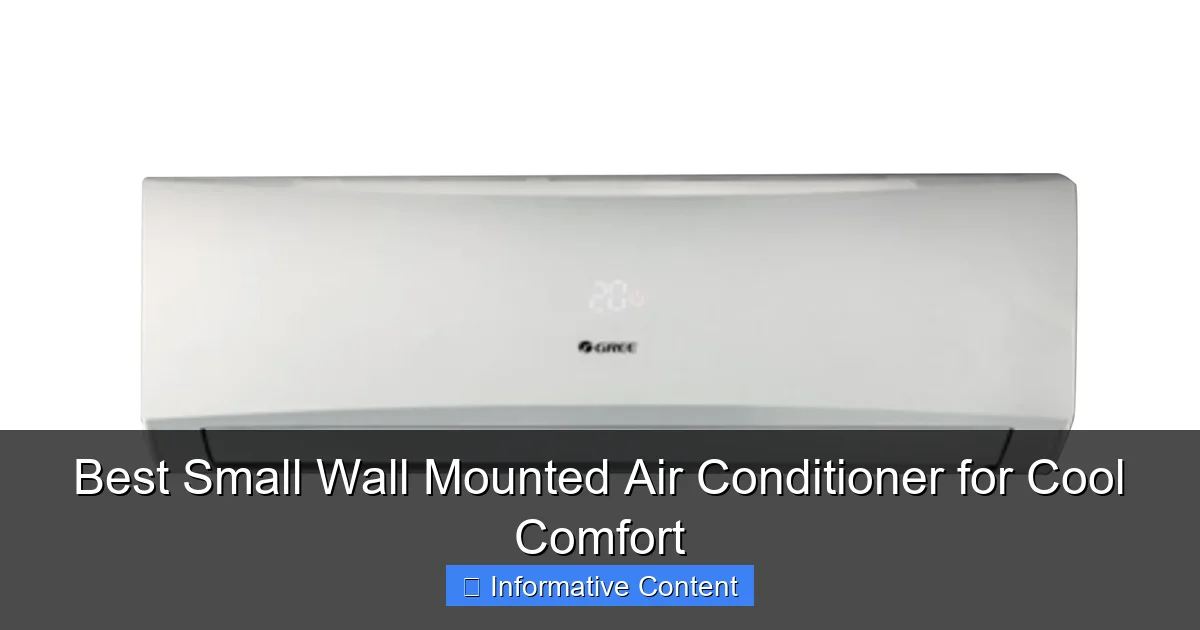
Featured image for best wall air conditioner units
The best wall air conditioner units deliver powerful, energy-efficient cooling with easy installation and smart features. Top models like the Frigidaire FHPC102AC1 and Koldfront WTC8001W stand out for their quiet operation, precise temperature control, and space-saving designs—perfect for bedrooms, offices, or apartments. These units offer a reliable, cost-effective solution for staying cool without the hassle of window installations or bulky portable ACs.
Key Takeaways
- Choose energy-efficient models: Save on bills with ENERGY STAR-certified units.
- Measure room size: Match BTU capacity to room square footage for optimal cooling.
- Prioritize noise levels: Select units under 50 dB for quiet operation.
- Check installation requirements: Ensure compatibility with your wall type and electrical setup.
- Smart features add convenience: Wi-Fi and app controls enhance usability and scheduling.
- Regular maintenance extends lifespan: Clean filters monthly and schedule annual servicing.
📑 Table of Contents
- The Cool Choice: Why Wall Air Conditioners Are Worth It
- How Wall Air Conditioners Work (And Why They’re Different)
- Top Wall Air Conditioner Picks for Every Need
- Installation Tips: DIY or Hire a Pro?
- Maintenance and Care: Keeping Your AC Running Smoothly
- Wall AC vs. Alternatives: What’s Right for You?
- Making the Final Decision: Your Cool Comfort Checklist
The Cool Choice: Why Wall Air Conditioners Are Worth It
Imagine this: it’s the middle of summer, and your apartment feels like a sauna. You’re sweating through your shirt, and the ceiling fan is doing little more than moving hot air around. You’ve tried portable ACs, but they’re bulky, noisy, and never quite cool enough. Sound familiar? That’s when you realize it’s time to upgrade—to a wall air conditioner.
Wall-mounted ACs are a game-changer for anyone living in an apartment, condo, or home without central air. They’re sleek, efficient, and powerful, delivering cool air exactly where you need it. Unlike window units, they don’t block your view or take up precious floor space. And unlike central systems, they’re affordable and easy to install (or have installed). But with so many options out there, how do you pick the right one? That’s where this guide comes in. We’ll walk you through everything you need to know to find the best wall air conditioner for your space—whether you’re cooling a tiny studio or a spacious living room.
How Wall Air Conditioners Work (And Why They’re Different)
The Basics: How They Cool Your Space
Wall air conditioners work similarly to window units but with a few key differences. Both types use a refrigerant to absorb heat from the indoor air and release it outside. However, wall units are installed through a hole in the wall, which means they’re more permanent and often more efficient. The outdoor portion sits flush with the exterior wall, while the indoor unit delivers cool air into your room.
One of the biggest advantages? They don’t block your window. That means you keep your natural light and view—plus, you don’t have to worry about the unit falling out on a windy day (a real concern with some window ACs).
Types of Wall ACs: Through-the-Wall vs. Mini-Split
Not all wall ACs are created equal. Here are the two main types:
- Through-the-wall units: These are all-in-one systems installed directly into a wall sleeve. They’re the most common type and are great for retrofitting older homes or apartments. Installation usually requires a professional, but they’re reliable and affordable.
- Mini-split systems: These have two parts—an outdoor compressor and an indoor air handler mounted on the wall. They’re more expensive and require professional installation, but they’re ultra-quiet, highly efficient, and offer advanced features like multi-zone cooling.
For most people, a through-the-wall unit is the sweet spot. But if you want whisper-quiet operation and don’t mind the higher cost, a mini-split might be worth the investment.
Energy Efficiency and BTUs: What You Need to Know
When shopping for a wall AC, two specs matter most: BTUs (British Thermal Units) and EER (Energy Efficiency Ratio). Here’s what they mean:
- BTUs: This measures cooling power. Too few, and your room stays hot. Too many, and you’ll waste energy. As a general rule:
- 100–150 sq. ft.: 5,000 BTUs
- 150–250 sq. ft.: 6,000 BTUs
- 250–300 sq. ft.: 7,000–8,000 BTUs
- 300–400 sq. ft.: 9,000–10,000 BTUs
- EER: The higher the EER, the more efficient the unit. Look for at least 10.0 for standard models or 12.0+ for ENERGY STAR-certified units. A higher EER means lower electricity bills over time.
Pro tip: Don’t just go by room size. If your apartment gets a lot of sun or has high ceilings, bump up the BTUs by 10–20%.
Top Wall Air Conditioner Picks for Every Need
Best Overall: Frigidaire FFRE0833S1
If you want a reliable, no-nonsense wall AC that does it all, the Frigidaire FFRE0833S1 is a top contender. With 8,000 BTUs, it cools rooms up to 350 sq. ft., making it perfect for living rooms or master bedrooms. It’s ENERGY STAR-certified (EER: 12.1), so it’s efficient without sacrificing performance.
What we love:
- Easy-to-use digital controls with a remote
- Three fan speeds and a sleep mode for quieter operation at night
- Washable filter for easy maintenance
Downsides? It’s a bit bulky, and the installation sleeve isn’t included (sold separately). But for the price, it’s hard to beat.
Best for Small Spaces: Keystone KSTAW05A
Tiny apartment? The Keystone KSTAW05A is a compact powerhouse. At 5,000 BTUs, it’s ideal for rooms up to 150 sq. ft.—think studios, home offices, or dorm rooms. It’s also one of the most affordable options on the market.
Highlights:
- Ultra-quiet operation (51 dB on low)
- Mechanical controls (no fussy electronics)
- Includes a wall sleeve for easier installation
One caveat: The cooling power is modest, so it’s not ideal for larger spaces or extreme heat. But if you’re in a mild climate or just need a little relief, it’s a solid pick.
Best Premium Option: LG LW1017ERSM
For those who want luxury, the LG LW1017ERSM delivers. With 10,000 BTUs, it cools large rooms (up to 450 sq. ft.) and features a sleek, modern design. It’s also Wi-Fi-enabled, so you can control it with your phone or voice assistant (Alexa/Google Assistant).
Standout features:
- Smart cooling: Adjusts temperature based on room occupancy
- Dehumidifies up to 3.2 pints per hour
- Ultra-quiet (48 dB on low)
The downside? It’s pricey, and the Wi-Fi setup can be finicky. But if you value convenience and cutting-edge tech, it’s worth the splurge.
Best Mini-Split: Mitsubishi MSZ-FH12NA
If noise is a dealbreaker, the Mitsubishi MSZ-FH12NA is the gold standard. This mini-split system is whisper-quiet (as low as 21 dB) and delivers 12,000 BTUs of cooling power. It’s also incredibly efficient (SEER: 26.1), which means lower energy bills.
Why it’s great:
- Zoned cooling: Adjust temperature room-by-room
- Heating function (perfect for year-round use)
- Remote and app control
The catch? It’s expensive (often $1,500+ installed) and requires professional help. But if you want the best of the best, this is it.
Best Budget-Friendly: GE AHY08LZ
Not everyone wants to spend hundreds on an AC. The GE AHY08LZ proves you don’t have to. At around $250, it’s one of the most affordable wall units out there—and it still delivers solid performance (8,000 BTUs, EER: 10.7).
Pros:
- Easy installation (includes wall sleeve)
- Three fan speeds and a 24-hour timer
- Durable build
Just don’t expect smart features or ultra-quiet operation. But for the price, it’s a steal.
Installation Tips: DIY or Hire a Pro?
DIY Installation: When You Can (And Should) Do It Yourself
Some wall ACs, like the Keystone KSTAW05A and GE AHY08LZ, come with wall sleeves and are designed for DIY installation. If you’re handy with tools and your wall is standard (wood or drywall), you might be able to handle it yourself. Here’s what you’ll need:
- Measuring tape
- Jigsaw or reciprocating saw
- Level
- Drill
- Sealant (to prevent leaks)
Steps:
- Measure the wall sleeve and mark the cutout.
- Cut the hole (start small—you can always make it bigger).
- Insert the sleeve and secure it with screws.
- Slide in the AC unit and seal the edges.
Pro tip: Always check local building codes. Some apartments or condos require professional installation.
When to Call a Professional
For most mini-splits and some through-the-wall units, you’ll need a pro. Here’s why:
- Electrical work: Some units require hardwiring or a dedicated circuit.
- Refrigerant lines: Mini-splits need precise refrigerant charging.
- Structural concerns: If your wall is brick, concrete, or load-bearing, DIY is risky.
How much does it cost? Expect $200–$500 for standard installations, or $1,000+ for mini-splits. But it’s worth it for peace of mind and warranty protection.
Common Installation Mistakes to Avoid
- Skipping the level: A crooked unit can leak or vibrate.
- Ignoring the slope: The unit should tilt slightly outward (1/4″ per foot) for proper drainage.
- Forgetting the sealant: Gaps let hot air in and cool air out.
- Overlooking insulation: Wrap the sleeve with foam tape to prevent drafts.
One reader shared: “I thought I could wing it, but my first install was a disaster. The unit kept tripping the breaker. Turns out I needed a 20-amp circuit. Learned my lesson!”
Maintenance and Care: Keeping Your AC Running Smoothly
Cleaning the Filter: The #1 Maintenance Task
Dirty filters are the #1 reason ACs underperform. A clogged filter restricts airflow, making your unit work harder and use more energy. Here’s how to clean it:
- Turn off the unit and unplug it.
- Remove the front panel (usually snaps off).
- Pull out the filter and rinse it with lukewarm water.
- Let it dry completely before reinstalling.
Do this every 2–4 weeks during peak cooling season. If you have pets or allergies, clean it more often.
Other Routine Tasks
- Check the coils: If they’re dusty, gently wipe them with a soft brush or cloth.
- Inspect the drain pan: Make sure it’s not cracked or leaking.
- Trim outdoor vegetation: Keep plants at least 12″ away from the exterior unit to prevent airflow blockage.
Troubleshooting Common Issues
AC acting up? Here are quick fixes:
- Unit won’t turn on: Check the circuit breaker and power cord.
- No cool air: Clean the filter and check the thermostat settings.
- Leaking water: Clear the drain line with a pipe cleaner.
- Strange noises: Tighten loose panels or check for debris in the fan.
One user tip: “I kept hearing a buzzing sound at night. Turned out a leaf was stuck in the fan. A quick vacuum fixed it!”
Wall AC vs. Alternatives: What’s Right for You?
Wall AC vs. Window Unit
Both cool the same way, but there are key differences:
- Wall AC: More permanent, doesn’t block the window, often more efficient.
- Window unit: Easier to install, cheaper, but blocks light and view.
Verdict: If you want a clean look and don’t mind the upfront cost, go for a wall AC. If you’re renting or on a budget, a window unit works fine.
Wall AC vs. Portable AC
Portable ACs are popular, but they have drawbacks:
- Wall AC: More powerful, quieter, more efficient.
- Portable AC: No installation, but noisy, less effective, and takes up floor space.
Real-world example: “I had a portable AC in my bedroom. It cooled the room, but the noise kept me up. Switching to a wall unit was a night-and-day difference.”
Wall AC vs. Central Air
Central air is the gold standard, but it’s not for everyone:
- Wall AC: Cheaper, easier to install, ideal for apartments or single rooms.
- Central air: Cools the whole house, but expensive to install and maintain.
If you have central air, consider a wall unit for supplemental cooling in hot spots (like a sunny living room).
Making the Final Decision: Your Cool Comfort Checklist
Choosing the best wall air conditioner doesn’t have to be stressful. Here’s a quick checklist to guide you:
- Measure your room: Match the BTUs to your space size (and adjust for sun exposure).
- Check efficiency: Look for ENERGY STAR or high EER ratings.
- Consider noise: If you’re sensitive to sound, aim for 50 dB or lower.
- Think about features: Do you want a remote, Wi-Fi, or dehumidifying?
- Plan for installation: DIY or professional? Budget accordingly.
- Read reviews: Real-world feedback is invaluable.
And here’s the best part: once you’ve picked your unit, you’re just a few weeks away from cool, comfortable summers. No more sweating through your sheets or relying on fans that don’t cut it. A wall AC is an investment in your comfort—and your sanity.
| Model | BTUs | EER | Noise (dB) | Special Features |
|---|---|---|---|---|
| Frigidaire FFRE0833S1 | 8,000 | 12.1 | 52 | Remote, sleep mode |
| Keystone KSTAW05A | 5,000 | 11.0 | 51 | Mechanical controls |
| LG LW1017ERSM | 10,000 | 12.1 | 48 | Wi-Fi, smart cooling |
| Mitsubishi MSZ-FH12NA | 12,000 | 26.1 (SEER) | 21 | Heating, zoned cooling |
| GE AHY08LZ | 8,000 | 10.7 | 55 | Budget-friendly |
At the end of the day, the best wall air conditioner is the one that fits your space, budget, and lifestyle. Whether you’re cooling a cozy studio or a sprawling living room, there’s a perfect match out there. So take your time, do your research, and get ready to enjoy cool comfort all summer long. You’ve earned it.
Frequently Asked Questions
What are the best wall air conditioner units for small rooms?
The best wall air conditioner units for small rooms (under 300 sq. ft.) include models like the Frigidaire FHPC082AC1 and GE AJCQ06LWH, offering 8,000 BTUs of cooling power. These units balance efficiency, quiet operation, and easy installation.
How do I choose the right size wall AC unit for my space?
Match the unit’s BTU (British Thermal Unit) rating to your room size: 8,000 BTUs for 250–350 sq. ft., and 10,000–12,000 BTUs for 400–550 sq. ft. Always measure your space and consider factors like sunlight and ceiling height when selecting the best wall air conditioner units.
Are wall air conditioners more efficient than window units?
Yes, wall air conditioners are often more energy-efficient than window units due to better insulation and a permanent installation that reduces air leaks. Many models also feature higher SEER ratings and smart energy-saving modes.
Can I install a wall air conditioner myself?
While DIY installation is possible for handy homeowners, professional installation is recommended for the best wall air conditioner units to ensure proper sealing, electrical connections, and warranty compliance. Improper installation can lead to leaks or inefficiency.
What features should I look for in a high-quality wall AC unit?
Look for adjustable thermostats, multiple fan speeds, programmable timers, remote controls, and energy-saving modes. The best wall air conditioner units also include washable filters and smart home compatibility for added convenience.
Do wall air conditioners require a lot of maintenance?
Minimal maintenance is needed: clean or replace filters monthly, clear debris from outdoor vents, and check drainage lines annually. Regular upkeep ensures optimal performance and extends the lifespan of your wall AC unit.