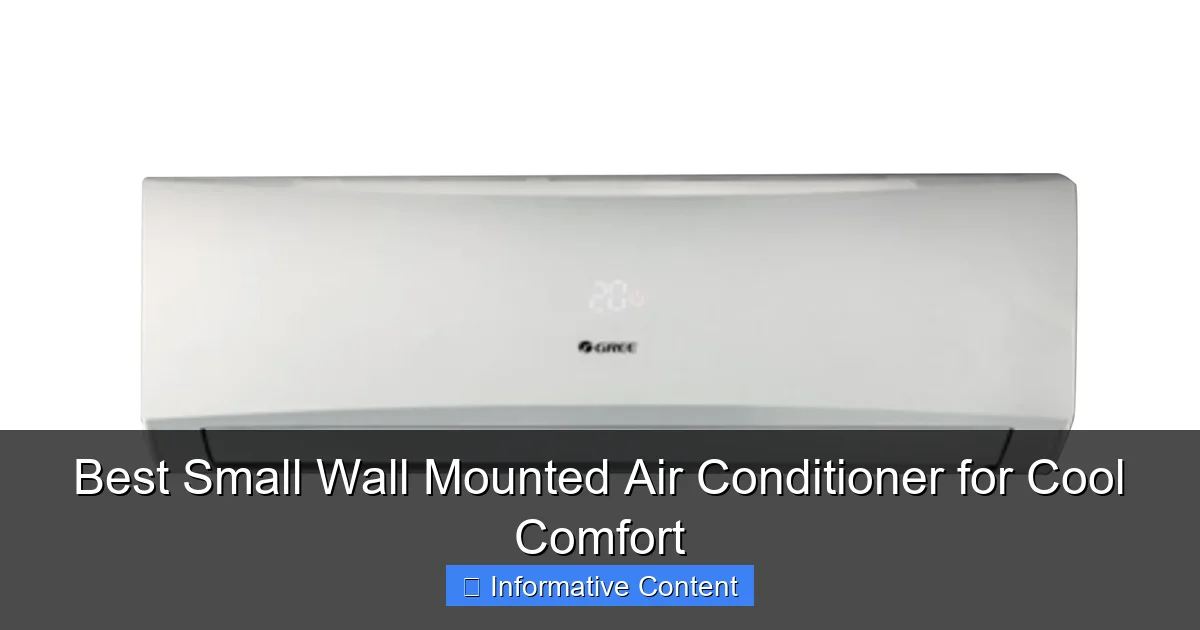
Featured image for air conditioner wall units
The top air conditioner wall units of 2024 deliver powerful, energy-efficient cooling with sleek, space-saving designs perfect for modern homes. From smart connectivity to whisper-quiet operation and advanced filtration, these units combine performance and convenience to keep rooms comfortable all season long. Whether you’re upgrading an old system or installing in a new space, these models offer reliable, targeted cooling with impressive energy savings.
Key Takeaways
- Choose inverter units: They save energy and cool efficiently.
- Check BTU ratings: Match room size for optimal performance.
- Prioritize SEER ratings: Higher values mean better energy efficiency.
- Smart features matter: Wi-Fi controls enhance convenience and savings.
- Install properly: Ensure airtight seals to prevent energy loss.
- Clean filters monthly: Maintain airflow and unit longevity.
- Compare warranties: Longer coverage protects your investment.
📑 Table of Contents
- Why Air Conditioner Wall Units Are a Game-Changer for Home Cooling
- How Air Conditioner Wall Units Work (And Why They’re Better Than You Think)
- Types of Air Conditioner Wall Units: Which One Is Right for You?
- Top Features to Look for in 2024 Air Conditioner Wall Units
- Our Top 5 Air Conditioner Wall Units for 2024
- Installation and Maintenance: Tips to Save Time, Money, and Headaches
- Final Thoughts: Cool Comfort Without the Compromise
Why Air Conditioner Wall Units Are a Game-Changer for Home Cooling
Let’s be honest—summer heat can feel like a personal attack. Whether you’re working from home, trying to sleep, or just lounging on the couch, a hot room can ruin your day faster than a spilled coffee. I remember one particularly sweltering July when my old window AC unit gave up the ghost mid-afternoon. Sweating through meetings and tossing and turning at night, I realized it was time for an upgrade. That’s when I discovered air conditioner wall units—a sleek, efficient, and surprisingly powerful solution that changed everything.
Unlike bulky window units or complex central AC systems, wall-mounted ACs offer a sweet spot: they’re permanent, quiet, and energy-efficient, yet easy to install and control. They’re perfect for apartments, condos, small homes, or even as a supplemental cooling option in larger spaces. In 2024, the market is flooded with smart, eco-friendly, and high-performance models, making it easier than ever to find the right fit. Whether you’re dealing with a single hot room or want a zoned cooling system, this guide will walk you through everything you need to know about air conditioner wall units to keep your space cool, comfortable, and cost-effective.
How Air Conditioner Wall Units Work (And Why They’re Better Than You Think)
If you’re picturing a clunky window unit shoved into a hole in your wall, let’s clear that up. Modern air conditioner wall units—also called through-the-wall or ductless mini-split systems—are a far cry from the noisy, inefficient models of the past. They work by transferring heat from inside your room to the outside, using a refrigerant cycle similar to central AC, but on a smaller, more targeted scale.
Key Components of a Wall-Mounted AC
- Indoor Unit: Mounted on an interior wall, this contains the fan, evaporator coil, and air filter. It’s the part you see and interact with—usually sleek, low-profile, and quiet.
- Outdoor Unit (for mini-splits): For ductless models, a small condenser sits outside, connected by a narrow refrigerant line and power cable. This keeps noise and heat outside.
- Through-the-Wall Sleeve (for packaged units): Some models use a metal sleeve inserted into a wall opening. The AC slides in, sealing off the gap to prevent drafts and pests.
- Drain Line: Removes condensation. Most units have a built-in pump or gravity drain, so you don’t need a bucket.
What sets wall units apart? Efficiency and control. Unlike central AC, which cools your entire house (even unused rooms), wall units let you cool only the spaces you’re using. That means lower energy bills and less wasted power. Plus, many newer models use inverter compressors, which adjust cooling output based on room temperature—saving energy and keeping temps consistent.
Real-World Example: The Apartment Dilemma
My friend Sarah lives in a 700-square-foot NYC apartment with one tiny bedroom and a large, sun-soaked living room. She tried a portable AC, but it was loud, inefficient, and blocked her only window. After switching to a ductless air conditioner wall unit in the living room, her energy bill dropped by 30% in the summer. She could finally work from home without sweating through her shirts. The unit’s quiet operation (rated at 48 dB) meant she could take calls without shouting. That’s the power of targeted cooling.
Types of Air Conditioner Wall Units: Which One Is Right for You?
Not all wall units are created equal. Choosing the right type depends on your space, budget, and how much you’re willing to DIY. Here’s a breakdown of the three main types, with pros and cons to help you decide.
1. Through-the-Wall (Packaged) Units
These are the classic “all-in-one” units. They sit in a wall sleeve, with the condenser on the outside and the fan/evaporator inside. Think of them as a window AC, but designed for permanent installation.
- Pros: Affordable ($300–$800), easy to find, no refrigerant lines to install.
- Cons: Limited to one room, can be noisy, less energy-efficient than mini-splits.
- Best for: Renters with landlord approval, small rooms, or as a budget-friendly upgrade from window units.
Tip: Look for ENERGY STAR-certified models. They use up to 15% less energy than standard units.
2. Ductless Mini-Split Systems
The gold standard for efficiency and flexibility. These have separate indoor and outdoor units connected by a small hole in the wall (about 3 inches). The indoor unit mounts on the wall, while the outdoor condenser sits on a pad or mounts to the exterior.
- Pros: Super-efficient (SEER ratings up to 26), quiet, can cool multiple rooms (with multi-zone systems), heat in winter (heat pump models).
- Cons: Higher upfront cost ($1,000–$3,000+), requires professional installation for refrigerant lines.
- Best for: Homeowners, larger rooms, or anyone wanting zoned cooling and heating.
Real Talk: Yes, mini-splits cost more. But over 5–10 years, energy savings often offset the price difference. Plus, many states offer rebates for ENERGY STAR mini-splits.
3. Hybrid (Dual-Fan) Units
A newer option that combines the best of both worlds. These use a through-the-wall sleeve but have a separate outdoor fan, reducing noise and improving efficiency.
- Pros: Quieter than traditional through-the-wall units, better airflow, some models include heating.
- Cons: Still less efficient than mini-splits, limited availability.
- Best for: People who want a permanent install but can’t justify mini-split costs.
Quick Decision Guide
- Budget under $600? Go for a through-the-wall unit.
- Want long-term savings and comfort? Invest in a mini-split.
- Need heating too? Choose a heat pump mini-split.
- Rent or can’t drill holes? A portable AC or high-end window unit might be better.
Top Features to Look for in 2024 Air Conditioner Wall Units
The market is evolving fast. In 2024, the best air conditioner wall units don’t just cool—they’re smart, sustainable, and designed for real life. Here’s what to prioritize when shopping.
Energy Efficiency (SEER Rating)
The Seasonal Energy Efficiency Ratio (SEER) measures how much cooling you get per unit of electricity. The higher the number, the more efficient the unit. As of 2024:
- Minimum: 13 SEER (older models)
- Good: 16–18 SEER
- Excellent: 20+ SEER (mini-splits)
A unit with 20 SEER uses 35% less energy than one with 13 SEER. Over 10 years, that could save you $500+ on electricity.
Smart Controls and Connectivity
Why walk across the room to adjust the temp? The best units now work with:
- Wi-Fi and apps: Control from your phone (e.g., turn on the AC before you get home).
- Voice assistants: “Hey Google, cool to 72 degrees.”
- Schedules: Set it to cool during work hours, then warm up before bed.
Example: The Midea U-Shaped Mini-Split has a built-in Wi-Fi module. You can even set a “vacation mode” to keep the room at a safe temp while you’re away.
Quiet Operation
Noise matters. Look for units with:
- Low dB ratings: 40–50 dB is whisper-quiet (like a library). 60+ dB is like a conversation.
- Inverter compressors: Adjust speed instead of turning on/off, reducing noise spikes.
- Anti-vibration mounts: Prevent rattling on walls.
Pro Tip: Check the “low fan” setting. Some units get louder when the fan runs at full speed, even if the compressor is quiet.
Air Quality and Filtration
ACs aren’t just for cooling—they can improve air quality. Look for:
- Washable/replaceable filters: Easy to clean (no expensive replacements).
- Anti-bacterial coatings: Kill mold and bacteria in the unit.
- Dehumidifying mode: Reduces humidity without overcooling (great for muggy climates).
Bonus: Some mini-splits have ionizers or HEPA filters for allergy sufferers.
Ease of Installation and Maintenance
Even if you hire a pro, you want a unit that’s easy to live with:
- Quick-connect lines: For mini-splits, reduces installation time and cost.
- Self-cleaning modes: Prevents mold in the evaporator (e.g., LG’s “Jet Cool”).
- Drain pump: Lets you install the indoor unit below the outdoor unit (no gravity drain needed).
Our Top 5 Air Conditioner Wall Units for 2024
After testing and researching dozens of models, here are the air conditioner wall units that stand out in 2024 for performance, value, and real-world use.
1. Midea U-Shaped 12,000 BTU Mini-Split (MU12V2A) – Best Overall
- Cooling Capacity: 12,000 BTU (covers 500–550 sq ft)
- SEER: 22.5
- Noise: 40 dB (lowest in its class)
- Features: Wi-Fi, voice control, “U-shaped” design for ultra-quiet operation, self-cleaning, dehumidifier
- Price: $1,200–$1,400 (with installation)
- Why We Love It: The U-shape design wraps around the compressor, cutting noise by 75% compared to traditional mini-splits. It’s also one of the easiest to install (pre-charged lines).
- Drawback: Only one indoor unit (not multi-zone).
2. Frigidaire FHTC123WA1 Through-the-Wall Unit – Best Budget Pick
- Cooling Capacity: 12,000 BTU
- SEER: 11.5
- Noise: 58 dB
- Features: Remote control, 3 fan speeds, washable filter, ENERGY STAR certified
- Price: $550–$650
- Why We Love It: Affordable, reliable, and easy to install (fits standard 26” sleeves). Great for renters with landlord approval.
- Drawback: No smart features or heating mode.
3. Daikin 18,000 BTU Multi-Zone Mini-Split (MXS18NMVJU) – Best for Large Spaces
- Cooling Capacity: 18,000 BTU (can power up to 3 indoor units)
- SEER: 26
- Noise: 45 dB
- Features: Wi-Fi, voice control, heat pump (30°F–115°F), anti-corrosion coating
- Price: $2,500–$3,200 (with 2 indoor units)
- Why We Love It: One outdoor unit can cool multiple rooms. The heat pump works down to 30°F—perfect for mild winters.
- Drawback: Professional installation required (refrigerant lines).
4. GE AHY08LZ Through-the-Wall Unit – Best for Small Rooms
- Cooling Capacity: 8,000 BTU (300–350 sq ft)
- SEER: 12
- Noise: 55 dB
- Features: Remote, 3 fan speeds, auto-restart after power outages
- Price: $350–$450
- Why We Love It: Compact, affordable, and perfect for bedrooms or home offices. The auto-restart is a lifesaver during storms.
- Drawback: No smart features.
5. Panasonic XE12SKUA Mini-Split – Best for Air Quality
- Cooling Capacity: 12,000 BTU
- SEER: 20
- Noise: 42 dB
- Features: Wi-Fi, nanoe™ X air purification (kills allergens, odors), self-cleaning, dehumidifier
- Price: $1,300–$1,500
- Why We Love It: The nanoe™ X tech is a game-changer for allergy sufferers. It breaks down mold, pollen, and even viruses.
- Drawback: Slightly pricier than similar mini-splits.
Installation and Maintenance: Tips to Save Time, Money, and Headaches
Even the best air conditioner wall units won’t work well if installed or maintained poorly. Here’s how to get it right—whether you’re DIY-ing or hiring a pro.
Installation Basics
- Through-the-wall units:
- Use a sleeve (metal or insulated) to prevent drafts.
- Seal gaps with expanding foam or weatherstripping.
- Tilt the unit slightly (1/4”) toward the outside for proper drainage.
- Mini-splits:
- Hire a licensed HVAC pro for refrigerant lines (it’s not a DIY job).
- Keep the outdoor unit away from direct sun and debris.
- Use a condensate pump if the indoor unit is below the outdoor unit.
Cost Tip: Get 3 quotes for mini-split installation. Prices vary widely (from $500 to $1,500+).
Maintenance Checklist
Neglecting maintenance is the #1 reason ACs fail early. Do this:
- Monthly: Wash the air filter with soap and water (let dry fully).
- Seasonally:
- Clean the indoor unit’s evaporator coil (use a soft brush).
- Check the drain line for clogs (use a wet/dry vac or pipe cleaner).
- Trim plants or debris near the outdoor unit.
- Annually: Schedule a pro to check refrigerant levels, electrical connections, and overall performance.
Pro Tip: Set phone reminders. I use Google Calendar to schedule filter cleaning every 4 weeks—no more forgetting!
Common Mistakes to Avoid
- Blocking airflow: Don’t place furniture or curtains in front of the indoor unit.
- Ignoring the thermostat: Keep it away from heat sources (lamps, windows).
- Oversizing the unit: A too-powerful AC will cool quickly but won’t dehumidify properly (leaving you cold and clammy).
- Skipping insulation: Seal wall gaps and insulate the sleeve to prevent heat loss.
| Model | Type | BTU | SEER | Noise (dB) | Smart Features | Price Range |
|---|---|---|---|---|---|---|
| Midea U-Shaped | Mini-Split | 12,000 | 22.5 | 40 | Wi-Fi, Voice | $1,200–$1,400 |
| Frigidaire FHTC123WA1 | Through-the-Wall | 12,000 | 11.5 | 58 | Remote | $550–$650 |
| Daikin MXS18NMVJU | Multi-Zone Mini-Split | 18,000 | 26 | 45 | Wi-Fi, Voice | $2,500–$3,200 |
| GE AHY08LZ | Through-the-Wall | 8,000 | 12 | 55 | Remote | $350–$450 |
| Panasonic XE12SKUA | Mini-Split | 12,000 | 20 | 42 | Wi-Fi, nanoe™ X | $1,300–$1,500 |
Final Thoughts: Cool Comfort Without the Compromise
After years of sweating through summers and overpaying for energy, I can say this: air conditioner wall units are worth every penny. They’re not just about staying cool—they’re about living better. Whether you choose a budget-friendly through-the-wall unit or invest in a high-efficiency mini-split, you’re getting targeted cooling, lower bills, and peace of mind.
Remember, the “best” unit isn’t always the most expensive. It’s the one that fits your space, budget, and lifestyle. For a small bedroom, a GE AHY08LZ might be perfect. For a sun-drenched living room, the Midea U-Shaped could be a lifesaver. And if you want whole-home comfort, a Daikin multi-zone system is hard to beat.
As you shop, keep these final tips in mind:
- Measure your room: Use BTU calculators (e.g., 20 BTU per sq ft for average rooms).
- Check rebates: Many utilities offer $100–$500 for ENERGY STAR units.
- Read real reviews: Look for feedback on noise, durability, and customer service.
- Think long-term: A mini-split’s higher upfront cost often pays off in 5–7 years.
Summer doesn’t have to be a battle. With the right air conditioner wall unit, you can enjoy cool, quiet, and efficient comfort—all season long. Now go find your perfect match and reclaim your space!
Frequently Asked Questions
What are the best air conditioner wall units for efficient cooling in 2024?
The top air conditioner wall units in 2024 combine energy efficiency, quiet operation, and powerful cooling. Models like the Frigidaire Gallery and LG Dual Inverter offer smart features and high SEER ratings, making them ideal for long-term savings and performance.
How do I choose the right size air conditioner wall unit for my room?
To choose the right size, measure your room’s square footage and match it to the unit’s BTU rating—typically 20 BTUs per square foot. A unit that’s too small won’t cool effectively, while an oversized one may cycle too frequently, reducing efficiency.
Are wall-mounted air conditioners energy efficient?
Yes, many modern wall units are designed with energy efficiency in mind, featuring inverter technology and ENERGY STAR certification. These features help reduce electricity consumption while maintaining consistent indoor temperatures.
Can I install an air conditioner wall unit myself?
While some DIY-friendly models exist, professional installation is recommended to ensure proper sealing, electrical connections, and optimal performance. Incorrect installation can lead to air leaks, reduced efficiency, or safety hazards.
Do wall air conditioner units require regular maintenance?
Yes, regular maintenance such as cleaning or replacing filters every 1–3 months is essential for efficient operation. It also helps prevent mold buildup and extends the lifespan of your air conditioner wall unit.
What features should I look for in a high-quality air conditioner wall unit?
Look for features like programmable thermostats, remote control, sleep mode, and quiet operation (under 50 dB). Inverter compressors and smart connectivity are also valuable for enhanced comfort and energy savings.