
Ah, the open road! There’s nothing quite like the freedom of RV life, exploring new places, and making memories. But let’s be real, sometimes that beautiful sunshine can turn your cozy camper into a sauna. That's where a reliable small air conditioner for RV comes in handy. It’s not just about staying cool; it’s about comfort, better sleep, and enjoying your travels without feeling overheated.
Choosing the right AC unit for your recreational vehicle can be tricky. You need something compact, efficient, and powerful enough to handle your specific space without hogging all your power. We’ve done the legwork for you, diving into some of the best compact AC units designed to keep you chilled out on your adventures. Let's take a look at our top picks!
1. Outequip RV Air Conditioner, 12V 10000 BTU Rooftop Air…

The Outequip rooftop unit, designed to run straight off a 12V battery bank.
Check the Outequip's price on Amazon
If you’re often heading off the beaten path or love the freedom of boondocking, the Outequip RV Air Conditioner is an absolute game-changer. This unit is specifically engineered for off-grid living, running efficiently on your RV’s 12V battery system. Imagine getting a solid 8-10 hours of blissful cooling without needing shore power – that’s pure freedom right there! It’s designed to quickly drop the temperature in your RV, making those hot summer days much more bearable.
Efficient Cooling: Blasts 10,000 BTUs to cool your RV in as little as 15 minutes.
Battery-Powered for Off-Grid Use: Operates on your 12V vehicle battery, offering up to 10 hours of cooling with a 600Ah battery.
Durable & Weather-Resistant: Built with UV-stabilized ABS, EPDM foam gasket, and a zinc-coated condenser to endure harsh outdoor conditions.
Quiet Operation: Features brushless copper motor fans and spring-supported mounts for a peaceful, low-noise experience.
Smart Control & Easy Operation: Comes with a remote control, temperature monitoring, and various modes like eco, sleep, and turbo.
Pros:
- Excellent for off-grid and boondocking thanks to 12V battery power.
- Very quick and powerful cooling for its size.
- Built to withstand tough weather, ensuring longevity.
- Remarkably quiet operation, great for sleeping.
- Multiple smart modes for personalized comfort.
Cons:
- Requires a robust 12V battery setup for extended use.
- Rooftop installation may require some technical know-how.
User Impressions: Customers rave about the Outequip's ability to provide genuine off-grid cooling, a feature many traditional RV ACs struggle with. The quick cooling time and quiet operation are frequently praised, making it a favorite for those who value peace and quiet alongside powerful climate control. Many consider it a solid investment for improved RV comfort. Power your boondocking trips — order on Amazon
2. FOGATTI RV Window Air Conditioner, 6500 BTU Cools up to…
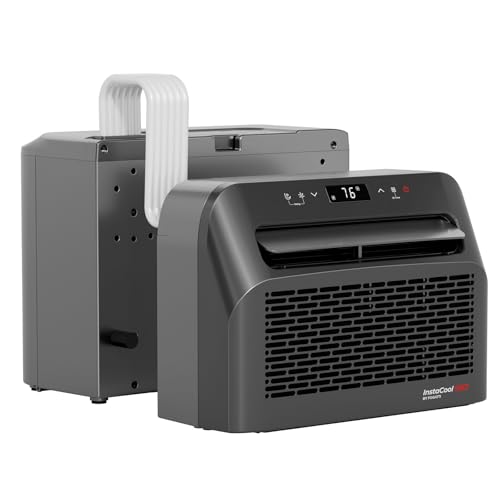
The FOGATTI slots into a standard RV window — no roof work required.
Check the FOGATTI's price on Amazon
Sometimes, a rooftop unit isn't the best fit, or you simply prefer the flexibility of a window-mounted option. The FOGATTI RV Window Air Conditioner is a fantastic alternative, bringing powerful 6500 BTU cooling to your camper or small space (up to 120 sq. ft.). What’s really cool about this unit is its 4-in-1 versatility, offering cooling, fan, dehumidifying, and even a dedicated sleeping mode. It’s also incredibly easyto move and install, making it a great choice for various indoor and outdoor scenarios beyond just your RV window.
Beat the Heat: Offers powerful 6500 BTU cooling, ideal for spaces up to 120 sq. ft.
Quiet Operation: Runs at a peaceful 50dB, ensuring a good night’s sleep.
Easy Mobility and Installation: Lightweight design allows for simple disassembly and placement in different settings.
Versatility for Any Season: A 4-in-1 unit combining cooling, fan, dehumidifying, and sleeping modes.
Energy-Efficient Cooling: Uses eco-friendly R32 refrigerant, consuming less power with strong performance.
Designed for Small Space: Engineered for easy, modification-free installation on RV windows (check window thickness).
Pros:
- Highly versatile with 4 modes for different needs and seasons.
- Lightweight and easy to move, great for temporary setups.
- Eco-friendly refrigerant and energy-efficient operation.
- Quieter than many other AC units.
- Straightforward window installation, requiring minimal tools.
Cons:
- Requires specific window thickness for included mounting hardware (extension brackets available).
- Lower BTU might not suffice for larger RVs in extreme heat.
- Window units can slightly obstruct views or airflow.
User Impressions: Users frequently highlight the Fogatti's surprising cooling power for a window unit and appreciate its multi-functionality. The ease of installation and the quiet hum make it a popular choice for those wanting a straightforward and effective solution for their camper AC needs, especially for smaller RVs or specific zones. Stay cool anywhere you park — get it on Amazon
3. Furrion Chill Cube 18k BTU Variable Speed RV Rooftop Air…

The Chill Cube's aerodynamic shell trims drag while the variable-speed compressor avoids noisy on/off cycling.
Check the Chill Cube's price on Amazon
When you need serious cooling power without compromising on efficiency or noise, the Furrion Chill Cube 18k BTU RV Rooftop Air Conditioner stands out. This isn't just any camper AC; it's a high-capacity unit designed with variable speed compressors that work smarter, not harder. This means it moves cool air quickly and efficiently, delivering over a ton of cooling power, perfect for larger campervans or those really scorching days. Plus, its compact, aerodynamic design reduces drag, which is a nice bonus for your fuel economy!
Easy to Install: Features a simple bolt-on installation with a clear guide (Note: ADB sold separately).
Superior Performance: 18,000 BTU variable speed compressors move cool air faster and more efficiently.
High Capacity & Efficiency: Offers higher cooling capacity and better energy efficiency compared to typical RV ACs, extending battery runtime off-grid.
Quiet Operation: Variable speed compressors run constantly, eliminating noisy starts and stops, reducing excessive amp draw.
Compact Design: Weighs 72.4 lbs (10% lighter than competitors) and boasts an aerodynamic rooftop design for less drag.
Pros:
- Exceptional cooling power suitable for larger RVs.
- Variable speed ensures high energy efficiency and longer battery life.
- Very quiet operation due to continuous running compressors.
- Lightweight and aerodynamic design benefits driving performance.
- Relatively straightforward installation process.
Cons:
- Requires a separate Air Distribution Box (ADB) for installation.
- Higher BTU might be overkill for very small RVs.
- Higher upfront cost compared to some smaller units.
User Impressions: Reviewers are consistently impressed by the Chill Cube's powerful, consistent cooling, especially its ability to keep larger RVs comfortable even in extreme heat. The quiet operation is a huge plus, often cited as a reason for better sleep. While the separate ADB is a minor hurdle, the overall performance makes it a top choice for those seeking a premium rooftop RV AC. Upgrade to steady, whisper-quiet cooling — order the Chill Cube on Amazon
4. Furrion Chill Cube 18k BTU Variable Speed RV Rooftop Air…

Variable-speed compressor design means no jarring start-stop kicks while you sleep.
Check this Chill Cube deal on Amazon
Yes, we're looking at the Furrion Chill Cube again, but it's worth highlighting this powerhouse for another perspective! This small air conditioner for RV isn't small in terms of its cooling might, but rather in its clever, space-saving design and efficient operation. Its 18,000 BTU variable speed compressor is a marvel for anyone needing robust RV climate control without the typical noise and power surges. It’s engineered for those who want to maximize their time off-grid, providing excellent cooling while being gentle on your battery bank, making it ideal for longer adventures.
Easy to Install: Mounts with a simple bolt-on process and includes a step-by-step guide (ADB sold separately).
Superior Performance: Variable speed compressors deliver 18,000 BTUs, ensuring rapid and effective cool air circulation.
High Capacity & Efficiency: Provides higher cooling and impressive energy efficiency, extending battery runtime during off-grid use.
Quiet Operation: Runs continuously without the harsh starts and stops of traditional ACs, leading to significantly reduced noise.
Compact Design: Weighs only 72.4 lbs and features an aerodynamic rooftop profile to minimize drag and improve fuel efficiency.
Pros:
- Unrivaled cooling capacity for demanding conditions.
- Outstanding energy efficiency for extended off-grid stays.
- Whisper-quiet operation enhances overall comfort.
- Lightweight and sleek design contributes to better RV aerodynamics.
- User-friendly installation, even for DIY enthusiasts.
Cons:
- The Air Distribution Box (ADB) is a separate purchase.
- May be considered oversized for micro campers or tiny trailers.
User Impressions: This unit frequently earns praise for its consistent and powerful cooling, with many users noting a significant improvement over their previous RV AC units. The lack of disruptive cycling noise is a standout feature, contributing to a more relaxed atmosphere inside the RV. Its off-grid efficiency is particularly appreciated by extended travelers. Bring premium rooftop comfort on every trip — order on Amazon
5. Dometic 9600028602 FreshJet FJX3000 Series Rooftop…

The FreshJet's two-piece, low-profile layout keeps roof clutter down and installation simple on non-ducted rigs.
Check the FreshJet's price on Amazon
Dometic has long been a trusted name in RV accessories, and their FreshJet FJX3000 Series Rooftop Air Conditioner lives up to the reputation. This particular model is a fantastic choice if you're looking for a modern, low-profile small air conditioner for RV that's designed for non-ducted applications. It delivers powerful airflow to both the front and back of your RV, ensuring even cooling throughout your living space. With its intuitive operation and sleek design, it blends seamlessly with the aesthetics of contemporary RVs, providing effective mobile cooling without standing out like a sore thumb.
Non-Ducted Applications: Specifically designed for RVs without existing ductwork.
Powerful, Front and Back Airflow: Ensures even and consistent cooling throughout the living space.
Easy and Intuitive Operation: Simple controls for hassle-free use.
Two-Piece Design: Simplifies both assembly and installation.
Modern, Low-Profile Design: Blends seamlessly with contemporary RV aesthetics and reduces roof clutter.
Optional Upgrade: Can be upgraded with cool white LED lights (sold separately).
Pros:
- Ideal for RVs without pre-existing ducting systems.
- Even distribution of cool air, eliminating hot spots.
- User-friendly controls make operation a breeze.
- Simplified installation process thanks to its two-piece design.
- Sleek, modern look that doesn't detract from your RV's appearance.
Cons:
- LED light upgrade is an additional purchase.
- Might be less efficient in very large, multi-zone RVs compared to ducted systems.
User Impressions: Customers love the Dometic FreshJet for its sleek design and straightforward installation, particularly for non-ducted setups. The powerful, yet balanced airflow is frequently mentioned as a key benefit, keeping the entire RV comfortable. Its reputation for reliability and ease of use makes it a solid choice for many RVers. Keep every corner of the rig comfortable — order the FreshJet on Amazon
Choosing Your Perfect Small RV Air Conditioner
Finding the right small air conditioner for RV can make all the difference in your comfort on the road. When you're making your decision, consider these factors:
BTU Rating: This tells you the cooling power. A general rule of thumb is 100 BTUs per square foot, but consider your RV’s insulation, window size, and where you travel. Hot climates demand more BTUs.
Power Source: Do you primarily plug in, or do you rely on batteries for off-grid adventures? 12V RV air conditioners are fantastic for boondocking , while 120V units require shore power or a generator.
Type of Unit: Rooftop units are common and efficient but require roof access and often an Air Distribution Box. Window units are more portable and easier to install but can obstruct views.
Noise Level: A quiet unit can drastically improve your sleeping and relaxation experience, especially in a small space.
Size and Weight: A compact AC unit reduces drag and doesn't add too much weight to your RV, which impacts fuel efficiency and handling.
Installation: Some units are DIY-friendly, while others might require professional help.
Taking these points into account will help you pick an AC unit that’s perfectly suited to your specific RV and travel style.
One more factor worth knowing as you shop in 2026: refrigerant standards keep tightening, and current-generation compact units like the FOGATTI above run on lower-impact R-32 as the industry moves away from older high-GWP blends. For RVers this mostly means easier service and better parts availability down the road, but it's a real reason to buy a current model rather than old stock — refrigerant compatibility matters if the system ever needs a recharge. The same sizing logic applies if you're ever picking a unit for a sticks-and-bricks house, and our guide to sizing a home system walks through that decision in more depth.
Rooftop vs. Window vs. 12V: A Side-by-Side Comparison
All three designs will cool a rig, but they trade off very differently depending on how and where you travel. This quick comparison makes the trade-offs easier to see:
| Factor | 120V Rooftop | 12V Rooftop | Window Unit |
|---|---|---|---|
| Cooling power | High (13k–18k BTU typical) | Moderate–high (~10k BTU) | Moderate (5k–6.5k BTU) |
| Power source | Shore power or generator | Battery bank | Shore power or standard outlet |
| Off-grid friendly | Only with a large inverter setup | Yes — that's the design goal | Rarely |
| Installation | Roof cutout + ADB | Roof cutout + ADB | Window bracket, no roof work |
| Portability | Permanent | Permanent | Removable and reusable |
| Best rig type | Trailers, motorhomes | Vans, off-grid rigs | Small campers, pop-ups |
If you've ever wondered how a dedicated RV unit compares to whole-house systems, the short answer is that mobile units deliberately trade raw efficiency for low weight, low drag, and flexible power options.
Powering Your RV AC Off-Grid: Batteries, Generators, and Solar
In practice, power is where most RV cooling plans come apart — the unit is only half the purchase. A 12V model that runs 10 hours on a 600Ah battery is averaging roughly 60 amps, which is a serious continuous load, so size your lithium capacity generously and make sure your charging sources (alternator, solar, converter) can keep pace. A common mistake is pairing a capable 12V AC with an undersized battery bank or an inverter that can't handle the compressor's startup surge — the result is nuisance shutdowns on the hottest afternoon of the trip.
For 120V rooftop units, generator sizing comes down to running watts plus healthy headroom for that startup kick, which is far larger than the running draw; a soft starter is a popular fix when a generator is marginally sized. Solar helps offset daytime consumption, but few setups produce enough to run an AC full-time on their own — treat it as a supplement, not a solution. For day-to-day efficiency, the same principles the U.S. Department of Energy promotes for home cooling apply on the road: raise the setpoint when you can, block heat gain with reflective shades, and lean on eco and sleep modes overnight. Our rundown of efficient temperature settings breaks down the ideal ranges and why every degree matters for runtime.
Installation and Sealing: Get It Right the First Time
With rooftop units, the gasket does the immediate weatherproofing, but the bead of self-leveling sealant around the mounting frame is what keeps water out for years — a common mistake is reusing a crushed gasket or skipping fresh sealant, which leads to slow leaks that surface months later as soft spots in the roof. Snug the mounting bolts evenly rather than cranking them down, since overtightening compresses the gasket unevenly and invites drips. For window units, verify your window thickness against the included hardware before ordering, add a support bracket so the sash isn't carrying the full weight, and foam any side gaps to keep hot air from sneaking around the unit. If a rooftop cutout is more than you want to tackle, a mobile RV tech can handle the lift, mount, and seal in a single afternoon — money well spent for peace of mind.
Maintenance and Quick Troubleshooting for the Road
Dust is the quiet killer of RV cooling performance, especially if you camp on gravel or in the desert. It pays to build a proper seasonal upkeep routine around three things: filters, coils, and seals. Rinse the filter monthly in dusty conditions, gently clean the evaporator and the condenser coil at least once a season, and inspect the roof gasket and sealant before every travel season.
When something goes wrong, start simple. A unit that runs but blows lukewarm usually has a dirty filter, restricted airflow, or a frozen evaporator — let it thaw, restore airflow, and it often recovers on its own. If that doesn't fix it, work through our full guide to vents that stop cooling properly before assuming the worst. For model-specific manuals, parts diagrams, and service bulletins, manufacturer hubs like Dometic's official site are usually the fastest route to exact answers.
Conclusion
Whether you're battling the summer heat in a bustling campground or trying to keep cool during a quiet off-grid escape, a reliable small air conditioner for RV is a crucial piece of gear for any RVer. From powerful 12V rooftop units designed for ultimate freedom to versatile window ACs perfect for smaller spaces, there's a fantastic mobile cooling solution out there for everyone. We hope this guide helps you find the perfect companion to keep you comfortable on all your future journeys! Happy travels and stay cool!
Pick the unit above that matches your power setup, and if you want more road-tested cooling advice, our cooling library has you covered.
FAQ Section
Q1: How many BTUs do I need for my RV's air conditioner? A1: The ideal BTU (British Thermal Unit) depends on your RV's size, insulation, and the climate you're traveling in. A general guideline is 100 BTUs per square foot. For a small RV (up to 120 sq ft), 5,000-8,000 BTUs might be enough. For larger campers (150-250 sq ft), you might need 10,000-15,000 BTUs. Always consider factors like large windows, slide-outs, and extreme temperatures, which might require more cooling power.
Q2: Can I run an RV air conditioner on batteries for off-grid camping? A2: Yes, absolutely! Many modern RV air conditioners, especially 12V RV air conditioners, are designed for battery-powered off-grid use. However, running an AC unit on batteries requires a robust battery bank (lithium-ion recommended) and often a powerful inverter. The runtime will vary significantly based on your battery capacity and the AC unit's efficiency.
Q3: What's the main difference between rooftop and window RV air conditioners? A3: Rooftop RV ACs are permanently mounted on your RV's roof, providing efficient cooling from above without taking up interior space. They often require professional installation and may be heavier. Window RV ACs, on the other hand, are typically lighter, more portable, and easier to install temporarily in an RV window, but they can obstruct your view and take up window space.
Q4: Are small RV air conditioners noisy? A4: Noise levels vary significantly between models and manufacturers. Newer, more advanced compact AC units, especially those with variable speed compressors, tend to be much quieter than older or cheaper models. Look for decibel ratings (dB) in product specifications; lower numbers indicate a quieter operation. Many modern units are designed with quiet running in mind for better sleep and relaxation.
Q5: How do I install a small air conditioner in my RV? A5: Installation methods differ by type. Rooftop units typically involve cutting an opening in the roof (if one doesn't exist), mounting the unit, and connecting electrical wiring. This often requires sealing for weatherproofing. Window units usually involve securing the unit in an existing window opening with brackets and seals. Always follow the manufacturer's specific instructions for safe and effective installation, and don't hesitate to seek professional help if you're unsure.
Q6: What kind of maintenance does a small RV air conditioner require? A6: Regular maintenance helps prolong your RV AC's life and efficiency. This usually includes cleaning or replacing air filters frequently, clearing debris from the condenser and evaporator coils, checking for proper drainage, and inspecting electrical connections. For rooftop units, regularly check the roof seal for cracks or leaks.
Q7: Do I need a special generator to power an RV air conditioner? A7: The size of the generator you need depends on the BTU rating and starting wattage of your RV AC unit. Many 13,500 BTU units require at least a 2,000-watt inverter generator with a good surge capacity. Larger 15,000 BTU or 18,000 BTU units might need 3,000 watts or more. Always check the AC unit's power requirements and match them with your generator's output to ensure it can handle the initial "surge" current when the compressor kicks on.
Q8: Can I use a portable floor-standing AC in an RV instead? A8: Yes, as a temporary or supplemental option. Portable units need a window or vent to exhaust hot air, they eat valuable floor space, and single-hose designs create negative pressure that pulls warm outside air back in. For most RVers, a rooftop or window unit will cool more effectively for the same effort.
Q9: How long will a 12V RV air conditioner actually run on batteries? A9: It comes down to simple arithmetic: divide your usable battery capacity by the unit's average amp draw. The 10,000 BTU unit above, for example, averages roughly 60 amps, so a 400Ah lithium bank realistically delivers around 6-7 hours, while a 600Ah bank stretches to 8-10. Plan for about 20% less than the theoretical maximum in real-world heat.
Q10: Can I run the air conditioner while driving? A10: With a 12V unit, yes — that's one of its biggest advantages, since it draws from your battery system while the alternator keeps it topped up as you drive. A 120V rooftop unit needs a generator running or an inverter setup, which is why many travelers with standard units pre-cool the rig before departure and rely on ventilation while under way.
Q11: Why does my RV air conditioner smell musty when it starts? A11: That smell is usually mildew or biofilm on the evaporator coil and in the drain pan, fed by condensation and dust. Remove and wash the filter, run fan-only mode to dry the coil after humid trips, and use an evaporator coil cleaner if it persists. Running the fan for 15-30 minutes before shutting down is the easiest prevention.
Q12: Should I cover my RV air conditioner in winter? A12: A breathable AC cover protects the shroud from UV damage, ice, and nesting pests during storage — just avoid airtight plastic tarps that trap moisture. Before covering, clear debris off the unit and check the sealant around the mounting frame for cracks, since freeze-thaw cycles will exploit any gap.

