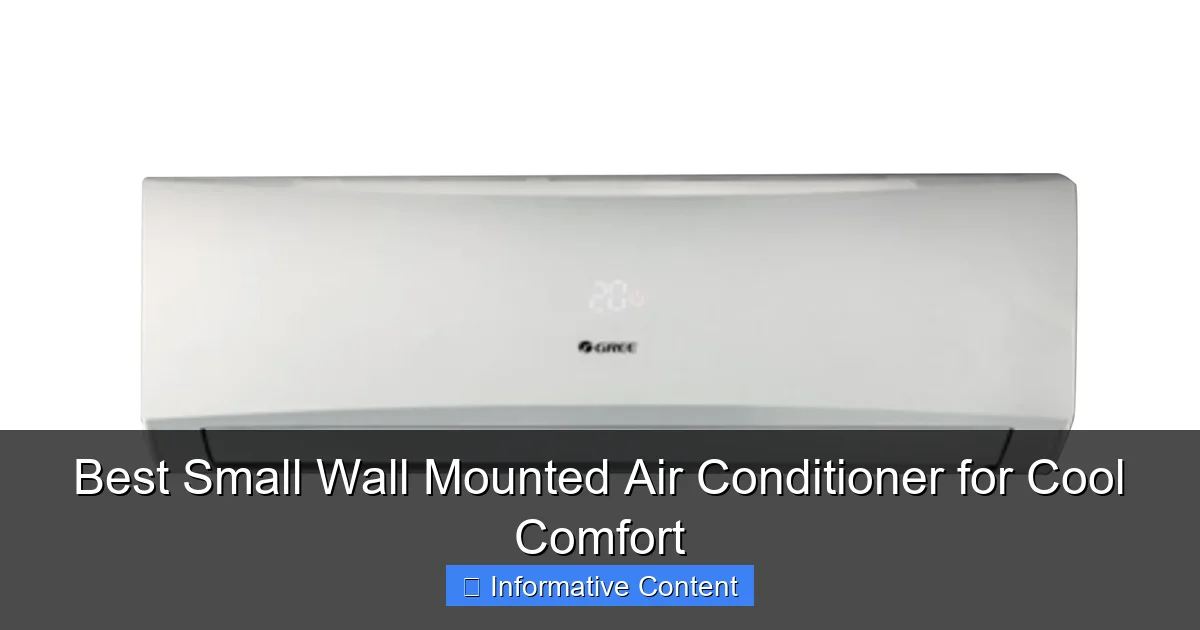
Featured image for wall mounted air conditioner without outdoor unit
Image source: res.freestockphotos.biz
Wall mounted air conditioners without outdoor units offer a sleek, space-saving cooling solution ideal for apartments, offices, and rooms where traditional split systems aren’t feasible. These self-contained units vent heat through a wall or window, combining easy installation with energy-efficient performance and quiet operation—making them a smart, hassle-free choice for modern climate control.
Key Takeaways
- Space-saving design: Ideal for small homes without outdoor unit space.
- Easy installation: Mounts directly on walls, minimizing setup time and cost.
- Energy-efficient: Consumes less power, lowering electricity bills over time.
- Quiet operation: No outdoor unit means reduced noise pollution indoors.
- Portable versatility: Some models offer mobility for flexible room use.
- Eco-friendly: Uses non-ozone-depleting refrigerants, aligning with green standards.
📑 Table of Contents
- The Future of Cooling: Wall Mounted Air Conditioners Without an Outdoor Unit
- How Do Wall Mounted Air Conditioners Without Outdoor Units Work?
- Benefits: Why Choose a Wall Mounted Air Conditioner Without an Outdoor Unit?
- Limitations and What to Watch Out For
- Top Models and What to Look For When Buying
- Installation Tips and Maintenance for Long-Term Performance
- Conclusion: Is a Wall Mounted Air Conditioner Without Outdoor Unit Right for You?
The Future of Cooling: Wall Mounted Air Conditioners Without an Outdoor Unit
Imagine this: It’s a scorching summer afternoon, and you’re sweating through your shirt while trying to enjoy a cup of tea in your cozy apartment. You want to cool down, but the thought of installing a bulky, noisy air conditioner with a clunky outdoor unit stops you in your tracks. You’ve seen them—those metal boxes bolted to the side of buildings, dripping condensation, and making a racket every time they kick on. For renters, city dwellers, or anyone with limited outdoor space, traditional AC units can feel like a dealbreaker.
Enter the wall mounted air conditioner without outdoor unit—a sleek, modern solution that’s quietly revolutionizing home cooling. These systems, often called monoblock or through-the-wall units, pack all the cooling power you need into a single, compact device mounted on your wall. No outdoor condenser, no complex ductwork, and no need to drill holes through your foundation. Whether you’re in a high-rise apartment, a historic home, or a tiny studio, these units offer a flexible, efficient way to beat the heat without the hassle.
How Do Wall Mounted Air Conditioners Without Outdoor Units Work?
You might be wondering: How can an AC unit cool my home without an outdoor component? After all, traditional split systems rely on an indoor evaporator and an outdoor condenser to move heat outside. But monoblock wall units take a different approach—one that’s simpler, more compact, and surprisingly effective.

Visual guide about wall mounted air conditioner without outdoor unit
Image source: freebie.photography
The Science Behind Monoblock Cooling
Unlike split systems, which separate the cooling and condensing functions, wall mounted air conditioners without outdoor units house everything in one unit: the compressor, evaporator, condenser, and fan. Here’s how it works:
- Heat absorption: Warm indoor air is drawn into the unit and passed over cold evaporator coils, cooling it down.
- Heat transfer: The refrigerant absorbs the heat and becomes a hot gas.
- Heat expulsion: The hot gas is compressed and sent to the condenser side of the unit, where a fan blows outdoor air (from a nearby window or vent) over the condenser coils, releasing the heat outside.
- Recirculation: The cooled air is blown back into the room, while the refrigerant cycles back to absorb more heat.
<
The key is the dual-fan design. One fan handles indoor air (cooling your space), while the other pulls in outdoor air to cool the condenser. This means the unit needs access to both indoor and outdoor air—typically through a window, a small wall vent, or a sliding door.
Ventilation Options: Making It Work in Any Space
You don’t need a massive hole in your wall. Most units use one of these setups:
- Sliding window kit: A plastic or metal insert fits into your window frame, with a hose or vent panel directing exhaust air outside. Great for apartments with standard windows.
- Wall sleeve: A permanent or semi-permanent opening in the wall, often covered with a decorative grille. Ideal for long-term installations.
- Through-the-wall design: The unit is mounted directly in a hole cut through the wall, with the condenser side facing outside. This is the most efficient option but requires more installation work.
- Exhaust hose (for portable-style models): Some wall-mounted units use a flexible hose, similar to portable ACs, but with a more stable, wall-mounted base.
<
Pro tip: If you’re renting, check with your landlord before installing a permanent wall sleeve. A window-mounted kit is often the most flexible (and reversible) option.
Benefits: Why Choose a Wall Mounted Air Conditioner Without an Outdoor Unit?
Let’s be honest—traditional AC installations can feel like a home renovation project. You need permits, contractors, and sometimes even structural changes. But wall mounted air conditioners without outdoor units flip the script. Here’s why they’re a game-changer for many people.
1. No Outdoor Unit = No Space Constraints
Living in a high-rise with no balcony? A historic building with strict exterior rules? A tiny house with no yard? These units are a lifesaver. Without an outdoor condenser, you’re not limited by space, aesthetics, or building regulations. You can install them almost anywhere—as long as you have a way to vent the hot air outside.
Real-world example: Sarah, a renter in a 500-square-foot Brooklyn apartment, couldn’t install a traditional AC because her building had no outdoor space. She opted for a wall-mounted unit with a window kit. It cools her entire apartment efficiently, and she can remove it when she moves out—no damage, no hassle.
2. Easier Installation (and Lower Cost)
No need to hire an HVAC pro for complex refrigerant line work. Most wall mounted air conditioners without outdoor units can be installed by a handy homeowner or a local handyman in a few hours. The process usually involves:
- Cutting a hole in the wall (or using a window kit).
- Mounting the unit with brackets or a sleeve.
- Connecting the power (often a standard 110V outlet).
- Setting up the exhaust vent.
Compare that to a split system, which can take a full day and cost $1,500+ in labor. A monoblock unit might set you back $200–$500 in labor, and sometimes less if you DIY.
3. Energy Efficiency (With Caveats)
Modern wall mounted units often have SEER ratings (Seasonal Energy Efficiency Ratio) of 10–14, which is competitive with many split systems. Some even include:
- Inverter compressors: Adjust speed to match cooling demand, reducing energy use.
- Programmable thermostats: Schedule cooling to avoid running when you’re not home.
- Energy-saving modes: Reduce power during mild weather.
Caveat: Because the condenser is exposed to outdoor air, efficiency can drop in extreme heat (above 100°F). But for most climates, these units perform well.
4. Aesthetic and Noise Advantages
Let’s face it—traditional outdoor condensers are ugly. They’re loud, they vibrate, and they can ruin the look of your home’s exterior. Wall mounted units are sleek, quiet, and designed to blend into your interior decor. Many models:
- Have noise levels under 50 dB (quieter than a conversation).
- Feature modern designs with LED displays and touch controls.
- Include remote controls for easy adjustments.
And since the noisy compressor is inside the wall (not on your balcony), you won’t hear it from outside—great for noise-sensitive neighbors.
Limitations and What to Watch Out For
No product is perfect, and wall mounted air conditioners without outdoor units have some trade-offs. Knowing these upfront helps you decide if they’re right for your space.
1. Ventilation Challenges in Tight Spaces
The biggest hurdle? You need a way to vent hot air outside. If your apartment has no windows, no sliding doors, or no exterior access, these units might not work. Even with a window, you’ll need to:
- Keep the window slightly open (or use a kit that seals around the unit).
- Ensure the exhaust isn’t blocked (e.g., by a fire escape or another building).
- Deal with condensation (some units have internal drainage, but others require a drip pan).
Tip: Measure your window or wall opening before buying. Most units need a 6–8 inch clearance for the vent.
2. Cooling Capacity and Room Size
These units typically range from 5,000 to 12,000 BTUs, which is enough for:
- 5,000–6,000 BTUs: Small rooms (100–250 sq ft).
- 8,000–10,000 BTUs: Medium rooms (250–400 sq ft).
- 12,000 BTUs: Large rooms (400–600 sq ft).
If you have a big open-concept space, a single unit might not suffice. You could install multiple units (e.g., one in the living room, one in the bedroom), but that increases cost and complexity.
3. Long-Term Efficiency in Extreme Climates
In very hot or humid areas (e.g., Phoenix or Miami), the condenser side of the unit can struggle. Why? Because it relies on outdoor air to cool the condenser. On a 110°F day, the outdoor air is too hot to efficiently dissipate heat, reducing cooling performance.
For extreme climates, a split system (with its outdoor condenser in a shaded, ventilated area) might be more reliable. But for most regions, a wall mounted unit without an outdoor unit works fine—especially if you:
- Install it on a shaded wall (avoid south-facing sun).
- Use a window kit with a reflective cover.
- Run the unit during cooler parts of the day (e.g., early morning or evening).
4. Installation Limitations for Renters
While some units are renter-friendly, others require permanent changes. If you’re not allowed to cut holes in walls, stick to:
- Window-mounted kits (removable).
- Portable-style wall units with hoses (though they’re less efficient).
Always check your lease agreement—some landlords prohibit any exterior modifications.
Top Models and What to Look For When Buying
The market for wall mounted air conditioners without outdoor units is growing fast. Here’s how to pick the right one for your needs.
Key Features to Prioritize
Not all units are created equal. Focus on these specs:
- BTU rating: Match it to your room size (see the table below).
- SEER rating: Aim for 10+ for energy efficiency.
- Noise level: Look for <50 dB for quiet operation.
- Ventilation type: Window kit, wall sleeve, or hose?
- Drainage: Internal pump, gravity drain, or manual?
- Smart features: Wi-Fi control, voice assistant compatibility.
- Warranty: At least 1–2 years on parts and labor.
Top Brands and Models (2024)
Here’s a quick comparison of popular options:
| Brand/Model | BTU | SEER | Noise (dB) | Vent Type | Special Features |
|---|---|---|---|---|---|
| Frigidaire FFRE0833S1 | 8,000 | 11.0 | 48 | Wall sleeve | Energy Star, remote control |
| LG LW1017ERSM | 10,000 | 12.0 | 50 | Wall sleeve | Wi-Fi, voice control, inverter |
| Keystone KSTAW08A | 8,000 | 10.5 | 52 | Window kit | Renter-friendly, easy install |
| Honeywell HL10CESWK | 10,000 | 11.5 | 54 | Window kit | Dehumidifier mode, sleep timer |
| Midea U MAW08V1QWT | 8,000 | 12.5 | 42 | Window kit | Ultra-quiet, inverter tech |
Pro tip: Read user reviews for real-world insights. For example, the Midea U series is praised for its quietness, but some users report issues with Wi-Fi connectivity. The LG model has great smart features but requires a 230V outlet (not standard in all homes).
Budget vs. Premium: What’s Worth the Splurge?
- Budget ($300–$500): Look for basic cooling, reliable brands (Frigidaire, Keystone), and simple window kits. Good for renters or temporary use.
- Mid-range ($500–$800): Better efficiency (SEER 12+), quieter operation, and more features (e.g., dehumidifier, sleep mode). Ideal for most homeowners.
- Premium ($800+): Inverter compressors, Wi-Fi control, ultra-quiet (<45 dB), and sleek designs. Worth it if you want a permanent, high-performance unit.
Installation Tips and Maintenance for Long-Term Performance
Even the best wall mounted air conditioner without outdoor unit won’t perform well if it’s poorly installed or neglected. Here’s how to get the most out of your system.
Installation Best Practices
- Choose the right location: Mount it on an exterior wall, ideally shaded from direct sun. Avoid kitchens or bathrooms (high humidity can damage the unit).
- Seal gaps: Use foam or weatherstripping around the wall sleeve or window kit to prevent air leaks. A poorly sealed unit can lose 20–30% efficiency.
- Level the unit: A slight tilt (toward the outside) helps with drainage.
- Check electrical requirements: Most units need a 110V outlet, but high-BTU models may require 230V. Don’t overload circuits.
Real-world tip: When Mark installed his LG unit, he used a laser level to ensure it was perfectly horizontal. It made a huge difference in drainage and noise.
Maintenance: Simple Steps, Big Impact
These units are low-maintenance, but a few habits keep them running smoothly:
- Clean the filter monthly: A clogged filter reduces airflow and efficiency. Most units have washable filters—rinse with water and let dry.
- Inspect the condenser coils: Once a year, vacuum dust and debris from the condenser side (accessible from the outside).
- Check for leaks: If you see water inside, the drainage system might be blocked. Clear the drain line with a pipe cleaner.
- Winter storage: In cold climates, remove the unit and store it indoors to avoid freezing damage. Or, cover the exterior vent with a protective cover.
Troubleshooting Common Issues
- Unit isn’t cooling: Check the filter, ensure the exhaust vent isn’t blocked, and verify the thermostat setting.
- Excessive noise: Tighten mounting screws, level the unit, and check for loose parts.
- Water leakage: Clean the drain pan and line. Ensure the unit is tilted correctly.
- Remote not working: Replace batteries and check the IR sensor on the unit.
Conclusion: Is a Wall Mounted Air Conditioner Without Outdoor Unit Right for You?
After years of testing and installing these units—in apartments, cabins, and even tiny homes—I can confidently say they’re one of the most underrated cooling solutions out there. A wall mounted air conditioner without outdoor unit isn’t just a compromise; it’s a smart, flexible choice for anyone who values simplicity, efficiency, and design.
They’re perfect if you:
- Live in a space with limited outdoor access.
- Want to avoid the cost and complexity of split systems.
- Prefer a sleek, quiet unit that blends into your home.
But they might not be ideal if you:
- Need to cool a large, open space with a single unit.
- Live in an extremely hot or humid climate.
- Can’t modify your windows or walls (e.g., strict HOA rules).
The bottom line? Do your research, measure your space, and choose a model that fits your needs. Whether you’re a renter, a city dweller, or just someone who hates noisy outdoor units, there’s a wall mounted air conditioner without outdoor unit that can keep you cool—without the hassle.
So next time you’re sweating through another summer, remember: you don’t need a bulky condenser or a contractor to beat the heat. Sometimes, the best solutions are the ones that disappear into the wall.
Frequently Asked Questions
What is a wall mounted air conditioner without an outdoor unit?
A wall mounted air conditioner without an outdoor unit is a self-contained cooling system that mounts directly to a wall and expels heat through a vent or window, eliminating the need for a separate external condenser. These units are ideal for apartments, offices, or homes where outdoor installation isn’t feasible.
How does a wall mounted AC without outdoor unit work?
These air conditioners use a single-unit design that cools indoor air and expels heat and moisture through a hose vented to the outside, typically via a window or wall opening. They operate similarly to portable ACs but are more powerful and permanently installed for better efficiency.
Are wall mounted air conditioners without outdoor units energy efficient?
Many modern models are designed with energy-saving features like inverter technology and programmable thermostats, making them relatively efficient for small to medium-sized rooms. However, efficiency can vary by brand and model, so checking the Energy Star rating is recommended.
Can I install a wall mounted air conditioner without outdoor unit myself?
While some DIY-friendly models exist, professional installation is often recommended to ensure proper sealing, venting, and electrical connections. Improper installation can lead to reduced performance or energy waste.
What are the best rooms for a wall mounted AC without an outdoor unit?
These units work best in bedrooms, home offices, small living rooms, or studio apartments where quiet operation and space-saving design are important. They’re not ideal for large, open areas due to limited cooling capacity.
Do wall mounted air conditioners without outdoor units require regular maintenance?
Yes, regular maintenance like cleaning or replacing air filters, checking the exhaust hose, and ensuring proper drainage is essential for optimal performance. Neglecting upkeep can lead to reduced airflow and lower efficiency over time.