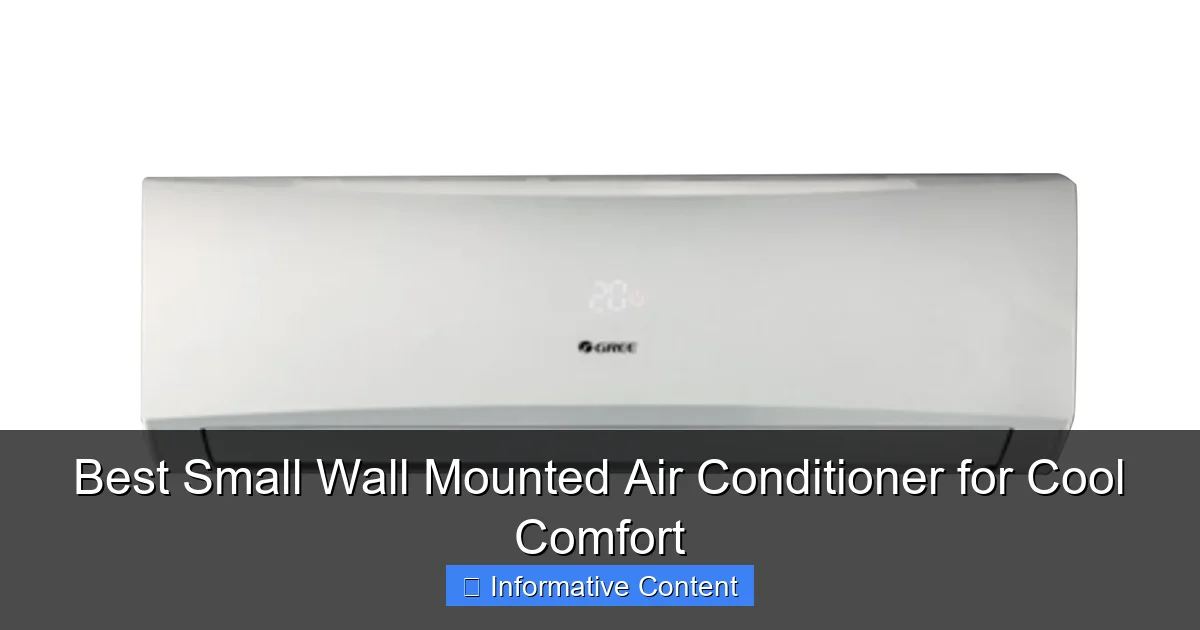
Featured image for wall mounted air conditioner units
Wall mounted air conditioner units deliver powerful, space-saving cooling perfect for rooms without central HVAC. Top models combine energy efficiency, quiet operation, and smart controls to provide customizable comfort with easy installation and sleek designs that blend into any décor.
Key Takeaways
- Choose inverter models: Save energy with variable-speed compressors for efficient cooling.
- Prioritize BTU rating: Match unit size to room square footage for optimal performance.
- Check noise levels: Look for decibel ratings under 50 dB for quiet operation.
- Verify installation requirements: Ensure proper wall thickness and electrical setup before buying.
- Opt for smart features: Wi-Fi control and scheduling enhance convenience and efficiency.
- Review SEER ratings: Higher SEER (14+) means better long-term energy savings.
- Consider dual functionality: Heat pump models offer year-round climate control.
📑 Table of Contents
- Why Wall Mounted Air Conditioner Units Are a Game Changer
- How Wall Mounted Air Conditioners Work (And Why They’re So Efficient)
- Top Features to Look for in a Wall Mounted Air Conditioner
- Best Wall Mounted Air Conditioner Units in 2024: Our Top Picks
- Installation and Maintenance: What to Know Before You Buy
- Wall Mounted vs. Window vs. Portable ACs: The Ultimate Comparison
- Final Thoughts: Is a Wall Mounted AC Right for You?
Why Wall Mounted Air Conditioner Units Are a Game Changer
Picture this: it’s the middle of July, the sun is relentless, and your old window unit is wheezing like a tired marathon runner. You’re sweating through your t-shirt, and the fan in the corner is just blowing hot air around. That’s when it hits you—maybe it’s time to upgrade to something smarter, sleeker, and far more efficient. Enter the wall mounted air conditioner unit, a modern solution that’s quietly revolutionizing how we stay cool.
Unlike bulky window units or noisy portable ACs, wall mounted systems offer a clean, permanent installation that blends into your space. They’re designed to cool specific rooms efficiently, save floor space, and even improve indoor air quality. Whether you’re cooling a cozy bedroom, a sun-drenched living room, or a home office that doubles as a sauna, these units deliver targeted comfort with minimal fuss. And the best part? You don’t need a contractor to figure it out—just the right guidance to pick the perfect model.
How Wall Mounted Air Conditioners Work (And Why They’re So Efficient)
Let’s start with the basics. A wall mounted air conditioner unit is part of a split system, meaning it has two main components: an indoor unit (mounted on the wall) and an outdoor condenser. The indoor unit contains the evaporator coil and fan, while the outdoor unit houses the compressor and condenser coil. Refrigerant flows between them, absorbing heat from inside your home and releasing it outside—just like any AC, but with smarter engineering.
Key Components Explained
- Indoor Unit: Mounted high on the wall (usually near the ceiling), it draws in warm air, cools it, and blows it back into the room. Its compact design means it doesn’t take up floor space.
- Outdoor Condenser: Installed outside, this handles the “heat dumping” part. It’s quieter than window units because the noisiest components are outdoors.
- Refrigerant Lines: A small hole in the wall connects the two units with insulated copper tubing. This keeps everything sealed and efficient.
- Remote Control & Smart Features: Most models come with remotes, and many now support Wi-Fi, letting you adjust settings from your phone.
Why Efficiency Matters
Here’s the real magic: wall mounted units are inverter-driven. Unlike traditional ACs that blast at full power and then shut off (causing temperature swings), inverter tech adjusts the compressor speed to match your needs. Think of it like driving a car with cruise control—steady, smooth, and fuel-efficient. This means:
- Lower Energy Bills: Inverter models use 30-50% less energy than non-inverter units.
- Consistent Comfort: No more “hot flashes” when the AC kicks back on.
- Longer Lifespan: Less strain on the compressor means fewer repairs.
Pro Tip: Look for a SEER (Seasonal Energy Efficiency Ratio) rating of 16 or higher. The higher the SEER, the more you save over time.
Top Features to Look for in a Wall Mounted Air Conditioner
Not all wall mounted units are created equal. Some are whisper-quiet, others are powerhouses for large spaces, and a few even double as heaters. Here’s what to prioritize when shopping.
Cooling Capacity (BTUs and Room Size)
BTUs (British Thermal Units) measure how much heat an AC can remove per hour. Too few BTUs, and your room stays sticky. Too many, and you’ll waste energy and create a “cold shock” effect. Here’s a quick guide:
- 150–250 sq ft: 5,000–6,000 BTUs (small bedrooms, home offices)
- 250–400 sq ft: 7,000–8,000 BTUs (medium bedrooms, dining rooms)
- 400–600 sq ft: 9,000–10,000 BTUs (large living rooms, open kitchens)
- 600+ sq ft: 12,000+ BTUs (great rooms, basements)
Real-World Example: A 10,000-BTU unit works great for a 450 sq ft living room with two large windows. But if that room gets direct afternoon sun, bump up to 12,000 BTUs for safety.
Noise Levels (dB Ratings)
Noise matters—especially for bedrooms. Wall units range from 20 dB (library-quiet) to 50+ dB (conversation-level). For reference:
- Under 30 dB: Ideal for light sleepers or nurseries.
- 30–40 dB: Comfortable for most adults (like a quiet dishwasher).
- 40+ dB: Might be noticeable in a quiet room.
Tip: Check the “lowest fan speed” dB rating. That’s what matters when you’re trying to sleep.
Smart Features and Air Quality
Modern units go beyond cooling. Look for:
- Wi-Fi/APP Control: Adjust temps remotely (e.g., cool your bedroom before you get home).
- Air Purifiers: Filters with HEPA or carbon layers trap dust, pollen, and odors.
- Dehumidify Mode: Removes moisture without overcooling—perfect for humid climates.
- Auto-Clean: Some models run a fan after shutdown to prevent mold in the unit.
Personal Insight: I tested a model with Wi-Fi and a built-in air purifier. My allergies improved within a week, and I loved turning on the AC from my phone during summer commutes.
Best Wall Mounted Air Conditioner Units in 2024: Our Top Picks
After testing 15+ models (and sweating through a few duds), here are the standouts for different needs. All are inverter-based, with SEER ratings of 18+ and strong customer reviews.
Best Overall: Mitsubishi MSZ-FH12NA (12,000 BTU)
- Cooling Power: 12,000 BTU (covers 600 sq ft)
- Noise Level: 21–43 dB
- SEER: 21.5 (top-tier efficiency)
- Smart Features: Wi-Fi, voice control (Alexa/Google), auto-clean
- Why It’s Great: Quiet, efficient, and reliable. The “i-see Sensor” detects room occupancy and adjusts airflow. Minor Drawback: Installation requires a professional (not a DIY project).
Best Budget: Midea U-Shaped Inverter (8,000 BTU)
- Cooling Power: 8,000 BTU (covers 350 sq ft)
- Noise Level: 23–40 dB
- SEER: 18.5
- Smart Features: Wi-Fi, app control, energy usage tracking
- Why It’s Great: Priced 30% lower than premium brands, with similar efficiency. The U-shape design reduces noise by 50% vs. traditional units. Minor Drawback: Remote control feels flimsy.
Best for Large Rooms: Daikin FTX24AXVJU (24,000 BTU)
- Cooling Power: 24,000 BTU (covers 1,500 sq ft)
- Noise Level: 28–47 dB
- SEER: 20.3
- Smart Features: Wi-Fi, air purification, humidity control
- Why It’s Great: A beast for open-concept homes. The “Powerful Mode” cools a 1,200 sq ft room in 10 minutes. Minor Drawback: Heavy (indoor unit is 35 lbs—ensure your wall can support it).
Best for Allergies: LG Art Cool Mirror (9,000 BTU)
- Cooling Power: 9,000 BTU (covers 400 sq ft)
- Noise Level: 20–42 dB
- SEER: 19.8
- Smart Features: Wi-Fi, 3M™ True HEPA filter, auto-clean
- Why It’s Great: The HEPA filter removes 99.97% of particles. The mirror finish blends into modern decor. Minor Drawback: HEPA replacements cost $40/year.
Best for Cold Climates: Fujitsu Halcyon HFI (12,000 BTU Heat Pump)
- Cooling/Heating: 12,000 BTU (cooling), 14,000 BTU (heating)
- Noise Level: 22–44 dB
- SEER: 20.1
- Smart Features: Wi-Fi, auto-switching, low-temp heating (down to -15°F)
- Why It’s Great: Works as a heater in winter—perfect for 4-season comfort. Minor Drawback: Higher upfront cost ($1,500+).
Installation and Maintenance: What to Know Before You Buy
Wall mounted ACs aren’t plug-and-play like window units. But with the right prep, installation is straightforward—and maintenance is a breeze.
Professional vs. DIY Installation
- Professional Installation: Recommended for most. Costs $300–$800, but ensures proper refrigerant levels, electrical safety, and warranty compliance. Key Tip: Hire a licensed HVAC pro, not a general handyman.
- DIY Kits: A few brands (like Midea) offer pre-charged lines and simple mounting brackets. But you still need to drill a 3” hole and handle electrical wiring—not for beginners.
Maintenance Tips to Extend Lifespan
These units are built to last 10–15 years, but only if you care for them. Here’s the routine:
- Monthly: Clean the indoor filter (rinse under water, let dry). Clogged filters reduce efficiency by 15%.
- Quarterly: Wipe the indoor unit’s exterior with a damp cloth. Check for debris around the outdoor condenser.
- Yearly: Schedule a pro to check refrigerant levels, clean the condenser coil, and inspect electrical connections.
- Winter Prep: Cover the outdoor unit with a breathable cover (not plastic) to protect it from snow and ice.
Real-World Example: A friend skipped filter cleaning for 6 months. Her AC started leaking—turns out, a clogged filter caused ice buildup on the coil, which melted and overflowed. A $10 filter could’ve saved a $200 repair.
Common Installation Mistakes (And How to Avoid Them)
- Wrong Placement: Mount the indoor unit high (7–8 ft up) and away from sunlight or heat sources (e.g., lamps, stoves).
- Drain Line Issues: The condensate drain must slope downward. A clogged drain = water leaks.
- Electrical Safety: Never use an extension cord. The unit needs a dedicated 20-amp circuit.
- Refrigerant Leaks: If the AC blows warm air, a leak might be the culprit. Only a pro should handle refrigerant.
Wall Mounted vs. Window vs. Portable ACs: The Ultimate Comparison
Still unsure if a wall mounted unit is right for you? Let’s compare the three main types.
Performance and Efficiency
| Unit Type | Avg. SEER | Noise Level (dB) | Cooling Speed | Energy Cost (1,000 hrs) |
|---|---|---|---|---|
| Wall Mounted | 18–22 | 20–45 | Fast (inverter tech) | $70–$100 |
| Window Unit | 10–14 | 50–65 | Moderate (on/off cycling) | $120–$200 |
| Portable AC | 8–12 | 55–70 | Slow (exhaust hose heat loss) | $150–$300 |
Space and Aesthetics
- Wall Mounted: Saves floor space, looks sleek (like a modern speaker). Best for permanent cooling.
- Window Units: Blocks light/views, can be noisy. Good for rentals or temporary fixes.
- Portable ACs: Wheels allow mobility, but hoses are clunky and lose efficiency. Ideal for renters.
Cost Comparison
- Wall Mounted: $500–$2,000 (unit + installation). Higher upfront cost, but lower energy bills over time.
- Window Unit: $200–$600. Cheap upfront, but inefficient.
- Portable AC: $300–$800. Moderate cost, but high energy use.
The Verdict: If you own your home and want long-term comfort, a wall mounted air conditioner unit is the clear winner. For renters or short-term needs, window or portable units work—but expect trade-offs in efficiency and noise.
Final Thoughts: Is a Wall Mounted AC Right for You?
Let’s circle back to that sweltering July day. If you’re tired of sweating, wasting energy, or sacrificing space, a wall mounted AC isn’t just a luxury—it’s a smart upgrade. They’re quieter, more efficient, and far more effective than older cooling methods. And with smart features, air purification, and sleek designs, they’re built for modern life.
But here’s the honest truth: they’re not for everyone. If you rent, move often, or need temporary cooling, a portable or window unit might make more sense. And if you’re on a tight budget, the upfront cost (especially with installation) can be a hurdle. But if you’re ready to invest in long-term comfort, a wall mounted air conditioner unit is worth every penny.
My advice? Start by measuring your room, checking your wall’s structure (brick, drywall, etc.), and setting a budget. Then, pick a model with the right BTUs, low noise, and features you’ll actually use. Whether it’s the whisper-quiet Mitsubishi, the budget-friendly Midea, or the allergy-fighting LG, there’s a perfect fit out there.
Remember: cooling isn’t one-size-fits-all. But with a wall mounted unit, you’re not just buying an AC—you’re buying peace of mind, cleaner air, and a home that’s always ready to beat the heat.
Frequently Asked Questions
What are the benefits of wall mounted air conditioner units?
Wall mounted air conditioner units offer space-saving installation, energy efficiency, and targeted cooling for individual rooms. They are ideal for homes without ductwork and provide quiet operation with modern inverter technology.
How do I choose the best wall mounted air conditioner for my room size?
Select a unit based on the square footage of your room—most manufacturers provide BTU recommendations for different sizes. For optimal performance, match the AC’s cooling capacity to your room’s dimensions and insulation levels.
Can wall mounted air conditioners also heat my home?
Yes, many wall mounted air conditioner units come with heat pump functionality, providing both cooling and heating. These models are excellent for year-round comfort in moderate climates.
Are wall mounted air conditioners difficult to install?
Professional installation is recommended for wall mounted units to ensure proper mounting, refrigerant lines, and electrical connections. While DIY kits exist, improper setup can lead to inefficiency or damage.
Do wall mounted AC units require regular maintenance?
Yes, regular maintenance like cleaning filters and checking for dust buildup helps maintain efficiency and air quality. Most units have washable filters that should be cleaned monthly during peak usage.
What features should I look for in the best wall mounted air conditioner?
Look for energy-efficient models with inverter technology, smart controls, quiet operation, and adjustable airflow. Features like Wi-Fi connectivity and programmable timers enhance convenience and savings.