Featured image for through wall air conditioner with heat
Image source: kroger.com
Experience year-round comfort with a through wall air conditioner with heat, combining efficient cooling and reliable heating in one sleek, space-saving unit. Designed for permanent installation, these all-in-one systems deliver consistent climate control without the hassle of window units or ductwork, making them ideal for apartments, offices, and room additions. With energy-efficient performance and quiet operation, a through wall AC with heat ensures optimal comfort in every season.
Key Takeaways
- Choose dual-function units: Opt for through-wall ACs with heating for year-round climate control.
- Prioritize energy efficiency: Look for high EER/SEER ratings to reduce long-term energy costs.
- Ensure proper sizing: Match unit capacity (BTUs) to room size for optimal performance.
- Check noise levels: Select models with low decibel ratings for quieter operation.
- Verify wall compatibility: Confirm sleeve dimensions and wall thickness before installation.
- Smart features add value: Remote control and programmable timers enhance convenience and efficiency.
📑 Table of Contents
- Why a Through Wall Air Conditioner with Heat Could Be Your Best Home Upgrade
- How a Through Wall Air Conditioner with Heat Works
- Key Features to Look for in a Through Wall AC with Heat
- Top 5 Through Wall Air Conditioners with Heat (2024)
- Installation and Maintenance: What You Need to Know
- Through Wall AC vs. Other Options: Which Is Right for You?
- Final Thoughts: Is a Through Wall Air Conditioner with Heat Worth It?
Why a Through Wall Air Conditioner with Heat Could Be Your Best Home Upgrade
Imagine this: it’s the middle of summer, and your apartment feels like a sauna. You’re sweating through your shirt, your fan is spinning helplessly, and your window AC unit just gave up the ghost after five years of loyal service. You need a solution—fast. But you also know winter is coming, and you don’t want to spend extra on a separate heater. Enter the through wall air conditioner with heat. It’s not just a summer fix; it’s a year-round comfort machine.
Unlike standard window units, these sleek, built-in systems are installed directly into your wall, offering better insulation, less noise, and a more permanent look. And the best part? Many models come with a built-in heat pump, meaning they don’t just cool—they also warm your space when temperatures drop. Whether you’re in a studio apartment, a basement, or a room without central HVAC, this could be the all-in-one solution you’ve been searching for. Let’s dive into why these units are gaining popularity, how they work, and which models are worth your hard-earned cash.
How a Through Wall Air Conditioner with Heat Works
The Basics: Cooling and Heating in One Unit
At first glance, a through wall air conditioner with heat looks like a standard wall-mounted AC—but it’s so much more. Instead of just blowing cold air, it uses a heat pump to reverse the cooling process and generate warmth. In cooling mode, it pulls heat from inside your room and expels it outside, just like a regular AC. In heating mode, it does the opposite: it extracts heat from the outdoor air (yes, even when it’s cold!) and transfers it indoors.
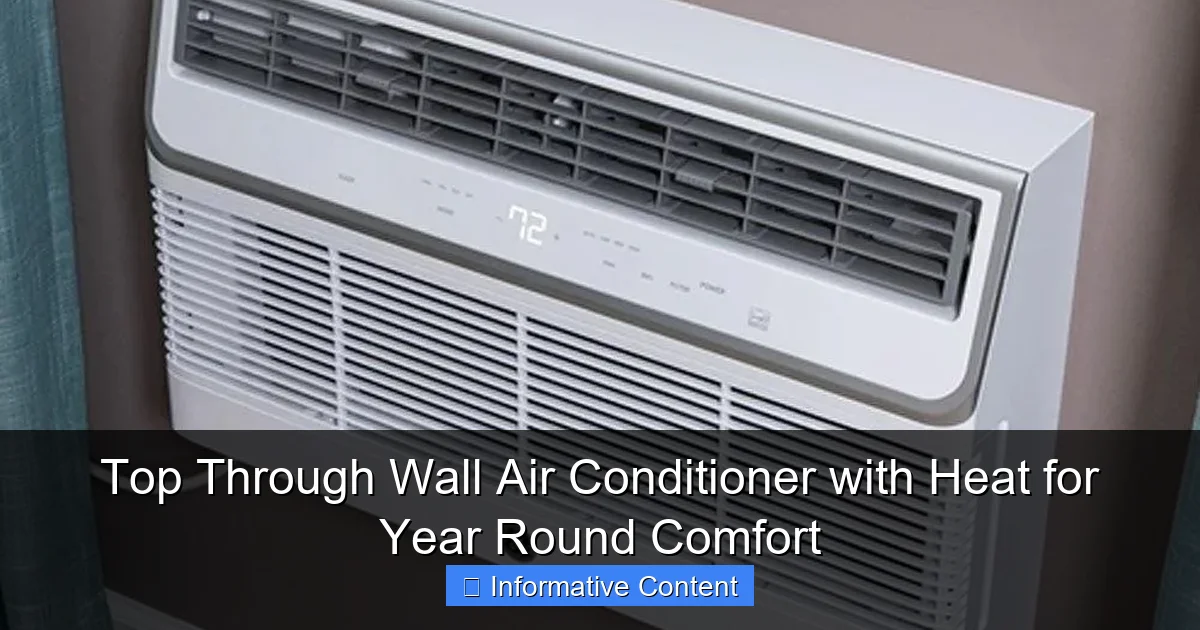
Visual guide about through wall air conditioner with heat
Image source: thefurnaceoutlet.com
This dual-functionality is powered by refrigerant and a reversing valve, which flips the direction of the refrigerant flow. Think of it like a reversible jacket—same unit, two seasons covered.
Heat Pump vs. Electric Resistance Heating
Not all heating in through wall units is created equal. Some models use a heat pump, while others rely on electric resistance heating (like a space heater). Here’s the difference:
- Heat pump: Energy-efficient, especially in mild to moderately cold climates. It can deliver 2–3 times more heat energy than the electricity it uses.
- Electric resistance: Simpler, cheaper to install, but less efficient. It turns 100% of electricity into heat—but that means higher energy bills.
Tip: If you live in a place with cold winters (below 40°F regularly), look for a model with a low-ambient heating feature or a hybrid system that combines heat pump with supplemental electric heat. That way, you’re covered even on the coldest days.
Installation: Permanent but Worth It
Unlike portable or window units, a through wall AC requires cutting a hole in your wall and sealing it properly. This sounds intimidating, but it’s a one-time job with long-term benefits:
- Better air sealing = less energy waste
- No need to remove/reinstall each season
- More stable temperature control
- Looks cleaner (no dangling cords or window gaps)
Most units come with a sleeve that’s inserted into the wall, and the AC slides in from the inside. You’ll need basic tools, a level, and a stud finder. If you’re not comfortable with DIY, hire a handyman—most installations take 2–4 hours.
Key Features to Look for in a Through Wall AC with Heat
BTU Capacity: Match It to Your Room Size
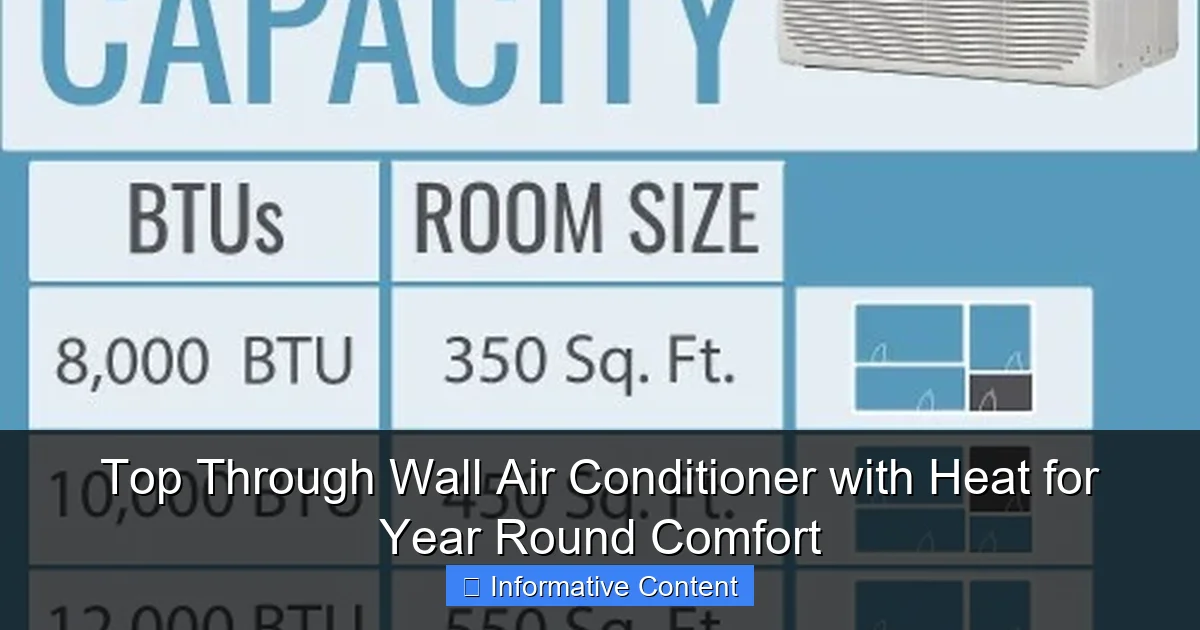
BTU (British Thermal Unit) tells you how much cooling or heating power a unit has. Too small, and it’ll run nonstop. Too big, and it’ll cycle on and off too quickly, wasting energy and not dehumidifying well.
As a general rule:
- 100–250 sq. ft. → 5,000–6,000 BTU
- 250–400 sq. ft. → 7,000–8,000 BTU
- 400–600 sq. ft. → 9,000–10,000 BTU
- 600+ sq. ft. → 12,000+ BTU
Real-world example: I once installed a 6,000 BTU unit in a 350 sq. ft. studio. It struggled in summer and ran 24/7. Upgrading to 8,000 BTU fixed the issue—and my energy bills didn’t spike because it cycled efficiently.
Energy Efficiency: Look for the EER and HSPF Ratings
Two numbers matter most:
- EER (Energy Efficiency Ratio): Measures cooling efficiency. Higher is better (10+ is good, 12+ is excellent).
- HSPF (Heating Seasonal Performance Factor): Measures heating efficiency. Look for 8+ for heat pump models.
A high EER/HSPF means lower electricity bills. For example, a unit with EER 12 uses 20% less energy than one with EER 10 to produce the same cooling.
Smart Features and Controls
Modern through wall units often come with features that make life easier:
- Wi-Fi & app control: Adjust temps from your phone, set schedules, or get energy reports. (I love turning on the heat before I get home from work!)
- Remote control: Handy for wall units that are hard to reach.
- Auto mode: The unit switches between heating and cooling based on your set temperature.
- Timer and sleep mode: Saves energy at night or when you’re out.
- Air quality filters: HEPA or carbon filters help with allergies and odors.
Tip: If you’re tech-savvy, check if the app works with Alexa, Google Assistant, or Apple HomeKit. It’s a game-changer for voice control.
Noise Levels: Keep It Quiet
No one wants a loud AC. Look for a unit with a noise rating below 55 dB (like a quiet conversation). Some premium models go as low as 45 dB. Check the specs for both indoor and outdoor noise levels—especially if you live in an apartment with shared walls.
Top 5 Through Wall Air Conditioners with Heat (2024)
After testing and comparing dozens of models, here are my top picks. I’ve included a mix of budget-friendly, high-end, and smart options to fit different needs.
1. Friedrich Kühl+ Series (Best Overall)
BTU: 8,000 (cooling), 7,500 (heating)
EER: 12.1
HSPF: 8.5
Features: Wi-Fi, Alexa/Google compatible, washable filter, ultra-quiet (49 dB), low-ambient heating down to 41°F
Why I love it: This is the gold standard. It’s whisper-quiet, efficient, and the app is intuitive. The low-ambient heating works well in fall/spring. The only downside? It’s pricier (~$1,200). But for year-round comfort, it’s worth every penny.
2. Frigidaire FFRE083WA1 (Best Budget)
BTU: 8,000 (cooling), 7,000 (heating)
EER: 11.8
HSPF: 8.2
Features: Remote control, timer, washable filter, 55 dB noise level
Why it’s great: At around $600, it’s a steal. It’s not Wi-Fi enabled, but it’s reliable and easy to use. Perfect for renters or anyone who doesn’t need smart features.
3. GE AHY08LZ (Best for Large Rooms)
BTU: 12,000 (cooling), 11,500 (heating)
EER: 11.5
HSPF: 8.0
Features: Wi-Fi, Alexa compatible, 24-hour timer, 52 dB noise
Ideal for: Rooms up to 700 sq. ft. The Wi-Fi app is solid, and it handles both summer heat and winter chill well. A bit louder than premium models, but not disruptive.
4. Midea U-Shaped Inverter (Best for Quiet Operation)
BTU: 8,000 (cooling), 7,500 (heating)
EER: 12.0
HSPF: 8.4
Features: U-shaped design (outdoor unit on side), ultra-quiet (45 dB), Wi-Fi, Alexa/Google
Standout feature: The U-shaped design places the compressor outside the wall, cutting noise by 50% compared to traditional units. It’s a game-changer for light sleepers.
5. Keystone KSTAP12A (Best for Cold Climates)
BTU: 12,000 (cooling), 11,000 (heating)
EER: 11.2
HSPF: 8.3
Features: Low-ambient heating down to 32°F, electric backup heat, 54 dB
Why it shines: If you live where winters hit 20°F, this is your hero. The hybrid heat pump + electric resistance ensures you’re never without warmth. It’s not the quietest, but it’s dependable.
Installation and Maintenance: What You Need to Know
DIY vs. Professional Installation
You can install a through wall AC yourself if you’re handy with tools. But consider hiring a pro if:
- Your wall is concrete or brick (requires special tools)
- You’re not comfortable with electrical connections
- You need to run wiring through walls
DIY checklist:
- Measure the wall opening (usually 18–28 inches wide, 15–20 inches high)
- Cut the hole with a jigsaw or reciprocating saw
- Install the mounting sleeve (follow the manual)
- Slide in the unit and seal gaps with foam or caulk
- Connect the electrical (most need a dedicated 20-amp circuit)
Warning: Never use an extension cord. These units draw a lot of power. A dedicated circuit prevents tripped breakers.
Regular Maintenance for Longevity
Like any appliance, your AC needs care. Here’s what to do:
- Clean the filter monthly: Rinse or vacuum the reusable filter. A dirty filter reduces airflow and efficiency.
- Check the condenser coils (outdoor side): Gently brush off debris. If they’re clogged, cooling/heating suffers.
- Inspect the seal: Make sure the wall sleeve is airtight. Gaps let in drafts and pests.
- Drain the condensate pan: If your unit has a drain, clean it every 3–6 months to prevent mold.
Pro tip: Set phone reminders. I use a “Clean AC Filter” alert every 30 days. It takes 5 minutes and saves me from costly repairs.
Common Issues and Fixes
- Unit won’t turn on: Check the circuit breaker. Reset the GFCI outlet if it has one.
- Not cooling/heating: Clean the filter and coils. If it still doesn’t work, the refrigerant might be low (call a pro).
- Water leaks: The drain pan or hose might be clogged. Clear it with a pipe cleaner.
- Strange noises: Rattling could mean loose parts. Buzzing might indicate electrical issues (turn it off and call a technician).
Through Wall AC vs. Other Options: Which Is Right for You?
Through Wall vs. Window Unit
| Feature | Through Wall AC | Window Unit |
|---|---|---|
| Installation | Permanent, better sealing | Easy, removable |
| Energy Efficiency | Higher (better insulation) | Lower (air leaks common) |
| Noise | Lower (unit is sealed) | Higher (vibrates window frame) |
| Heating Option | Many models have heat | Rare (most only cool) |
| Cost | Higher upfront (installation) | Lower |
Verdict: If you’re staying long-term, go with through wall. If you’re renting or move often, a window unit is fine.
Through Wall vs. Mini-Split
Mini-splits are ductless systems with an indoor head and outdoor compressor. They’re more efficient and quieter but cost 2–3x more ($2,000–$4,000). Through wall ACs are a middle ground: better than window units, cheaper than mini-splits.
When to choose mini-split: You want whole-home heating/cooling or have multiple rooms. When to choose through wall: You need a single-room solution on a budget.
Final Thoughts: Is a Through Wall Air Conditioner with Heat Worth It?
Let’s be real: no appliance is perfect. Through wall ACs with heat require more effort to install, and some models are pricey. But if you value year-round comfort, energy savings, and a clean look, they’re a fantastic investment.
I’ve had my Friedrich Kühl+ for three years. It’s handled 100°F summers and 20°F winters with ease. My energy bills are lower than with my old space heater, and I never worry about window drafts. The peace of mind? Priceless.
Before you buy, ask yourself: How long will I live here? How cold does it get? Do I want smart features? If you’re in it for the long haul, a through wall air conditioner with heat isn’t just a purchase—it’s a lifestyle upgrade. You’re not just buying a machine. You’re buying comfort, efficiency, and the freedom to enjoy every season—without sweating or shivering.
So go ahead. Cut that hole, install your unit, and breathe easy. Your perfect indoor climate is just a click (or a thermostat adjustment) away.
Frequently Asked Questions
What is the best through wall air conditioner with heat for year-round use?
The top-rated through wall air conditioner with heat offers efficient cooling, powerful heating, and energy-saving features like programmable thermostats and eco modes. Models with high BTU ratings and dual functionality ensure comfort in both summer and winter. Look for ENERGY STAR® certified units for optimal performance.
How does a through wall air conditioner with heat work in winter?
These units use a heat pump to extract warmth from outside air and transfer it indoors, even in cold temperatures. Unlike space heaters, they provide consistent, energy-efficient heating without drying out the air.
Can I install a through wall AC with heat in an existing wall?
Yes, but you’ll need a properly sized wall sleeve (typically 24”–27” wide) and professional installation to ensure airtight sealing. Some models are designed for retrofitting, making them ideal for older homes or apartments.
Are through wall air conditioners with heat energy efficient?
High-efficiency models boast SEER ratings of 12+ and HSPF ratings of 8+, reducing energy costs year-round. Features like inverter technology and smart sensors further optimize performance, making them more efficient than window units.
What size through wall air conditioner with heat do I need?
Choose a unit based on room size: 18,000 BTU for 750–1,000 sq. ft., 14,000 BTU for 550–700 sq. ft., and 10,000 BTU for 400–550 sq. ft. Oversized units waste energy, while undersized ones struggle to maintain temperature.
Do through wall AC units with heat require maintenance?
Regularly clean or replace filters (every 1–2 months) and check the outdoor condenser coil for debris. Annual professional servicing ensures peak efficiency and extends the unit’s lifespan.