Is your workshop feeling more like a sauna than a creative haven? Working in a hot, stuffy workshop isn’t just uncomfortable; it can zap your energy, dull your focus, and even be unsafe. Whether you’re a seasoned woodworker, a dedicated mechanic, or a hobbyist tinkerer, keeping your workspace cool and comfortable is crucial. But finding the right air conditioning solution for these unique spaces can be a challenge.
That’s why we’ve scoured the market to find the best air conditioner for workshop environments. We’re talking about units that can stand up to the challenge, from battling dusty conditions to delivering powerful cooling in open or poorly insulated areas. In this guide, we’ll dive into seven top contenders, breaking down their features, pros, and cons to help you pick the perfect one for your space. Let’s get cool!
Why a Workshop Needs a Dedicated AC
Workshops are different from typical living spaces. They often have less insulation, larger doors that open frequently, and tools that generate their own heat. Plus, dust and debris are common, meaning your AC needs to be robust and easy to maintain. A good workshop AC isn’t just about comfort; it’s about:
- Increased Productivity: You’ll work faster and more efficiently when you’re not sweating through your clothes.
- Better Safety: Heat fatigue can lead to mistakes, especially when operating power tools.
- Tool Protection: Excessive heat and humidity can sometimes be detrimental to sensitive electronics or metal tools.
- Enjoyment: Let’s face it, hobbies are more fun when you’re comfortable!
Factors to Consider When Choosing the Best Air Conditioner for Workshop Use
Before you buy, think about these key elements to ensure you get the perfect fit for your specific needs:
- BTU Capacity: This is crucial. BTU (British Thermal Unit) measures cooling power. A general rule is 20 BTU per square foot for standard rooms, but for a workshop, you might need more, especially if it’s poorly insulated or has lots of heat-generating equipment.
- Type of Unit:
- Portable ACs: Offer flexibility, no permanent installation, but require venting out a window or door.
- Window ACs: More energy-efficient and take up no floor space, but require a window and aren’t portable.
- Evaporative Coolers (Swamp Coolers): Work best in dry climates, are ventless, and very energy-efficient, but add humidity and are less effective in humid areas.
- Durability: Workshops can be tough environments. Look for sturdy builds.
- Dehumidification: Many ACs double as dehumidifiers, which is great for combating sticky, humid conditions common in many workshops.
- Portability: Do you need to move the unit around your shop or to different areas? Wheels and handles are a big plus.
- Noise Level: While workshops are often noisy, a quiet AC can be a blessing during quieter tasks or when you’re just trying to relax.
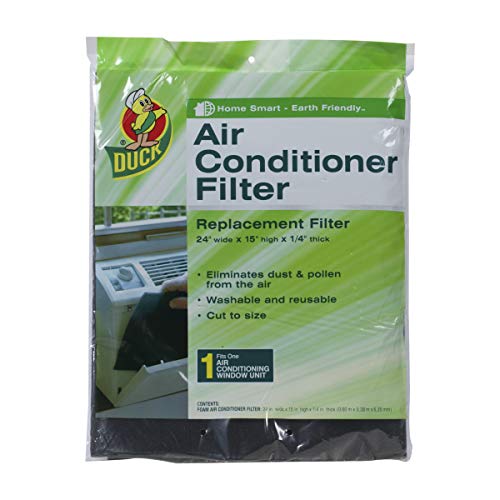
- Maintenance: Easy-to-clean filters are essential in dusty workshop environments.
Now, let’s get to the good stuff – our top picks!
1. Dreo Portable Air Conditioner, 12,000 BTU AC Unit for…

If you’ve got a decent-sized workshop that needs serious cooling power, the Dreo Portable Air Conditioner is an absolute beast. With a massive 12,000 BTU capacity, this unit isn’t just blowing air; it’s actively chilling your space down to a comfortable 65°F. What truly sets it apart is its smart noise isolation system, keeping things surprisingly quiet at a minimum of 46dB, making it less disruptive than many competitors, even when working hard. Plus, with smart home integration and a self-evaporating system, it’s designed for modern convenience.
Key Features:
– Massive 12,000 BTU ASHRAE cooling capacity, reaching up to 16 ft
– 3-in-1 mode: Cooling, Dehumidifying, and Fan
– Noise isolation system reduces operation to a minimum 46dB
– Drainage-free self-evaporating system (up to 90% reduction in drainage needs below 85% humidity)
– Smart control via Amazon Alexa, Google Home, or Dreo App for multiple modes, fan speeds, timers, and schedules
Pros:
– Exceptional cooling power for larger workshops
– Surprisingly quiet for its BTU rating
– Smart home connectivity for remote control and scheduling
– Reduces the need for frequent manual draining
– Versatile 3-in-1 functionality
Cons:
– Requires venting out a window or door
– Higher BTU units typically consume more energy
User Impressions:
Customers frequently highlight the Dreo’s powerful cooling capabilities, often remarking on how quickly it transforms a hot space. Many also praise its relatively quiet operation compared to other portable ACs, and the convenience of smart controls is a consistent favorite.
2. CENSTECH 4-IN-1 Portable Air Conditioners, Evaporative Air…

For those in dry climates looking for an energy-efficient, ventless cooling solution for their workshop, the CENSTECH Evaporative Air Cooler stands out. This isn’t a traditional refrigerant-based AC; it’s a “swamp cooler” that chills the air by evaporating water, making it incredibly power-efficient (just 65W!). It’s perfect if you don’t have a window for venting and want to avoid the drying effects of a conventional AC, as it adds a touch of humidity. With 4 modes, 3 speeds, a massive 2-gallon water tank for 20 hours of cooling, and even pre-filled ice packs, it’s designed for hassle-free comfort.
Key Features:
– 2025 Advanced Cooling Technology: Quickly reduces ambient temperatures by 41-49°F via water evaporation
– 4 Modes (Cooling/Sleep/Normal/Nature) & 3 Fan Speeds
– Ventless design: No hose or window needed; can be used unpackaged
– Ultra-quiet operation at 45dB and energy-efficient (65W)
– 120° oscillation covers up to 300 sq ft with strong airflow (1620 cubic ft/min)
– 2-gallon water tank provides 20 hours of continuous cooling
– Includes 4 upgraded, pre-filled, reusable ice packs
– Functions as an Air Cooler, Humidifier, and Fan (4-in-1)
Pros:
– No window venting required, offering ultimate placement flexibility
– Extremely energy-efficient, significantly cutting electricity costs
– Very quiet operation, ideal for focused work
– Humidifies dry air, which can be beneficial in arid climates
– Large water tank and ice packs provide long-lasting cooling
Cons:
– Only effective in dry climates; will increase humidity in already humid workshops
– Does not cool to a specific temperature like traditional ACs
– Requires regular water refills and cleaning of cooling pad
User Impressions:
Users in arid regions like the Southwestern US rave about this unit’s effectiveness and its ability to provide a comfortable, humidified breeze without the need for venting. Its low power consumption and quiet operation are also frequently praised. However, users in humid areas note its limited cooling power and the increased humidity.
3. Takywep 8,000BTU Portable Air Conditioners, 3 in 1…

The Takywep 8,000 BTU Portable Air Conditioner is a great choice for smaller to medium-sized workshops, offering a solid blend of cooling power and user-friendly features. It’s compact, highly portable thanks to its 360° wheels, and versatile with its 3-in-1 cooling, dehumidifying, and fan modes. The integrated temperature sensor helps reduce energy consumption by intelligently adjusting operations, making it a smart and practical addition to your workspace.
Key Features:
– Powerful 8,000BTU cooling capacity, suitable for areas up to 350 sq ft
– 3-in-1 functionality: Cooling, Dehumidify, and Fan modes
– Built-in temperature sensor for automatic compressor adjustment and energy reduction
– Dual LED digital displays (on top and front) and remote control
– Extremely portable design with 4×360° wheels and a built-in carrying handle
– Includes all necessary accessories and a window mount kit for easy setup
Pros:
– Good cooling capacity for its size, quickly cools up to 350 sq ft
– Very portable for easy movement between different workshop zones
– Auto-sensing temperature helps save on energy bills
– Simple controls and remote for convenient operation
– Complete kit ensures hassle-free installation
Cons:
– Requires window venting like all portable ACs
– 8,000 BTU might be insufficient for very large or poorly insulated workshops
User Impressions:
Customers appreciate the Takywep’s straightforward setup and effective cooling for single rooms or smaller workshop areas. Its mobility is a significant plus, allowing users to direct cool air exactly where it’s needed most.
4. Midea 5,000 BTU EasyCool Window Air Conditioner – Cool up…

When floor space is a premium in your workshop, or you have a dedicated window you can utilize, the Midea 5,000 BTU EasyCool Window Air Conditioner is a fantastic, traditional choice. This unit is designed to be quiet and incredibly energy-efficient, cooling up to 150 sq. ft. without hogging valuable floor space. Its 3-in-1 functionality (cooling, fan, dehumidifier) makes it a versatile performer, and with an Eco mode and timer, you can keep your energy bills low even during peak usage.
Key Features:
– 3-in-1 Comfort: Cools up to 150 sq ft, 3-speed fan, and dehumidifier mode
– Quiet operation, as low as 52dB on low mode
– Intuitive LED display and full-function remote control
– Easy window installation with all mounting accessories included
– Energy-efficient with Eco mode and EasyTimer feature for programmable schedules
– Removable and reusable air filter
Pros:
– Very energy-efficient, saving money on electricity
– Frees up floor space, which is great for busy workshops
– Relatively quiet for a window unit
– Reliable brand with a good warranty
– Effective dehumidification alongside cooling
Cons:
– Requires a window for installation, limiting placement options
– 5,000 BTU is only suitable for very small workshops or focused spot cooling
– Not portable once installed
User Impressions:
Users consistently praise the Midea EasyCool for its quiet operation and ease of installation. It’s highly regarded for effectively cooling smaller rooms and tight spaces while being mindful of energy consumption.
5. BLACK+DECKER Portable Air Conditioner 8,000 BTU (5,100 BTU…

Bring smart home convenience to your workshop with the BLACK+DECKER Portable Air Conditioner. This 8,000 BTU unit not only provides robust cooling, fan, and dehumidifying functions, but it also integrates seamlessly with your smart devices. Control it from your phone via a special app, or use voice commands with Alexa or Google Assistant – perfect for when your hands are full with a project. Its auto water evaporation system also minimizes the need for manual draining, making your life a little easier.
Key Features:
– 8,000 BTU (ASHRAE 128) portable AC with fan and dehumidifier functions
– Smart Device compatibility: Works with iOS/Android app, Alexa, and Google Assistant
– Features 2 cooling and 2 fan speeds, auto water evaporation, and a 24-hour timer
– Electronic controls with digital display and casters for easy mobility
– Removable and washable filter, plus adjustable louvers for optimal airflow
– Includes a fully functional remote control and window kit for streamlined installation
Pros:
– Smart home integration for convenient remote control and voice commands
– Auto water evaporation reduces the hassle of draining
– Good cooling capacity for a portable unit in medium-sized workshops
– Easy to move around thanks to casters
– Washable filter is ideal for dusty workshop environments
Cons:
– Requires window venting for exhaust
– WiFi setup might be a slight learning curve for some users
User Impressions:
Customers love the smart features, allowing them to turn the unit on before even stepping into the workshop. Its cooling performance and the auto-evaporation function are also frequently mentioned as major conveniences.
6. BLACK+DECKER Portable Air Conditioner, 8,000 BTU (3,950 BTU…

This BLACK+DECKER Portable Air Conditioner is another solid 8,000 BTU option that prioritizes user comfort and mobility. What makes it particularly appealing is the “Follow Me” remote control, which acts as a thermostat wherever you place it, ensuring the temperature is perfectly regulated right where you’re working. Designed for rooms up to 400 sq. ft., it’s a versatile 3-in-1 unit that’s easy to move thanks to its casters and side handles, making it an excellent choice for dynamic workshop layouts.
Key Features:
– Three-in-One Unit: 8,000 BTU (3,950 BTU SACC) AC, dehumidifier, and fan
– Full-function remote control with “FOLLOW ME” function for precise temperature sensing
– Suitable for rooms up to 400 sq. ft.
– Easy mobility thanks to casters and side handles
– Top-mounted control panel with LED display
– Includes an easy-to-install window kit and large vented airflow outlet
Pros:
– “Follow Me” remote provides accurate temperature control at your location
– Excellent portability for moving between different areas of the workshop
– Good coverage for medium to larger workshop spaces
– Straightforward setup with included window kit
– Reliable 3-in-1 performance
Cons:
– Requires window venting for exhaust
– Lacks smart home connectivity compared to other models
User Impressions:
The “Follow Me” remote is a big hit with users, ensuring they stay comfortable no matter where they are in the room. Its easy mobility and solid cooling performance for a portable unit are also highly valued by customers.
7. 10,000 BTU Portable Air Conditioner – Cools Rooms Up to…
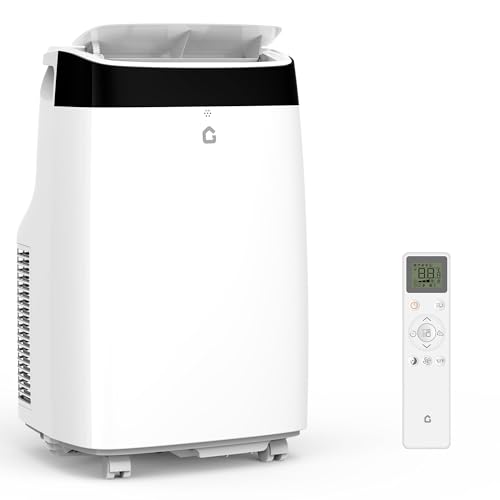
For those with larger workshops or garages up to 450 sq. ft., this 10,000 BTU Portable Air Conditioner delivers powerful, rapid cooling and serious dehumidification. What makes it a top contender is its high-capacity dehumidifier, removing up to 100 pints of moisture per day, making your workshop feel far less sticky and more comfortable. It’s also incredibly convenient with its hassle-free self-evaporation system, meaning you’ll rarely need to drain it, and an ultra-quiet sleep mode for those longer, focused work sessions.
Key Features:
– Powerful 10,000 BTU cooling for large spaces up to 450 sq ft
– Energy-efficient compressor and high-capacity dehumidification (up to 100 pt/day)
– Ultra-quiet Sleep Mode (<50 dB)
– Smart 24H timer for automated operation
– Hassle-free self-evaporation system (no drain needed under most conditions)
– Easy mobility with 360-degree wheels
– Quick installation with included exhaust hose and window kit, plus user-friendly controls
Pros:
– Excellent cooling and dehumidifying capacity for larger workshops
– Self-evaporation minimizes the need for manual draining
– Very quiet operation, especially in sleep mode
– Highly portable with omni-directional wheels
– Energy-efficient design helps save on utility costs
Cons:
– Requires window venting for hot air exhaust
– Higher upfront cost due to greater power and features
User Impressions:
Customers are highly impressed by this unit’s ability to cool and dehumidify larger spaces effectively. The quiet operation and the convenience of the self-evaporation system, reducing maintenance, are consistently highlighted as major benefits.
Choosing the Right Air Conditioner for YOUR Workshop
Picking the best air conditioner for workshop use really comes down to your specific needs.
* For large, hot workshops: The Dreo 12,000 BTU or the 10,000 BTU Portable ACs offer serious power.
* For smaller workshops or those on a budget with a window: The Midea 5,000 BTU window unit is efficient and takes up no floor space.
* For dry climates where venting is an issue: The CENSTECH Evaporative Cooler is an energy-efficient, ventless option.
* For smart home enthusiasts: The BLACK+DECKER 8,000 BTU with WiFi connectivity is a great pick.
* For maximum comfort right where you are: The BLACK+DECKER 8,000 BTU with the “Follow Me” remote is ideal.
Consider your workshop’s size, insulation, typical humidity levels, and whether you have convenient access to a window for venting. No matter which you choose, investing in a quality air conditioner will transform your workspace into a much more enjoyable and productive environment. Stay cool out there!
FAQ Section
Q1: How many BTUs do I need for my workshop?
A: A general rule for standard rooms is 20 BTUs per square foot. However, for a workshop, you might need more due to less insulation, heat-generating tools, and frequent door openings. Consider 25-30 BTUs per square foot for garages or poorly insulated shops. Measure your space (length x width) and consult a BTU calculator online, then add a buffer for workshop conditions.
Q2: Are portable air conditioners good for workshops?
A: Yes, portable air conditioners are a popular choice for workshops because of their flexibility. They don’t require permanent installation and can be moved around, making them ideal for varying needs. The main drawback is the need to vent the hot air out a window or door.
Q3: Can I use an evaporative cooler (swamp cooler) in my workshop?
A: Evaporative coolers are excellent for workshops located in dry climates (like the Southwestern US). They are energy-efficient, ventless, and add beneficial humidity. However, they are ineffective and can even make conditions worse in humid environments, as they increase the moisture in the air.
Q4: Do workshop AC units need special filters due to dust?
A: While standard AC units come with filters, workshops can generate a lot of dust. Look for units with easily removable and washable filters, or consider adding a pre-filter screen over the intake vent if your workshop is particularly dusty. Regular cleaning of filters will be essential to maintain efficiency and air quality.
Q5: How can I make my workshop AC more efficient?
A:
* Insulate: Improve your workshop’s insulation (walls, ceiling, garage door).
* Seal Gaps: Seal any gaps or cracks around windows and doors.
* Block Sunlight: Use blinds or reflective film on windows to reduce solar heat gain.
* Vent Smartly: Ensure your portable AC’s exhaust hose is as straight and short as possible and well-sealed at the window.
* Clean Filters: Regularly clean or replace your AC’s filters.
* Use Dehumidifier: If humidity is high, using the dehumidifier function (if available) can make the air feel cooler even at a higher temperature setting.
Q6: What’s the difference between ASHRAE and SACC BTU ratings?
A: ASHRAE (American Society of Heating, Refrigerating and Air-Conditioning Engineers) BTU is the traditional, higher rating that measures theoretical cooling capacity. SACC (Seasonally Adjusted Cooling Capacity) is a newer, lower rating mandated by the Department of Energy (DOE) that better reflects real-world performance by accounting for factors like heat leakage from the exhaust hose. When comparing units, SACC is often a more accurate measure of a portable AC’s actual cooling power.
Q7: Will a workshop AC increase my electricity bill significantly?
A: Any air conditioning unit will impact your electricity bill. The extent depends on the unit’s BTU, its energy efficiency rating (EER or SEER), how often you use it, and your local electricity rates. Choosing an energy-efficient model, using features like eco mode and timers, and ensuring your workshop is well-sealed can help minimize costs.