Hitting the open road in your small RV is all about freedom, adventure, and comfort. But let’s be real – when the summer sun beats down or the humidity skyrockets, that comfort can quickly turn into a sweaty struggle. That’s where a reliable air conditioner comes in, transforming your compact living space into a cool, refreshing oasis. Choosing the best air conditioner for small RV isn’t just about finding any unit; it’s about balancing power, efficiency, quiet operation, and compatibility with your rig’s specific needs.
Whether you’re boondocking off-grid or hooked up at a campground, having an efficient RV cooling system can make all the difference. We’ve scoured the market to bring you our top picks, focusing on units that deliver optimal performance without overwhelming your smaller space or power supply. Let’s dive in and find the perfect climate control solution for your mobile adventures!
1. RV Air Conditioner, 12V 10000 BTU Rooftop Air Conditioner

This 12V rooftop air conditioner is a fantastic choice for those who crave quick cooling and energy efficiency, especially when dry camping. It’s designed to rapidly cool your small RV, making uncomfortable heat a distant memory in mere minutes. What truly sets this unit apart is its 12-volt operation, allowing you to enjoy cool air without needing a generator or shore power, perfect for extended off-grid adventures.
-
Key Features
- Efficient 10,000 BTU air conditioner cools your RV in just 15 minutes.
- 4,500 BTU PTC heater provides supplementary warmth for mild temperatures.
- Durable construction with UV-stabilized ABS, EPDM foam gasket, and zinc-coated condenser.
- Quiet operation thanks to brushless copper motor fans and spring-supported mounts.
- Smart control with remote, temperature monitoring, and multiple modes (eco, sleep, turbo).
-
Pros
- Rapid cooling performance for quick comfort.
- 12V power makes it ideal for boondocking and off-grid use.
- Built to withstand harsh weather conditions.
- Very quiet operation, ensuring peaceful rest.
- Smart controls offer a personalized user experience.
-
Cons
- Heater is supplementary and not suitable as a primary heat source in extreme cold.
- Might require professional installation if you’re not comfortable with electrical work.
User Impressions: RVers frequently praise this unit for its impressive cooling speed and remarkably quiet performance, even at full blast. Many appreciate the 12V capability, which significantly extends their off-grid comfort. Users often highlight it as a top contender for the best air conditioner for small RV for those prioritizing battery-powered cooling.
2. RecPro RV Air Conditioner 15K Ducted or Non-Ducted

The RecPro RV Air Conditioner offers a powerful 15,000 BTU cooling capacity with the added benefit of a built-in heat pump, making it a versatile choice for four-season RVing. Its standout feature is its whisper-quiet operation combined with a low amp draw, meaning you get robust climate control without stressing your electrical system or your peace and quiet. This makes it an excellent option for campers who want maximum comfort and efficiency.
-
Key Features
- Low amp draw for energy efficiency, perfect for off-grid or generator setups.
- Durable, road-ready construction with UV-resistant plastic and aerodynamic shape.
- Whisper-quiet 55.4 dB operation, comparable to gentle rain.
- Remote and LED touch controls for easy adjustment of cool, dry, fan, sleep, and timer modes.
- 15K BTU AC with a built-in heat pump for cooling and supplemental heating.
-
Pros
- Powerful 15,000 BTU cooling handles larger small RVs or hotter climates.
- Extremely quiet operation enhances relaxation and sleep.
- Energy-efficient design reduces power consumption.
- Includes a heat pump for year-round comfort.
- Flexible for both ducted and non-ducted RV systems.
-
Cons
- 15K BTU might be slightly more than necessary for very tiny RVs, potentially increasing initial cost.
- Rooftop installation requires careful sealing to prevent leaks.
User Impressions: Customers rave about how quiet this RecPro unit is, often calling it a “game-changer” for their RV experience. The combination of powerful cooling and the heat pump function is frequently mentioned as a major plus, providing comfort no matter the season. Its low power consumption also gets high marks from those concerned with energy efficiency.
3. Furrion Chill Cube 18k BTU Variable Speed RV Rooftop Air Conditioner

The Furrion Chill Cube 18k BTU is an absolute powerhouse for its size, offering over a ton of cooling capacity with superior energy efficiency. What truly distinguishes this unit is its variable speed compressor, which allows it to run constantly at optimal levels, eliminating the sudden starts and stops that are typical of standard RV ACs. This not only makes it incredibly quiet but also significantly more energy-efficient, extending your battery runtime during off-grid adventures.
-
Key Features
- Easy bolt-on installation (Note: ADB sold separately, but includes necessary components).
- Superior performance with variable speed compressors for faster, more efficient cooling.
- High capacity (18,000 BTU) and greater energy efficiency for extended battery life.
- Quiet operation due to continuous variable speed compressor, eliminating abrupt cycles.
- Compact and lightweight design (72.4 lbs) with an aerodynamic shape to reduce drag.
-
Pros
- Exceptional cooling power, ideal for challenging climates or slightly larger small RVs.
- Outstanding energy efficiency extends battery life for boondockers.
- Extremely quiet operation, enhancing your RV living experience.
- Lighter and more aerodynamic than many competitors, improving RV performance.
- Variable speed compressor provides consistent, comfortable cooling.
-
Cons
- The Air Distribution Box (ADB) is sold separately, adding to the total cost.
- 18,000 BTU might be overkill for the smallest of RVs, though efficiency is still a plus.
User Impressions: Users consistently highlight the Furrion Chill Cube’s incredible cooling ability and surprisingly quiet performance. Many appreciate the energy savings and the smooth, continuous operation, noting it’s a huge upgrade from traditional RV air conditioners. It’s often cited as a premium choice for the best air conditioner for small RV for those needing serious cooling power.
4. Furrion Chill Cube 18k BTU Variable Speed RV Rooftop Air Conditioner

(As this is the same product as #3, we’ll re-emphasize its key benefits and user experience, focusing on specific applications.)
Yes, you’re seeing double! This second listing of the Furrion Chill Cube 18k BTU Variable Speed RV Rooftop Air Conditioner simply reinforces its popularity and high performance. It’s truly built for modern RVers who demand both power and efficiency. If your small RV, travel trailer, or campervan faces extreme heat, or if you simply prioritize cutting-edge technology for superior climate control and quieter operation, this unit is designed to exceed expectations. Its variable speed technology isn’t just a gimmick; it’s a smart way to maintain precise temperatures and conserve precious battery power.
-
Key Features
- Easy to install with a bolt-on method (ADB sold separately, but provides all installation components).
- Delivers superior performance with variable speed compressors for swift and efficient airflow.
- Boasts high cooling capacity (over one ton) while being more energy-efficient than typical RV ACs.
- Ensures quiet operation by running continuously, avoiding the loud on/off cycles.
- Features a compact design, being approximately 10% lighter with an aerodynamic profile.
-
Pros
- Perfect for maintaining consistent, comfortable temperatures in various climates.
- Significantly reduces energy consumption, beneficial for extended boondocking.
- Its quietness makes for a more pleasant and relaxing RV environment.
- Lightweight and aerodynamic design contribute to better fuel economy and handling.
- Offers a premium cooling experience with advanced technology.
-
Cons
- Requires separate purchase of the Air Distribution Box.
- Higher initial investment compared to some basic models.
User Impressions: This unit continues to impress with its ability to quickly cool down even large small RVs. Owners often comment on the noticeable difference in noise levels compared to older or simpler units, and the peace of mind that comes with better energy efficiency. It’s consistently praised for making RV travel more enjoyable, especially during peak summer heat.
5. 12V RV Air Conditioner, 15000 BTU Heat Pump and Cooling
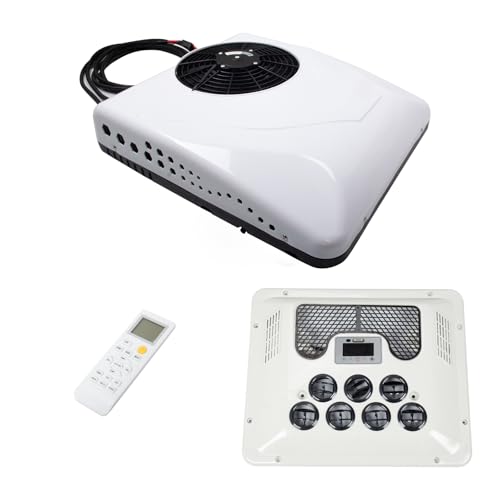
This 12V RV Air Conditioner is a standout contender for the best air conditioner for small RV because it brings together robust cooling, heating, incredible stability, and whisper-quiet operation, all in a sleek package. Its unique horizontal compressor design reduces vibration and lowers the center of gravity, translating to increased durability and a longer service life on the road. With 15,000 BTU of cooling and heating capacity, it’s a true four-season climate control solution.
-
Key Features
- Stable and durable with a horizontal compressor for less vibration and a lower center of gravity.
- Compact structure and seven-hole air outlet for efficient cooling and heat dissipation.
- 15,000 BTU cooling and heating capacity with intelligent frequency conversion technology for energy efficiency.
- Extremely quiet operation at only 45 decibels, akin to a soft breeze.
- Fashionable, ultra-thin, and streamlined design reduces wind resistance and is UV resistant.
- Wide compatibility with most RVs, light trucks, vans, and other vehicles.
-
Pros
- Exceptional stability and durability due to innovative compressor design.
- Powerful cooling and heating functions for year-round comfort.
- Outstandingly quiet operation, allowing for undisturbed rest.
- Energy-efficient due to intelligent frequency conversion technology.
- Aesthetically pleasing and aerodynamic, improving vehicle performance.
-
Cons
- Requires careful checking of sunroof dimensions before purchase for compatibility.
- Installation, while widely compatible, still requires a proper seal.
User Impressions: Customers are particularly impressed by the quietness of this 12V unit, often noting they can barely hear it running. The dual cooling and heating functions are a big hit, providing comfort in all seasons. Many users also appreciate its robust build quality and streamlined look, making it a favorite for reliability and style.
Frequently Asked Questions About Small RV Air Conditioners
Choosing the right AC unit for your compact home on wheels can be tricky. Here are some common questions to help you make an informed decision:
Q1: What BTU level do I need for a small RV?
A: For most small RVs (under 25 feet), a unit between 8,000 to 15,000 BTUs (British Thermal Units) is usually sufficient. Factors like your RV’s insulation, window size, and the climate you’ll be traveling in can influence this. Generally, 10,000-13,500 BTUs is a sweet spot for many small to medium-sized RVs, while very small campers might get by with 5,000-8,000 BTUs.
Q2: Can I run an RV air conditioner on batteries or solar power?
A: Yes, many modern RV air conditioners, especially those designed for 12V operation, can run on batteries, often supplemented by solar panels. Look for units with a low amp draw and intelligent frequency conversion technology, as these are more energy-efficient. You’ll need a robust battery bank (lithium-ion is preferred) and potentially an inverter to convert DC power to AC for 120V units.
Q3: What’s the difference between 12V and 120V RV AC units?
A: 12V units are designed to run directly off your RV’s 12-volt DC battery system, making them ideal for boondocking and off-grid use without needing shore power or a generator. 120V (or 110V) units are more common and typically require an AC power source like a shore power hookup, generator, or a powerful inverter connected to your batteries. 120V units often have higher BTUs but consume more power.
Q4: How quiet are modern RV air conditioners?
A: Significant advancements have been made in reducing RV AC noise levels. Many newer models boast noise ratings as low as 45-55 dB, which is comparable to a quiet office or gentle rain. Look for features like brushless motors, variable speed compressors, and optimized fan designs if quiet operation is a top priority for you.
Q5: Are rooftop air conditioners better than portable units for small RVs?
A: Rooftop AC units are generally more efficient, powerful, and provide better overall air distribution than portable units. They free up interior space and are designed for continuous use. Portable units can be a cheaper alternative and offer flexibility, but they often require venting a hose out a window (which compromises insulation) and take up valuable floor space in a small RV. For optimal comfort and long-term use, rooftop units are usually the superior choice.
Q6: How often should I clean my RV air conditioner?
A: Regular maintenance is crucial for optimal performance and longevity. You should clean or replace your RV AC’s air filters every 2-4 weeks during heavy use, or at least every camping season. Additionally, inspect and clean the condenser and evaporator coils annually to remove dirt and debris, which can impede efficiency and lead to costly repairs.
Q7: What does “heat pump” mean in an RV AC unit?
A: An RV air conditioner with a built-in heat pump can both cool and heat your RV. In cooling mode, it extracts heat from inside and expels it outside. In heating mode, it reverses the process, extracting heat from the outside air (even in cooler temperatures) and transferring it inside. This is an energy-efficient way to provide supplemental warmth, though dedicated furnaces are usually needed for extreme cold.
Final Thoughts on Choosing the Best Air Conditioner for Your Small RV
Finding the best air conditioner for small RV doesn’t have to be a daunting task. By considering your specific travel style – whether you’re a full-time boondocker, a weekend warrior, or someone who loves campground hookups – you can narrow down your options. Prioritize factors like BTU output for your space, power consumption for your setup, and noise levels for your peace of mind.
Any of the units reviewed above would be a fantastic addition to your small RV, offering a blend of modern features and reliable performance. Invest in a good RV air conditioner, and you’ll guarantee more enjoyable journeys and cooler, more comfortable nights, no matter where the road takes you!