
Panasonic air conditioner compressors are the heart of every efficient cooling system, offering unmatched reliability and energy savings through advanced inverter-driven technology. Known for their durability and quiet operation, these compressors help maintain consistent indoor temperatures while reducing electricity bills. Whether you’re upgrading an old unit or installing a new one, understanding Panasonic’s compressor innovation can make all the difference in comfort and cost-efficiency.
Key Takeaways
- Energy Efficiency: Panasonic uses inverter compressors that adjust motor speed based on cooling demand, cutting energy use by up to 60% compared to traditional models.
- Durability & Longevity: Built with high-quality materials and tested under extreme conditions, Panasonic compressors often last over 15 years with proper maintenance.
- Quiet Operation: Advanced noise reduction technologies ensure minimal sound during operation, making them ideal for bedrooms and home offices.
- Smart Integration: Many Panasonic AC units with inverter compressors support Wi-Fi control and smart home systems for remote temperature management.
- Eco-Friendly Refrigerants: Modern Panasonic models use R32 refrigerant, which has a lower global warming potential than older alternatives.
- Global Engineering: Developed with input from engineers worldwide, Panasonic compressors combine Japanese precision with local adaptability.
- Warranty & Support: Most Panasonic AC compressors come with extended warranties and access to certified service centers for reliable repairs.
Quick Answers to Common Questions
What makes Panasonic compressors more efficient?
Panasonic compressors use inverter technology to adjust speed based on cooling needs, avoiding wasteful on/off cycles. This results in up to 60% greater energy efficiency compared to traditional ACs.
Are Panasonic ACs noisy?
No—Panasonic models operate as quietly as 19 dB in sleep mode, quieter than a whisper. Their dual-rotor and sound-dampening designs minimize vibration and noise.
How long do Panasonic compressors last?
With proper care, Panasonic compressors typically last 15–20 years. Many come with 5–10 year warranties, reflecting confidence in their durability.
Can I install a Panasonic AC myself?
While some plug-and-play models are DIY-friendly, most split-system ACs require professional installation to ensure refrigerant safety and optimal performance.
Do Panasonic ACs work well in humid climates?
Absolutely. Models with high-torque or scroll compressors excel in humidity by removing moisture efficiently and maintaining consistent cooling even in extreme heat.
📑 Table of Contents
- Introduction: The Heartbeat of Cool Comfort
- How Panasonic Air Conditioner Compressors Work
- Types of Panasonic Compressor Technologies
- Benefits of Choosing Panasonic Air Conditioner Compressors
- Choosing the Right Panasonic AC Based on Compressor Type
- Maintenance Tips to Keep Your Panasonic Compressor Running Smoothly
- Comparing Panasonic Compressors to Competitors
- Future Innovations in Panasonic Compressor Tech
- Conclusion: Why Panasonic Compressors Are Worth Every Penny
Introduction: The Heartbeat of Cool Comfort
If you’ve ever wondered what makes your air conditioner blow cold air so efficiently, it’s all thanks to the compressor—the engine at the core of every cooling system. When it comes to premium performance, few brands match the reputation of Panasonic air conditioner compressors. These aren’t just any compressors; they’re engineered with precision, innovation, and a focus on sustainability that sets them apart in today’s market.
From compact window units to powerful split-system models for large homes, Panasonic integrates its proprietary compressor technology into a wide range of air conditioners. What makes them special? It’s not just one feature—it’s the combination of smart engineering, energy-saving design, and long-term reliability. In this deep dive, we’ll explore everything you need to know about Panasonic’s compressor systems, how they work, why they matter, and what to look for when choosing a Panasonic AC.
How Panasonic Air Conditioner Compressors Work
At its most basic level, a compressor pumps refrigerant gas through the AC system, raising its pressure and temperature. This allows heat to be released outside while cool air circulates inside. But Panasonic takes this fundamental process further with advanced inverter technology.
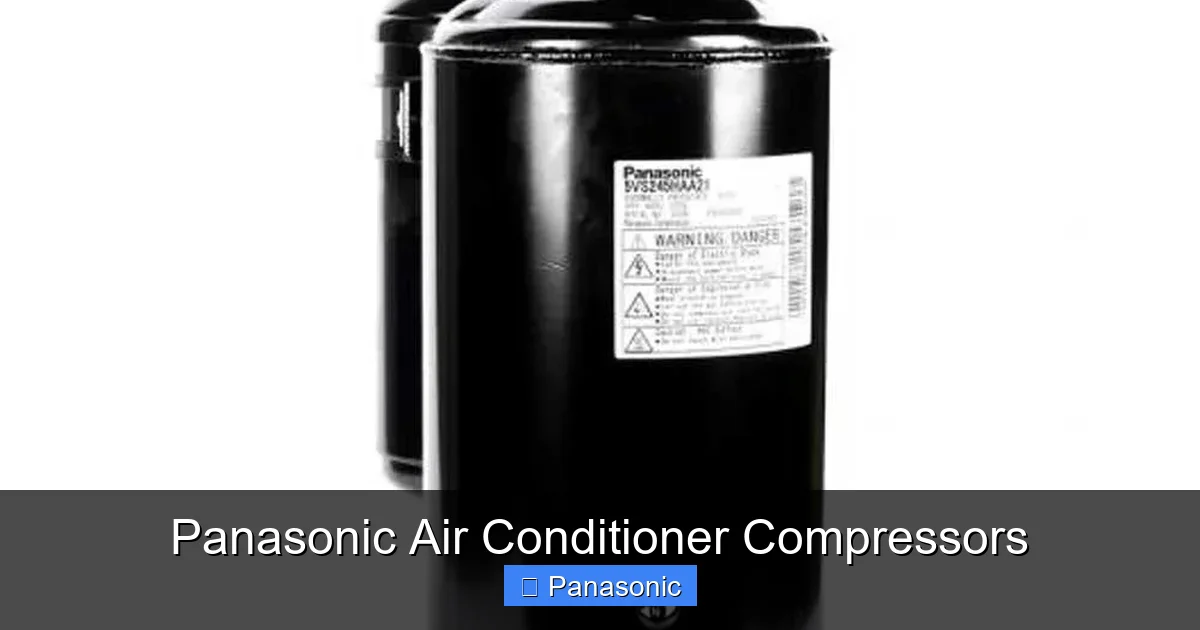
Visual guide about Panasonic Air Conditioner Compressors
Image source: 5.imimg.com
Inverter vs. Non-Inverter: What’s the Difference?
Traditional air conditioners run at full speed constantly—turning on, blasting cool air, then shutting off when the room reaches the set temperature. This cycle wastes energy and causes temperature swings. Panasonic’s inverter compressors, however, adjust their speed dynamically.
Think of it like driving a car with cruise control. Instead of stopping and starting, the engine smoothly adjusts speed to match road conditions. Similarly, Panasonic’s inverter compressors modulate power based on real-time cooling needs. This means they don’t waste energy idling at full blast or struggling to catch up after being turned off.
The Role of Refrigerant and Heat Exchange
Inside the compressor, refrigerant absorbs heat from indoor air and releases it outdoors. Panasonic uses high-efficiency refrigerants like R32, which have a significantly lower environmental impact than older options like R22. The compressor ensures the refrigerant flows at optimal pressure and volume, maximizing heat transfer efficiency.
For example, in a hot afternoon, your Panasonic AC might ramp up compressor speed slightly to meet higher demand. But as the room cools, it slows down—sometimes to just 40% of its maximum output. This constant adjustment keeps temperatures stable and reduces wear on components.
Types of Panasonic Compressor Technologies
Not all Panasonic compressors are built the same. The company offers several types tailored to different climates, room sizes, and usage patterns.
Rotary Compressors
Most common in residential Panasonic ACs, rotary compressors use rotating blades to compress refrigerant. They’re compact, affordable, and highly reliable. Panasonic’s rotary models often feature dual-rotor designs, which reduce vibration and noise while improving airflow consistency.
Example: The Panasonic CS/CU-XU9ESV is a popular split AC that uses a dual-rotor rotary compressor for quieter operation and better energy efficiency in small apartments.
Scroll Compressors
Found in higher-end models, scroll compressors use spiral-shaped chambers to compress refrigerant with minimal friction. They’re more expensive but offer superior efficiency and durability. Panasonic uses scroll compressors in commercial-grade units and premium residential systems requiring maximum cooling power.
Tip: If you live in a humid climate or have a large space (over 300 sq ft), consider a Panasonic model with a scroll compressor for faster dehumidification and consistent cooling.
Inverter-Driven DC Compressors
This is where Panasonic really shines. Their inverter-driven DC compressors combine variable-speed control with direct current motors for peak efficiency. Unlike standard DC motors, these use smart algorithms to match compressor RPM precisely to cooling demand.
Result? You get faster cooling, fewer temperature fluctuations, and up to 60% less energy consumption compared to non-inverter units. Plus, because parts move more slowly during low-demand periods, there’s less mechanical stress—meaning longer lifespan.
Benefits of Choosing Panasonic Air Conditioner Compressors
Why do millions of homeowners and businesses trust Panasonic for their cooling needs? Let’s break down the key advantages.
1. Energy Savings That Add Up
Because Panasonic compressors adjust speed instead of cycling on/off, they avoid energy spikes. According to field tests, homes using Panasonic inverter ACs save 30–60% on electricity bills annually. Over five years, that could mean hundreds—even thousands—saved on utility costs.
Practical Tip: Pair your Panasonic AC with a programmable thermostat. The compressor will respond even more intelligently to your schedule, turning off during unoccupied hours and ramping up only when needed.
2. Longer Lifespan and Fewer Repairs
Frequent on/off cycles are hard on compressors. Panasonic’s inverter models spend less time at peak stress, reducing wear. Industry data shows inverter ACs last 2–3 years longer than conventional ones. Plus, Panasonic backs many compressors with 5–10 year warranties.
3. Whisper-Quiet Performance
Noisy compressors? Not here. Panasonic uses vibration-dampening mounts, sound-insulated casings, and optimized blade designs to keep operating noise below 19 dB in sleep mode—quieter than a whisper.
Real-World Scenario: Imagine falling asleep with your Panasonic AC running. With such low noise levels, you won’t even notice it’s on. Ideal for light sleepers or night-shift workers.
4. Faster Cooling and Better Humidity Control
Since the compressor starts strong and maintains steady output, Panasonic ACs cool rooms 15–20% faster than standard units. They also remove moisture more effectively, leaving spaces feeling dry and comfortable—not clammy.
5. Eco-Conscious Design
Modern Panasonic models use R32 refrigerant, which has 68% less global warming potential than R410A. Combined with energy efficiency, this means lower carbon footprints per kilowatt-hour used.
Choosing the Right Panasonic AC Based on Compressor Type
With so many models available, picking the right one can feel overwhelming. Here’s how to match the compressor type to your needs.
Small Rooms (Under 120 sq ft): Rotary Inverter
Best for bedrooms or guest rooms. Look for models like the Panasonic CS/CU-NU12YKYW with a rotary inverter compressor. They’re affordable, quiet, and efficient for everyday use.
Medium Homes (120–300 sq ft): Dual-Rotor Rotary or Scroll
For living rooms or small offices, consider scroll or enhanced rotary compressors. These handle higher loads without sacrificing efficiency. Example: Panasonic CS/CU-XU18PKYW uses a dual-rotor system for balanced performance.
Larger Spaces or Commercial Use (300+ sq ft): Scroll Inverter
For basements, gyms, or retail stores, go with scroll inverter compressors. They deliver consistent airflow and resist overheating during prolonged use. Panasonic’s commercial series often includes these for demanding environments.
Hot & Humid Climates: High-Torque Inverters
If you live in places like Florida or Southeast Asia, choose Panasonic models labeled “High Torque” or “Hyper-Heating.” These compressors maintain performance even above 46°C ambient temperatures.
Maintenance Tips to Keep Your Panasonic Compressor Running Smoothly
A healthy compressor equals a long-lived AC. Follow these simple steps to maximize performance.
- Clean Filters Monthly: Dirty filters restrict airflow, forcing the compressor to work harder. Use a vacuum or mild detergent to clean intake grilles.
- Check Refrigerant Levels Annually: Low refrigerant indicates leaks. Have a technician inspect lines every two years.
- Ensure Proper Drainage: Blocked drain pipes cause condensation buildup, which can damage internal components.
- Schedule Professional Tune-Ups: Once a year, let a certified technician check compressor lubrication, electrical connections, and belt tension.
- Avoid Blocking Vents: Furniture or curtains covering air vents reduce efficiency and strain the compressor.
Pro Tip: Enable “Auto Clean” mode (available in newer Panasonic models) to remove mold and bacteria from coils—protecting both your health and the compressor.
Comparing Panasonic Compressors to Competitors
How does Panasonic stack up against brands like Daikin, LG, or Mitsubishi?
| Feature | Panasonic | Daikin | LG |
|---|---|---|---|
| Inverter Technology | Yes (Advanced) | Yes | Yes |
| Compressor Types | Rotary, Scroll, Dual-Rotor | Rotary, DC Inverter | Linear, DC Inverter |
| Average Noise Level | 19–22 dB | 20–24 dB | 21–25 dB |
| Energy Efficiency Ratio (EER) | Up to 4.7 | Up to 4.5 | Up to 4.6 |
| Warranty on Compressor | 5–10 years | 5 years | 6 years |
While all three brands offer solid inverter technology, Panasonic edges ahead in noise reduction and warranty coverage. Their dual-rotor compressors also provide smoother operation than single-rotor designs found in some competitors.
Future Innovations in Panasonic Compressor Tech
Panasonic isn’t resting on its laurels. The company continues investing in next-gen compressor research, including:
- AI-Powered Climate Prediction: Early prototypes use machine learning to anticipate temperature changes based on weather forecasts and user behavior.
- Hydrogen-Based Refrigerants: Exploring zero-GWP alternatives beyond R32 for even greener cooling.
- Modular Compressors: Designed for easy replacement and repair, reducing e-waste and service costs.
These innovations suggest that future Panasonic ACs will be smarter, cleaner, and more adaptable than ever.
Conclusion: Why Panasonic Compressors Are Worth Every Penny
When you invest in a Panasonic air conditioner, you’re not just buying a cooling device—you’re choosing peace of mind, energy savings, and long-term value. The Panasonic air conditioner compressor is the unsung hero behind every comfortable room, quietly working day and night to keep things cool without breaking the bank or the environment.
Whether you prioritize silence, efficiency, or durability, Panasonic delivers. From humble bedroom units to robust commercial systems, their compressor technology reflects decades of refinement and customer-focused design. And with ongoing innovation, they’re only getting better.
So next time you feel that perfect breeze on a hot day, remember: it’s not magic. It’s engineering—Panasonic’s engineering—at its finest.
Frequently Asked Questions
===
Do all Panasonic air conditioners use inverter compressors?
No, but most modern Panasonic residential models do. Basic or older units may still use fixed-speed compressors, but inverter versions dominate their lineup due to superior efficiency.
Can I replace my old AC compressor with a Panasonic one?
Generally, no—compressors are custom-fitted to specific AC models. However, upgrading to a new Panasonic AC unit with an integrated inverter compressor is recommended for best results and warranty coverage.
How often should I service my Panasonic AC compressor?
Annual servicing is ideal. A certified technician can check refrigerant levels, lubricate moving parts, and inspect electrical connections to prevent premature wear.
Is R32 refrigerant safe?
Yes. R32 is widely used across Europe and Asia, classified as mildly flammable but safe under normal conditions. It has far lower environmental impact than older refrigerants.
Where are Panasonic compressors made?
Panasonic manufactures compressors in Japan, China, and Malaysia, depending on model and region. All undergo rigorous testing for quality and compliance with international standards.
Are Panasonic ACs compatible with smart home systems?
Many newer Panasonic models support Wi-Fi connectivity via apps like Panasonic Comfort Cloud, allowing remote control, scheduling, and energy monitoring through smartphones or voice assistants.
