
Choosing the right circuit breaker for your Panasonic air conditioner is essential for safety and efficiency. A properly sized breaker prevents overloads, protects your home’s electrical system, and ensures your AC unit operates smoothly. This guide covers everything from selecting the correct amperage to installation tips—so you can stay cool without risking damage or fire hazards.
Key Takeaways
- Understanding panasonic air conditioner circuit breaker: Provides essential knowledge
Quick Answers to Common Questions
What size circuit breaker do I need for a 12,000 BTU Panasonic air conditioner?
Assuming 12,000 BTU equals ~10A running current at 120V, apply the 80% rule: 10 × 1.25 = 12.5A → round up to 15A single-pole breaker. Always verify with your unit’s nameplate.
Can I use a 20-amp breaker for a small window AC?
Only if your AC’s running current is ≤16A (since 20A × 0.8 = 16A). Most small window units draw under 10A, so a 15A breaker is safer and code-compliant.
How do I know if my breaker is faulty?
If it won’t reset, feels hot to touch, trips randomly, or emits a burning smell—replace it immediately. Use a multimeter to test continuity if comfortable doing so.
Should I install the breaker inside or outside?
The breaker itself must be indoors in a UL-listed panel. The disconnect switch near the outdoor unit should be accessible outdoors but protected from elements.
Does a larger breaker increase energy bills?
No—but an oversized breaker removes protection, potentially allowing undetected overloads that waste energy through inefficiency or premature component failure.
📑 Table of Contents
- Introduction: Why Your Panasonic Air Conditioner Needs the Right Circuit Breaker
- Understanding How a Circuit Breaker Works with Your Panasonic AC
- How to Choose the Correct Circuit Breaker for Your Panasonic Air Conditioner
- Installation Guide: Safely Connecting Your Panasonic AC to the Right Breaker
- Troubleshooting Common Circuit Breaker Issues with Panasonic AC Units
- Energy Efficiency and Electrical Safety: Balancing Both
- Frequently Asked Questions About Panasonic Air Conditioner Circuit Breakers
Introduction: Why Your Panasonic Air Conditioner Needs the Right Circuit Breaker
When summer heat hits hard, your Panasonic air conditioner becomes your best friend—keeping you cool, comfortable, and productive. But behind that whisper-quiet operation and energy-efficient performance lies a critical component: the circuit breaker. While many homeowners focus only on thermostat settings or refrigerant levels, few realize how vital the right electrical protection is for their AC system. A properly matched Panasonic air conditioner circuit breaker does more than just prevent nuisance trips—it safeguards both your appliance and your home’s wiring from dangerous faults.
In this comprehensive guide, we’ll walk you through everything you need to know about selecting, installing, and maintaining the ideal circuit breaker for your Panasonic air conditioning unit. Whether you’re upgrading an old breaker, setting up a new system, or troubleshooting frequent shutdowns, understanding this often-overlooked piece of equipment will save you time, money, and stress. We’ll keep things simple, practical, and grounded in real-world use—because no one wants to be stuck in a hot room fumbling with wires.
Understanding How a Circuit Breaker Works with Your Panasonic AC
Before diving into specs or installation steps, let’s clarify what a circuit breaker actually does—and why it matters specifically for Panasonic air conditioners.
A circuit breaker is an automatic switch designed to protect electrical circuits from damage caused by overcurrent, short circuits, or ground faults. Think of it as the “brake pedal” for your home’s electricity. When too much current flows—like when your AC’s compressor kicks on—the breaker senses the surge and interrupts the circuit within milliseconds, preventing overheating, arcing, or even fires.
Panasonic air conditioners are engineered for reliability and efficiency, but like all appliances, they draw significant power during startup and peak operation. The compressor alone can consume several amps at once, especially in central or ductless mini-split models. Without a correctly rated breaker, repeated surges can degrade internal components or trip lower-rated breakers repeatedly, leading to downtime and frustration.
Most residential Panasonic units operate on standard 120V or 240V systems. The type of breaker you need depends on voltage, amperage draw, and whether your model has multiple motors (e.g., separate compressors and fans). Modern Panasonic ACs often include soft-start technology to reduce initial load, but the breaker must still handle sustained operating conditions.
Types of Circuit Breakers Used for Residential Air Conditioners
Not all breakers are created equal. Here’s a quick breakdown of common types used with Panasonic air conditioners:
– Single-Pole Breakers: Typically used for 120V systems. These control one live wire and are common in window units or smaller ductless splits.
– Double-Pole Breakers: Required for 240V systems (most central ACs). These manage two live wires simultaneously and provide full voltage across the circuit.
– Miniature Circuit Breakers (MCBs): Small, fast-acting switches found in distribution boards; ideal for precise overload protection.
– Residual Current Devices (RCDs/GFCIs): Offer additional shock protection—especially important in humid environments or older homes.
For most Panasonic residential models, a double-pole MCB rated appropriately for your unit’s max current is recommended. Always refer to your user manual or nameplate data for exact specifications.
How to Choose the Correct Circuit Breaker for Your Panasonic Air Conditioner
Selecting the wrong breaker isn’t just inconvenient—it can be hazardous. Too small, and it trips every time you run the AC. Too large, and it fails to protect against dangerous overcurrent situations. Here’s how to get it right.
Step 1: Check Your AC Unit’s Nameplate Data
Every Panasonic air conditioner comes with a metal or plastic nameplate listing key electrical details. Look for:
– Voltage (usually 120V or 240V)
– Maximum running current (in amps)
– Starting/peak current (often 2–3x running current)
For example, if your unit shows “240V, 9.5A running / 22A starting,” your breaker should handle at least 22A continuously—but not exceed the wire gauge and panel capacity.
Step 2: Apply the 80% Rule for Continuous Loads
Electrical code (NEC Article 210) requires that continuous loads—those lasting 3 hours or more—not exceed 80% of a breaker’s rated capacity. Since air conditioners run continuously during hot days, multiply your AC’s running current by 1.25 to find the minimum breaker size.
Example:
Running current = 10A
Minimum breaker = 10 × 1.25 = **12.5A** → Round up to **15A**
So, even though your AC might technically work on a 10A circuit, code-compliant practice demands a 15A breaker.
Step 3: Account for Other Appliances on the Same Circuit
Avoid daisy-chaining high-draw devices (like microwaves, space heaters, or dehumidifiers) on the same breaker as your AC. If unavoidable, calculate total expected load and ensure the combined usage stays under 80% of breaker capacity.
Practical Tip: Use a Kill-a-Watt meter or smart plug to monitor actual power draw over a week. This real-world data beats guesswork every time.
Installation Guide: Safely Connecting Your Panasonic AC to the Right Breaker
Once you’ve selected the correct breaker size, proper installation is non-negotiable. Improper wiring can void warranties, violate insurance policies, or create electrocution risks. Follow these steps carefully—or hire a pro.
Tools You’ll Need
– Phillips and flathead screwdrivers
– Wire strippers
– Voltage tester
– Safety gloves and goggles
Step-by-Step Installation Process
- Turn Off Main Power: Shut off the main circuit breaker in your electrical panel. Confirm zero voltage with a tester before touching any wires.
- Mount the New Breaker: In most panels, snap a compatible breaker into place until it clicks. Ensure it aligns with adjacent breakers and fits snugly.
- Connect Wires: Attach black (hot) and white (neutral) wires to the breaker terminals. For 240V units, connect both hots to the double-pole breaker. Never skip the neutral if required by your model.
- Ground the System: Connect the green or bare copper ground wire to the panel’s grounding bus bar.
- Secure Everything: Tighten all terminal screws and ensure no bare wires protrude outside the panel box.
- Restore Power & Test: Turn the main breaker back on, then flip the new breaker. Listen for normal startup sounds from your AC.
⚠️ Never attempt this if you’re unsure about wiring colors or panel layout. When in doubt, call a licensed electrician.
Common Mistakes to Avoid
– Using aluminum instead of copper wire (unless specified)
– Oversizing the breaker to “future-proof” (this defeats its protective purpose!)
– Ignoring local electrical codes (always check with your utility inspector)
– Skipping the GFCI test after installation
Troubleshooting Common Circuit Breaker Issues with Panasonic AC Units
Even with perfect installation, problems can arise. Here’s how to diagnose and fix frequent issues.
Problem 1: Breaker Trips Immediately When AC Turns On
Cause: Short circuit in wiring or internal AC fault
Solution: Disconnect the AC from the breaker. Test continuity between live and neutral/ground. If resistance reads near zero, the compressor or capacitor may be faulty. Replace the unit or call a technician.
Problem 2: Breaker Trips After Running for Several Minutes
Cause: Overheating due to undersized breaker or dirty coils
Solution: Clean the outdoor condenser coils and ensure vents aren’t blocked. Verify breaker size matches the 80% rule. If unresolved, measure actual current draw—your breaker might be degrading.
Problem 3: Warm Breaker Housing or Burning Smell
Cause: Loose connection or excessive current
Solution: Turn off power immediately. Inspect terminal tightness and clean oxidation. Consider upgrading to a higher-quality breaker with arc-fault detection.
Proactive Maintenance Tips
– Schedule annual professional inspections
– Keep the area around the outdoor unit clear
– Replace air filters monthly during heavy use
– Lubricate fan motors if applicable (check manual)
Energy Efficiency and Electrical Safety: Balancing Both
Modern Panasonic air conditioners are built with energy-saving features like inverter technology and smart thermostats—but none of these matter if the electrical foundation is unsafe. An improperly protected system wastes energy *and* increases fire risk.
By choosing the correct Panasonic air conditioner circuit breaker, you enable stable voltage delivery, reduce brownouts, and extend the life of your compressor. Additionally, energy-efficient models often have lower running currents, which means you might actually downsize the breaker slightly compared to older inefficient units—but only after verifying nameplate specs!
Remember: Safety and efficiency go hand-in-hand. A well-maintained breaker doesn’t just prevent outages—it helps your AC perform optimally, saving you money on electricity bills while keeping your family secure.
Frequently Asked Questions About Panasonic Air Conditioner Circuit Breakers
Can I use any circuit breaker for my Panasonic air conditioner?
No. The breaker must match your AC’s voltage, amperage, and phase requirements. Using an incompatible breaker risks damage or violates electrical codes. Always follow manufacturer guidelines and local regulations.
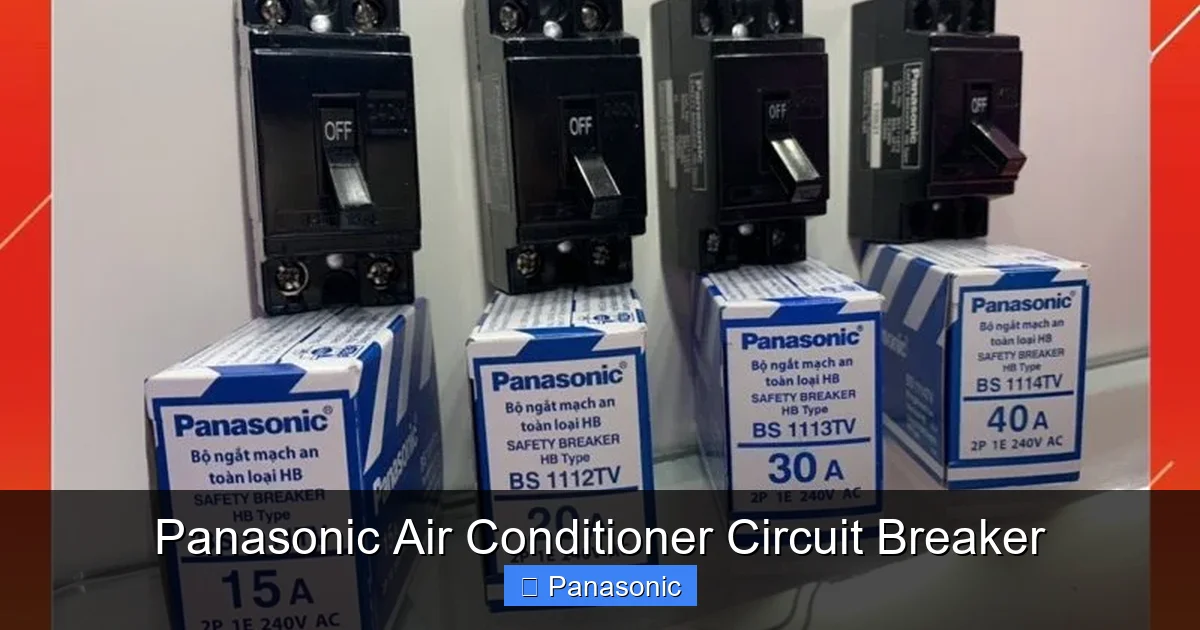
Visual guide about Panasonic Air Conditioner Circuit Breaker
Image source: down-my.img.susercontent.com
What size circuit breaker do I need for a 5,000 BTU Panasonic window unit?
A typical 5,000 BTU window AC draws about 12–15 amps at 120V. Based on the 80% rule, you’ll need a 15-amp single-pole breaker. However, check your specific model’s nameplate—some newer energy-efficient units may require less.
Can I install the breaker myself?
If you’re experienced with basic electrical work and have turned off all power, yes—but only if you understand panel wiring and local codes. Otherwise, hire a licensed electrician to avoid liability and ensure compliance.
Why does my breaker keep tripping even with the right size?
This usually indicates a failing compressor, dirty coils, or loose wiring. Have a HVAC technician inspect the unit. Repeated tripping stresses the breaker and other components.
Do I need a GFCI breaker for my indoor AC unit?
GFCI (Ground Fault Circuit Interrupter) protection is required only if the AC has exposed parts in wet areas (e.g., outdoor condensers near pools). Indoor units typically don’t need GFCIs unless installed in bathrooms or kitchens.
Can I share a circuit breaker between my AC and another appliance?
Generally no—especially for high-load devices like refrigerators or washing machines. Each major appliance should have its own dedicated circuit to prevent overloads and ensure safety.
How often should I replace my circuit breaker?
Breakers last decades if undamaged and properly maintained. Replace only if it fails to reset, feels excessively warm, or shows corrosion. Annual visual checks suffice for most homes.
Does Panasonic provide breaker recommendations?
Yes! Refer to your owner’s manual or contact Panasonic customer support. They can confirm exact requirements based on your model number and region.
Will a higher-rated breaker improve my AC’s performance?
No. A larger breaker won’t boost cooling—but it also won’t harm performance. However, it removes critical protection, so never exceed the recommended rating.
What if my electrical panel is full? Can I add another breaker?
Only if your panel has unused slots and sufficient capacity. Older panels may lack space or amperage. Consult an electrician to assess compatibility and upgrade needs.
Are AFCI breakers required for air conditioners?
AFCI (Arc-Fault Circuit Interrupter) protection is mandated for bedrooms and living areas in new builds per NEC 2020+, but not typically for dedicated HVAC circuits. Still, some jurisdictions recommend them for added safety.
Can weather affect my breaker’s performance?
Extreme cold can make contacts brittle; humidity may cause corrosion. Ensure your breaker box is dry, ventilated, and located away from direct sun or moisture sources.
What’s the difference between a standard breaker and a tandem breaker?
A tandem breaker fits two circuits in one slot but shares a single pole—ideal for narrow panels. Use only if your panel supports it and your AC doesn’t share voltage phases.
Should I upgrade to a smart circuit breaker for monitoring?
Smart breakers offer remote alerts and usage tracking—great for energy-conscious users. But they’re optional for basic AC protection. Prioritize correct sizing and safety first.
Can I transfer my existing breaker to a new AC?
Only if the old breaker matches the new unit’s specs and hasn’t degraded. Otherwise, install a fresh breaker to ensure optimal protection.
What happens if the breaker fails silently (doesn’t trip but doesn’t deliver power)?
This rare failure mode suggests internal wear or contact erosion. Test with a multimeter. If output voltage is missing, replace the breaker immediately—don’t assume the AC is broken.
Is there a warranty impact if I install the wrong breaker?
Yes. Self-installation errors or using non-recommended parts may void your Panasonic AC warranty. Always follow official guidelines or use certified technicians.
Frequently Asked Questions
How do I determine the correct circuit breaker size for my Panasonic air conditioner?
Check the unit’s nameplate for voltage and maximum current. Multiply the running current by 1.25 (per NEC 80% rule), then round up to the nearest standard breaker size (e.g., 15A, 20A).
Can I install a circuit breaker myself for my Panasonic AC?
Only if you’re qualified and confident in your electrical skills. Turn off main power, follow local codes, and consider hiring a licensed electrician to ensure safety and compliance.
What happens if I use the wrong size circuit breaker?
Too small: Frequent tripping, interrupted cooling. Too large: No protection against overloads, risking fire or equipment damage. Always match the breaker to your AC’s specs.
How often should I inspect my air conditioner’s circuit breaker?
At least once a year during routine maintenance. Look for loose connections, discoloration, or warmth. Also test the breaker manually if possible.
Do modern Panasonic air conditioners require special breakers?
Most residential models use standard MCBs. However, inverter-driven or high-efficiency units may benefit from higher-quality breakers with arc-fault protection—consult your manual.
Is it safe to share a circuit with other appliances?
Not recommended. Dedicated circuits prevent overloads and ensure consistent power delivery. Sharing can lead to brownouts or nuisance tripping during peak demand.
