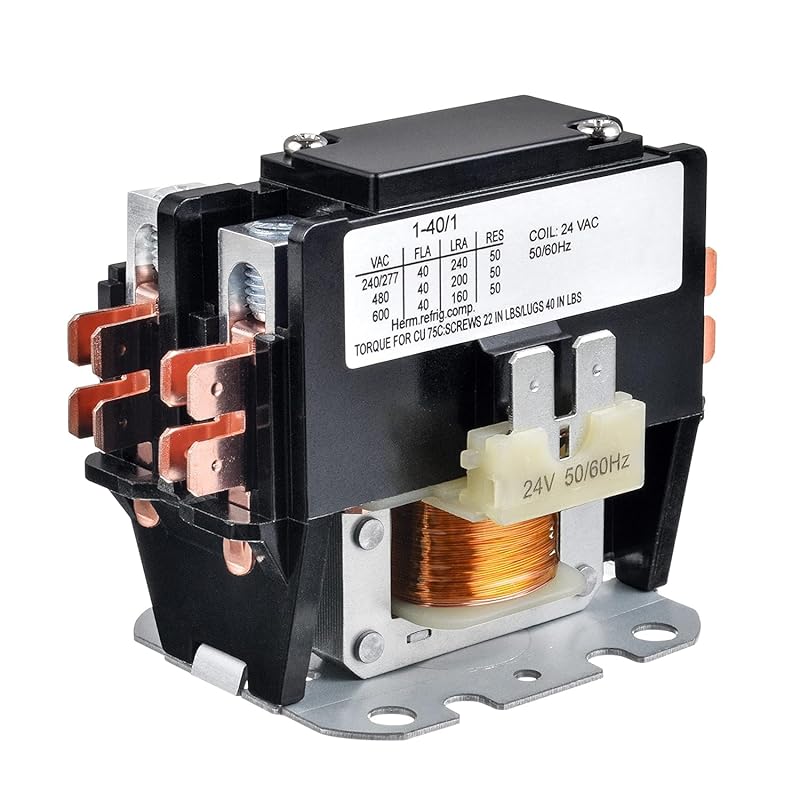
Knowing your Carrier air conditioner’s age is essential for proper maintenance, repair planning, and energy efficiency upgrades. This guide walks you through finding the model number, decoding the serial number, and using online tools to pinpoint your unit’s manufacturing date with confidence.
Finding out how old your Carrier air conditioner is might seem tricky at first, but it’s actually simpler than you think. Whether you’re planning maintenance, troubleshooting issues, or deciding whether to repair or replace your unit, knowing its age gives you valuable context. Carrier, one of the most trusted names in HVAC systems, has used consistent labeling practices over the years—making it possible to estimate your AC’s manufacturing date with just a few steps.
This guide will walk you through everything from locating key identification numbers to interpreting them correctly. You’ll learn why age matters, how to read serial numbers, and where to look when labels are faded or missing. By the end, you’ll feel confident determining your Carrier air conditioner’s age—no technical degree required.
Quick Answers to Common Questions
What if my serial number looks completely different?
Some older or commercial Carrier units use non-standard serial formats. Take clear photos of the label and compressor type to Carrier support—they can often trace obscure codes manually.
Can I trust online serial decoders?
Most are accurate for post-2010 models, but treat them as estimates. Always verify with Carrier’s official tool or a licensed technician for pre-2015 units.
Does the outdoor unit alone tell me the full story?
Yes—for split systems, the outdoor condenser’s serial number corresponds to the indoor coil. Just ensure both share the same model prefix.
How accurate is the month of manufacture?
Typically within 1–2 months. Carrier batches units weekly, so minor delays occur. Don’t worry about exact calendar dates—focus on the year.
Should I replace my AC if it’s over 12 years old?
Not necessarily—but consider upgrading if it’s less efficient than modern SEER 16+ models. Ask an HVAC pro for an energy audit to compare savings.
Why Knowing Your Air Conditioner’s Age Matters
Your Carrier air conditioner isn’t just a machine—it’s a long-term investment in your home’s comfort and efficiency. But like any appliance, its performance depends heavily on its age. Units built more than 10–15 years ago typically operate at lower SEER (Seasonal Energy Efficiency Ratio) ratings compared to modern models. Older compressors may also lack advanced features like variable-speed motors or smart controls.
Understanding your AC’s age helps you:
- Plan timely maintenance: Regular servicing becomes critical as units approach 10–12 years.
- Assess repair costs vs. replacement: Extremely old units may cost more to fix than to replace.
- Verify warranty coverage: Most manufacturers void warranties after 10 years, even if the unit appears functional.
- Upgrade efficiently: Knowing your system’s age helps you choose compatible replacements and take advantage of rebates.
Even if your Carrier AC seems fine now, hidden wear and inefficiencies could be costing you money on utility bills. That’s why identifying its age is the first step toward smarter HVAC decisions.
Step 1: Locate the Model and Serial Number
Every Carrier air conditioner comes with two important labels:
- Model Number: A short alphanumeric code (e.g., “24ABA601700”)
- Serial Number: A longer sequence (often 10–12 characters) starting with letters
These are typically printed on a white or silver metal plate attached to either:
- The indoor blower assembly (inside the furnace or air handler)
- The outdoor compressor housing
- Near the electrical disconnect box
Where to Look on Indoor Units
If your Carrier system includes a furnace or air handler (common in packaged units), open the front panel. The blower motor compartment should contain the label. If you see a large metal cabinet with wires and ducts, that’s likely your air handler.
For split systems (indoor evaporator coil + outdoor condenser), check behind the grille of the indoor unit—usually near the return air duct.
Where to Look on Outdoor Units
The outdoor condenser/compressor unit has a hinged access panel. Open it carefully and look for the label near the top or side. Avoid touching internal components unless necessary.
Pro Tip: Use a flashlight if lighting is poor. Labels sometimes fade over time—look for raised text or use a magnifying glass.
Step 2: Decode the Serial Number for Manufacturing Date
Visual guide about How to Determine the Age of a Carrier Air Conditioner
Image source: img44.hbzhan.com
Carrier encodes manufacturing information directly into the serial number. While formats vary slightly by era, most follow a predictable pattern:
– First letter: Plant identifier (not always reliable)
– Next two digits: Year of manufacture
– Following digit(s): Month of manufacture
For example, a serial number like **C181234567** breaks down as:
- C = Plant code (Buffalo, NY plant)
- 18 = 2018
- 1 = January
So this unit was made in January 2018.
However, older models (pre-2000s) used different schemes. Some early units only show the last two digits of the year. If your serial starts with **“00”**, it might be 2000 or earlier—but exact dating requires cross-referencing.
Common Serial Number Patterns
| Serial Prefix | Approximate Era |
|---|---|
| C14, C15, C16 | 2014–2016 |
| C17, C18, C19 | 2017–2019 |
| C20+ | 2020 onward |
| 00–02 | 2000–2002 (may vary) |
Note: Always verify with Carrier’s official database if possible. Third-party decoders exist online, but they’re not always accurate for rare vintage models.
Step 3: Use the Model Number for Additional Context
While the serial number tells you *when* your Carrier AC was built, the model number reveals *what kind* of unit it is—and sometimes *how new* it is.
Modern Carrier models follow a standardized naming convention:
- First digit: Cooling capacity (e.g., “2” = 2 tons)
- Second digit: Series/type (e.g., “4” = Comfort™ series)
- Third letter: Product line (e.g., “B” = standard residential)
Compare your model number to Carrier’s current lineup. If yours matches a discontinued series (like the 24ABC), it’s probably 10+ years old.
You can search your model online using terms like:
“Carrier [your model number] release date”
Manufacturer websites and HVAC forums often list discontinuation dates for legacy products.
Step 4: Check for Installation Stickers or Tags
Sometimes, the easiest way to find your Carrier air conditioner’s age is through documentation left behind during installation. Look for:
- Installer tags stapled to ductwork
- Stickers on electrical boxes
- Paperwork inside the unit’s access panel
These often include:
- Date installed
- Technician name/company
- Permit numbers (which can be traced via local building departments)
If you have old HVAC invoices or receipts, they’re goldmines for dating your system.
Step 5: Use Online Tools and Databases
Several free tools help decode Carrier serial numbers:
- Carrier’s Official Support Portal: Visit carrier.com/support and enter your serial number.
- HVAC Serial Decoder Websites: Sites like HVAC Parts Now offer community-driven lookup services.
- Google Search: Try “Carrier serial number decoder” or paste your full serial into quotes (e.g., “C181234567”).
Always double-check results against multiple sources—especially for pre-2005 units.
Troubleshooting Common Challenges
Not all Carrier air conditioners make it easy to find their age. Here’s how to handle tough cases:
Faded or Missing Labels
Over time, UV exposure and weather erode outdoor labels. Try:
- Using a soft cloth and mild soap to clean the area
- Checking inside the unit (sometimes labels duplicate)
- Looking under the cap or near screws—labels are sometimes tucked away
If nothing works, contact Carrier customer service with photos of visible wiring or compressor type.
Unclear Serial Format
If your serial doesn’t match known patterns (e.g., starts with numbers instead of letters), it may be an older prototype or commercial-grade unit. In these cases:
- Call Carrier support at 1-800-821-6717
- Provide photos of the entire label and nearby components
- Ask specifically about vintage model dating
HVAC professionals often have access to legacy databases not available to the public.
Split Systems vs. Packaged Units
Remember: Split systems have separate indoor and outdoor units. Each may have its own serial number! Match them together using the model number—they should be identical or closely related (e.g., “24ABC600000” / “24ABC600001”).
When to Consult a Professional
If you’ve tried all steps above and still can’t determine your Carrier air conditioner’s age, it’s time to call an HVAC technician. Certified professionals:
- Own diagnostic software linked to Carrier’s archives
- Can inspect internal components (compressor type, refrigerant lines) for age clues
- Offer free estimates that include replacement recommendations based on unit age
Many offer same-day appointments and satisfaction guarantees—worth every penny if you’re unsure.
Conclusion: Make Informed HVAC Decisions
Determining your Carrier air conditioner’s age doesn’t require special skills—just patience and attention to detail. By locating the serial number, understanding Carrier’s coding system, and using available resources, you gain clarity on your system’s history and future needs.
Whether you’re scheduling preventative maintenance, comparing repair quotes, or shopping for a new unit, knowing your AC’s age empowers you to act wisely. Modern Carrier systems last 15–20 years with proper care, but even the best-built machines eventually reach the end of their useful life.
Take 10 minutes today to find your model and serial numbers. It could save you hundreds (or thousands) down the road. And remember: when in doubt, Carrier’s support team is just a phone call away.