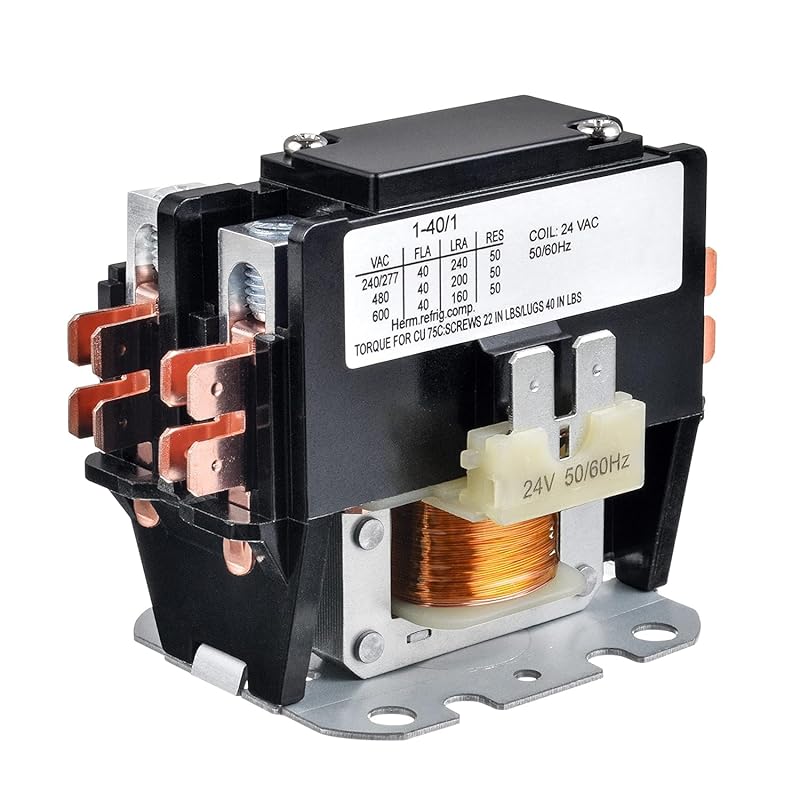
Carrier air conditioners range from $1,800 to over $9,000, depending on the type, size, efficiency rating, and installation needs. Central systems cost more but last longer and cool larger homes, while smaller units offer budget-friendly cooling. This guide breaks down real-world pricing for every Carrier model so you can find the right balance of performance and value.
How Much Does a Carrier Air Conditioner Cost?
If your home feels like an oven on summer afternoons, you’re not alone. Heat waves are getting hotter, and even mild summers can leave us scrambling for relief. A reliable air conditioner isn’t just a luxury—it’s a necessity for comfort, health, and productivity. When it comes to trusted names in HVAC, Carrier stands out for innovation, durability, and nationwide service. But before you fall in love with their sleek designs or whisper-quiet operation, you’ll want to know: How much does a Carrier air conditioner cost?
Prices vary wildly based on what kind of system you choose and how complex your home is to cool. You could spend under $500 for a simple window unit or over $8,000 for a top-tier central air setup with smart controls and premium materials. The good news? Whether you’re on a tight budget or ready to invest in long-term savings, there’s a Carrier option that fits both your wallet and your cooling needs.
In this guide, we’ll walk through every major category of Carrier air conditioners—central systems, ductless mini-splits, window units, and portable models—along with real-world pricing, installation tips, efficiency comparisons, and money-saving strategies. By the end, you’ll have a clear picture of what to expect when shopping for a Carrier AC, so you can make a confident decision without overspending or underperforming.
What Are Central Air Conditioning Systems?
Central air conditioning is the gold standard for whole-home cooling. These systems use ducts to distribute cool air evenly throughout your house via registers in each room. Carrier has been designing central AC units since 1915, and today they offer some of the most efficient and durable models on the market.
Central systems come in two main types: split systems (most common) and packaged systems. Split systems have an outdoor condensing unit connected to one or more indoor air handlers through refrigerant lines and ducts. Packaged units sit entirely outside and feed cooled air through ducts—often used in homes without basements or crawl spaces.
When you hear people talk about “how much does a Carrier air conditioner cost” in relation to central cooling, they’re usually referring to split systems because they’re the most popular choice for modern homes.
Typical Price Range for Carrier Central Air Conditioners
For a standard 3-ton or 4-ton Carrier central air conditioner—enough to cool a 1,500- to 2,000-square-foot home—you’ll pay:
– **Unit only**: $2,200 to $6,500
– **Installation (basic)**: $1,300 to $3,000
– **Total installed**: $3,500 to $9,000
Larger homes (2,500+ sq ft) may require a 5-ton unit, which pushes the total toward $8,000–$10,000+. Smaller homes might get away with a 2-ton model starting around $2,800 installed.
It’s important to note that higher SEER (Seasonal Energy Efficiency Ratio) ratings increase upfront cost but cut electricity bills significantly. For example, a 16-SEER unit costs less than a 20-SEER model, but the latter pays for itself in energy savings within 3–5 years in hot climates.
Factors That Influence Central AC Pricing
Several variables affect how much you’ll ultimately pay for a Carrier central air conditioner:
– **Capacity (tonnage)**: Too small = poor cooling; too large = wasted energy and humidity issues. A licensed contractor should perform a Manual J load calculation to size your system correctly.
– **Efficiency rating (SEER)**: Carrier offers models from 14 SEER all the way up to 26 SEER. Higher SEER means better efficiency but higher sticker price.
– **Refrigerant type**: Most newer Carrier units use R-410A (a safer, more efficient alternative to older R-22).
– **Ductwork condition**: If your ducts leak or are undersized, installation becomes more expensive due to repairs or replacements.
– **Electrical requirements**: Older homes may need panel upgrades to handle the amperage draw of modern high-efficiency compressors.
– **Thermostat integration**: Smart thermostats like Carrier’s Infinity series add convenience and energy savings but increase system cost slightly.
Example: Installing a Carrier Performance 25VNA5 in a 1,800-SF Home
Let’s say you live in Phoenix, Arizona, where summer temps routinely hit 110°F. Your home is 1,800 square feet with existing ductwork in good shape. You want a reliable, moderately efficient system that won’t spike your electric bill.
You opt for the Carrier Performance 25VNA5—a 3-ton, 16-SEER unit priced at about $2,900. Installation includes refrigerant line prep, thermostat wiring, and standard labor. Total comes to roughly $4,600.
Compare that to a Carrier Infinity 24VSB9—a 3-ton, 20-SEER ultra-high-efficiency model costing $4,800 before installation. With the same labor, your total hits $6,500. Over 10 years, the higher-efficiency model could save you $1,200–$1,800 in electricity, not counting potential rebates.
Should You Upgrade From an Older System?
If your current Carrier unit is over 10 years old, you might be tempted to just replace it rather than repair. Newer models are quieter, smarter, and far more efficient. Plus, installing a modern system often voids the need for costly retrofits—many components are plug-and-play compared to legacy designs.
However, if your furnace or air handler is still functional, you can often pair a new Carrier condenser coil with your existing blower assembly, saving thousands. Just ensure compatibility—your HVAC contractor should verify this during the quote phase.
What Are Ductless Mini-Split Systems?
Not every home has ductwork. Rentals, historic houses, sunrooms, and additions are common scenarios where running ducts would be prohibitively expensive or structurally invasive. That’s where ductless mini-splits shine.
A ductless system consists of an outdoor compressor/condenser and one or more indoor air-handling units mounted high on walls or ceilings. They connect via thin refrigerant lines and electrical cables—no ducts needed. Each indoor unit serves a single room or zone, allowing precise temperature control.
Carrier entered the ductless market in recent years with its ProSeries and Performance lines, offering excellent performance at competitive prices.
Typical Price Range for Carrier Ductless Mini-Splits
Here’s what you can expect for a Carrier ductless mini-split system:
– **1-zone (single-room) setup**: $2,000 to $3,500 installed
– **2-zone system**: $2,800 to $5,000 installed
– **3–4 zone system**: $3,500 to $7,500 installed
Prices depend heavily on tonnage per room and whether you include Wi-Fi controls or advanced features like dual-zone airflow.
For instance, a 9,000 BTU (1-ton equivalent) single-room Carrier ProSeries unit runs about $1,100. Add mounting brackets, refrigerant lines, wall sleeves, and installation, and you’re looking at $2,200 total. A four-room 36,000 BTU multi-zone system with all accessories and labor could reach $7,200.
Advantages of Choosing Carrier Ductless
– **No ductwork required**: Ideal for remodels or new constructions without existing infrastructure.
– **Zoned comfort**: Cool only the rooms you’re using, reducing waste.
– **Quiet operation**: Indoor units operate below 25 decibels—quieter than a library.
– **Fast installation**: Typically completed in one day versus days for central AC retrofits.
– **Energy savings**: Inefficient ducts lose 20–30% of cool air; ductless systems eliminate that loss.
Real-World Example: Cooling a Sunroom Without Ducts
Maria owns a Craftsman-style bungalow built in 1920. Her sunroom faces south and gets scorching heat by midday. She considered adding ducts but realized it would require tearing up her hardwood floors and exterior walls.
Instead, she chose a Carrier 12,000 BTU (1.5-ton) ductless unit for the sunroom. The installer ran refrigerant lines through a small conduit sleeve and mounted the indoor unit on the wall. Total cost: $2,400. Within hours, Maria had cool, dry air circulating—no structural damage, no dust, no mess.
She later added a second unit for the master bedroom, bringing her total investment to $4,100 for two perfectly climate-controlled zones.
What About Window and Portable Air Conditioners?
Sometimes simplicity wins. If you need temporary relief, renting space, or cooling just one room, a window or portable air conditioner makes perfect sense. While Carrier isn’t as dominant in this segment as brands like Frigidaire or LG, they do offer reliable models designed for easy installation and quiet operation.
Typical Price Range for Carrier Window Units
Carrier window ACs generally fall into these tiers:
– **Entry-level (8,000–10,000 BTU)**: $350 to $600
– **Mid-range (12,000–14,000 BTU)**: $500 to $800
– **High-capacity (18,000 BTU+)**: $700 to $1,200
These units include exhaust hoses, mounting hardware, and remote controls. Installation usually involves sliding the unit into a pre-cut window frame or custom bracket.
Portable AC Options from Carrier
Portable units are self-contained and don’t require permanent installation. However, Carrier’s portable offerings are limited compared to other manufacturers. Expect to pay:
– **Basic portable (10,000 BTU)**: $400 to $650
– **Deluxe portable with dehumidifier**: $600 to $900
Keep in mind: portable ACs vent warm air through a window hose, which reduces cooling capacity by 15–20%. They also remove moisture, making them useful in humid climates—but they take up floor space and generate noise.
Best Use Cases for Window & Portable Carrier Units
– **Renters who can’t modify windows**
– **Supplemental cooling in bedrooms or offices**
– **Short-term relief during power outages or maintenance periods**
– **Small apartments or studio spaces under 400 sq ft**
Just remember: these aren’t substitutes for whole-home cooling. If your living room, kitchen, and hallway all need AC simultaneously, you’ll likely need multiple units—which adds up quickly.
How Installation Affects Total Cost
One of the biggest myths about “how much does a Carrier air conditioner cost” is that the quoted price always matches what you pay at checkout. Not true! Labor, permits, and hidden complications can swing the final bill by hundreds or even thousands.
What’s Included in Standard Installation?
A reputable Carrier dealer typically includes these services in the installation fee:
– Removal and disposal of old unit (if requested)
– Mounting hardware for window or ductless units
– Refrigerant line charging and leak testing
– Electrical connections and circuit verification
– Thermostat programming and calibration
– Basic duct sealing (for central AC)
But here’s where surprises happen:
– **Old ductwork**: Cracked or leaking ducts cost $500–$2,000+ to repair or replace.
– **Structural modifications**: Reinforcing window frames or cutting holes for refrigerant lines adds time and labor.
– **Permits**: Required in many cities—expect $100–$300.
– **Electrical upgrades**: Homes built before 1980 may need new breakers or wiring ($400–$1,200).
– **Refrigerant recovery**: Old systems using R-22 require special handling and disposal fees.
Always ask your contractor for a detailed breakdown before signing anything. Reputable dealers provide itemized quotes with warranties on both parts and labor.
DIY vs. Hiring a Pro: What’s Safe?
Installing a window unit yourself is doable if you’re handy and follow instructions carefully. But for central AC or ductless systems, hiring a licensed technician is non-negotiable. Improper refrigerant handling can void manufacturer warranties and create environmental hazards. Plus, misaligned coils or loose electrical connections risk fires or system failure.
Most Carrier-certified installers offer free consultations and load calculations—worth the trip if you’re serious about investing in long-term comfort.
Energy Efficiency and Long-Term Savings
When evaluating “how much does a Carrier air conditioner cost,” don’t forget to factor in operating expenses. A cheaper unit may seem like a bargain until your electricity bill triples during July.
Understanding SEER Ratings
SEER measures cooling output divided by energy input over a typical season. Higher numbers = greater efficiency. Here’s how Carrier stacks up:
| Model Series | Minimum SEER | Maximum SEER |
|——————–|————–|————–|
| Comfort™ | 14 | 16 |
| Performance | 16 | 18 |
| ProSeries | 18 | 21 |
| Infinity | 20 | 26 |
In regions like California or Hawaii, where utilities incentivize efficiency, upgrading from 14 SEER to 20 SEER can save $150–$300 annually.
Payback Period Calculator
Use this rough formula to estimate when efficiency pays off:
(Extra Upfront Cost) ÷ (Annual Energy Savings) = Years to Break Even
Example:
– 16 SEER unit: $4,600 installed
– 20 SEER unit: $6,500 installed
– Difference: $1,900
– Annual savings: $350
– Payback period: ~5.4 years
After that, every dollar spent on efficiency turns into pure savings.
Smart Thermostats and Remote Management
Many Carrier systems integrate with Wi-Fi thermostats that let you adjust temperatures from your phone. Some models learn your habits and auto-adjust to save energy. While not essential, these features add convenience and can shave another 10–15% off usage.
Rebates, Tax Credits, and Financing Options
The sticker price is rarely the final price. Thanks to federal, state, and utility incentives, you can often reduce your Carrier AC cost by 10–30%.
Federal Tax Credit (2024)
Under the Inflation Reduction Act, homeowners who install qualifying ENERGY STAR-certified heat pumps or central AC systems may claim a **tax credit of up to $2,000**. To qualify:
– System must be ≥ 15 SEER (or ≥ 14.3 EER for packaged units)
– Must be installed by a certified contractor
– Keep receipts and Form 5695 for your taxes
Note: This credit applies to heat pump systems primarily for heating—but many Carrier central ACs also qualify if paired with compatible heat pumps.
State and Local Rebates
Programs vary widely. In Massachusetts, you might get $200 off a high-efficiency unit. In Florida, utilities offer $300–$600 rebates for ENERGY STAR models. Check databases like [dsireusa.org](https://www.dsireusa.org) or contact your utility directly.
Financing Through Carrier
Carrier partners with Wells Fargo and other lenders to offer 0% APR financing for qualified buyers. Terms typically range from 24 to 72 months. Approval depends on credit score, income, and debt-to-income ratio—but pre-qualification is free and doesn’t impact your credit.
Home Warranty Coverage
Some homeowners insurance policies cover HVAC equipment damage (like lightning strikes). Others exclude it unless you add an endorsement. Ask your agent about “Equipment Breakdown Coverage.”
Maintenance Costs and Lifespan Expectations
Owning a Carrier air conditioner isn’t just about the initial cost—it’s an ongoing commitment. Regular maintenance keeps your system running efficiently, prevents breakdowns, and extends lifespan.
Average Annual Maintenance Expenses
– **Professional tune-up (twice yearly)**: $100–$200 per visit
– **Filter replacement**: $15–$30 per filter (every 1–3 months)
– **Coil cleaning**: $75–$150 (annually)
– **Drain line flush**: $50–$100 (bi-annually)
Neglecting maintenance cuts system life from 15–20 years down to 8–10 years. Worse, dirty filters force the compressor to work harder, increasing wear and energy use by 15%.
DIY Maintenance Tips
– Vacuum vents and registers monthly
– Clean reusable filters with soap and water
– Trim shrubs away from outdoor unit
– Clear debris from condenser fins
– Set thermostat to “fan” mode occasionally to circulate air and prevent stagnation
Most Carrier owners report fewer service calls and lower bills when they stick to a simple schedule.
Comparing Carrier to Other Brands
You might wonder: Is Carrier worth the premium over competitors like Trane, Lennox, or Goodman?
Here’s the short answer: Yes—especially if you value reliability, nationwide service, and resale value. Carrier units consistently rank among the most durable in independent tests. Their customer service network spans every U.S. region, and parts are widely available.
That said, brands like Rheem and York offer similar quality at lower prices—but you trade off warranty terms and support responsiveness. For peace of mind in extreme weather zones, Carrier’s reputation often justifies the extra cost.
Final Thoughts: Finding the Right Balance
So, how much does a Carrier air conditioner cost? The answer isn’t one number—it’s a spectrum shaped by your home, lifestyle, and priorities. A $400 window unit solves immediate problems for renters. A $7,500 central system delivers decades of comfort for families. And a $5,000 ductless setup offers flexibility for mixed-use spaces.
The key is matching capacity, efficiency, and features to your actual needs—not chasing the fanciest model. Consult multiple licensed contractors, compare at least three quotes, and don’t skimp on installation quality. Remember, the cheapest option today could mean higher bills tomorrow.
With smart planning, rebates, and routine care, your Carrier air conditioner can become one of the best investments in your home’s comfort and value. Stay cool—and stay informed.
Key Takeaways
- Carrier central air conditioners typically cost between $3,500 and $9,000 installed for a 3- to 5-ton unit, with SEER ratings from 14 to 26 affecting price.
- Ductless mini-split systems run $2,000 to $7,500, including indoor and outdoor units plus basic installation for up to four rooms.
- Window and portable Carrier units start around $400–$1,200, ideal for single rooms or supplemental cooling without ductwork.
- Higher efficiency (SEER 20+) costs more upfront but saves 20–40% on annual energy bills, especially in hot climates like Florida or Texas.
- Installation complexity drives up total cost; older homes may need new ductwork, electrical upgrades, or refrigerant lines.
- Rebates and tax credits can offset 10–30% of the purchase price—check ENERGY STAR® and local utility incentives before buying.
- Maintenance adds $100–$300 per year; regular filter changes and professional tune-ups extend system life by 10+ years.
Frequently Asked Questions
How much does a Carrier central air conditioner cost installed?
Carrier central air conditioners typically cost between $3,500 and $9,000 installed, depending on capacity, efficiency (SEER rating), and installation complexity. A 3- to 4-ton unit for a 1,500–2,000 sq ft home usually falls in the $4,500–$6,500 range with a reputable dealer.
Are Carrier air conditioners worth the higher price?
Yes, Carrier units are known for durability, nationwide service, and strong resale value. While slightly pricier than some competitors, their long-term reliability and efficiency often justify the upfront cost—especially in extreme climates.
Can I get a discount or rebate on a Carrier AC?
Yes! Federal tax credits, state programs, and utility rebates can reduce your Carrier air conditioner cost by 10–30%. Check dsireusa.org or contact your local utility for current offers on ENERGY STAR-certified models.
How often should I maintain my Carrier air conditioner?
Schedule professional maintenance twice yearly (once in spring, once in fall) and change air filters every 1–3 months. Regular upkeep improves efficiency, extends lifespan, and prevents costly repairs.
Do I need a permit to install a Carrier air conditioner?
In most cities, yes—permits are required for central AC or ductless installations to ensure safety codes and structural integrity. Permit fees typically range from $100 to $300 and are included in the contractor’s quote.
Is DIY installation safe for Carrier air conditioners?
Only window units are suitable for DIY installation. Central AC and ductless systems require licensed technicians due to refrigerant handling, electrical wiring, and load calculations—improper installation can void warranties and pose safety risks.