Concord air conditioners offer solid performance at a more affordable price point, making them an attractive option for budget-conscious homeowners. While Trane and Carrier lead the market in premium features and longevity, Concord delivers reliable cooling with modern energy-efficient technology. This comparison helps you weigh cost versus quality when choosing your next air conditioning system.
Key Takeaways
- Price Point: Concord units are generally 20–30% less expensive than Trane or Carrier models, offering strong value for mid-tier buyers.
- Efficiency Ratings: Most Concord ACs meet or exceed ENERGY STAR standards, though high-end Trane and Carrier models often feature superior SEER ratings (up to 26).
- Warranty Coverage: Concord offers limited warranties (typically 5–10 years), while Trane and Carrier provide longer coverage (10–20 years) on compressors and parts.
- Build Quality: Trane and Carrier use heavy-duty components and corrosion-resistant materials; Concord uses durable but more standard-grade parts.
- Noise Levels: Concord models run slightly louder than premium brands, averaging 70–74 dB vs. 68–70 dB for Trane or Carrier.
- Availability: Concord is sold through HVAC contractors and online retailers; Trane and Carrier are available nationwide via certified dealers.
- Customer Support: Trane and Carrier offer better service networks and faster response times for repairs and maintenance.
📑 Table of Contents
- Introduction: Choosing the Right Air Conditioner
- Overview of the Brands: Trane, Carrier, and Concord
- Performance and Efficiency: SEER Ratings Compared
- Build Quality and Durability
- Noise Levels and Comfort
- Installation and Availability
- Smart Features and Technology
- Cost Analysis: Total Value Over Time
- Customer Reviews and Reputation
- Conclusion: Which Should You Choose?
Introduction: Choosing the Right Air Conditioner
So you’re shopping for a new air conditioner, and you’ve heard of big names like Trane and Carrier—but now you’re wondering: what about Concord air conditioners? Are they worth considering? Honestly, it’s a smart question. With so many options out there, comparing brands isn’t just helpful—it’s essential. You want a unit that cools your home efficiently, lasts for years, and doesn’t blow your budget.
Enter Concord. This brand has been gaining traction in recent years as a mid-range alternative to the industry giants. It’s not quite in the luxury tier like Trane or Carrier, but it’s also not a low-cost bargain bin model. Instead, Concord aims to strike a balance between performance, efficiency, and affordability. But how do they really stack up?
In this deep dive, we’ll compare Concord air conditioners head-to-head with two of the most respected names in HVAC: Trane and Carrier. We’ll look at efficiency, build quality, warranty, noise levels, installation, and real-world value. By the end, you’ll know exactly where Concord fits in the market—and whether it’s the right choice for your home.
Overview of the Brands: Trane, Carrier, and Concord
Who Is Trane?
Trane has been around since 1885 and is one of the oldest HVAC companies in the world. Known for innovation and engineering excellence, Trane specializes in high-performance heating and cooling systems. Their products are often found in commercial buildings, luxury homes, and anywhere performance matters most. Trane units typically come with advanced features like variable-speed compressors, smart thermostats, and superior sound insulation.
Visual guide about How Does Concord Air Conditioners Compare to Trane or Carrier
Image source: ph-test-11.slatic.net
If you’re looking for top-tier efficiency and durability, Trane is a name you can trust. But be prepared for a higher price tag—premium models can easily cost $5,000 to $8,000 installed.
Who Is Carrier?
Carrier is another heavyweight in the HVAC world, originally founded by Willis Haviland Carrier, the inventor of modern air conditioning. Today, Carrier is part of United Technologies Corporation (UTC) and offers a full line of residential and commercial HVAC systems. Known for reliability and innovation, Carrier is a go-to brand for contractors and homeowners who want dependable performance.
Carrier units are widely available, well-supported, and backed by strong warranties. They’re especially popular in new construction and energy-efficient retrofits. However, like Trane, Carrier leans toward the higher end of the price spectrum unless you opt for entry-level models.
Who Is Concord?
Concord entered the HVAC scene in the early 2000s as a value-oriented brand focused on delivering reliable cooling without the luxury markup. Sold primarily through HVAC contractors and online platforms, Concord offers central air conditioners and heat pumps designed to meet basic comfort needs at a lower cost.
While not as widely recognized as Trane or Carrier, Concord has built a reputation for solid performance and decent efficiency. It’s a great pick if you’re replacing an older unit and need something modern, quiet, and affordable—without paying for bells and whistles you don’t need.
Performance and Efficiency: SEER Ratings Compared
Understanding SEER Ratings
When comparing air conditioners, one of the first things you’ll see is the SEER rating—Seasonal Energy Efficiency Ratio. This number tells you how efficiently your AC uses electricity to cool your home. The higher the SEER, the less energy it consumes.
Visual guide about How Does Concord Air Conditioners Compare to Trane or Carrier
Image source: lexairconditioning.com
As of 2023, the U.S. Department of Energy requires all new AC units to have a minimum SEER of 14 in the North and 15 in the South. Anything above that is considered efficient or high-efficiency.
Concord vs. Trane: Efficiency Breakdown
Concord typically offers SEER ratings between 16 and 20, depending on the model. For example, the Concord CA18 Series features a 18.0 SEER rating, which is excellent for its price range. That means it uses about 20% less energy than a 14 SEER unit.
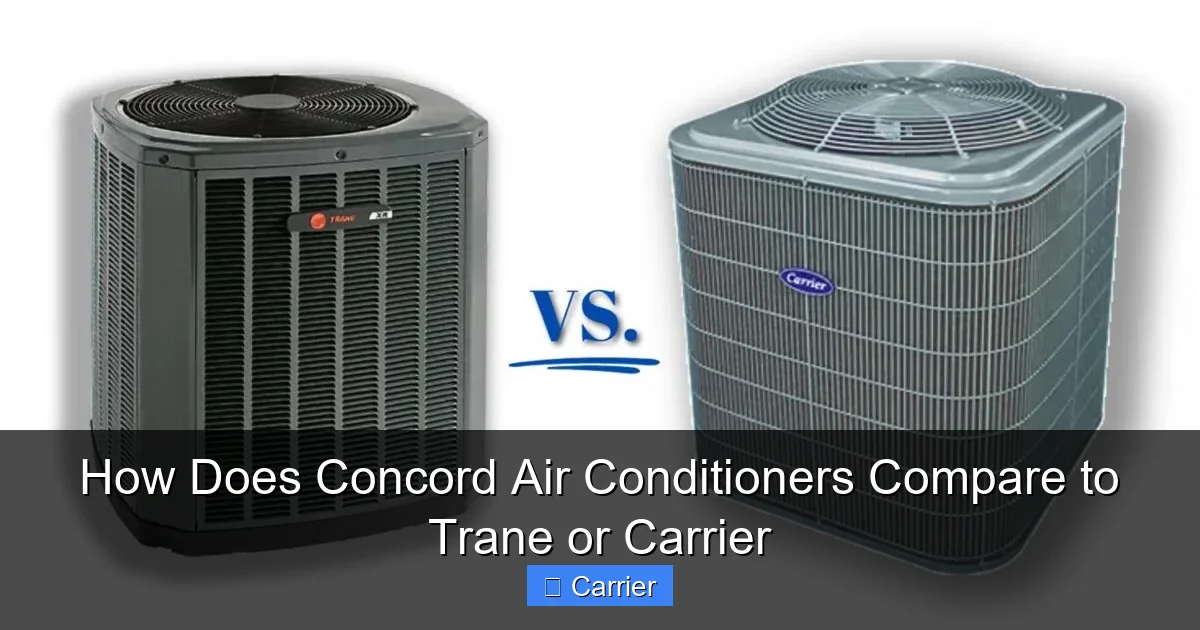
In contrast, Trane often leads with SEER ratings from 20 up to 26. Their XR18 and XL20i models, for instance, boast 20+ SEER ratings. These units use advanced inverter technology to adjust cooling output based on demand, saving even more energy during mild weather.
So while Concord is efficient, Trane goes further—especially in climates with wide temperature swings.
Carrier’s Energy Edge
Carrier matches Trane in efficiency, with many models rated at 20+ SEER. Their 25VSX series, for example, hits a 25.0 SEER rating using two-stage compressors and intelligent climate control. This allows Carrier units to run longer at lower speeds, reducing wear and energy use.
Even their base models usually start at 16 SEER, putting Concord’s range right in the middle. So if your priority is maximum energy savings, Trane and Carrier win—but Concord is still competitive.
Real-World Energy Savings Example
Let’s say you live in Texas and run your AC 1,200 hours per year. A 14 SEER unit uses about 1,200 kWh annually. Upgrading to an 18 SEER unit reduces that to 800 kWh—a 33% drop.
A Concord 18 SEER unit would save you roughly $60–$80 per year on electricity, assuming $0.12/kWh. A Trane 22 SEER unit could save another $30–$50 annually. Over 10 years, that’s $900–$1,300 in extra savings—but only if you pay the premium upfront.
Bottom line: Concord offers strong efficiency for the price, but Trane and Carrier push the envelope further.
Build Quality and Durability
Materials and Construction
One of the biggest differences between Concord and the premium brands lies in materials and manufacturing standards. Trane and Carrier use heavier-gauge steel cabinets, corrosion-resistant coils, and high-grade refrigerants. These features help units last longer in harsh climates—like coastal areas with salt air or hot, humid summers.
Concord, meanwhile, uses standard galvanized steel and aluminum fins. While these materials are durable enough for most homes, they’re not as resistant to corrosion. That said, Concord does include protective coatings on coils and cabinets to extend lifespan.
Compressor Technology
The compressor is the heart of your AC. Trane and Carrier almost always use two-stage or variable-speed compressors, allowing precise temperature control and quieter operation. These compressors can ramp up or down based on demand, improving efficiency and comfort.
Concord typically uses single-stage compressors. That means they run at full power when cooling and cycle off completely when the set temperature is reached. While reliable, this causes more temperature swings and higher energy spikes during startup.
Longevity Comparison
With proper maintenance, both Concord and Carrier units can last 15–20 years. Trane units often hit 20–25 years due to superior components. Concord may struggle past 12–15 years in extreme conditions unless serviced regularly.
For example, a Concord unit in Phoenix might need coil cleaning every six months to avoid overheating. A Trane unit with a self-cleaning coil might only need annual maintenance.
Warranty Coverage
Here’s a key area where Trane and Carrier pull ahead:
- Concord: Typically offers a 5-year parts warranty and 10 years on the compressor.
- Trane: Offers up to 10 years on the compressor and 5–10 years on parts (varies by model). Extended warranties available.
- Carrier: Provides 10 years on compressors and 5–10 years on parts. Some models include lifetime heat exchanger warranties.
So while Concord’s warranty is decent for its class, premium brands offer longer protection, which adds peace of mind and lowers long-term costs.
Noise Levels and Comfort
How Loud Is Your AC?
Nobody wants a loud, rumbling machine outside their bedroom window. Noise is measured in decibels (dB), and lower numbers mean quieter operation.
Decibel Ratings: A Side-by-Side
On average:
- Concord: 70–74 dB (comparable to a normal conversation or vacuum cleaner)
- Trane: 68–70 dB (softer than a whisper at 30 feet)
- Carrier: 67–70 dB (similar to light rainfall)
Trane and Carrier use sound-dampening foam, insulated panels, and slower fan speeds to reduce noise. Concord relies more on standard insulation and design, which limits noise reduction.
Impact on Home Life
If you have a small home or live close to neighbors, noise matters. A Concord unit might be fine if it’s on a concrete pad, but in an apartment setting, Trane or Carrier would be far more pleasant.
Pro tip: Ask your contractor to install a quiet fan shroud or vibration isolators—even with a Concord unit. This can cut noise by 3–5 dB.
Installation and Availability
Where to Buy
Concord: Sold online through retailers like HVACDirect, Amazon, and HVAC contractor websites. Installation must be done by a licensed professional—you can’t DIY.
Trane and Carrier: Available through certified HVAC dealers nationwide. Many utility rebate programs require installation by a certified pro, which makes Trane/Carrier easier to qualify for.
Installation Costs
Installation prices vary by region, but here’s a rough estimate:
- Concord (14–16 SEER): $3,500–$5,000 installed
- Carrier (16–20 SEER): $4,500–$6,500
- Trane (18–22 SEER): $5,000–$7,500
Concord saves you $1,000–$2,500 upfront, which can be significant if you’re on a tight budget.
Finding a Contractor
Because Concord is less known, finding a trusted installer can be trickier. Look for contractors who specialize in mid-tier brands and have good reviews on Google or Angi.
With Trane and Carrier, you’re more likely to find local dealers with trained technicians and quick service calls.
Smart Features and Technology
Thermostat Compatibility
All three brands work with popular smart thermostats like Nest, Ecobee, and Honeywell Home. But here’s the catch:
- Concord: Basic compatibility. May lack advanced controls like adaptive recovery or occupancy sensing.
- Trane & Carrier: Full integration with their proprietary smart thermostats (e.g., Trane Home, Carrier Infinity). These include learning algorithms, remote access, and geofencing.
Wi-Fi and App Control
Only Trane and Carrier offer factory-built Wi-Fi modules for remote monitoring. Concord units usually require aftermarket add-ons, which can void warranties or complicate setup.
Maintenance Alerts
Premium brands send maintenance reminders via app. Concord doesn’t offer this feature natively—you’ll need to track filter changes and service dates manually.
When Smart Features Don’t Matter
If you’re not tech-savvy or don’t plan to use a smart thermostat, these differences fade. For simple cooling, Concord’s manual controls are perfectly fine.
Cost Analysis: Total Value Over Time
Upfront vs. Long-Term Costs
Let’s break down the total cost of ownership over 10 years. We’ll assume a 3-ton unit used 1,200 hours/year in a hot climate.
| Brand | Unit Price | Install Cost | Annual Energy Use | 10-Year Energy Cost* | Total 10-Year Cost |
|---|---|---|---|---|---|
| Concord (18 SEER) | $2,800 | $4,200 | 800 kWh | $960 | $8,060 |
| Carrier (20 SEER) | $3,600 | $5,500 | 720 kWh | $864 | $10,064 |
| Trane (22 SEER) | $4,000 | $6,000 | 680 kWh | $816 | $11,616 |
*Assuming $0.12/kWh
As you can see, Concord saves you nearly $2,000 in the first decade—mostly from lower purchase and install costs. But Trane and Carrier save a few hundred dollars on energy bills.
Is the Savings Worth It?
If you’re replacing a broken unit and need something fast and affordable, Concord wins. But if you plan to stay in your home 15+ years, Trane or Carrier may offer better long-term value despite the higher initial cost.
Customer Reviews and Reputation
What Do People Say?
Online reviews tell a mixed but mostly positive story:
- Concord: Praised for “great value” and “solid cooling,” but criticized for “noisy operation” and “limited dealer support.”
- Carrier: Consistently rated 4.3–4.6 stars. Users love reliability and quiet performance. Occasional complaints about high prices.
- Trane: Highly rated for quality and durability. Some users note “overkill features” for smaller homes.
Reliability Reports
Consumer Reports and other studies show that Carrier and Trane have fewer service calls over time compared to Concord. Concord units hold up well but may need more frequent repairs after 10 years.
Final Verdict from Real Users
One Concord owner said: “It’s not fancy, but it cools my house and I paid $2,000 less than I would’ve for a Trane.” Another Trane user replied: “Yes, it’s expensive—but I never worry about it breaking down.”
Conclusion: Which Should You Choose?
So where does that leave you? Here’s the bottom line:
- Choose Concord if: You want reliable cooling at a lower price, have a moderate-sized home, and aren’t chasing top-tier efficiency or smart features.
- Choose Carrier or Trane if: You prioritize longevity, energy savings, quiet operation, and want access to premium warranties and support.
Concord isn’t trying to beat Trane or Carrier—it’s trying to give you the best value in the mid-tier market. And for many homeowners, that’s exactly what they need.
Don’t forget: no matter which brand you pick, professional installation and annual maintenance are key to performance and lifespan. A poorly installed Concord unit will underperform, just like a cheaply installed Trane.
Ultimately, the right choice depends on your budget, climate, and how long you plan to stay in your home. But now you know exactly how Concord stacks up against the big names—and that’s half the battle.
Frequently Asked Questions
Are Concord air conditioners as reliable as Trane or Carrier?
Concord units are reliable for basic cooling needs and last 10–15 years with proper care. However, Trane and Carrier use higher-quality materials and compressors, leading to fewer breakdowns and longer lifespans in harsh conditions.
Can I get a Concord air conditioner with a smart thermostat?
Yes, Concord units are compatible with most smart thermostats like Nest and Ecobee. However, they don’t include built-in Wi-Fi or advanced features like adaptive learning, which are standard on Trane and Carrier models.
Which brand offers the best warranty?
Trane and Carrier offer longer warranties—up to 10 years on compressors and parts. Concord typically provides 5–10 years on parts and 10 years on the compressor, which is decent but not as comprehensive.
Is it hard to find a contractor to install a Concord unit?
It can be trickier than for Trane or Carrier, since Concord is less common. Look for HVAC contractors who specialize in mid-tier brands and check online reviews before hiring.
Do Concord units use R-410A refrigerant?
Yes, like most modern ACs, Concord units use R-410A refrigerant, which is standard across the industry and environmentally safer than older R-22.
Should I buy Concord if I live in a hot, humid climate?
Concord can handle moderate humidity and heat, but Trane or Carrier are better choices for extreme conditions due to superior dehumidification and two-stage cooling. Concord’s single-stage compressor may struggle to keep up during peak summer days.