
Carrier air conditioners come in various sizes to suit different spaces and needs. Knowing the dimensions of Carrier air conditioner units helps you choose the right model for optimal cooling and energy efficiency. From compact window units to large central ACs, understanding measurements ensures smooth installation and peak performance. This guide breaks down everything you need to know about sizing your Carrier system correctly.
Key Takeaways
- Exact Measurements Matter: The dimensions of Carrier air conditioner models vary by type—window, split, or central. Accurate sizing ensures proper fit and airflow.
- Impact on Installation: Incorrect dimensions can lead to installation issues, poor cooling, or structural damage. Always verify space requirements before purchasing.
- Energy Efficiency Linked to Size: A properly sized unit operates more efficiently, saving energy and reducing utility bills.
- Consult Professionals: HVAC experts can help match your room’s square footage with the correct Carrier unit based on BTU output and dimensions.
- Check Manufacturer Specs: Carrier provides detailed dimension charts for each model on their official website and product manuals.
- Consider Future Upgrades: Planning for larger spaces? Choose a slightly oversized unit for better comfort during peak heat.
- Space Constraints Require Precision: In tight areas, measure doorways, windows, and ceiling height to avoid delivery or installation problems.
Quick Answers to Common Questions
What are the typical dimensions of a Carrier window air conditioner?
Carrier window air conditioners range from 15 to 24 inches in width, 12 to 16 inches in height, and 17 to 21 inches in depth, depending on BTU capacity.
How do I measure my window for a Carrier window AC?
Measure the width, height, and depth of the window opening. Include the sill and allow a 1/8-inch gap on all sides for proper fit.
Can I install a Carrier mini-split myself?
While DIY installation is possible, professional setup is recommended to ensure proper refrigerant handling, wiring, and warranty compliance.
What size Carrier air conditioner do I need for a 1,000 sq ft home?
A 1,000-square-foot home typically needs a 20,000–24,000 BTU unit, depending on insulation, climate, and ceiling height. A Manual J calculation provides the most accurate recommendation.
Where can I find official dimensions for Carrier air conditioners?
Official specs are available in product manuals, on carrier.com, or by contacting Carrier customer support or an authorized dealer.
📑 Table of Contents
- Understanding Dimensions of Carrier Air Conditioner Units
- Types of Carrier Air Conditioners and Their Sizes
- How to Measure Your Space for a Carrier Air Conditioner
- Why Dimensions Affect Performance and Efficiency
- Where to Find Official Dimensions for Carrier Air Conditioners
- Practical Tips for Choosing the Right Carrier Unit
- Common Mistakes to Avoid When Installing Carrier Air Conditioners
- Conclusion: Making the Smart Choice with Carrier Air Conditioners
Understanding Dimensions of Carrier Air Conditioner Units
Choosing the right air conditioner is more than just picking a brand—it’s about finding a unit that fits your space perfectly. Carrier has long been recognized as a leader in HVAC technology, offering reliable, energy-efficient cooling solutions for homes and businesses. One of the most critical factors when selecting a Carrier air conditioner is understanding its physical dimensions. Whether you’re installing a window unit, a ductless mini-split, or a central air system, knowing the exact dimensions of Carrier air conditioner models helps ensure a seamless installation and efficient operation.
But why do dimensions matter so much? Let’s break it down. An improperly sized unit can lead to a host of problems: inefficient cooling, increased energy bills, premature wear and tear, and even installation complications. For example, if your window air conditioner is too wide for the opening, it won’t fit—no matter how powerful it is. Similarly, a central AC unit that’s too large for your home’s ductwork may cycle on and off too frequently, reducing its lifespan.
In this comprehensive guide, we’ll walk through the typical dimensions of different Carrier air conditioning systems, explain how to measure your space accurately, and offer practical tips to help you make an informed decision. By the end, you’ll feel confident choosing the right Carrier unit that matches both your cooling needs and your living space.
Types of Carrier Air Conditioners and Their Sizes
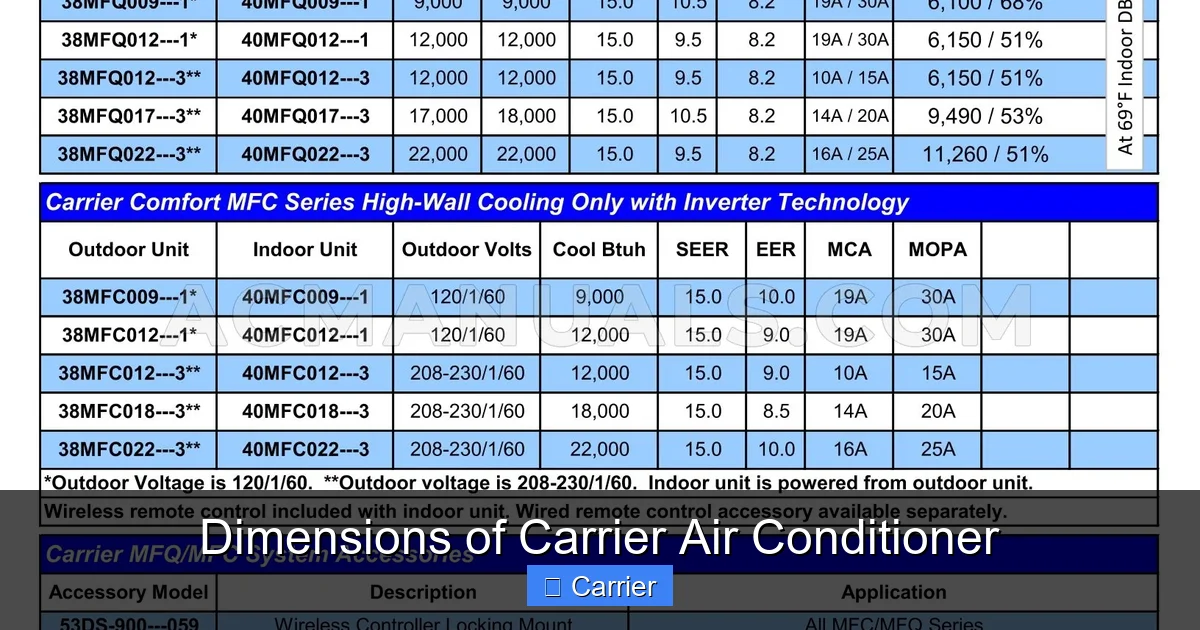
Visual guide about Dimensions of Carrier Air Conditioner
Image source: acmanuals.com
Carrier offers a diverse range of air conditioning systems designed to meet different cooling demands and architectural styles. Each type comes with unique dimensions that affect installation, aesthetics, and performance. Below, we explore the three main categories of Carrier air conditioners and their typical size ranges.
1. Window and Through-Wall Air Conditioners
Window units are among the most common residential air conditioners due to their affordability and ease of installation. Carrier produces several window models, with dimensions varying by capacity (measured in BTUs). For example:
– A 5,000–6,000 BTU window unit typically measures around 15 inches wide, 12 inches high, and 17 inches deep.
– A 8,000–10,000 BTU model is usually 17.5 inches wide, 14 inches high, and 19 inches deep.
– High-capacity units like the 14,000 BTU Carrier window AC might be 24 inches wide, 16 inches high, and 21 inches deep.
These measurements include the chassis and built-in louvers. When installing, you’ll need to cut a precise opening in your window frame. It’s essential to double-check these dimensions before placing an order. Also, consider the weight—larger units can be heavy and may require additional support.
2. Ductless Mini-Split Systems
Ductless mini-splits are gaining popularity for their quiet operation and zoned cooling capabilities. These systems consist of an outdoor compressor/condenser unit and one or more indoor air-handling units. The dimensions of Carrier air conditioner components differ between indoor and outdoor parts:
– Indoor head units are generally slim, measuring between 7 to 12 inches in depth. Widths range from 30 to 40 inches depending on capacity, while heights stay under 12 inches.
– Outdoor units are bulkier, often 28 to 36 inches wide, 13 to 20 inches high, and 13 to 24 inches deep. A 24,000 BTU Carrier outdoor unit, for instance, might be 32″ x 16″ x 13″.
Installation requires mounting the indoor unit on a wall at least 7 feet above the floor and ensuring the outdoor unit sits on a sturdy platform with adequate clearance for airflow. Professional installation is recommended to maintain warranty coverage and ensure refrigerant lines are properly routed.
3. Central Air Conditioning Systems
Central ACs are ideal for whole-home cooling and are installed inside utility closets or basements. These systems are composed of multiple components, each with distinct dimensions:
– The outdoor condenser unit varies significantly by capacity. A 3-ton (36,000 BTU) Carrier central AC outdoor unit might measure 29″ x 29″ x 17″, while a 5-ton (60,000 BTU) unit could be 36″ x 36″ x 19″.
– The indoor furnace or air handler is usually wider and deeper, often 20–30 inches deep, 18–30 inches wide, and 40–60 inches tall.
– Ductwork must align with the plenum sizes, which are typically 12″ to 24″ in diameter for residential homes.
Because central systems involve complex installations, consulting an HVAC technician is crucial. They can assess your home’s layout, existing ductwork, and square footage to recommend the right size and placement for all components.
How to Measure Your Space for a Carrier Air Conditioner
Accurate measurement is the foundation of a successful installation. No matter how advanced your Carrier air conditioner is, it won’t perform well if it doesn’t fit. Here’s a step-by-step guide to measuring your space effectively.
Gather the Right Tools
Before you start, collect these essentials:
– A tape measure or laser distance measurer
– A notepad and pen to record dimensions
– A level (for checking window frames)
– A helper (especially for higher or hard-to-reach areas)
Measure the Installation Area
For window units, measure the width, height, and depth of the window opening. Don’t forget to account for the sill thickness and any obstructions like screens or trim. For mini-splits, measure the wall space where the indoor unit will hang—ensure there’s at least 6 inches of clearance on all sides. For central systems, measure the available space in your mechanical room, including ceiling height and access points.
Check Clearances and Obstructions
Airflow is vital for efficiency. Ensure there are no furniture, curtains, or walls blocking vents or return air paths. For outdoor units, leave at least 12 inches of space around all sides for proper ventilation. Trees, fences, or buildings nearby can reduce efficiency, so position the unit in a shaded, open area.
Verify Weight and Structural Support
Larger Carrier air conditioner models can weigh over 200 pounds. Confirm that your mounting surface—whether a window frame, wall, or concrete pad—can support the load. Use reinforced brackets or platforms as needed.
Why Dimensions Affect Performance and Efficiency
The physical size of your Carrier air conditioner isn’t just about fitting into a space—it directly influences how well the unit cools your home. Oversized or undersized systems struggle to maintain consistent temperatures, leading to discomfort and higher energy costs.
Over-Sizing Leads to Short Cycling
An air conditioner that’s too large for the room will cool the space quickly but then shut off prematurely. This “short cycling” reduces efficiency, increases wear on components, and shortens the unit’s lifespan. For example, a 12,000 BTU Carrier window unit in a 400-square-foot room may cool too fast, failing to dehumidify properly and leaving the room feeling clammy.
Under-Sizing Results in Inadequate Cooling
Conversely, a small unit will run continuously without ever reaching the desired temperature. This constant operation strains the compressor and leads to higher electricity usage. A 5,000 BTU Carrier unit in a 600-square-foot sunroom simply won’t cut it during summer afternoons.
Proper Sizing Enhances Comfort and Savings
When you choose a Carrier air conditioner with the correct dimensions and capacity, it runs efficiently and maintains stable indoor conditions. Properly sized units dehumidify better, reduce noise, and lower utility bills. For instance, a 14 SEER mini-split Carrier system in a 900-square-foot apartment delivers consistent comfort with minimal energy waste.
Where to Find Official Dimensions for Carrier Air Conditioners
Carrier provides detailed specifications for every model, including exact dimensions, weights, and installation requirements. You can find this information in several places:
Product Manuals and Brochures
Each Carrier air conditioner comes with a printed or digital manual that includes dimension diagrams. These often show front, side, and top views with measurements in both inches and centimeters.
Manufacturer Website
Visit carrier.com and search for your specific model number. Product pages typically feature downloadable PDFs with technical specs. For example, the Carrier 38HBC series window units list dimensions like 15.2″ W x 12.5″ H x 17.3″ D.
Third-Party Retailers and Dealers
Reputable HVAC suppliers and online retailers like Home Depot or Lowe’s also display dimensions on product listings. Be sure to cross-reference with Carrier’s official site to avoid outdated or incorrect info.
Contact Carrier Directly
If you’re unsure, reach out to Carrier customer service or an authorized dealer. They can provide accurate dimension data tailored to your climate zone and room configuration.
Practical Tips for Choosing the Right Carrier Unit
Selecting the right Carrier air conditioner involves more than just matching BTU output to square footage. Consider these real-world tips to make the best choice:
1. Account for Insulation and Climate
A well-insulated home in a mild climate may need less cooling than a drafty house in a hot region. Adjust your expectations accordingly. For example, a Carrier 8,000 BTU window unit works well in a small, insulated bedroom in Florida, but a similar-sized unit might struggle in an uninsulated attic in Arizona.
2. Prioritize Energy Efficiency Ratings
Look for ENERGY STAR® certified models. Higher SEER (Seasonal Energy Efficiency Ratio) ratings mean better performance and lower bills. Carrier’s 24VNA9 variable-speed systems, for instance, offer up to 26 SEER—among the highest on the market.
3. Think Long-Term
If you plan to expand your home or upgrade appliances, consider a slightly larger unit now to avoid future replacements. This proactive approach saves money and hassle down the road.
4. Schedule a Load Calculation
HVAC professionals use Manual J calculations to determine the exact cooling load for your home. This scientific method considers insulation, window orientation, ceiling height, and local weather data—far more accurate than simple square footage estimates.
5. Don’t Skip Professional Installation
Even the best Carrier air conditioner won’t perform well if installed incorrectly. Certified technicians ensure proper sizing, sealing, and airflow, maximizing efficiency and longevity.
Common Mistakes to Avoid When Installing Carrier Air Conditioners
Despite your best efforts, mistakes happen. Here are some frequent errors people make when dealing with Carrier air conditioner dimensions—and how to avoid them.
Mistake 1: Ignoring Weight Limits
Many homeowners overlook the weight of larger units. A 10,000 BTU Carrier window AC can weigh up to 120 pounds. If your window frame isn’t rated for that load, it may crack or collapse. Always check manufacturer guidelines or consult a contractor.
Mistake 2: Cutting the Opening Too Small
It’s tempting to squeeze a unit into a tight space, but this causes stress on the frame and prevents proper sealing. Leave a 1/8-inch gap on all sides for expansion and adjustment during installation.
Mistake 3: Placing the Outdoor Unit in Direct Sunlight
While some shade is good, direct sunlight increases operating temperatures and reduces efficiency. Position the outdoor unit in a partially shaded area with good airflow.
Mistake 4: Using Wrong Voltage or Electrical Capacity
Ensure your electrical circuit can handle the unit’s amperage. Most window units run on standard 120V outlets, but larger central systems may require dedicated 240V circuits. Consult an electrician if unsure.
Mistake 5: Skipping Maintenance Access
Future maintenance, like cleaning filters or checking coils, requires easy access. Make sure the installation plan includes space for routine servicing.
Conclusion: Making the Smart Choice with Carrier Air Conditioners
Understanding the dimensions of Carrier air conditioner units is essential for a successful, efficient, and comfortable cooling experience. From window models to central systems, each type has specific size requirements that impact installation, performance, and longevity. By taking accurate measurements, consulting professionals, and choosing the right capacity, you ensure your Carrier unit delivers reliable service year after year.
Remember, a well-chosen air conditioner isn’t just about cooling power—it’s about harmony between technology and space. Whether you’re replacing an old unit or installing a new one, investing time in proper planning pays off in energy savings, comfort, and peace of mind.
With Carrier’s reputation for innovation and quality, you can trust that their products are designed with precision and durability in mind. Just be sure to match those specs to your home’s unique layout. After all, the perfect fit makes all the difference.
Frequently Asked Questions
How do I know if my Carrier air conditioner is too big or too small?
If your unit cycles on and off frequently (short cycling), it’s likely too large. If it runs constantly without cooling effectively, it’s probably too small. A professional HVAC assessment can confirm proper sizing.
Are Carrier air conditioners available in custom sizes?
Carrier does not offer custom-sized units for residential use. All models come in standardized dimensions designed for mass production and compatibility with common installation spaces.
Can I replace my old air conditioner with a Carrier unit of the same BTU rating but different dimensions?
Only if the new unit physically fits in the existing opening and meets electrical and structural requirements. Otherwise, you may need to modify the installation site, which can add cost and complexity.
Do Carrier air conditioners come with dimension diagrams?
Yes, every Carrier air conditioner includes detailed dimension diagrams in its user manual and on the manufacturer’s website to assist with planning and installation.
What should I do if my Carrier air conditioner doesn’t fit in the planned space?
Consult an HVAC professional immediately. They can suggest alternative models, repositioning options, or modifications to accommodate the unit safely and efficiently.
Is it safe to install a heavier Carrier unit without reinforcement?
No. Exceeding the load capacity of window frames or wall mounts can cause structural damage or accidents. Always verify weight limits and use proper support equipment.

