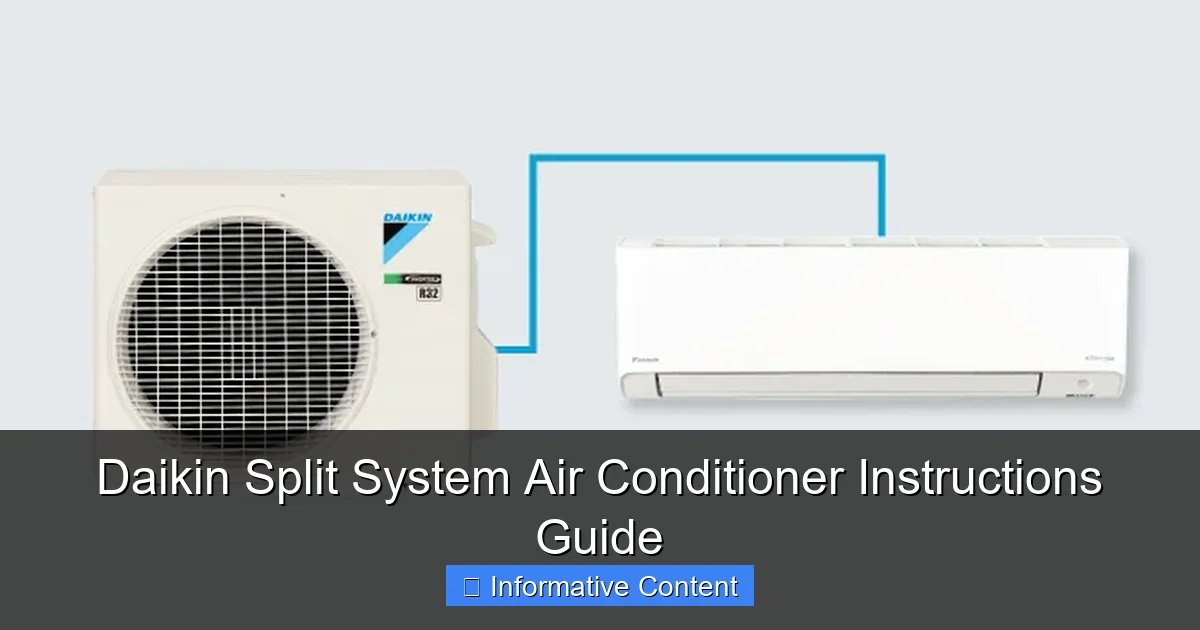
Featured image for daikin split system air conditioner instructions
Image source: daikin.com
Master your Daikin split system air conditioner with ease using this clear, step-by-step instructions guide. From installation and operation to maintenance and troubleshooting, it covers everything you need to maximize efficiency and comfort. Whether you’re a first-time user or upgrading your system, this guide ensures reliable performance and energy savings year-round.
Key Takeaways
- Read the manual first: Always review Daikin’s instructions before installation or use.
- Proper installation matters: Hire certified technicians to ensure optimal performance and safety.
- Use the remote correctly: Master settings like mode, timer, and fan speed for efficiency.
- Clean filters monthly: Maintain airflow and reduce energy use with regular filter care.
- Schedule annual maintenance: Prevent breakdowns with professional yearly inspections.
- Optimize temperature settings: Set between 24–26°C for comfort and energy savings.
📑 Table of Contents
- Daikin Split System Air Conditioner Instructions Guide
- Understanding Your Daikin Split System: What It Is and How It Works
- Step-by-Step Daikin Split System Air Conditioner Instructions
- Maintaining Your Daikin Split System for Optimal Performance
- Troubleshooting Common Daikin Split System Issues
- Energy-Saving Tips for Your Daikin Split System
- Daikin Split System Models and Features Comparison
- Final Thoughts: Getting the Most Out of Your Daikin Split System
Daikin Split System Air Conditioner Instructions Guide
So, you’ve just had a brand-new Daikin split system air conditioner installed in your home—or maybe you’re thinking about getting one. Either way, you’re probably feeling a mix of excitement and slight overwhelm. These sleek, wall-mounted units promise cool comfort in summer and cozy warmth in winter, all while being energy-efficient and whisper-quiet. But like any advanced appliance, knowing how to use it properly makes all the difference between a smooth experience and constant frustration.
I remember the first time I used my Daikin split system. I stood in front of the remote, staring at buttons labeled with symbols I didn’t recognize, wondering if I’d accidentally set the thermostat to “Arctic Blast” mode. Sound familiar? You’re not alone. Many homeowners love their Daikin units but feel unsure about the controls, maintenance, or even basic troubleshooting. That’s exactly why this guide exists—to walk you through everything you need to know, step by step, in plain English. No technical jargon, no confusing manuals. Just clear, practical advice so you can get the most out of your investment.
Understanding Your Daikin Split System: What It Is and How It Works
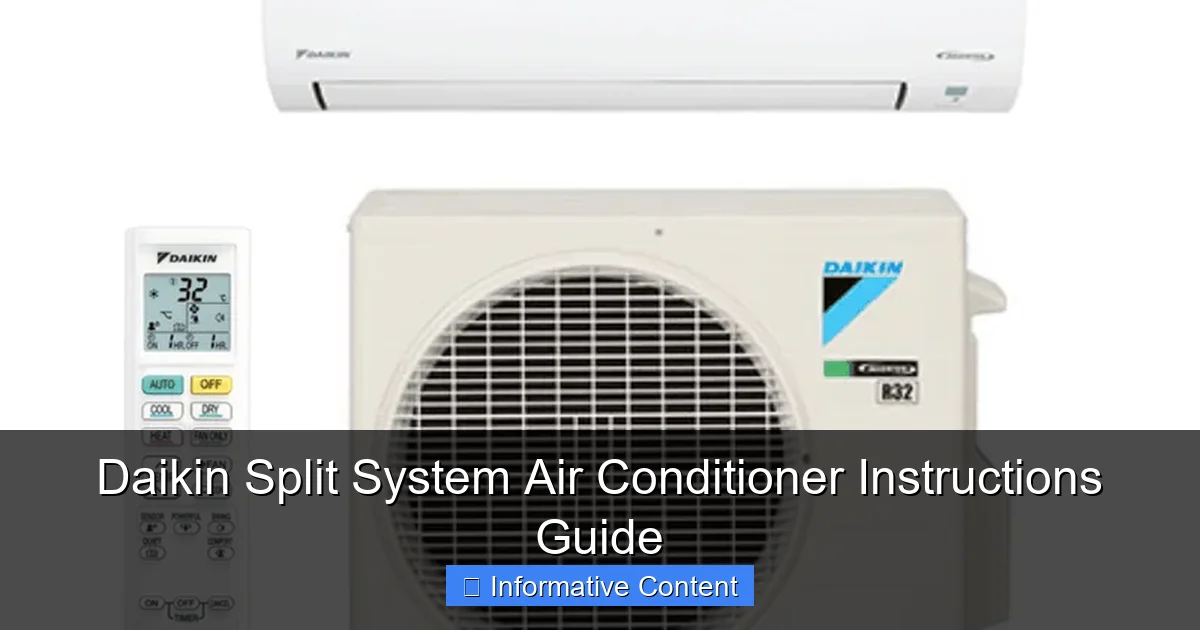
Before diving into the instructions, it helps to understand what a Daikin split system actually is. Unlike window units or central HVAC systems, a split system consists of two main parts: an indoor unit (mounted on your wall) and an outdoor unit (placed outside your home). These two components are connected by refrigerant lines and electrical wiring, allowing them to work together to heat or cool your space efficiently.
Visual guide about daikin split system air conditioner instructions
Image source: global-uploads.webflow.com
Daikin is one of the world’s leading manufacturers of air conditioning systems, known for their reliability, quiet operation, and advanced inverter technology. Their split systems are especially popular in homes where ductwork isn’t an option or where you want zoned cooling and heating—meaning you can control the temperature in individual rooms.
Key Components of a Daikin Split System
Let’s break down the main parts so you know what you’re working with:
- Indoor Unit: This is the part you see inside your room. It houses the evaporator coil, fan, and air filter. It’s responsible for blowing conditioned air into your space.
- Outdoor Unit: Located outside, this contains the compressor and condenser coil. It releases heat (in cooling mode) or absorbs heat (in heating mode).
- Remote Control: Your command center. Most Daikin models come with a sleek remote that lets you adjust temperature, fan speed, mode, and more.
- Air Filter: Located behind the front panel of the indoor unit, this traps dust, pollen, and other particles. Regular cleaning is essential for performance and air quality.
- Drain Line: Removes condensation produced during cooling. It must be kept clear to prevent leaks or water damage.
How It Works: The Basics
Here’s a simple way to think about it: your Daikin split system moves heat from one place to another. In cooling mode, it extracts heat from inside your home and releases it outside. In heating mode, it does the reverse—pulling heat from the outdoor air (even when it’s cold!) and bringing it inside. This is made possible by the refrigerant circulating between the indoor and outdoor units.
Thanks to Daikin’s inverter technology, the compressor doesn’t just turn on and off like older models. Instead, it adjusts its speed based on the room’s needs, which means more consistent temperatures, lower energy bills, and less wear and tear on the system.
Step-by-Step Daikin Split System Air Conditioner Instructions
Now that you know what you’re working with, let’s get into the nitty-gritty: how to actually use your Daikin split system. Whether you’re turning it on for the first time or switching between modes, these instructions will help you operate it like a pro.
Turning On Your Daikin Split System
Start by making sure the power is on. Check that the circuit breaker hasn’t tripped and that the outdoor unit is receiving power. Then, grab your remote control.
- Press the Power button (usually marked with a circle or power symbol).
- The indoor unit will beep and the display will light up.
- Use the Mode button to select your desired setting: Cool, Heat, Fan, Dry, or Auto.
- Set your preferred temperature using the up and down arrows.
- Adjust the fan speed if needed (Low, Medium, High, or Auto).
- Press Start/Stop or wait a few seconds—the unit will begin operating.
Pro Tip: If the unit doesn’t turn on, check the remote’s batteries. It’s a simple fix that solves a surprising number of issues.
Using Different Operating Modes
Your Daikin remote offers several modes, each designed for specific needs. Here’s what they do:
- Cool Mode: Lowers the room temperature. Ideal for hot summer days.
- Heat Mode: Warms the room. Great for chilly mornings or winter nights.
- Fan Mode: Circulates air without cooling or heating. Useful for ventilation.
- Dry Mode: Reduces humidity without significantly lowering temperature. Perfect for damp or muggy days.
- Auto Mode: The system automatically switches between cooling and heating to maintain your set temperature.
For example, if it’s a humid 78°F outside, you might choose Dry Mode to feel more comfortable without overcooling the room. Or, on a mild spring evening, Fan Mode can keep air moving without using extra energy.
Adjusting Temperature and Fan Speed
Temperature control is straightforward: use the up and down arrows on the remote. Most Daikin models allow settings between 60°F and 86°F (16°C to 30°C).
Fan speed affects how quickly air is circulated. In Auto mode, the system adjusts fan speed based on how far the room is from the target temperature. But you can also manually set it:
- Low: Quiet operation, ideal for nighttime.
- Medium: Balanced noise and airflow.
- High: Maximum cooling or heating, best for quick temperature changes.
Personal Experience: I used to crank the fan to High every time I turned on the AC. But I learned that Auto mode is more efficient—and quieter. Now I only use High when I’m coming home to a sweltering house.
Using the Timer and Sleep Functions
Daikin remotes often include timer and sleep features—great for saving energy and improving comfort.
- Timer On/Off: Set the unit to turn on or off at a specific time. For example, program it to start cooling 30 minutes before you get home from work.
- Sleep Mode: Gradually adjusts the temperature over time to match your body’s natural sleep cycle. It typically increases the temperature by 1–2°F after you fall asleep, reducing energy use without sacrificing comfort.
To set the timer, press the Timer button, then use the arrows to select the time. Confirm with the Set or OK button. Sleep mode is usually activated by pressing the Sleep button—look for a moon or bed icon.
Maintaining Your Daikin Split System for Optimal Performance
Even the best air conditioners need a little TLC. Regular maintenance not only extends the life of your Daikin split system but also keeps it running efficiently and your indoor air clean.
Cleaning the Air Filter
This is the #1 maintenance task—and the easiest. A dirty filter restricts airflow, makes the system work harder, and can lead to poor air quality.
Here’s how to clean it:
- Turn off the unit and unplug it for safety.
- Open the front panel of the indoor unit. It usually swings down or lifts up.
- Remove the air filter—it’s a flat, mesh panel that slides out easily.
- Rinse it under lukewarm water. Use a mild detergent if needed, but avoid harsh chemicals.
- Let it air dry completely before reinserting.
- Close the front panel and plug the unit back in.
Pro Tip: Clean the filter every 2–4 weeks during heavy use (summer and winter). In milder seasons, once a month is usually enough.
Inspecting and Cleaning the Indoor Unit
While you’re cleaning the filter, take a moment to wipe down the inside of the front panel and the air vents with a soft, damp cloth. Dust buildup can reduce efficiency and affect airflow.
Also, check the drain line (usually a small hose near the back of the indoor unit). Make sure it’s not clogged or kinked. A blocked drain can cause water to leak inside your home.
Caring for the Outdoor Unit
The outdoor unit needs space to breathe. Keep the area around it clear of leaves, grass, and debris. Trim any plants or shrubs that are within 2 feet of the unit.
Every few months, gently hose down the outdoor fins to remove dirt and dust. Be careful—the fins are delicate and can bend easily. If they’re bent, use a fin comb (available at hardware stores) to straighten them.
Warning: Never use a pressure washer on the outdoor unit. The high pressure can damage the fins and internal components.
When to Call a Professional
While DIY maintenance covers the basics, some tasks require a licensed technician. Schedule a professional service once a year, ideally before the peak cooling or heating season.
A technician will:
- Check refrigerant levels
- Inspect electrical connections
- Test system performance
- Clean coils and internal components
- Verify thermostat accuracy
Regular servicing can prevent costly repairs and ensure your system operates at peak efficiency.
Troubleshooting Common Daikin Split System Issues
Even with proper care, issues can arise. The good news? Many common problems are easy to fix—or at least diagnose—before calling a technician.
Unit Won’t Turn On
If your Daikin split system doesn’t respond when you press the power button, check these basics:
- Is the remote control working? Try replacing the batteries.
- Is the unit plugged in? Check the power cord and outlet.
- Has the circuit breaker tripped? Reset it if needed.
- Is the indoor unit display showing an error code? Refer to your manual for code meanings.
If none of these work, the issue might be internal—like a faulty capacitor or sensor—and it’s time to call a pro.
Poor Cooling or Heating
If your unit is running but not cooling or heating effectively, consider these causes:
- Dirty air filter: Replace or clean it.
- Blocked outdoor unit: Clear debris and ensure proper airflow.
- Low refrigerant: This requires a technician to diagnose and recharge.
- Thermostat settings: Make sure the mode and temperature are set correctly.
- Frozen evaporator coil: Turn off the unit and let it thaw. This often happens due to restricted airflow or low refrigerant.
Real-Life Example: Last summer, my Daikin unit was blowing warm air. I checked the filter—clean. Then I noticed the outdoor unit was covered in pollen. After hosing it down, cooling returned to normal. Simple fix!
Unusual Noises or Odors
Your Daikin should run quietly. If you hear rattling, grinding, or squealing, it could indicate:
- Loose panels or screws (tighten them)
- Debris in the fan (clean the indoor and outdoor units)
- Worn motor bearings (requires professional repair)
Musty or burning smells are more serious. A musty odor often means mold in the drain pan or evaporator coil—clean it thoroughly. A burning smell could signal an electrical issue—turn off the unit immediately and call a technician.
Water Leaks Inside the House
If you notice water dripping from the indoor unit, the drain line is likely clogged. Turn off the system and try to clear the blockage with a wet/dry vacuum or a pipe cleaner. If that doesn’t work, a technician may need to flush the line.
Also, check that the unit is level. If it’s tilted, water may not drain properly.
Energy-Saving Tips for Your Daikin Split System
Daikin systems are already energy-efficient, but a few smart habits can help you save even more on your utility bills—and reduce your environmental impact.
Set the Right Temperature
The Department of Energy recommends setting your thermostat to 78°F (26°C) when you’re home and higher when you’re away. In heating mode, 68°F (20°C) is ideal.
Use the Econo Mode (if your model has it) to limit power consumption. It prevents the compressor from overworking and reduces energy use by up to 30%.
Use Fans and Ventilation
Ceiling fans and exhaust fans help circulate cool air and remove hot air from kitchens and bathrooms. This reduces the load on your AC.
Close curtains or blinds during the day to block sunlight, especially on south- and west-facing windows.
Maintain Consistent Settings
Avoid constantly adjusting the temperature. Your Daikin’s inverter technology works best when maintaining a steady setting. Frequent changes force the compressor to work harder.
Use the timer to pre-cool or pre-heat your home before you arrive, rather than cranking the system at full power.
Seal Air Leaks
Check windows, doors, and ducts for drafts. Even small leaks can make your system work harder. Use weatherstripping or caulk to seal gaps.
Well-insulated homes keep cool air in and hot air out—making your Daikin more effective.
Daikin Split System Models and Features Comparison
Daikin offers a range of split system models, from basic units to high-end systems with smart features. Here’s a quick comparison of popular series:
| Model Series | Key Features | Energy Efficiency (SEER) | Best For |
|---|---|---|---|
| Daikin FTXS | Inverter tech, quiet operation, Wi-Fi optional | Up to 24.5 | Bedrooms, living rooms |
| Daikin Emura | Sleek design, smart controls, air purification | Up to 27.0 | Modern homes, tech-savvy users |
| Daikin Aurora | Affordable, reliable, easy installation | Up to 18.0 | Budget-conscious buyers |
| Daikin Quaternity | Advanced filtration, ultra-quiet, eco-friendly refrigerant | Up to 26.0 | Allergy sufferers, eco-homes |
When choosing a model, consider your climate, room size, and budget. A higher SEER rating means better efficiency—but also a higher upfront cost. Over time, the energy savings often justify the investment.
Final Thoughts: Getting the Most Out of Your Daikin Split System
Owning a Daikin split system is a smart move for comfort, efficiency, and air quality. But like any appliance, it performs best when you understand how to use and care for it. From turning it on for the first time to cleaning the filter and troubleshooting minor issues, these instructions are designed to make your experience as smooth as possible.
Remember, regular maintenance is key. A clean filter, clear drain line, and unobstructed outdoor unit can prevent 90% of common problems. And when in doubt, don’t hesitate to call a professional—especially for refrigerant issues or electrical concerns.
With the right care and a little know-how, your Daikin split system will keep you cool in summer, warm in winter, and happy all year round. So grab that remote, set your ideal temperature, and enjoy the comfort you deserve.
Frequently Asked Questions
How do I operate my Daikin split system air conditioner for the first time?
To operate your Daikin split system air conditioner, start by ensuring the power supply is connected. Use the remote control to select your desired mode (cool, heat, dry, or fan) and adjust the temperature and fan speed settings.
What are the key maintenance steps for a Daikin split system air conditioner?
Regularly clean the air filters every two weeks to maintain airflow and efficiency. Additionally, schedule annual professional servicing to check refrigerant levels, clean coils, and inspect the outdoor unit.
How do I troubleshoot common issues with my Daikin split system air conditioner?
If your unit isn’t cooling or heating properly, check if the air filters are clogged or if the outdoor unit is obstructed. Refer to the Daikin split system air conditioner instructions for error code explanations and reset procedures.
Can I install a Daikin split system air conditioner myself?
Professional installation is strongly recommended to ensure proper refrigerant handling, electrical connections, and system performance. DIY installation may void the warranty and lead to safety hazards.
What do the symbols on my Daikin remote control mean?
The remote control symbols represent modes (snowflake for cool, sun for heat), fan speeds, timer settings, and swing functions. Consult the Daikin split system air conditioner instructions guide for a full legend and usage tips.
How do I set the timer on my Daikin split system air conditioner?
Press the “Timer” button on the remote and use the arrow keys to set the start/stop times. The timer helps save energy by automatically turning the unit on or off at scheduled times.