Replacing your HVAC system with a new Carrier furnace and air conditioner is a major investment, typically ranging from $8,000 to $15,000 or more. Costs vary based on model, size, efficiency, installation complexity, and location. With proper planning and smart choices, you can balance comfort, efficiency, and long-term savings.
Key Takeaways
- Typical cost range: A new Carrier furnace and air conditioner combo usually costs between $8,000 and $15,000, including installation.
- Efficiency matters: Higher SEER and AFUE ratings mean better energy savings but come with a higher upfront price.
- Size is critical: An improperly sized system can increase costs and reduce comfort—always get a professional load calculation.
- Installation complexity affects price: Ductwork modifications, electrical upgrades, or removing old units can add $1,000–$3,000.
- Rebates and incentives available: Federal, state, and utility rebates can reduce your out-of-pocket cost by $500–$2,000.
- Long-term savings offset cost: High-efficiency Carrier systems can cut energy bills by 20–40% annually.
- Get multiple quotes: Always compare at least three estimates from licensed HVAC contractors.
📑 Table of Contents
- Introduction: Why Upgrading to a Carrier HVAC System Is Worth It
- Understanding the Average Cost of a Carrier Furnace and Air Conditioner
- Factors That Influence the Cost of a Carrier HVAC System
- Carrier Furnace and Air Conditioner Models: What You Get for Your Money
- Hidden Costs and Additional Expenses to Consider
- How to Save Money on Your Carrier HVAC Purchase
- Long-Term Value: Is a Carrier System Worth the Investment?
- Conclusion: Making the Smart Choice for Your Home
Introduction: Why Upgrading to a Carrier HVAC System Is Worth It
Your furnace and air conditioner are the backbone of your home’s comfort. When they start to falter—making strange noises, struggling to heat or cool, or racking up high energy bills—it might be time for a replacement. If you’re considering a new system, Carrier is one of the most trusted names in the HVAC industry. Known for reliability, innovation, and energy efficiency, Carrier systems are a popular choice for homeowners looking to upgrade.
But how much does a new Carrier furnace and air conditioner actually cost? The answer isn’t one-size-fits-all. Prices depend on several factors, including the type of system, your home’s size, local labor rates, and available incentives. While the initial investment can seem steep, a high-quality Carrier system can last 15–20 years and significantly reduce your monthly energy costs. In this guide, we’ll break down everything you need to know about the cost of a new Carrier furnace and air conditioner—so you can make an informed decision without breaking the bank.
Understanding the Average Cost of a Carrier Furnace and Air Conditioner
The cost of a new Carrier furnace and air conditioner system typically ranges from $8,000 to $15,000 or more, including equipment and professional installation. This price range covers mid- to high-efficiency models suitable for most single-family homes. However, costs can go lower or higher depending on your specific needs and location.
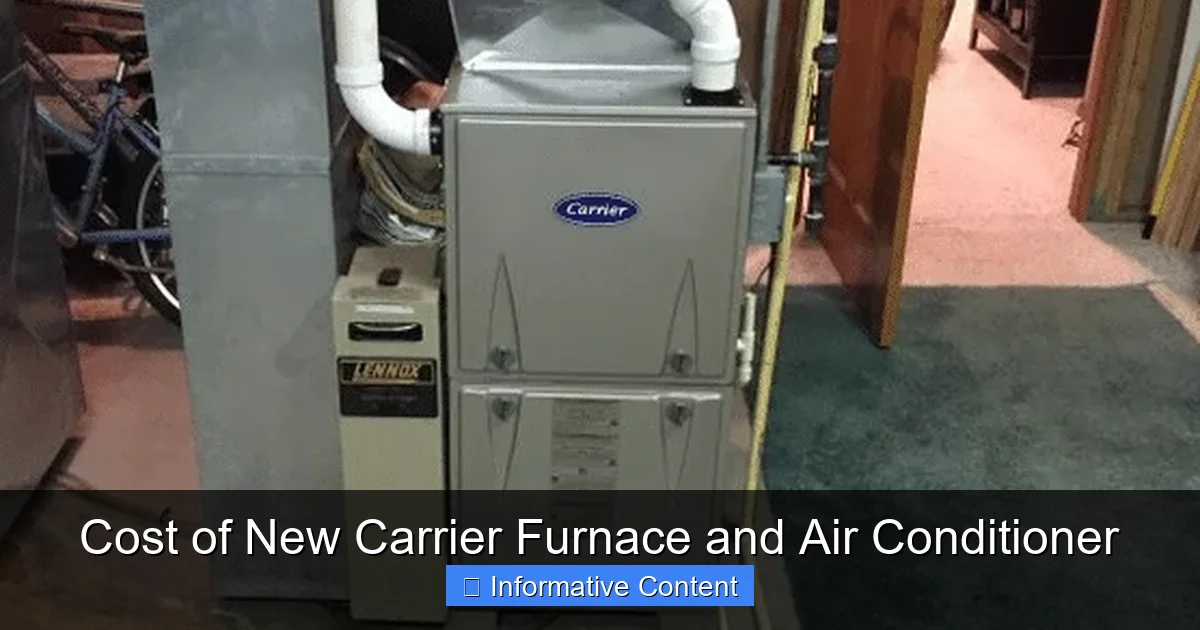
Visual guide about Cost of New Carrier Furnace and Air Conditioner
Image source: shrinkthatfootprint.com
Breaking Down the Price Range
Let’s look at what influences the cost:
- Basic systems: A standard-efficiency Carrier furnace (80% AFUE) paired with a 14–16 SEER air conditioner might cost $6,000–$9,000 installed. These are good for milder climates or smaller homes.
- Mid-range systems: A high-efficiency furnace (95% AFUE or higher) and a 16–18 SEER air conditioner typically fall in the $9,000–$12,000 range. These offer better comfort and energy savings.
- Premium systems: Top-tier Carrier Infinity or Performance series with variable-speed technology, smart thermostats, and SEER ratings of 20+ can cost $12,000–$18,000 or more. These are ideal for larger homes or areas with extreme temperatures.
For example, a homeowner in Phoenix, Arizona, might pay closer to $14,000 for a high-efficiency Carrier system due to the need for powerful cooling. Meanwhile, someone in Minneapolis might spend $11,000 on a system optimized for cold winters and moderate summers.
What’s Included in the Cost?
When you get a quote for a new Carrier furnace and air conditioner, it should include:
- The furnace unit (gas, electric, or oil)
- The air conditioner or heat pump unit
- Thermostat (often a Carrier-compatible smart thermostat)
- Professional installation by a licensed HVAC contractor
- Removal and disposal of old equipment
- Basic ductwork inspection and sealing (if needed)
Some contractors may also include a warranty or maintenance plan. Always ask for a detailed breakdown to avoid hidden fees.
Factors That Influence the Cost of a Carrier HVAC System
Several key factors determine how much you’ll pay for your new Carrier furnace and air conditioner. Understanding these can help you budget better and avoid surprises.
1. System Efficiency Ratings
Efficiency is one of the biggest cost drivers. Carrier systems are rated using two main metrics:
- AFUE (Annual Fuel Utilization Efficiency): Measures how efficiently a furnace converts fuel to heat. A 95% AFUE furnace is more efficient than an 80% model.
- SEER (Seasonal Energy Efficiency Ratio): Rates how efficiently an air conditioner uses electricity over a cooling season. A 16 SEER unit is more efficient than a 14 SEER.
Higher efficiency means higher upfront cost but lower utility bills. For example, upgrading from a 14 SEER to a 20 SEER air conditioner could save you $200–$400 per year on cooling costs, depending on usage and local electricity rates.
2. Home Size and Layout
The size of your home directly affects the size (and cost) of the HVAC system you need. A 1,500-square-foot home might need a 2.5-ton system, while a 3,000-square-foot home could require a 5-ton system.
But size isn’t just about square footage. Other factors include:
- Number of stories
- Insulation quality
- Window type and orientation
- Ceiling height
- Local climate
A professional HVAC contractor will perform a Manual J load calculation to determine the correct system size. Oversized systems cycle on and off too frequently, wasting energy and wearing out faster. Undersized systems struggle to maintain comfort.
3. Type of Furnace and Air Conditioner
Carrier offers several product lines, each with different features and price points:
- Base Series: Affordable, reliable, and ideal for budget-conscious homeowners. Good for mild climates.
- Performance Series: Mid-tier efficiency with better comfort features like two-stage heating and cooling.
- Infinity Series: Top-of-the-line with variable-speed motors, ultra-quiet operation, and smart home integration.
For example, a Carrier Performance 96 gas furnace (96% AFUE) costs more than a Base 80, but it provides quieter operation and better temperature control.
4. Installation Complexity
Even with the same equipment, installation costs can vary widely. Factors that increase labor time and cost include:
- Replacing old ductwork or sealing leaks
- Upgrading electrical panels or gas lines
- Removing and disposing of old units (especially if they contain refrigerant)
- Installing a new thermostat or zoning system
- Working in tight or hard-to-reach spaces (like attics or crawl spaces)
In some cases, structural modifications may be needed, adding $1,000–$3,000 to the total cost.
5. Geographic Location
HVAC costs vary by region due to differences in:
- Labor rates (higher in urban areas)
- Permit fees
- Climate demands (e.g., extreme heat or cold requires more robust systems)
- Availability of qualified technicians
For instance, installation in New York City might cost 20–30% more than in rural Kansas due to higher labor and permit costs.
6. Additional Features and Upgrades
Modern Carrier systems offer advanced features that improve comfort and efficiency—but they come at a price. Common upgrades include:
- Variable-speed blowers: Adjust airflow for consistent temperatures and better humidity control.
- Two-stage or modulating gas valves: Provide more precise heating, reducing energy use.
- Smart thermostats: Allow remote control and learning schedules (e.g., Carrier Côr or ecobee with Carrier compatibility).
- Zoning systems: Allow different temperature settings in different areas of your home.
- Air purifiers and humidifiers: Improve indoor air quality (IAQ).
Adding a smart thermostat might cost $200–$500 extra, while a whole-home zoning system can add $2,000–$4,000.
Carrier Furnace and Air Conditioner Models: What You Get for Your Money
Carrier offers a range of models to suit different budgets and needs. Here’s a closer look at some popular options and their typical price points.
Carrier Furnaces
Carrier furnaces are known for durability and efficiency. Here are three common models:
- Carrier Comfort 80: 80% AFUE, single-stage, basic model. Ideal for mild climates. Cost: $2,500–$3,500 (unit only).
- Carrier Performance 96: 96% AFUE, two-stage heating, quieter operation. Cost: $3,500–$4,500 (unit only).
- Carrier Infinity 98: 98.5% AFUE, modulating gas valve, variable-speed blower, Wi-Fi enabled. Cost: $5,000–$6,500 (unit only).
The Infinity 98 is one of the most efficient furnaces on the market, offering near-perfect fuel use and ultra-quiet performance.
Carrier Air Conditioners
Carrier air conditioners range from basic to premium efficiency:
- Carrier Comfort 16: 16 SEER, single-stage compressor. Cost: $3,000–$4,000 (unit only).
- Carrier Performance 18: 18 SEER, two-stage compressor, better humidity control. Cost: $4,000–$5,500 (unit only).
- Carrier Infinity 20: 20.5 SEER, variable-speed compressor, ultra-quiet, Wi-Fi enabled. Cost: $6,000–$8,000 (unit only).
The Infinity 20 uses advanced technology to adjust cooling output in tiny increments, maintaining consistent temperatures and reducing energy use.
Heat Pump Options
In milder climates, a heat pump can replace both your furnace and air conditioner. Carrier offers high-efficiency heat pumps like the Infinity 20 Heat Pump (up to 20.5 SEER and 13 HSPF), which can cost $7,000–$10,000 installed.
Heat pumps are especially cost-effective in areas with moderate winters, as they move heat rather than generate it, using less energy.
Hidden Costs and Additional Expenses to Consider
While the equipment and installation are the biggest expenses, there are other costs that can add up. Being aware of these helps you budget more accurately.
Ductwork Repairs or Replacement
Old or leaky ductwork can reduce system efficiency by 20–30%. If your ducts are damaged, undersized, or poorly insulated, you may need repairs or replacement. This can cost $1,500–$5,000, depending on the extent of the work.
A professional duct inspection during your HVAC evaluation can identify issues early.
Permits and Inspections
Most cities require permits for HVAC installations. Permit fees typically range from $100 to $500, depending on your location. Some contractors include this in their quote, while others charge separately.
Electrical or Gas Line Upgrades
Newer, high-efficiency systems may require upgraded electrical circuits or gas lines. For example, a modulating furnace might need a 240-volt circuit, or a high-BTU furnace may need a larger gas line. These upgrades can cost $500–$2,000.
Disposal of Old Equipment
Removing and disposing of your old furnace and air conditioner involves handling refrigerants and heavy materials. Most contractors include this in the installation cost, but it’s worth confirming. If not, expect to pay $200–$500 extra.
Extended Warranties and Maintenance Plans
Carrier offers a standard 10-year parts warranty on most models. You can purchase an extended warranty for $300–$800, covering labor and additional years.
Some contractors also offer annual maintenance plans ($150–$300 per year) to keep your system running efficiently and extend its lifespan.
How to Save Money on Your Carrier HVAC Purchase
While a new HVAC system is a significant investment, there are several ways to reduce the cost without sacrificing quality.
1. Take Advantage of Rebates and Incentives
Federal, state, and utility companies often offer rebates for high-efficiency HVAC systems. For example:
- The federal tax credit for energy-efficient home improvements (25C tax credit) allows you to claim 30% of the cost (up to $600 for furnaces and $600 for air conditioners) through 2032.
- Many utility companies offer instant rebates of $200–$1,000 for installing ENERGY STAR-rated Carrier systems.
- Some states, like California and New York, have additional incentives for heat pumps and high-efficiency equipment.
Check the ENERGY STAR website or your local utility provider for current offers.
2. Time Your Purchase Right
HVAC contractors are busiest during peak seasons (summer for AC, winter for furnaces). Buying during the off-season—spring or fall—can lead to lower prices and faster installation.
Some manufacturers also run seasonal promotions. For example, Carrier often offers rebates in the spring for summer AC installations.
3. Get Multiple Quotes
Always get at least three detailed quotes from licensed, insured HVAC contractors. Compare not just the price, but also:
- Equipment models and efficiency ratings
- Included services (duct sealing, thermostat, disposal)
- Warranty terms
- Contractor reviews and certifications (e.g., NATE, Carrier Factory Authorized Dealer)
A slightly higher quote from a reputable contractor may offer better long-term value than the cheapest option.
4. Consider a Heat Pump in Mild Climates
If you live in a region with mild winters (like the Southeast or Southwest), a heat pump can be a cost-effective alternative to a furnace and air conditioner combo. Heat pumps are more efficient for both heating and cooling, and some models qualify for additional rebates.
5. Bundle with Other Home Improvements
If you’re already planning home upgrades—like insulation, windows, or a new roof—consider bundling your HVAC replacement. This can reduce labor costs and improve overall energy efficiency.
Long-Term Value: Is a Carrier System Worth the Investment?
Yes—especially if you plan to stay in your home for several years. While the upfront cost of a new Carrier furnace and air conditioner is high, the long-term benefits often outweigh the expense.
Energy Savings
High-efficiency Carrier systems can reduce your heating and cooling bills by 20–40%. For example, upgrading from a 10 SEER to a 16 SEER air conditioner could save $150–$300 per year. Over 15 years, that’s $2,250–$4,500 in savings.
Improved Comfort
Modern Carrier systems offer better temperature control, quieter operation, and improved humidity management. Variable-speed technology keeps your home consistently comfortable, eliminating hot and cold spots.
Increased Home Value
A new, efficient HVAC system can boost your home’s resale value. Buyers often look for updated systems and may pay a premium for homes with Carrier equipment.
Reliability and Warranty
Carrier systems are built to last. With proper maintenance, they can operate efficiently for 15–20 years. The standard warranty covers parts, and many components (like heat exchangers) have lifetime warranties.
Conclusion: Making the Smart Choice for Your Home
Replacing your furnace and air conditioner is one of the most important home improvement decisions you’ll make. A new Carrier furnace and air conditioner offers a blend of reliability, efficiency, and comfort that’s hard to beat. While the cost—typically $8,000 to $15,000—can seem daunting, it’s an investment in your home’s future.
By understanding the factors that influence pricing, exploring rebates, and choosing the right system for your needs, you can maximize value and minimize stress. Don’t rush the process. Take time to research, get multiple quotes, and consult with a trusted HVAC professional. With the right approach, your new Carrier system will keep your home comfortable and your energy bills low for years to come.
Frequently Asked Questions
How much does a new Carrier furnace and air conditioner cost?
The average cost ranges from $8,000 to $15,000, including equipment and installation. Prices vary based on system size, efficiency, and location.
Are Carrier HVAC systems worth the price?
Yes, Carrier systems are known for durability, energy efficiency, and advanced features. They offer long-term savings on utility bills and improved home comfort.
Can I get rebates for installing a Carrier furnace and air conditioner?
Yes, federal tax credits, state incentives, and utility rebates are often available for high-efficiency Carrier models. Check with your local utility or the ENERGY STAR website.
How long does a Carrier furnace and air conditioner last?
With proper maintenance, Carrier systems typically last 15–20 years. Regular servicing can extend their lifespan and maintain efficiency.
Do I need to replace my ductwork when installing a new Carrier system?
Not always, but a professional inspection is recommended. Leaky or undersized ducts can reduce efficiency and should be repaired or replaced if needed.
Should I install a heat pump instead of a furnace and air conditioner?
In mild climates, a heat pump can be a more efficient and cost-effective option. It provides both heating and cooling using less energy than separate systems.