The cost of Carrier Infinity Series central air conditioner varies by model, size, and installation needs, typically ranging from $5,000 to $10,000 total. While upfront prices are higher than standard units, their advanced efficiency and smart technology can significantly reduce energy bills over time. Homeowners investing in this high-end system often see long-term savings and enhanced comfort.
Key Takeaways
- Total Cost Range: The cost of Carrier Infinity Series central air conditioner systems usually falls between $5,000 and $10,000, including equipment and installation.
- Energy Efficiency Matters: These units boast high SEER ratings (up to 26), helping you save on monthly utility bills—potentially $100+ per year compared to older models.
- Smart Features Included: Most Infinity models come with Wi-Fi connectivity, remote control via apps, and adaptive learning to optimize performance.
- Installation Complexity: Professional installation is required and can add $800–$2,000 depending on ductwork, location, and electrical upgrades.
- Rebates & Incentives: Many utilities offer rebates for high-efficiency systems like the Infinity series, reducing net cost by 10–30%.
- Long-Term Value: Despite a higher initial investment, the Infinity series offers durability, warranty coverage, and lower maintenance needs.
- Financing Options: Carrier and third-party lenders provide payment plans, making the cost more manageable for qualified buyers.
Quick Answers to Common Questions
How much does a Carrier Infinity Series AC unit cost?
The equipment-only price ranges from $3,800 to $5,000 depending on the model and size. When including installation, expect to pay between $6,000 and $10,000 total.
Are Carrier Infinity units more expensive than other brands?
Yes, they carry a premium price due to advanced technology and efficiency. However, brands like Trane and Lennox offer similar tiers, often at comparable costs.
Can I finance my Carrier Infinity purchase?
Yes, Carrier offers 0% APR financing through Wells Fargo for qualified applicants, plus deferred interest options and contractor promotions.
Do I need special ductwork for the Infinity series?
Not necessarily, but existing ducts should be inspected for leaks or imbalances. Upgrades may be needed to maximize efficiency and airflow.
How long do Carrier Infinity systems last?
With proper maintenance, these units typically last 15–20 years—significantly longer than standard ACs averaging 10–12 years.
📑 Table of Contents
- Introduction: Why Invest in a Premium Air Conditioner?
- Understanding the Base Price of Carrier Infinity Models
- Installation Costs: What Hidden Expenses Should You Expect?
- Energy Efficiency: How Much Can You Save Monthly?
- Rebates and Financing: Lowering Your Total Investment
- Warranty Coverage: Protecting Your Investment
- Real-World Examples: Case Studies from Homeowners
- Conclusion: Is the Carrier Infinity Series Worth It?
Introduction: Why Invest in a Premium Air Conditioner?
When it comes to keeping your home cool and comfortable during hot summer months, not all air conditioners are created equal. Among the most trusted names in heating, ventilation, and air conditioning (HVAC) is Carrier, a company with over a century of innovation and reliability under its belt. Their Infinity Series central air conditioner stands out as one of the highest-performing residential cooling systems available today. But what exactly does it cost to own one? And is the price tag worth the benefits?
The cost of Carrier Infinity Series central air conditioner isn’t just about the unit itself—it includes installation, potential upgrades, energy use, and long-term savings. For many homeowners, this investment pays off through improved comfort, reduced utility bills, and peace of mind knowing they have a system built to last. In this comprehensive guide, we’ll break down every aspect of the cost, so you can make an informed decision that fits both your budget and lifestyle.
Understanding the Base Price of Carrier Infinity Models
The starting price for a Carrier Infinity Series central air conditioner varies depending on the model line, cooling capacity (measured in tons), and regional availability. As of 2024, here’s a general breakdown:
Visual guide about Cost of Carrier Infinity Series Central Air Conditioner
Image source: img.wongnai.com
- Infinity 26 Variable Speed Heat Pump: Starts around $4,200–$5,000 (equipment only)
- Infinity 24 Two-Stage Air Conditioner: Typically $3,800–$4,500
- Infinity 21 Two-Stage Heat Pump: Around $4,000–$4,800
These figures reflect manufacturer suggested retail price (MSRP) and do not include labor, permits, or additional components like thermostats or duct modifications. Keep in mind that larger homes may require higher-capacity units, which increase the base price due to increased refrigerant volume, compressor power, and internal components.
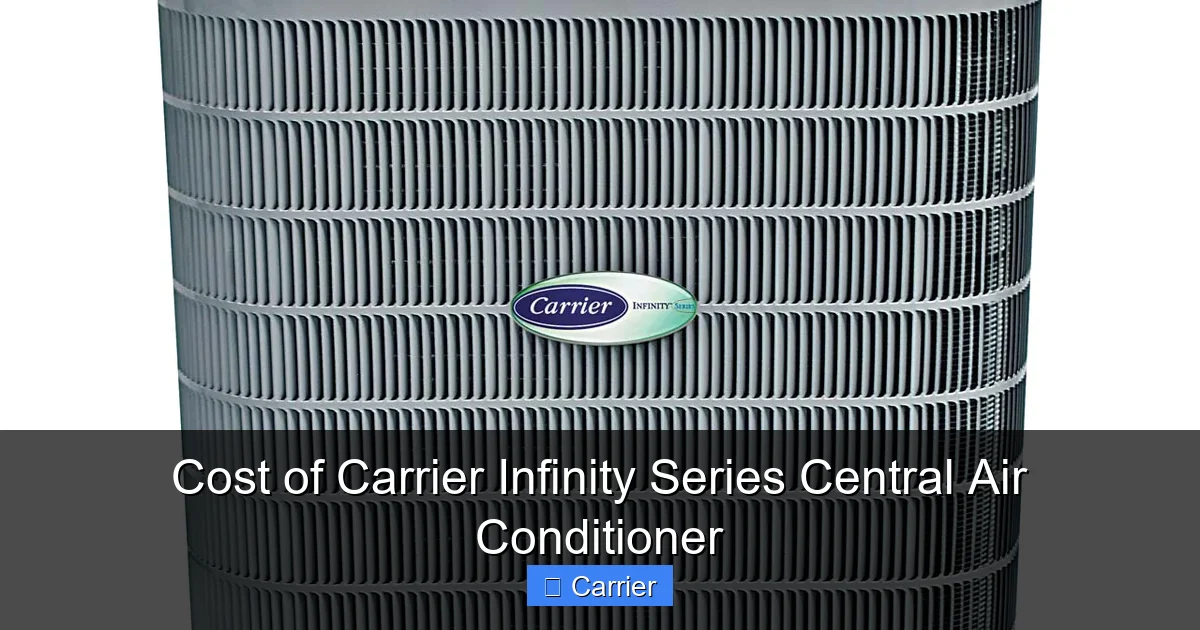
One reason the cost of Carrier Infinity Series central air conditioner is higher than entry-level models lies in its engineering. Every component—from the compressor to the fan motor—is designed for maximum efficiency and durability. For example, the variable-speed compressor in the Infinity 26 adjusts output based on real-time demand, unlike single-stage units that cycle on/off abruptly. This results in smoother operation and less wear and tear over time.
Installation Costs: What Hidden Expenses Should You Expect?
Even if you love the idea of owning a top-tier air conditioner, skipping professional installation could cost you more down the road. Improper setup leads to poor airflow, reduced efficiency, and even voided warranties. So, let’s talk about what goes into the actual cost of Carrier Infinity Series central air conditioner when you factor in labor and materials.
Visual guide about Cost of Carrier Infinity Series Central Air Conditioner
Image source: images.carriercms.com
Ductwork Assessment and Modifications
Many older homes have duct systems that weren’t designed for modern high-efficiency units. If your ducts are leaky, undersized, or poorly insulated, they can drop efficiency by up to 30%. An HVAC contractor will inspect your ducts and recommend sealing, resizing, or adding new runs—costing anywhere from $500 to $2,500 depending on complexity.
Electrical Upgrades
The Infinity series draws more power than standard ACs due to advanced compressors and motors. Older homes might need upgraded circuits or dedicated breaker panels, adding $300–$1,000 to the bill. Electricians typically charge $75–$150/hour, so a simple upgrade might take 2–4 hours.
Thermostat Replacement
Most Infinity models work best with smart thermostats like the Carrier Comfort® or Nest integration. If you’re upgrading from a basic programmable thermostat, expect to pay $200–$400 for a Wi-Fi-enabled model with zoning capabilities.
Permits and Inspections
In some municipalities, HVAC replacements require permits—usually $100–$300. These ensure compliance with local building codes and fire safety standards. Don’t skip this step; fines or insurance issues may arise otherwise.
On average, installation adds $2,000 to $4,000 to the total project cost. Always get at least three quotes from licensed contractors who specialize in Carrier systems—cheaper bids sometimes cut corners on critical steps like refrigerant charging or insulation.
Energy Efficiency: How Much Can You Save Monthly?
This is where the cost of Carrier Infinity Series central air conditioner truly starts to make sense. While the initial price is higher, the long-term savings on electricity can offset that gap within a few years. Let’s compare:
| Model | SEER Rating | Average Annual Cooling Cost (2-ton) | Savings vs. Standard 13 SEER |
|---|---|---|---|
| Infinity 26 | 26 SEER | $240/year | $120/year |
| Infinity 24 | 24 SEER | $260/year | $100/year |
| Standard 13 SEER | 13 SEER | $360/year | N/A |
Based on national averages of $0.12/kWh and 1,200 annual cooling hours, these numbers show real-world impact. Over 10 years, the Infinity 26 could save you over $1,200—not counting inflation or rising utility rates.
Additionally, variable-speed technology maintains consistent humidity levels, reducing the need for supplemental dehumidifiers. That means fewer appliances running and lower overall energy consumption. In humid climates like Florida or Louisiana, this alone can prevent mold growth and keep your home feeling fresher without overworking the system.
Rebates and Financing: Lowering Your Total Investment
Good news! You don’t have to pay the full sticker price out-of-pocket. Multiple programs exist to help offset the cost of Carrier Infinity Series central air conditioner:
Utility Company Rebates
Over 400 U.S. utilities offer rebates for ENERGY STAR-certified systems. For example:
- Georgia Power: Up to $500 for qualifying heat pumps
- Pacific Gas & Electric (California): $600–$800 for two-stage or variable-speed units
- Xcel Energy (Colorado): $400–$700 depending on efficiency tier
Federal Tax Credits
Under the Inflation Reduction Act (2022), homeowners can claim a 30% tax credit on eligible HVAC equipment installed before December 31, 2024. That means a $6,000 system could qualify for a $1,800 federal refund—applied when filing your next income tax return.
Manufacturer Financing
Carrier partners with Wells Fargo and Citizens Bank to offer promotional financing:
- 0% APR for 36 months on purchases over $1,500
- Deferred interest for 24 months (no penalty if paid off early)
Some contractors also run seasonal promotions, like free thermostats or extended warranties. Be sure to ask during your consultation!
Warranty Coverage: Protecting Your Investment
One reason the cost of Carrier Infinity Series central air conditioner feels justified is the generous warranty package. Unlike budget brands offering 5-year parts coverage, Carrier backs its Infinity line with:
- 10-Year Compressor Limited Warranty – Covers sealed system failures
- 10-Year Parts Limited Warranty – Includes coils, controls, and fans
- 12-Year Unit Replacement Option – Full replacement if compressor fails within 12 years (registration required)
This protection reduces future repair costs and gives you confidence that your system will perform reliably for decades. Just remember to register online within 60 days of installation—otherwise, coverage drops to 5 years.
Real-World Examples: Case Studies from Homeowners
To illustrate how the cost of Carrier Infinity Series central air conditioner plays out in practice, consider these scenarios:
Case Study 1: Urban Apartment Owner in Chicago
Maria, a first-time homebuyer, replaced her aging 10-year-old 10 SEER unit with a Carrier Infinity 24 in a 1,200 sq ft condo. Total cost: $7,200 after rebate ($4,500 equipment + $2,700 install). Her monthly electric bill dropped from $180 to $130. Within 18 months, she recovered $900 in savings.
Case Study 2: Suburban Family in Texas
The Johnsons upgraded their 2,800 sq ft house from a 14 SEER system to an Infinity 26 heat pump. They spent $9,500 total but received a $1,200 rebate and used a 0% financing plan. Thanks to adaptive defrost and humidity control, their kids’ asthma symptoms decreased significantly—a benefit hard to quantify but deeply valuable.
Both families agree: while the upfront cost was substantial, the combination of comfort, health, and savings made it worthwhile.
Conclusion: Is the Carrier Infinity Series Worth It?
After exploring every angle—from base prices to hidden fees, energy savings to financing options—one truth emerges: the cost of Carrier Infinity Series central air conditioner reflects its premium positioning. Yes, you’ll pay more initially than for a basic model. But when you factor in superior efficiency, intelligent features, robust warranty, and long-term reliability, it becomes clear that this isn’t just an appliance—it’s a lifetime investment in your home’s comfort and value.
If you’re building a new home, planning a major renovation, or simply fed up with inconsistent cooling and skyrocketing bills, the Infinity series is worth serious consideration. Consult with a Carrier-certified dealer to get a custom quote tailored to your climate, square footage, and lifestyle. With proper care and regular maintenance (annually recommended), your system could serve you faithfully for 15–20 years—making every dollar count.
Frequently Asked Questions
What’s included in the installation cost?
Installation covers refrigerant charging, thermostat setup, duct sealing (if needed), electrical connections, and permit fees. Labor is usually billed hourly at $80–$150.
Is there a rebate for installing a Carrier Infinity AC?
Many utilities and states offer rebates for high-efficiency HVAC systems. Check with your local provider—some cover up to $800 per unit.
Can I install the Infinity series myself?
No. HVAC systems involve refrigerants, electrical wiring, and precise calibration. DIY installation voids warranties and risks system damage or safety hazards.
How often should I service my Infinity AC?
Annual maintenance by a licensed technician is recommended. This includes cleaning coils, checking refrigerant levels, and inspecting electrical components.
Does the Infinity series work well in cold climates?
Yes, especially the heat pump models. The Infinity 26 includes adaptive defrost and operates efficiently even below freezing temperatures.
Will I save money on my electricity bill?
Absolutely. High SEER ratings mean lower kW usage. Most owners see 20–30% reductions compared to older, less efficient units.