
Cost of 5 Ton Carrier Air Conditioner
Looking to install a reliable 5-ton Carrier air conditioning unit? These powerful systems are ideal for large homes or commercial spaces but come with varying costs depending on model, efficiency, and installation complexity. On average, expect to pay between $3,000 and $6,500 total—including equipment and labor. This guide breaks down every cost factor so you can make an informed decision without overspending.
Key Takeaways
Total Cost Range: A 5-ton Carrier AC unit typically costs $3,000 to $6,500, including installation and accessories.
Energy Efficiency Matters: High SEER-rated models save money long-term despite higher upfront costs.
Installation Complexity Affects Price: Ductwork, electrical upgrades, and refrigerant lines add to the final bill.
Carrier Offers Premium Options: Carrier’s reputation for durability and performance comes at a premium price point.
Warranty Adds Value: Extended warranties can protect your investment over time.
DIY vs. Professional Installation: DIY saves money but risks improper setup; professionals ensure safety and efficiency.
Sizing Is Critical: Oversized or undersized units reduce efficiency and increase wear—correct sizing avoids wasted spending.
Quick Answers to Common Questions
How much does a 5-ton Carrier air conditioner cost?
On average, a 5-ton Carrier air conditioner costs between $3,000 and $6,500 total, including equipment and professional installation. Prices vary based on model efficiency, location, and installation complexity. For more on this, see our guide on air conditioner vs heat pump cost.
Is a 5-ton unit too big for my home?
A 5-ton unit is suitable for homes over 2,000 square feet. If your home is smaller, it may be oversized, leading to short cycling and higher energy bills. Consult an HVAC professional for proper sizing.
Can I install the unit myself to save money?
It’s not recommended. HVAC systems involve refrigerants, electrical wiring, and precise calibration. Improper installation can void warranties, cause damage, or pose safety risks. Hire a licensed contractor instead. For more on this, see our guide on how much does a 2 ton air conditioning.
Are Carrier units worth the higher price?
Yes, especially for large spaces. Carrier offers durable, efficient systems with excellent warranties and nationwide service support, making them a reliable long-term investment.
Do I qualify for rebates on a Carrier AC?
Many federal, state, and utility programs offer rebates for high-efficiency air conditioners. Check with your local energy provider or visit the Database of State Incentives for Renewables & Efficiency (DSIRE) website for current offers.
📑 Table of Contents
Understanding the Cost of a 5 Ton Carrier Air Conditioner
What Is a 5-Ton Air Conditioner?
SEER2 Ratings and the New Efficiency Standards
Average Cost Breakdown: Equipment vs. Installation
Energy Efficiency and Long-Term Savings
Refrigerant Transition: R‑410A to R‑454B
Factors That Influence Total Cost
Commercial vs. Residential Installation Considerations
Tips to Reduce Your Total Cost
Detailed Maintenance Schedule for 5‑Ton Systems
Is DIY Installation Worth It?
Comparing Carrier to Other Brands
Warranty Comparison Across Major Brands
Carrier 5‑Ton Model Comparison Table
Sound Ratings and Noise Considerations
Financing and Payment Plans
Conclusion: Is the Investment Worth It?
Understanding the Cost of a 5 Ton Carrier Air Conditioner
If you're searching for a reliable cooling solution for your home or business, chances are you've come across the name Carrier . Known for their innovation, durability, and energy-efficient designs, Carrier air conditioners are a top choice among HVAC professionals and homeowners alike. But when it comes to purchasing a 5-ton Carrier air conditioner, understanding the full cost isn't just about the sticker price—it's about knowing what goes into that number and how it affects your budget and comfort.
A 5-ton air conditioner is a significant investment. It’s designed to cool large spaces—typically homes over 2,000 square feet or commercial buildings like offices, retail stores, or restaurants. While the unit itself may seem expensive, it’s only one part of the equation. Installation, energy consumption, maintenance, and long-term performance all play a role in the true cost of ownership. In this comprehensive guide, we’ll break down every aspect of pricing so you can make a smart, informed decision.
What Is a 5-Ton Air Conditioner?
Before diving into costs, let’s clarify what a “5-ton” air conditioner actually means. The term “ton” refers to the cooling capacity of the unit, not its weight. One ton of cooling equals 12,000 British Thermal Units (BTUs) per hour. So, a 5-ton system provides 60,000 BTUs of cooling power.

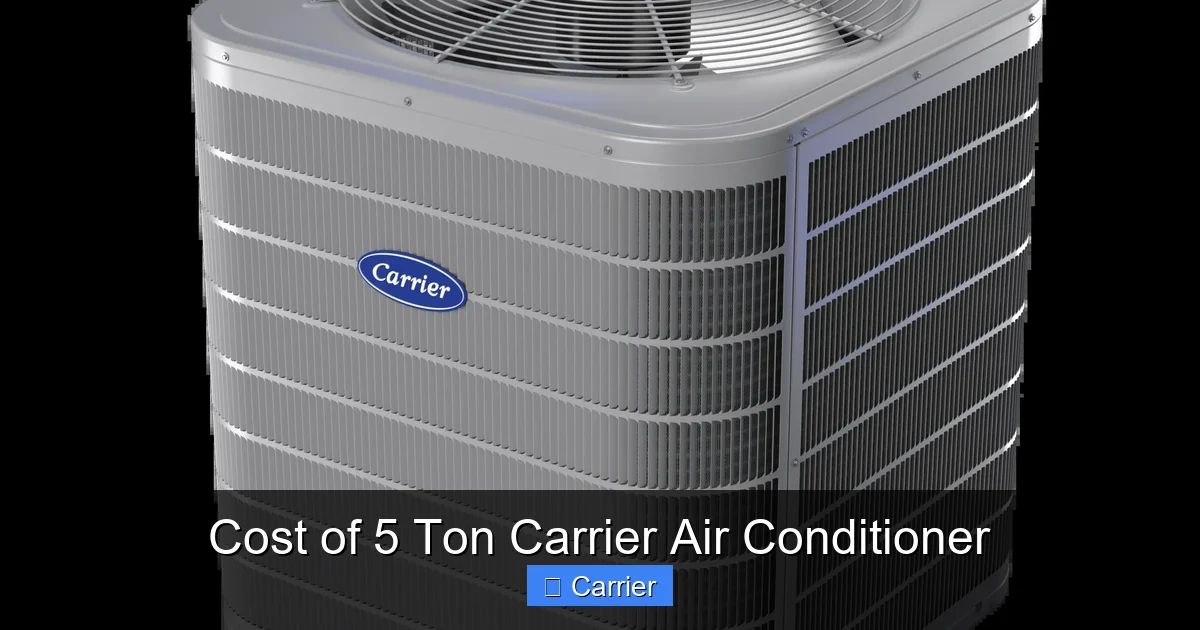
Outdoor condenser of a Carrier 5‑ton split system showing the compressor and coil assembly.
Image source: uux.cn
Ideal Applications
These systems are best suited for:
Large single-family homes (3+ bedrooms)
Small to mid-sized commercial buildings
Open-plan offices or retail spaces
Spaces with high heat loads (e.g., kitchens, server rooms)
Choosing the right size is crucial. An oversized unit will cycle on and off too frequently, wasting energy and increasing wear. An undersized unit won’t keep up during peak demand, leading to discomfort and higher utility bills.
SEER2 Ratings and the New Efficiency Standards
Since January 2023, the U.S. Department of Energy has required all new central air conditioners to meet SEER2 (Seasonal Energy Efficiency Ratio 2) standards, which use updated test procedures that better reflect real‑world conditions including duct pressure losses. In the Southwest and Southeast regions, the minimum for a 5‑ton split system is 14.3 SEER2; in the North it is 13.4 SEER2. Carrier’s current 5‑ton lineup spans 14.3–24 SEER2. When comparing quotes, confirm the rating is SEER2—not the older SEER metric—to avoid apples‑to‑oranges comparisons. A 1‑point SEER2 improvement on a 5‑ton unit typically reduces annual cooling electricity by 5–7 % in hot climates.
Average Cost Breakdown: Equipment vs. Installation
The total cost of a 5-ton Carrier air conditioner includes both the unit and professional installation. Let’s explore each component in detail.
Typical installation layout showing indoor air handler, refrigerant lines, and outdoor condenser placement.
Image source: imperialacsupply.com
Equipment Cost: $2,800 – $4,500
The base price for a 5-ton Carrier air conditioner ranges from approximately $2,800 to $4,500, depending on the model and features. Here’s a quick look at popular Carrier models in this category:
Carrier 24ANB060000 : Entry-level split system, around $2,900
Carrier 24APA7 : Mid-tier with improved efficiency, ~$3,600
Carrier Infinity 24VNA9 : Top-of-the-line variable-speed model, up to $4,500
Higher-end models include advanced features like two-stage compressors, variable-speed fans, and smart thermostats, which improve comfort and efficiency.
Installation Labor: $800 – $2,000
This is where costs can vary significantly. Professional installation ensures your system runs safely and efficiently. Factors affecting labor costs include:
Ductwork modifications or repairs
Electrical upgrades (new breaker, wiring)
Refrigerant line installation
Permits and inspections
In older homes, ductwork may need sealing or expansion, adding $300–$700. Commercial installations often require more complex setups, pushing labor costs toward the higher end.
Additional Accessories & Upgrades: $200 – $600
You may also need:
New thermostat ($150–$400)
Condensate drain line and pump ($100–$250)
Insulation for refrigerant lines ($50–$150)
Extended warranty or service plan ($200–$500 annually)
These extras ensure your system operates smoothly and lasts longer.
Energy Efficiency and Long-Term Savings
While a 5-ton Carrier AC may have a higher upfront cost, its energy efficiency can save you hundreds—or even thousands—over time. Carrier leads the industry in SEER (Seasonal Energy Efficiency Ratio) ratings.
Understanding SEER Ratings
SEER measures how efficiently an AC uses electricity. The higher the SEER, the less energy it consumes. Current minimum standards are 14 SEER, but Carrier offers models up to 26 SEER.
Model Series SEER Rating Average Annual Cost (Estimate)
24ANB (Standard) 14–16 $1,200–$1,500
24APA (Mid-Range) 18–20 $900–$1,100
24VNA9 (Premium) 26 $600–$800
Over a 15-year lifespan, upgrading from a 14 SEER to a 26 SEER model could save you over $2,000 in energy costs.
Smart Thermostats and Zoning
Pairing your Carrier unit with a smart thermostat or zoning system allows precise temperature control, reducing wasted cooling in unused rooms. This can cut energy use by 10–20%.
Smart Home Integration and Controls
Modern Carrier Infinity and Performance series units communicate with Carrier’s Cor thermostat and third‑party platforms such as Google Home, Amazon Alexa, and Apple HomeKit. In practice, linking the system to a home automation hub lets you set schedules, receive filter‑change alerts, and monitor runtime from a phone—features that routinely shave another 5–10 % off cooling bills. If you’re evaluating platforms, our guide on air‑conditioning innovations outlines the most compatible ecosystems.
Refrigerant Transition: R‑410A to R‑454B
The AIM Act mandates an 85 % phasedown of HFC production by 2036. Carrier began shipping 5‑ton Infinity and Performance models with R‑454B (GWP ≈ 466) in late 2024; entry‑level 24ANB units still use R‑410A (GWP ≈ 2,088) through 2025 inventory. R‑454B systems require mildly flammable (A2L)‑rated components and leak‑detection sensors, adding roughly $150–$300 to equipment cost but future‑proofing the install. Ask your dealer which refrigerant the quoted model uses—servicing R‑410A will become progressively pricier as reclaimed supply tightens. The EPA’s SNAP program publishes the official refrigerant status timeline.
Factors That Influence Total Cost
Several variables affect how much you’ll ultimately spend on a 5-ton Carrier air conditioner. Understanding these helps you budget accurately and avoid surprises.
Location and Climate
Living in a hot, humid climate (like Florida or Texas) increases cooling demands, potentially requiring additional components like dehumidifiers or larger ductwork. This raises both initial and operational costs.
Home or Building Structure
Older buildings may lack proper insulation or modern duct systems, necessitating upgrades before installation. Newer construction typically has fewer hidden costs.
Brand Reputation and Warranty
Carrier stands out for its 10-year parts warranty (with registration) and optional extended coverage. While this adds value, it also contributes to the overall price. Competitors like Trane or Lennox offer similar warranties, but Carrier’s customer support and resale value are often rated higher.
Local Contractor Rates
HVAC prices vary by region. Urban areas with high demand may charge more for labor than rural zones. Always get multiple quotes from licensed, insured contractors.
Choosing a Qualified HVAC Contractor
A reputable contractor performs a Manual J load calculation, verifies duct integrity, and pulls required permits—steps that prevent costly rework. Look for NATE‑certified technicians, check online reviews, and confirm they carry liability insurance. Our article on how to choose the right air conditioner for your home includes a checklist you can bring to the first meeting.
Commercial vs. Residential Installation Considerations
Commercial 5‑ton installs frequently involve rooftop curbs, economizers, demand‑controlled ventilation, and multi‑zone ductwork—items rarely seen in homes. Permit fees, crane rental ($800–$1,500/day), and after‑hours labor to avoid business disruption can add $2,000–$5,000 versus a residential swap. If you’re cooling a retail or office space, verify the contractor holds a commercial mechanical license and has experience with Title 24 / IECC compliance paperwork. Residential projects, by contrast, center on Manual J/D calculations, aesthetic condenser placement, and minimal structural penetration.
Tips to Reduce Your Total Cost
Even with a premium brand like Carrier, there are ways to manage expenses without sacrificing quality.
Get Multiple Quotes
Contact at least three licensed HVAC companies. Compare not just prices, but included services, warranties, and contractor reviews.
Consider Financing Options
Many Carrier dealers offer 0% financing for 24–36 months. This spreads the cost over time while avoiding interest charges if paid in full.
Look for Rebates and Incentives
Federal, state, and utility programs often provide rebates for high-efficiency AC units. For example, the U.S. Department of Energy offers tax credits up to $600 for qualifying systems. Check with your local provider—you could save $300–$800 instantly.
Schedule Regular Maintenance
Annual tune-ups prevent costly breakdowns and maintain efficiency. Most contractors include this in service plans for $150–$300/year.
Upgrade Ductwork Proactively
Sealing leaks and insulating ducts improves airflow and reduces strain on the system, lowering energy bills by 10–20%.
Maintenance Checklist for Longevity
Replace or clean the air filter every 1–3 months (more often with pets or high dust).
Clear debris from the outdoor coil and ensure 24 in. of clearance on all sides.
Inspect condensate drain line for clogs; flush with a 50/50 vinegar‑water mix annually.
Verify refrigerant pressures during the spring tune‑up; low charge signals a leak.
Tighten electrical connections and test capacitor values—common failure points after 5 years.
Log each service visit; a complete record supports warranty claims and resale value.
For a printable version, see our seasonal air conditioning maintenance tips.
Detailed Maintenance Schedule for 5‑Ton Systems
| Interval | Task | Who Performs |
|---|---|---|
| Monthly | Inspect/change air filter; clear debris from outdoor coil | Homeowner |
| Quarterly | Check condensate drain flow; verify thermostat calibration | Homeowner |
| Annually (Spring) | Full refrigerant pressure check, coil cleaning, electrical tightening, capacitor test, airflow measurement, safety‑switch verification | NATE‑certified tech |
| Every 3–5 Years | Duct leakage test (blower door), refrigerant leak audit, compressor megohm test | HVAC pro |
| 10 Years | Evaluate heat‑exchanger integrity; plan replacement budget | HVAC pro |
Skipping the annual pro visit is the single most common cause of premature compressor failure on 5‑ton units—repair bills often exceed $2,500.
Is DIY Installation Worth It?
Some homeowners consider installing the unit themselves to save on labor. However, HVAC systems involve refrigerants, electrical connections, and precise engineering—making improper installation risky.
Risks of DIY
Voided manufacturer warranty
Improper refrigerant handling (environmental hazard)
Electrical code violations
Reduced efficiency or system failure
Unless you’re a licensed HVAC technician, it’s safer and smarter to hire professionals. The potential savings rarely outweigh the risks.
Installation Timeline and What to Expect
A typical professional install for a 5‑ton split system takes 1–2 days:
Day 1 – Prep & Rough‑In – Remove old equipment, run new refrigerant lines, upgrade electrical circuit, and install condensate drain.
Day 2 – Charge & Commission – Pull vacuum, charge refrigerant to factory specs, program thermostat, and run performance verification (airflow, temperature split, safety switches).
If duct modifications are needed, add a half‑day. Ask your contractor for a written schedule; delays often stem from permit inspections or back‑ordered parts.
Comparing Carrier to Other Brands
While Carrier is a top choice, other brands like Trane, Lennox, and Rheem also offer 5-ton units. Here’s how Carrier stacks up:
Carrier vs. Trane: Both are American-made and reliable. Trane often has slightly lower equipment prices, but Carrier edges ahead in customer satisfaction and smart home integration.
Carrier vs. Lennox: Lennox focuses heavily on ultra-high efficiency (up to 26 SEER), but Carrier offers better nationwide service networks.
Carrier vs. Rheem: Rheem is more budget-friendly but lacks the same level of innovation and warranty support.
If long-term reliability and service availability matter most, Carrier remains a strong leader.
Warranty Comparison Across Major Brands
| Brand | Base Parts Warranty (Registered) | Compressor Warranty (Registered) | Labor Coverage Option | Transferable? |
|---|---|---|---|---|
| Carrier | 10 yr | 10 yr | 10‑yr labor add‑on | Yes, once |
| Trane | 10 yr | 12 yr (Compressor) | 10‑yr labor add‑on | Yes, once |
| Lennox | 10 yr | 10 yr | 5‑yr labor add‑on | Yes, once |
| Rheem | 10 yr | 10 yr | 5‑yr labor add‑on | Yes, once |
Carrier’s edge: factory‑backed labor add‑on can be purchased up to 12 months post‑install, and the dealer network density means faster warranty claim resolution in most metros.
Carrier 5‑Ton Model Comparison Table
Model SEER Compressor Type Sound (dB) Approx. Equipment Cost* Best For
24ANB060000 14‑16 Single‑stage 73 $2,900 Budget‑conscious replacement
24APA7 18‑20 Two‑stage 68 $3,600 Balanced efficiency & cost
Infinity 24VNA9 26 Variable‑speed 59 $4,500 Maximum comfort, low noise, smart home ready
*Equipment only; installation and accessories extra.
Sound Ratings and Noise Considerations
Carrier publishes sound power in dB(A) per AHRI 270. The Infinity 24VNA9 runs as low as 59 dB—comparable to a quiet conversation—while the entry 24ANB060000 sits near 73 dB (dishwasher level). For bedrooms or property‑line proximity, specify the variable‑speed model and request a sound‑blanket accessory (~$80). Many municipalities cap outdoor equipment at 65 dB at the lot line; verify local code before ordering. If noise is a primary concern, our split AC outdoor unit installation guide covers vibration‑isolation pads and strategic placement tactics.
Financing and Payment Plans
Most Carrier dealerships partner with financing companies to offer flexible payment options:
0% APR for 18–36 months
Lease-to-own programs
Home equity loans
These allow you to spread payments over years, making the total cost more manageable. Always read terms carefully and avoid high-interest options.
Rebate and Tax Credit Details (2026)
Federal 25C tax credit – Up to $600 for qualifying ≥15 SEER2 split systems (valid through 2032).
Utility rebates – Many carriers (e.g., PG&E, Con Ed, Duke Energy) offer $200‑$800 instant rebates for ENERGY STAR®‑certified models.
State programs – California’s TECH Clean California, New York’s NYSERDA, and Texas’ Oncor incentives can stack with federal credit.
Visit the Database of State Incentives for Renewables & Efficiency (DSIRE) for a searchable, up‑to‑date list.
Conclusion: Is the Investment Worth It?
A 5-ton Carrier air conditioner represents a serious commitment—both financially and logistically. With a total cost ranging from $3,800 to $6,500, it’s essential to weigh the benefits against your needs. For large homes or businesses where consistent, reliable cooling is non-negotiable, the investment pays off in comfort, energy savings, and peace of mind.
Remember, the cheapest option isn’t always the best. Choosing a high-efficiency Carrier model with professional installation ensures your system runs smoothly for decades. And with available rebates, financing, and maintenance plans, you don’t have to break the bank to enjoy premium cooling.
Ready to move forward? Start by scheduling consultations with local Carrier‑certified contractors. They’ll assess your space, recommend the right model, and provide transparent pricing—so you know exactly what you’re getting. Get a free, no‑obligation quote today and lock in 2026 rebate eligibility.
Frequently Asked Questions
What is included in the installation cost?
Professional installation typically covers mounting the outdoor unit, connecting refrigerant lines, installing a condensate drain, electrical wiring, and testing the system. Additional costs may apply for ductwork repairs or upgrades.
How often should I service my Carrier AC?
We recommend annual maintenance by a certified technician. Regular servicing improves efficiency, extends lifespan, and prevents unexpected breakdowns, especially before summer peak usage.
Can I upgrade my old system gradually?
Yes. Some contractors offer phased upgrades, allowing you to replace parts over time. However, partial upgrades may limit overall system performance and efficiency gains.
Does Carrier offer financing?
Yes, many Carrier dealers provide 0% financing for 18–36 months or flexible payment plans. Terms vary, so discuss options with your installer and review interest rates and repayment schedules carefully.
How do I know if my home needs a 5-ton unit?
An HVAC professional can perform a Manual J load calculation to determine your home’s exact cooling needs. This considers factors like square footage, insulation, windows, and climate zone.
Will a 5-ton unit reduce my energy bill?
Yes, especially if you choose a high-SEER model. Efficient systems use less electricity, saving money over time. Pair your unit with a programmable thermostat and good insulation for maximum savings.
What SEER rating should I target in 2026?
As of 2026, the federal minimum for new split‑system air conditioners is 15 SEER2 in most regions. For a 5‑ton unit, aiming for 18 SEER2 or higher delivers a solid payback within 5‑7 years in hot climates.
Are there any environmental concerns with refrigerants?
Modern Carrier 5‑ton units use R‑410A, which is being phased down under the AIM Act. Newer models (2024‑2025 onward) are transitioning to R‑454B, a lower‑GWP alternative. Ask your dealer which refrigerant the quoted model uses.

