Understanding Carrier air conditioner model numbers helps you identify key features like cooling capacity, efficiency rating, and manufacturing details. This guide breaks down the structure so you can make informed decisions when buying, replacing, or servicing your unit.
If you’ve ever looked at the side of your Carrier air conditioner and seen a long string of numbers and letters like “24VNA960A003AA,” you might have wondered: what does all that mean? It looks like a secret code, but it’s actually a detailed blueprint of your unit’s identity. These model numbers aren’t just random—they’re packed with useful information about your air conditioner’s size, efficiency, technology, and even where and when it was made.
Understanding Carrier air conditioner model numbers can feel overwhelming at first. But once you learn how to read them, you’ll gain valuable insight into your HVAC system. Whether you’re a homeowner trying to replace a filter, a contractor sourcing parts, or a buyer comparing units, knowing how to decode these numbers makes a big difference. It helps you avoid costly mistakes, ensures compatibility, and even helps with warranty claims.
In this guide, we’ll walk you through every part of a Carrier air conditioner model number. We’ll explain what each segment means, how to find your model number, and why it matters. By the end, you’ll be able to look at any Carrier AC unit and instantly understand its key features. Think of it like learning a new language—one that speaks directly to your comfort and energy savings.
Key Takeaways
- Model numbers reveal cooling capacity: The first two digits often indicate tonnage, helping you match the unit to your home’s size.
- Efficiency is encoded in the model: Look for SEER ratings in the number sequence to assess energy performance and potential savings.
- Series and generation matter: Letters like “24VNA” or “25HCB” denote product lines and technological advancements.
- Manufacturing details are hidden in the code: The model number can tell you the year and plant where the unit was made.
- Compatibility depends on model specifics: Knowing your model helps ensure correct parts and proper installation.
- Warranty and support rely on accurate identification: Always have your model number ready when contacting Carrier or a technician.
- Decoding saves time and money: Understanding the number prevents wrong purchases and improves troubleshooting.
📑 Table of Contents
- What Is a Carrier Air Conditioner Model Number?
- Why Understanding Model Numbers Matters
- How to Locate Your Carrier Air Conditioner Model Number
- Breaking Down the Carrier Model Number Structure
- Common Carrier Air Conditioner Series and Their Model Codes
- Practical Tips for Using Model Numbers
- Conclusion
What Is a Carrier Air Conditioner Model Number?
A Carrier air conditioner model number is a unique identifier assigned to each unit during manufacturing. It’s not just a serial number—it’s a structured code that contains specific details about the air conditioner’s design, performance, and origin. These numbers are typically 12 to 16 characters long and include a mix of numbers and letters.
For example, a model number like “24VNA960A003AA” might seem confusing, but each part has a purpose. The “24” could indicate the tonnage, “VNA” might refer to the product series, and the following numbers and letters could reveal efficiency, voltage, and manufacturing details. Unlike serial numbers—which are unique to each individual unit—model numbers are shared across units of the same type and design.
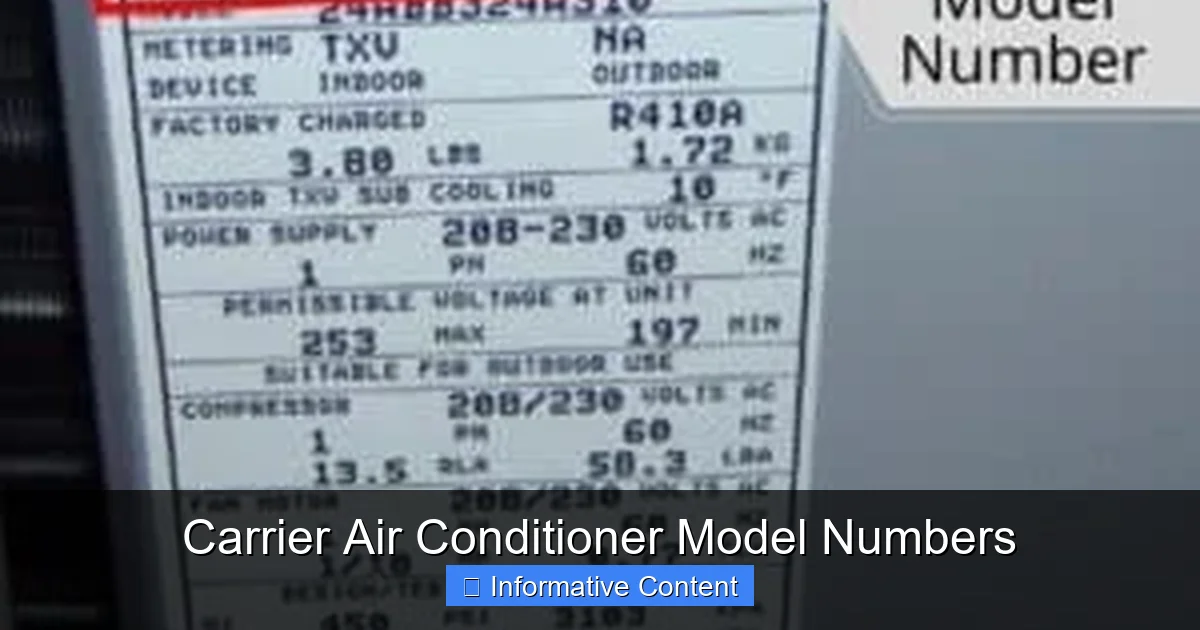
These codes are printed on a label or plate, usually located on the outdoor condenser unit. You might also find them on the indoor air handler or in your owner’s manual. Knowing where to look is the first step in decoding the information.
Carrier uses a consistent format across its product lines, which makes it easier once you learn the pattern. While the exact structure can vary slightly between models and years, the core elements remain the same. This consistency is what allows technicians, retailers, and homeowners to quickly identify key specs without needing a full product manual.
Why Understanding Model Numbers Matters
Visual guide about Carrier Air Conditioner Model Numbers
Image source: thedailythrive.org
You might be thinking, “Do I really need to know this?” The short answer is yes—especially if you care about efficiency, comfort, and long-term savings. Understanding your Carrier air conditioner model number helps in several practical ways.
First, it ensures you buy the right replacement parts. Air conditioners have many components—compressors, coils, capacitors, and more—and each is designed for specific models. Using the wrong part can damage your system or void your warranty. By knowing your model number, you can order the correct filter, refrigerant lines, or even a new thermostat that’s compatible with your unit.
Second, it helps during installation or upgrades. If you’re replacing an old unit or adding a new one, matching the tonnage and electrical requirements is crucial. The model number tells you exactly what size and power your system needs. For example, a 3-ton unit won’t work properly in a home that requires 4 tons—and vice versa. Over-sizing or under-sizing leads to poor cooling, higher energy bills, and frequent breakdowns.
Third, it simplifies troubleshooting. When you call a technician, they’ll often ask for your model number right away. This helps them quickly identify common issues, recall notices, or software updates related to your specific unit. It also helps them determine if your system is still under warranty.
Finally, understanding model numbers empowers you as a consumer. When shopping for a new air conditioner, you can compare models based on real data—not just marketing claims. You’ll know which units offer higher SEER ratings, quieter operation, or smart features. This knowledge helps you make smarter, more confident decisions.
How to Locate Your Carrier Air Conditioner Model Number
Finding your model number is easier than you might think. Carrier places the information in several accessible locations, so you usually don’t need to open any panels or call a technician.
The most common place is on the outdoor condenser unit. Look for a metal or plastic label on the side or back of the unit. It’s often near the electrical connections or refrigerant lines. The label will list the model number, serial number, voltage, and other technical details. Make sure the unit is turned off before inspecting it, especially if you need to move nearby objects or plants.
You might also find the model number on the indoor air handler, especially if you have a split system. This is the unit inside your home, typically in the attic, basement, or utility closet. Check the front panel or access door for a label. Some newer models include a QR code that links to the product information online.
Another option is your owner’s manual. If you still have it, the model number should be listed on the first few pages. If not, you can often find a digital copy on Carrier’s website by searching your unit’s approximate age or series.
If you’re still having trouble, try looking at your installation paperwork or warranty documents. These usually include the full model and serial numbers. You can also contact Carrier customer service with your serial number—they can often look up the model for you.
Tips for Reading the Label
When you find the label, take a photo or write down the full model number. Don’t just copy part of it—even a single missing character can lead to confusion. Also, note the serial number, as it’s needed for warranty claims and service records.
Some labels may be faded or dirty, especially on older units. Use a flashlight and gently wipe the surface with a damp cloth if needed. Avoid using harsh chemicals that could damage the label.
If the label is missing or unreadable, don’t panic. You can often identify your model by the unit’s physical features—like the number of fans, coil size, or branding—and cross-reference with Carrier’s product catalogs. A licensed HVAC technician can also help identify your model during a service call.
Breaking Down the Carrier Model Number Structure
Now that you know where to find it, let’s decode what the model number actually means. While the exact format can vary slightly by product line and year, most Carrier air conditioner model numbers follow a similar pattern. Let’s use a real example: “24VNA960A003AA.”
First Two Digits: Tonnage (Cooling Capacity)
The first two digits usually represent the unit’s tonnage, which is a measure of cooling capacity. One ton of cooling equals 12,000 BTUs (British Thermal Units) per hour. So, “24” means this unit has a 2-ton capacity (24,000 BTUs).
This is crucial for sizing your system correctly. A 2-ton unit is suitable for a small to medium-sized home, typically 1,000 to 1,200 square feet, depending on insulation and climate. If your home is larger, you might need a 3-ton (36,000 BTU) or 4-ton (48,000 BTU) unit.
Keep in mind that tonnage isn’t the only factor—efficiency, ductwork, and local weather also play a role. But the model number gives you a solid starting point.
Next Letters: Product Series and Generation
After the tonnage, you’ll see a series of letters like “VNA” or “HCB.” These indicate the product line and generation. For example, “VNA” refers to the Carrier Infinity Series with Greenspeed Intelligence, one of the company’s most advanced and efficient lines.
Different series offer different features:
– Infinity Series (e.g., 24VNA): High efficiency, variable-speed compressors, smart controls.
– Performance Series (e.g., 25HCB): Mid-tier efficiency, reliable performance, quieter operation.
– Comfort Series (e.g., 38GRAF): Budget-friendly, basic functionality, good for smaller homes.
The letters help you understand the technology level and expected lifespan of your unit. Higher-end series often come with longer warranties and better energy savings.
Following Digits: Efficiency and Voltage
The next set of numbers often relates to the unit’s Seasonal Energy Efficiency Ratio (SEER) and voltage. SEER measures how efficiently the unit uses electricity over a cooling season. Higher SEER means lower energy bills.
For example, in “24VNA960A003AA,” the “960” might indicate a SEER rating of 16 or higher, depending on the model. Newer units often have SEER ratings of 16 to 26, with the most efficient models qualifying for ENERGY STAR certification.
Voltage is usually indicated by a letter or number later in the sequence. Common voltages are 208/230V for residential units and 460V for commercial systems. This ensures compatibility with your home’s electrical system.
Final Letters: Manufacturing and Revision Codes
The last few characters often include manufacturing details like the plant location, production week, or design revision. These aren’t critical for most homeowners, but they’re useful for technicians and warranty claims.
For example, “A003AA” might mean the unit was made in the third week of the year at Plant A, with a specific design update. These codes help Carrier track quality and manage recalls if needed.
Common Carrier Air Conditioner Series and Their Model Codes
Carrier offers several air conditioner series, each with distinct model number patterns. Knowing these can help you quickly identify your unit’s class and capabilities.
Infinity Series (e.g., 24VNA, 25VNA)
The Infinity Series is Carrier’s premium line, featuring Greenspeed Intelligence—a variable-speed compressor that adjusts cooling output for maximum comfort and efficiency. These units often have model numbers starting with “24VNA” or “25VNA,” followed by efficiency and voltage codes.
Key features include:
– SEER ratings up to 26
– Quiet operation (as low as 58 decibels)
– Wi-Fi connectivity and smart thermostat compatibility
– Advanced humidity control
These models are ideal for homeowners who want top-tier performance and energy savings.
Performance Series (e.g., 25HCB, 25HCC)
The Performance Series offers a balance of efficiency and affordability. Model numbers like “25HCB” indicate a 2.5-ton unit in this line. These units typically have SEER ratings between 14 and 17.
Features include:
– Two-stage compressors for better temperature control
– Sound-dampening technology
– Durable cabinet design
This series is great for those who want reliable cooling without the premium price tag.
Comfort Series (e.g., 38GRAF, 38GRSF)
The Comfort Series is Carrier’s entry-level line, designed for budget-conscious buyers. Model numbers often start with “38” and include letters like “GRAF” or “GRSF.”
These units offer:
– Single-stage compressors
– Basic efficiency (SEER 13–16)
– Simple installation and maintenance
While not as advanced as higher-end models, they provide dependable cooling for smaller homes or mild climates.
Other Series and Special Models
Carrier also offers specialized units like geothermal heat pumps, ductless mini-splits, and commercial systems. These have unique model number formats. For example, ductless units might start with “38MAR” or “40RQ,” indicating indoor and outdoor components.
Always check the full model number and consult Carrier’s documentation to confirm the series and features.
Practical Tips for Using Model Numbers
Now that you understand how to read Carrier air conditioner model numbers, here are some practical ways to use this knowledge.
Buying Replacement Parts
When you need a new air filter, capacitor, or refrigerant line, your model number ensures you get the right part. For example, a 2-ton Infinity unit requires different components than a 3-ton Performance model. Use the model number when shopping online or visiting an HVAC supplier.
Many retailers, including Carrier’s official parts store, allow you to search by model number. This reduces the risk of ordering incompatible parts.
Scheduling Maintenance and Repairs
When calling a technician, have your model number ready. It helps them prepare the right tools and parts before arriving. It also allows them to check for known issues or recalls related to your specific unit.
Some technicians use model numbers to access digital service manuals, which include wiring diagrams and troubleshooting guides.
Upgrading or Replacing Your Unit
If you’re considering an upgrade, compare model numbers to evaluate efficiency, noise levels, and features. For example, switching from a 14 SEER Comfort model to a 20 SEER Infinity unit could cut your cooling costs in half.
Use the tonnage in the model number to ensure your new unit matches your home’s needs. Oversized units cycle on and off too frequently, wasting energy and reducing comfort.
Checking Warranty Status
Carrier offers warranties ranging from 5 to 10 years, depending on the model and registration. Your model number helps verify coverage. Visit Carrier’s warranty lookup tool and enter your model and serial numbers to check status.
Keep your model number in a safe place—like a home maintenance binder or digital note—so you can access it quickly when needed.
Conclusion
Decoding Carrier air conditioner model numbers might seem like a small detail, but it has a big impact on your comfort, energy bills, and system longevity. These codes are more than just identifiers—they’re a window into your unit’s design, performance, and history.
From determining the right tonnage to selecting compatible parts, understanding your model number empowers you to make smarter decisions. It simplifies maintenance, supports warranty claims, and helps you compare units when it’s time to upgrade.
Whether you’re a homeowner, technician, or HVAC enthusiast, taking the time to learn this “secret language” pays off. Next time you see a string of numbers on your outdoor unit, you’ll know exactly what it means—and why it matters.
So grab your flashlight, find that label, and start decoding. Your air conditioner has a story to tell—and now you know how to listen.
Frequently Asked Questions
Where can I find my Carrier air conditioner model number?
The model number is usually located on a label attached to the outdoor condenser unit. You can also check the indoor air handler, owner’s manual, or installation paperwork. Look for a combination of numbers and letters, often 12 to 16 characters long.
What does the first two digits in a Carrier model number mean?
The first two digits typically represent the unit’s tonnage, which indicates cooling capacity. For example, “24” means a 2-ton unit (24,000 BTUs), suitable for small to medium-sized homes.
How do I know the SEER rating from the model number?
The SEER rating is often embedded in the middle digits of the model number. For example, “960” in “24VNA960A003AA” may indicate a high-efficiency unit with a SEER of 16 or higher. Check Carrier’s product specifications for exact ratings.
Can I use my model number to check warranty coverage?
Yes, your model and serial numbers are required to verify warranty status. Visit Carrier’s official website and use their warranty lookup tool to confirm coverage and registration details.
What’s the difference between a model number and a serial number?
The model number identifies the type and specifications of the unit, while the serial number is unique to each individual unit. Both are needed for service, parts, and warranty claims.
How do I know if my Carrier unit is part of the Infinity Series?
Look for model numbers starting with “24VNA” or “25VNA.” These indicate the Infinity Series, which features Greenspeed Intelligence, high SEER ratings, and smart home compatibility.