When the mercury rises, a portable air conditioner can be a real lifesaver, transforming a stuffy room into a cool oasis. But simply plugging it in anywhere won’t give you the best results. To truly maximize its cooling power and energy efficiency, you need to understand the best position for portable air conditioner placement. It’s not just about convenience; it’s about smart strategy.
Choosing the right spot ensures your unit works smarter, not harder, keeping you comfy without sky-high energy bills. Let’s dive into some expert tips for optimal placement and then check out seven fantastic products that can help you achieve that perfect cool.
Mastering Your Portable AC Placement: Key Considerations
Getting the best position for portable air conditioner involves a few crucial factors that can significantly impact its performance. Think of it like this: you wouldn’t put a fan facing a wall, right? The same logic applies to your portable AC.
1. Near a Window (Always!)
This is non-negotiable for true portable air conditioners. Unlike evaporative coolers, portable ACs generate hot air that must be exhausted outside through a window kit and hose. Placing it close to a window minimizes the length of the exhaust hose, which helps reduce heat re-entry into the room and keeps the unit working efficiently. The shorter and straighter the hose, the better!
2. Avoid Obstructions
Give your portable AC room to breathe! Don’t tuck it behind curtains, furniture, or in a corner where airflow is restricted. The unit needs clear space around its intake vents to pull in warm room air and around its exhaust vent to push out hot air. Blocking these can lead to overheating and reduced cooling capacity. Aim for at least 12-18 inches of clearance on all sides.
3. On a Flat, Stable Surface
Portable ACs contain a compressor and refrigerant, making them a bit sensitive to uneven surfaces. Place your unit on a flat, stable floor to ensure proper operation, prevent excessive vibration, and allow for efficient drainage of condensation (if your unit requires it).
4. Consider the Room’s Layout
Think about where you spend the most time in the room. While the unit cools the entire space, direct airflow from its vents can provide immediate relief. If you’re working at a desk, positioning the AC to blow cool air towards your workspace can be a smart move. For general room cooling, a central location (while still near a window) might be ideal, but often a corner near the window is the most practical compromise.
5. Minimize Heat Sources
Try to place your portable AC away from direct sunlight, heat-generating appliances (like lamps, computers, or TVs), and doorways that frequently open to hotter areas. The less extraneous heat your unit has to battle, the more effectively it can cool your space.
Now that we know the tricks of the trade for finding the best position for portable air conditioner, let’s explore some top-notch products that can help you stay cool all summer long!
Top Portable Air Conditioner Picks & Accessories
1. LEZIFU Portable Air Conditioner Kit with Hose, Adjustable…
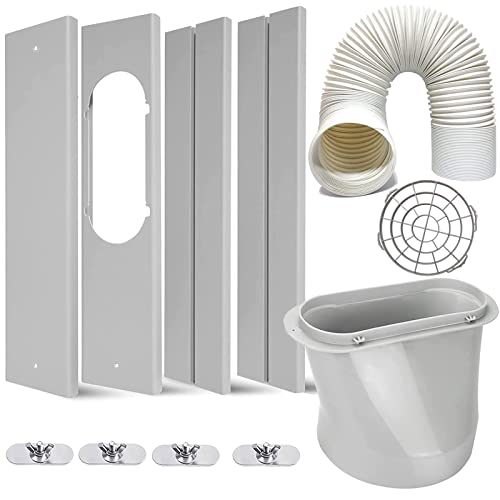
This isn’t an air conditioner itself, but it’s an absolute game-changer for anyone looking to optimize their portable AC’s efficiency. The LEZIFU kit provides a robust and adjustable solution for venting hot air out, which is paramount for any portable air conditioner. Its design focuses on creating a tight seal, meaning less hot air seeps back into your perfectly chilled room, saving you money on electricity and keeping your space cooler for longer. If you’ve ever struggled with ill-fitting window kits, this one aims to make that a problem of the past.
-
Key Features:
- Strengthened sealing to prevent hot air re-entry.
- Made from high-quality, anti-extrusion, anti-aging PVC for reusability.
- Easy to install and disassemble without additional tools.
- Adjustable length (up to 63″) for most vertical and horizontal sliding windows.
- Package includes fixing plates, adjustable plates, coupler filter, exhaust hose adaptor, 59″ exhaust hose, sealing tape, and screws.
-
Pros:
- Significantly improves AC efficiency by sealing hot air out.
- Durable and reusable year after year.
- Hassle-free installation and removal.
- Versatile fit for various window types.
-
Cons:
- Requires checking window size for compatibility.
- Only a kit, not a cooling unit.
-
User Impressions: Customers often praise this kit for its noticeable improvement in cooling performance and ease of setup. Many find it a superior replacement for standard kits that come with portable AC units, highlighting its robust sealing capabilities.
- See it on Amazon here
2. Dreo Portable Air Conditioners, 12,000 BTU AC Unit for…

When you’re serious about beating the heat, the Dreo AC515S steps up with a formidable 12,000 BTU ASHRAE cooling capacity. This isn’t just a powerful cooler; it’s a versatile climate control hub with 3-in-1 functions (cooling, dehumidifying, and fan) that can tackle spaces up to 16 feet effectively. What truly makes it stand out is its commitment to quiet operation, featuring an innovative noise isolation system around the compressor that brings sound levels down to a minimum 46dB – perfect for bedrooms or home offices where peace is prized. Plus, with smart controls, you can command your comfort from anywhere using your voice or the Dreo app.
-
Key Features:
- Massive 12,000 BTU ASHRAE cooling capacity.
- 3-in-1 modes: cooling, dehumidifying, and fan.
- Advanced noise isolation system for quiet operation (min 46dB).
- Drainage-free system (for humidity <85%) with self-evaporating technology.
- Smart cooling via Amazon Alexa, Google Home, or Dreo App.
-
Pros:
- Exceptionally powerful cooling for its class.
- Versatile functionality for all climate needs.
- Remarkably quiet, ideal for sensitive environments.
- Reduced need for manual drainage.
- Convenient smart home integration.
-
Cons:
- A drain hose is still required for very high humidity environments (>85%).
- Cooling reach is good but specific (up to 16 ft).
-
User Impressions: Users rave about the Dreo’s powerful cooling and surprisingly quiet operation, especially for a portable unit. The smart features are often highlighted as a major convenience, allowing for effortless control and scheduling.
- See it on Amazon here
3. ZAFRO Portable Air Conditioners, 10000 BTU, 3 in 1…

The ZAFRO 10,000 BTU portable air conditioner offers a fantastic blend of power, versatility, and user-friendly design. With its ASHRAE 10,000 BTU (SACC 6,000 BTU) capacity, it’s perfectly capable of cooling rooms up to 450 sq. ft., making it a solid choice for most bedrooms, living rooms, or offices. It provides three operational modes—cooling, dehumidifying, and fan—and even includes a sleep mode that automatically adjusts for a quiet, comfortable night. Portability is key here, with built-in casters and side handles that make moving it between rooms a breeze.
-
Key Features:
- 10,000 BTU ASHRAE (6,000 BTU SACC) cooling capacity for up to 450 sq. ft.
- 3-in-1 functionality: cooling, dehumidifying, and fan.
- 24-hour timer, remote control, and LED display for easy operation.
- Sleep mode for quiet (53dB or less) and energy-efficient overnight comfort.
- Casters and side handles for effortless portability.
- Washable fittings and auto-shutoff safety features.
-
Pros:
- Strong cooling power for medium-sized rooms.
- Highly versatile with multiple modes and fan speeds.
- Excellent portability for multi-room use.
- Quiet sleep mode enhances nighttime comfort.
- Easy installation and maintenance.
-
Cons:
- At 53dB, it’s quiet but not completely silent.
- Max cooling to 62°F, which is standard but not ultra-low.
-
User Impressions: Many users appreciate the ZAFRO for its effective cooling in various room sizes and its quiet operation, especially during sleep mode. The remote control and easy mobility are frequently mentioned as standout features for convenience.
- See it on Amazon here
4. Portable Air Conditioner Remote Control for 10,000 BTU &…
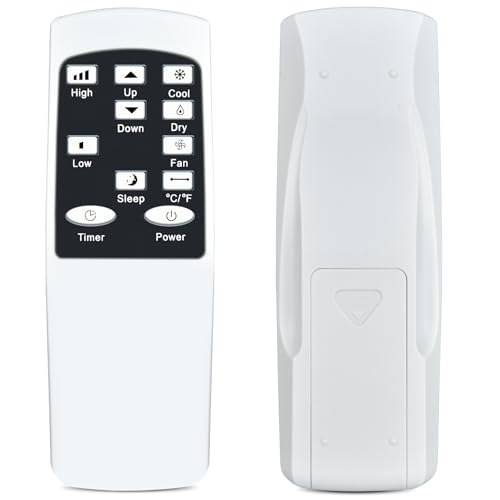
Sometimes, the simplest things make the biggest difference, and a lost or broken remote control for your portable AC can really put a damper on your comfort. This RETROSUN replacement remote is a godsend for owners of several popular 8,000 and 10,000 BTU portable air conditioner brands like Costway, EUHOMY, Royal Sovereign, and more. It’s designed as a direct replacement, meaning you won’t have to fuss with programming or pairing. Just pop in two AAA batteries, and you’re back in control of your cool environment. Its wide-angle design and ergonomic shape ensure you can adjust settings comfortably from almost anywhere in the room.
-
Key Features:
- Wide compatibility with specific Costway, EUHOMY, Royal Sovereign, DORTALA, Air Choice, and DR.PREPARE models.
- Direct replacement; no programming or pairing needed.
- Uses infrared 3.0 technology.
- Made with high-quality ABS material and a new-gen smart chip.
- Reliable 8m/26ft range with 120-degree wide-angle design.
- Ergonomic curved shape for comfortable use.
-
Pros:
- Easy, immediate use out of the box.
- Broad compatibility with listed portable AC brands.
- Robust construction for durability.
- Excellent range and wide-angle control.
-
Cons:
- Batteries and manual are not included.
- Compatibility is specific to certain models; requires checking.
-
User Impressions: Customers are highly satisfied with this remote as a straightforward, effective replacement. Its “no programming” feature and broad compatibility for the listed brands are consistently praised, bringing convenience back to users’ cooling experience.
- See it on Amazon here
5. JYew Portable Air Conditioners Evaporative Mini Room Air…
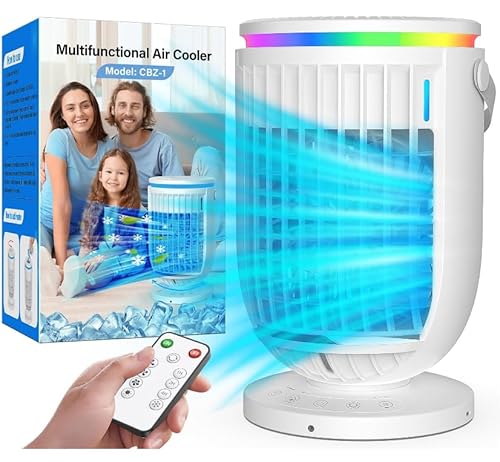
Hold on a sec! While listed as “Portable Air Conditioners,” it’s crucial to note that the JYew unit is an evaporative cooler, not a traditional refrigerant-based air conditioner. This means it cools by adding moisture to the air, which can be fantastic in dry climates, but less effective in humid ones. What makes it shine is its impressive 12-hour continuous cooling on a single fill thanks to a massive water tank, combined with 120° auto-oscillation for widespread comfort. Add in a 7-color ambient nightlight and dual mist modes, and you’ve got a personal cooling device that’s perfect for a desk, bedside, or even outdoor use in dry conditions, offering ambiance and a gentle breeze rather than deep cooling.
-
Key Features:
- Extra-large sealed water reservoir for up to 12 hours of continuous cooling.
- 120° auto-oscillation for wide-angle airflow.
- 7-color gradient ambient nightlight for mood setting.
- Dual mist modes (Low/High) for personalized humidity/cooling.
- Compact, lightweight, and versatile for indoor/outdoor use (battery/USB powered if applicable).
- Automatic shut-off system for low water levels.
-
Pros:
- Extremely long operating time per fill.
- Wide-angle oscillation provides good personal coverage.
- Adds a soothing ambiance with the nightlight.
- Highly portable and versatile for various settings.
- Energy-efficient compared to traditional ACs.
-
Cons:
- Not a true air conditioner; provides evaporative cooling.
- Less effective in high-humidity environments.
- Will not significantly lower room temperature like an AC.
-
User Impressions: Users love this product for its portability, quiet operation, and the added ambiance of the nightlight. It’s often highlighted as an excellent personal cooler for desks or bedrooms, especially in dry climates, though some may mistake its capabilities for a true AC.
- See it on Amazon here
6. LifeMaster 8,000 BTU Portable Air Conditioners, Room Air…
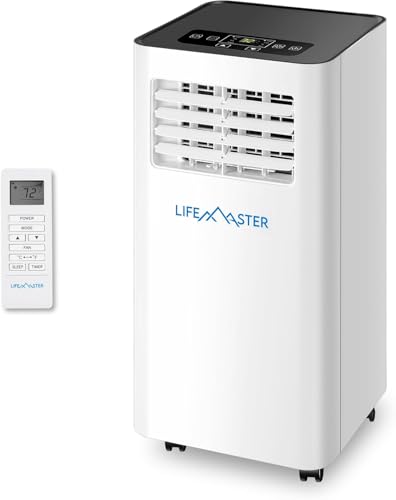
The LifeMaster 8,000 BTU portable air conditioner is a fantastic choice for those needing efficient cooling in smaller to medium-sized rooms up to 350 sq. ft. It’s a true 3-in-1 powerhouse, offering air conditioning, dehumidifying, and fan modes, so you’re covered no matter the weather. What’s particularly appealing about this compact unit (measuring just 12.8 x 11.6 x 27.6 inches) is its quiet operation, especially in sleep mode, making it ideal for bedrooms or offices where noise can be a distraction. Setup is a breeze with its included window mount exhaust kit, and the unit’s casters mean you can roll it to the perfect spot with ease.
-
Key Features:
- 3-in-1 operation: air conditioner, dehumidifier, and fan with 2 speed settings.
- 8,000 BTU ASHRAE (5,100 BTU DOE) cooling capacity for up to 350 sq. ft.
- Quiet operation, especially in sleep mode.
- Compact design with casters for easy mobility.
- Easy setup with included exhaust kit (fits 26.5-49″ windows).
- Removable and washable air filter for easy maintenance.
-
Pros:
- Versatile and compact, fitting into various spaces.
- Provides effective cooling for its rated area.
- Quiet enough for sleeping or working.
- Exceptionally easy to install and move.
- Low maintenance with washable filter.
-
Cons:
- 8,000 BTU is best suited for smaller rooms; may struggle in larger spaces.
- Minimum temperature setting is 65°F.
-
User Impressions: Reviewers frequently praise the LifeMaster for its straightforward setup, effective cooling in smaller rooms, and convenient portability. The quiet sleep mode is a consistent highlight for those using it in bedrooms.
- See it on Amazon here
7. Kxuhivc Portable Air Conditioner Window Vent Kit,…
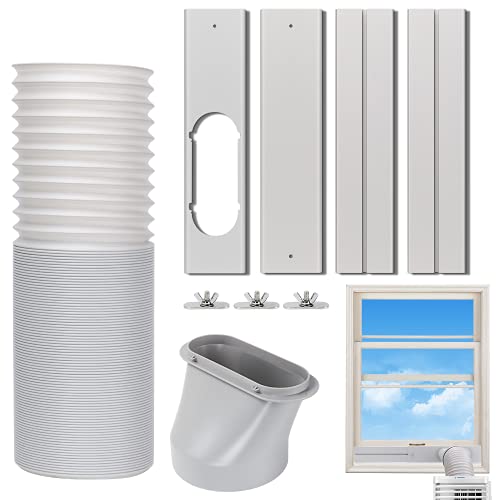
Another essential accessory for any portable AC user, the Kxuhivc exhaust hose and window vent kit is designed to address a common pain point: finding a compatible and durable replacement or extension hose. This kit specifically features an anti-clockwise thread direction – a critical detail for many portable AC models – ensuring a secure fit. With a common 5.9-inch diameter and two length options (1.5m/59″ and 2m/78.7″), it offers great flexibility for various setups. Having the right hose length and fit is crucial for maintaining efficient exhaust and, by extension, effective cooling from your portable air conditioner.
-
Key Features:
- Anti-clockwise thread direction for universal fit with compatible ACs.
- Standard 5.9-inch diameter.
- Two length options: 1.5m/59″ and 2m/78.7″.
- Designed to fit most portable air conditioners on the market.
-
Pros:
- Solves compatibility issues with anti-clockwise threaded hoses.
- Common diameter ensures broad fit.
- Offers flexible length options for different window setups.
- Durable construction for longevity.
-
Cons:
- Essential to check your existing hose’s thread direction before purchase.
- Only a hose/kit; no cooling unit included.
-
User Impressions: Users often find this kit to be a lifesaver when their original hose breaks or they need a longer one. The clear specification of the anti-clockwise thread is highly valued, preventing frustration with incorrect purchases and ensuring optimal hot air exhaust.
- See it on Amazon here
Frequently Asked Questions (FAQ)
Q1: Where is the absolute best position for a portable air conditioner?
A: The absolute best position for a portable air conditioner is as close to a window as possible, ensuring a short and straight exhaust hose. It should also have at least 12-18 inches of clearance around its vents for optimal airflow, be placed on a flat, stable surface, and be away from direct sunlight or other heat-generating appliances.
Q2: Can I use a portable AC without a window?
A: For true refrigerant-based portable air conditioners, no. They must vent hot air outside. Without a window (or a similar opening like a sliding door or wall vent), the hot exhaust air will remain in your room, effectively canceling out any cooling the unit provides. If you can’t vent outside, an evaporative cooler (like the JYew reviewed above) might be an option, but remember it won’t lower the temperature significantly and works best in dry climates.
Q3: How do portable ACs work?
A: Portable air conditioners work by drawing warm air from your room, passing it over a cold coil filled with refrigerant (which absorbs the heat), and then blowing the cooled air back into the room. The heat absorbed by the refrigerant is then expelled as hot air through an exhaust hose that must be vented outside, along with any condensed moisture.
Q4: What’s the difference between a portable AC and an evaporative cooler?
A: A portable AC uses a refrigerant cycle to remove heat and humidity from the air, much like a central AC, and exhausts hot air outside. An evaporative cooler (also known as a swamp cooler) uses water evaporation to cool the air. It draws warm air over a wet pad, causing the water to evaporate and absorb heat from the air. Evaporative coolers add moisture to the air and work best in dry climates; they are much less effective in humid conditions and won’t lower the temperature as much as a true AC.
Q5: How often do I need to drain a portable air conditioner?
A: This depends on the unit and the humidity levels in your environment. Many modern portable ACs feature a “self-evaporative” system, which re-evaporates much of the condensation and vents it out with the hot exhaust air, significantly reducing the need for manual drainage. In very humid conditions, or if your unit doesn’t have a strong self-evaporative function, you might need to drain it manually every few hours, or perhaps once a day. Units with a “full water” indicator will alert you when it’s time.
Q6: Do portable ACs use a lot of electricity?
A: Portable ACs are generally less energy-efficient than central air conditioning or mini-split systems due to their design (e.g., single-hose units can create negative pressure, drawing in hot outside air). However, they are more energy-efficient than leaving a window open and are a cost-effective solution for cooling specific rooms. Their energy consumption varies significantly by BTU rating; a 10,000 BTU unit will use more electricity than an 8,000 BTU unit, but also cool a larger space. Using an efficient model and ensuring optimal placement (as discussed) can help reduce energy use.
Q7: How can I improve the efficiency of my portable AC?
A: To boost your portable AC’s efficiency:
1. Ensure a tight window seal: Use a good window kit (like the LEZIFU or Kxuhivc kits) to prevent hot air from leaking back in.
2. Keep the exhaust hose short and straight: Avoid kinks or excessive length.
3. Clean the air filter regularly: A dirty filter restricts airflow and makes the unit work harder.
4. Seal off the room: Close doors and windows to prevent cool air from escaping and warm air from entering.
5. Use shades or blinds: Block direct sunlight to reduce heat gain in the room.
6. Don’t overcool: Set the temperature to a comfortable, not excessively cold, level (e.g., 72-78°F).