
Dreaming of comfortable RV adventures, even when you’re off-grid? Keeping your RV cool, especially during those scorching summer days, is a top priority. But powering your RV’s air conditioner without shore power can be a real head-scratcher. That’s where a reliable power inverter for RV air conditioner comes into play. It takes the 12V DC power from your RV batteries and converts it into the 120V AC power your AC unit needs to run.
Choosing the right inverter isn’t just about raw power; it’s about efficiency, compatibility, and protecting your valuable appliances. And sometimes, it’s not just about the inverter itself, but also clever tech like soft start kits that let smaller inverters do bigger jobs. In this guide, we’re diving deep into some of the best options available, including powerful inverters and smart soft start solutions, to help you stay frosty on your next road trip.
Understanding Your RV Air Conditioner’s Power Needs
RV air conditioners are notorious for being power hogs, especially when they first kick on. This initial burst of power, known as “surge power” or “LRA” (Locked Rotor Amps), can be significantly higher than the continuous “running power.” A typical 13,500 BTU RV AC might draw 1500-2000 watts continuously but demand 3000-4000 watts for a split second at startup. This is why a robust power inverter for RV air conditioner is essential, or why a soft start kit can be a game-changer, allowing smaller inverters or generators to handle the load more gracefully.
Our Top Picks: Power Inverters & Soft Start Solutions for RV ACs
Let’s explore some fantastic options to keep your RV’s climate control running smoothly.
1. BELTTT 3000W Pure Sine Wave Inverter 12V DC to 120V

The BELTTT 3000W Pure Sine Wave Inverter is a beast, offering substantial continuous power output perfect for demanding appliances like an RV air conditioner. What truly sets it apart is its pure sine wave output, mimicking grid power, which is critical for sensitive electronics and ensures your AC runs efficiently without strain. Its smart LCD display keeps you informed about input/output voltages and load status, making troubleshooting a breeze. This is a serious contender if you’re looking for a dedicated power inverter for RV air conditioner with ample overhead.
-
Key Features:
- Pure Sine Wave output suitable for sensitive loads.
- Delivers 3000W continuous, 6000W peak surge power.
- High conversion efficiency (>91%) with low no-load losses.
- Intelligent LCD display for real-time status and adjustments.
- Multiple safety protections (under/overvoltage, overload, over-temperature, short circuit, reverse connection).
- Dual AC sockets, 20A Outlet, 5V 2.1A USB, Hardwire Port, and remote controller.
-
Pros:
- Powerful enough for most RV AC units.
- Pure sine wave protects sensitive electronics.
- Informative LCD screen and remote control.
- Robust safety features.
- Versatile output options.
-
Cons:
- Might be overkill (and pricier) for smaller AC units.
- Requires a substantial battery bank to sustain 3000W output for long periods.
-
User Impressions: Customers frequently praise its robust build quality and consistent power delivery. Many highlight the clear LCD display as a significant advantage for monitoring performance. Users appreciate its ability to handle demanding loads like microwaves and, of course, their RV air conditioners.
2. SUNWHEEL 2000W Pure Sine Wave Inverter, 12V DC to

The SUNWHEEL 2000W Pure Sine Wave Inverter strikes a fantastic balance between power and portability for RVers. With 2000W continuous output and 4000W surge, it can handle many RV AC units, especially when paired with a soft start kit. Its exceptional conversion efficiency (over 92%) means less power wasted from your precious battery bank. Plus, the quiet operation (under 45 dB) and intelligent cooling system ensure it won’t disturb your peace, making it a great choice for overnight comfort.
-
Key Features:
- 2000W continuous power, 4000W peak surge.
- Pure Sine Wave output, high efficiency (>92%).
- Quiet operation (<45 dB).
- Multiple safety protections including GFCI, under/over-voltage, over-temperature, overload, short circuit.
- Durable aluminum alloy construction.
- Advanced smart cooling fans.
-
Pros:
- Highly efficient, saving battery power.
- Very quiet operation.
- Robust and durable construction.
- Comprehensive safety features, including GFCI.
- Suitable for sensitive electronics.
-
Cons:
- Might require a soft start kit for larger RV AC units.
- Cooling fans can get loud under heavy load (though only when needed).
-
User Impressions: Users love the SUNWHEEL for its reliable performance and quiet operation, especially when running various RV appliances. The build quality receives high marks, and many have successfully run refrigerators, microwaves, and even smaller AC units with it, often appreciating the peace of mind from the GFCI protection.
3. Spartan Power SpartanStart – Soft Start Kit for RV Air

Now, this isn’t a power inverter itself, but the Spartan Power SpartanStart is an absolute game-changer for those looking to run their RV AC with a smaller inverter or generator. This soft start kit dramatically reduces the initial surge current required by your air conditioner, allowing you to power even a 20,000 BTU unit with a much smaller 2200-watt inverter or generator. It’s incredibly easy to install with just three wires and boasts smart features like Generator Anti-Stall and motor reversal protection, making it a smart investment for expanding your off-grid capabilities.
-
Key Features:
- Enables starting up to 20,000 BTU RV AC with a 2200W inverter/generator.
- Reduces AC unit strain and battery drain.
- Generator Anti-Stall & Preload feature.
- Seamless switching between power sources.
- No learning cycles involved.
- Easy three-wire installation.
- Three-year warranty.
-
Pros:
- Significantly reduces AC startup current.
- Allows use of smaller, more affordable inverters/generators.
- Protects AC unit and power source from strain.
- Quick and easy DIY installation.
- Durable and reliable with a good warranty.
-
Cons:
- It’s an additional component to install.
- Does not provide power itself; requires an inverter or generator.
-
User Impressions: RVers rave about how this soft start kit transforms their power situation, allowing them to run their AC on limited campground power or with smaller generators they already own. The ease of installation is frequently highlighted, and many report a noticeable difference in their AC’s startup performance.
4. MICRO-AIR EasyStart FLEX 398 – Bluetooth Soft Start Kit
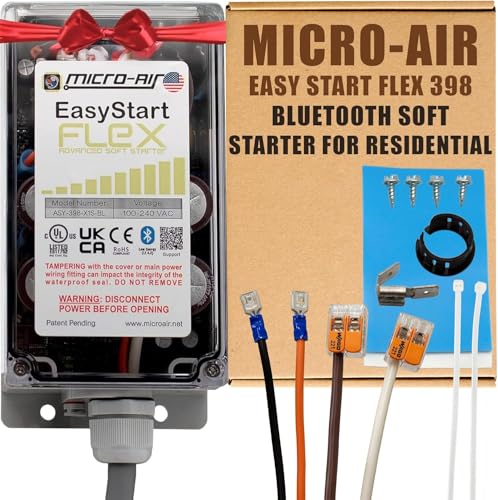
The MICRO-AIR EasyStart FLEX 398 is at the forefront of soft start technology. This particular model, which includes an installation kit, stands out for its advanced features and versatility. It’s designed to reduce your AC’s startup current by up to 75%, making it ideal for running even large residential units (up to 6 tons!) on generators or inverters. The Bluetooth connectivity for diagnostics and its compact design make it a smart choice for RVers seeking ultimate flexibility and protection for their AC system.
-
Key Features:
- Advanced Micro-Air technology for gentle startup.
- Reduces startup current by up to 75%.
- Compatible with generators, inverters, and limited utility power.
- Supports AC units up to 6 tons (72,000 BTUs).
- Quiet operation and prevents light flickering.
- Intelligent fault detection and short-cycle delay timer.
- 50% smaller enclosure size for easy installation in tight spaces.
- Includes installation kit.
-
Pros:
- Industry-leading soft start technology.
- Significantly reduces AC startup surge.
- Extends AC lifespan and protects compressor.
- Compact design for versatile installation.
- Bluetooth connectivity for monitoring (implied by “Bluetooth Soft Start Kit”).
-
Cons:
- Higher price point than some other soft start options.
- Requires installation, though simplified with the kit.
-
User Impressions: This unit receives overwhelming praise for its effectiveness in enabling AC operation on smaller power sources. Users love the quiet startup and the noticeable reduction in strain on their generators or inverters. The compact size is a bonus, and the reliability of Micro-Air is a strong selling point.
5. MICRO-AIR EasyStart FLEX 398 – Bluetooth Soft Start Kit
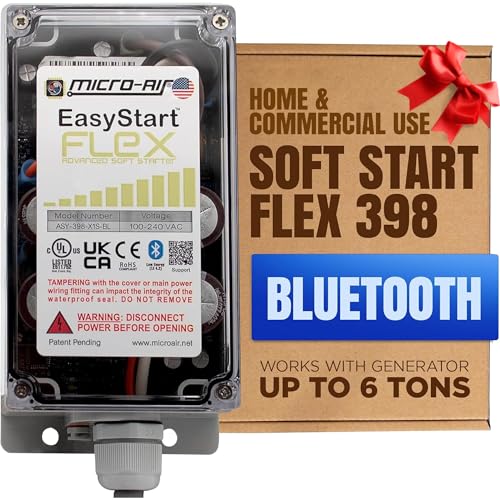
Just like its sibling above, the MICRO-AIR EasyStart FLEX 398, without the explicit “installation kit” mention, still delivers the same advanced Micro-Air technology for superior AC soft starting. This product shines by offering the most advanced and versatile soft starter capabilities for RV and even home AC units. It significantly reduces the massive startup current, allowing your chosen power inverter for RV air conditioner to operate much more efficiently without tripping breakers or overdrawing your battery bank. Its intelligent protection features also ensure your compressor motor enjoys a longer, healthier life.
-
Key Features:
- Advanced Micro-Air technology for controlled, gentle startup.
- Reduces startup current by up to 75%.
- Ideal for use with generators, inverters, and limited utility power.
- Supports AC systems up to 6 tons (72,000 BTUs).
- Quiet startup and prevents light flickering.
- Intelligent fault detection and short-cycle delay timer.
- Compact design (50% smaller enclosure) for easy installation.
-
Pros:
- Top-tier soft start performance.
- Extends AC unit and power source lifespan.
- Versatile for various AC sizes and power sources.
- Protects against low-voltage damage and excessive wear.
- Small footprint for flexible mounting.
-
Cons:
- Premium price for premium technology.
- Installation still required.
-
User Impressions: Customers consistently report flawless performance, even with older, power-hungry AC units. The unit’s ability to reduce startup noise and prevent electrical flickers is highly appreciated, contributing to a more comfortable RV experience. Many highlight the peace of mind gained from knowing their AC is protected.
6. 12V RV Air Conditioner with Heat Pump, 11,500 BTU Rooftop

This product is unique on our list because it eliminates the need for a traditional power inverter for RV air conditioner altogether! The 12V RV Air Conditioner with Heat Pump is a game-changer for off-grid travelers. Delivering a strong 11,500 BTU cooling and heating performance, it runs directly off your 12V battery system. This means no AC power, no generator, and no inverter is required, simplifying your power setup immensely. Its high-efficiency DC inverter compressor also ensures ultra-quiet operation and minimal power draw, making it ideal for solar-powered rigs.
-
Key Features:
- 11,500 BTU cooling and heating performance.
- 12V DC direct power – no inverter or generator needed.
- Ultra-quiet operation (as low as 45dB).
- High-efficiency DC inverter compressor.
- Slim, low-profile design (7.1 inches high).
- Durable, UV-resistant ABS housing.
- Easy installation, fits standard 14.1″x14.1″ rooftop openings.
-
Pros:
- No inverter or generator required for operation.
- Highly energy-efficient, perfect for off-grid.
- Extremely quiet, ensuring restful sleep.
- Compact and aerodynamic design.
- Provides both cooling and heating.
-
Cons:
- Requires a robust 12V battery bank to run effectively for extended periods.
- Higher initial purchase cost compared to some AC units.
- May require professional installation for rooftop mounting.
-
User Impressions: Customers who’ve embraced this 12V direct AC solution are thrilled with its efficiency and the freedom it offers from generators and inverters. The quiet operation is a consistent highlight, and many report successfully running it with their solar setups, proving its off-grid prowess.
7. Aoteda Soft Start for RV Air Conditioner, Upgraded HVAC

The Aoteda Soft Start for RV Air Conditioner offers a cost-effective yet highly efficient way to manage your RV AC’s power demands. By reducing the starting current by 65%-70%, it allows you to run your air conditioner on smaller generators (like a 2200W generator for a 15,000W AC) or limited campsite power connections. This not only prevents circuit breakers from tripping but also extends the life of your AC unit. Its durable, dust-proof design and easy-to-follow installation instructions make it an accessible upgrade for any RVer.
-
Key Features:
- Reduces AC starting current by 65%-70%.
- Enables 15,000W AC to run on 2200W generator or 20A domestic connection.
- Low noise, smooth starting.
- Prevents generator overload and circuit breaker tripping.
- Durable ABS plastic shell, waterproof wiring, upgraded capacitors.
- Built-in overload and short circuit protection.
- Easy installation with color-coded wires and detailed diagram.
-
Pros:
- Significantly reduces AC startup draw.
- Allows use of smaller power sources.
- Extends AC lifespan and ensures stable operation.
- Robust and durable construction.
- Affordable and easy DIY installation.
-
Cons:
- Still requires an inverter or generator to provide the primary power.
- May not be suitable for the very largest RV AC units without proper pairing.
-
User Impressions: Reviewers consistently praise the Aoteda soft starter for its ability to prevent power surges and allow them to run their AC units more reliably. Many highlight the clear instructions and ease of installation, making it a popular choice for those looking to upgrade their RV’s power management without breaking the bank.
Frequently Asked Questions (FAQ)
Q1: What size power inverter do I need for my RV air conditioner?
A: This depends on your AC unit’s wattage. You need an inverter that can handle both the continuous running wattage and the significantly higher surge wattage (startup current). A general rule of thumb is to have an inverter with a continuous wattage rating at least 1.5 to 2 times your AC’s running wattage, and a surge rating 3-4 times higher. For example, a 13,500 BTU AC might need a 2000W continuous / 4000W surge inverter, or even a 3000W continuous for peace of mind, especially if not using a soft start kit.
Q2: What’s the difference between pure sine wave and modified sine wave inverters for an RV AC?
A: A pure sine wave inverter produces power virtually identical to the electricity you get from your home outlet or the utility grid. This is crucial for sensitive electronics, including your RV air conditioner’s compressor and control boards, as it reduces wear and tear and prevents potential damage. Modified sine wave inverters are cheaper but produce a “choppier” waveform, which can cause motors to run hotter, make buzzing noises, and potentially shorten the lifespan of sensitive equipment. For an RV AC, a pure sine wave inverter is always recommended.
Q3: Can I run my RV AC on a 12V battery alone using a power inverter?
A: Yes, you can, but it requires a substantial battery bank and a powerful enough inverter. RV ACs draw a lot of power (often 100-200 DC amps from your 12V batteries), meaning a standard lead-acid battery won’t last long. For extended use, you’ll need a large bank of deep-cycle batteries (preferably lithium-ion for their higher usable capacity) and often a solar charging system or generator to replenish them.
Q4: What is a soft start kit and why do I need one for my RV AC?
A: An RV AC soft start kit is a device that significantly reduces the initial surge of electrical current your air conditioner demands when it first turns on. RV ACs have high “Locked Rotor Amps” (LRA) at startup. A soft start kit manages this surge, allowing you to run your AC unit on smaller generators, limited campground power (e.g., a 20-amp plug), or smaller power inverter for RV air conditioner setups than would otherwise be possible, preventing tripped breakers and strain on your system.
Q5: How do I install a power inverter in my RV?
A: Installing a power inverter for your RV AC typically involves connecting the inverter’s DC input directly to your battery bank with heavy-gauge cables and appropriate fusing. The AC output then connects to your RV’s electrical panel or directly to the AC unit (often via a dedicated circuit or transfer switch). Due to the high currents involved, it’s crucial to follow the manufacturer’s instructions precisely, use correct cable sizing, and install proper circuit protection. If you’re not comfortable with electrical wiring, professional installation is highly recommended.
Q6: Are there 12V direct AC units that don’t need an inverter?
A: Yes! As seen with product #6, some innovative RV air conditioners are designed to run directly on your RV’s 12V DC battery system. These units, often featuring high-efficiency DC inverter compressors, eliminate the need for a separate power inverter and are excellent for off-grid and solar-powered setups, simplifying your electrical system and reducing power conversion losses.
Q7: Can I run two RV air conditioners simultaneously with an inverter?
A: Running two RV AC units with an inverter is extremely challenging and typically requires a very large inverter (e.g., 5000W+ continuous) and an even larger battery bank. The combined running and especially the startup surge power of two ACs will be immense. It’s usually more practical to run one AC at a time, or consider dedicated 12V direct AC units if dual AC operation off-grid is a priority. Soft start kits can help reduce the combined surge if you have two, but the continuous draw will still be substantial.
Final Thoughts on Staying Cool
Choosing the right power inverter for RV air conditioner needs can significantly enhance your RV camping experience, granting you the freedom to stay comfortable wherever your adventures take you. Whether you opt for a powerful pure sine wave inverter, a smart soft start kit to optimize your existing setup, or even a revolutionary 12V direct AC unit, investing in the right power solution means more enjoyable, cooler journeys ahead. Happy trails, and stay chill!

