
Hitting the open road in your RV offers unparalleled freedom, but let’s be real – comfort is key! Whether you’re chasing the sun or seeking snowy adventures, having a reliable RV air conditioner with heater makes all the difference. No one wants to shiver through a chilly morning or melt in the midday heat. That’s why combination units, often featuring a heat pump, are becoming increasingly popular for their versatility and efficiency, providing true four-season climate control for your mobile home.
Gone are the days of needing separate appliances for cooling and heating. Modern RV air conditioners are engineered to deliver robust performance, keeping your interior perfectly temperate no matter what the weather throws at you. From powerful 15,000 BTU cooling to efficient heat pump technology, these units ensure you’re always cozy, whether parked in a desert campground or a mountain retreat. We’ve rounded up the 7 top RV air conditioner with heater options on the market to help you pick the perfect one for your rig. Let’s dive in!
1. RecPro RV Air Conditioner 15K Ducted or Non-Ducted

This RecPro unit stands out for its exceptional adaptability, catering to both ducted and non-ducted RV systems, making it a highly versatile choice for various setups. It combines powerful 15,000 BTU cooling with an integrated heat pump, ensuring comprehensive climate control. Its design also focuses on energy efficiency and quiet operation, perfect for those long stretches on the road or serene nights under the stars.
-
Key Features:
- Low Amp Draw for Energy Efficiency
- Durable, Road-Ready Construction (UV-resistant plastic, aerodynamic shape)
- Whisper-Quiet 55.4 dB Operation
- Remote and LED Touch Controls (cool, dry, fan, sleep, timer modes)
- 15K BTU AC with Built-In Heat Pump
- Ducted or Non-Ducted Compatibility
-
Pros:
- Excellent for off-grid or solar setups due to low amp draw
- Very quiet operation enhances comfort
- Provides both strong cooling and supplemental heating
- Flexible installation for various RV types
- User-friendly controls
-
Cons:
- May require professional installation for some users
- Supplemental heating, not a primary furnace replacement for extreme cold
-
User Impressions: Customers frequently praise its quiet performance and the convenience of having both cooling and heating in one unit. Many appreciate its low power consumption, making it a favorite among boondockers. The robust build quality also gets consistent positive remarks.
2. TOSOT 16000 BTU GO Cool RV Air Conditioner, Non-Ducted

The TOSOT GoCool series packs a serious punch with its 16,000 BTU cooling and 12,500 BTU heating capacities, designed to keep larger RVs up to 600 sq ft comfortable in virtually any weather. What truly sets it apart is its smart WiFi control, allowing you to manage your RV’s climate from your smartphone, a modern convenience for the tech-savvy RVer.
-
Key Features:
- High 16,000 BTU cooling capacity and powerful 12,500 BTU heating capacity
- All-Weather Comfort (works from 23°F to 115°F outdoor temps)
- Smart WiFi control via the free Gree+ app
- Non-Ducted configuration, fits standard 14.25 in x 14.25-inch rooftop openings
- Accessory Kit included for quick startup
- Suitable for RVs from 16 feet to 24 feet long
-
Pros:
- Impressive heating and cooling power for larger spaces
- WiFi control offers ultimate convenience
- Wide operating temperature range for diverse climates
- Relatively easy non-ducted installation
- Comes with essential installation accessories
-
Cons:
- Only for non-ducted RVs, limiting compatibility for some
- May be overkill for smaller RVs
- Shipped in multiple packages, requiring coordination for installation
-
User Impressions: Users love the sheer power of this unit, making quick work of cooling or heating their RVs. The WiFi control is a big hit, offering a modern touch to RV climate management. Many report easy installation for non-ducted setups.
3. RecPro RV Air Conditioner 15K | Quiet AC | 110-120V

Another strong contender from RecPro, this 15K BTU RV air conditioner with heater emphasizes quiet operation and robust design built for the road. While sharing many excellent features with its sibling, this model focuses on providing reliable 110-120V performance with an ultra-quiet hum, making it an ideal choice for those who prioritize a peaceful interior environment.
-
Key Features:
- Energy-Efficient Low Amp Draw
- Rugged, Durable Design Built for Travel (UV-resistant plastic, aerodynamic profile)
- Ultra-Quiet Operation – Just 55.4 dB
- Multi-Function Remote + LED Touch Display
- Built-In Heat Pump for 4-Season Comfort
- Ducted and Non-Ducted Compatibility
-
Pros:
- Exceptionally quiet, promoting restful sleep
- Low amp draw is excellent for energy management
- Durable construction stands up to travel wear and tear
- Versatile for both ducted and non-ducted systems
- Offers comprehensive heating and cooling
-
Cons:
- Heat pump is supplemental, not a primary heater
- May be difficult to distinguish from other similar RecPro models without specific model numbers
-
User Impressions: RVers consistently highlight the quietness of this unit, often remarking how it allows for normal conversations or undisturbed sleep. Its consistent performance in both heating and cooling modes, coupled with its robust build, makes it a highly recommended option for comfortable travel.
4. 12V RV Air Conditioner with Heat Pump, 11,500 BTU Rooftop

Designed specifically for off-grid adventurers, this 12V RV air conditioner with heater is a game-changer. It runs directly on your 12V battery system, eliminating the need for an inverter or generator, which is fantastic for boondockers and solar-powered setups. Its high-efficiency 11,500 BTU cooling and quiet operation ensure comfort without compromising on energy independence.
-
Key Features:
- High-Efficiency 11,500 BTU Cooling Performance
- 12V DC Direct Power – No Inverter Needed
- Ultra Quiet Operation (as low as 45dB inside)
- Slim, Low-Profile Design (7.1 inches high) with Durable ABS Housing
- Easy Installation & Wide Compatibility (fits standard 14.1″x14.1″ rooftop openings)
- Integrated Heat Pump for heating
-
Pros:
- Perfect for off-grid living and solar power
- Extremely quiet for a 12V unit
- Low-profile design reduces wind drag and fits under covers
- Relatively easy DIY installation
- Efficient cooling and heating without AC power
-
Cons:
- 11,500 BTU might be less powerful than 15K or 16K BTU AC units
- Requires a robust 12V battery bank for extended use
- Heating capacity might be less than 120V heat pumps
-
User Impressions: Off-grid enthusiasts can’t stop raving about this unit. The direct 12V operation is its biggest selling point, providing genuine freedom from shore power or generators. Users also frequently commend its quietness and effective cooling, even with the slightly lower BTU rating.
5. TURBRO RV Air Conditioner, 15,000 BTU Cooling with 1,500W

The TURBRO RV Air Conditioner offers comprehensive year-round comfort with a strong 15,000 BTU cooling capacity and a 1,500W electric heater. Its notable 9.6 EER rating highlights its energy efficiency, aiming to keep operational costs down. Beyond performance, it boasts an enhanced user experience with remote/app control and an atmosphere lamp function, adding a touch of ambiance to your RV.
-
Key Features:
- Year-round Comfort (15,000 BTU cooling, 1,500W electric heating, fan & dry modes)
- Lower operational costs with a 9.6 EER rating
- Quiet Operation (as low as 52 dB) with Sleep Mode
- Enhanced User Experience (remote, smart app control, atmosphere lamp)
- Universal Compatibility (fits 14.25″ x 14.25″ opening, modular ducting)
- Installation Notes: Requires AC 120V power and DC 12V cables (not included); Soft Starter recommended
-
Pros:
- High energy efficiency helps save on power
- Very quiet operation, especially with sleep mode
- Smart app control and aesthetic lighting are nice bonuses
- Versatile for various RV sizes and setups with modular ducting
- Powerful cooling and effective electric heating
-
Cons:
- Electric heating wattage might be limited for very cold conditions
- Requires separate AC and DC power cables (not included)
- Soft starter recommended for generator use, adding potential cost
-
User Impressions: Many users appreciate the quietness and the overall efficiency of this TURBRO unit. The smart app control is a definite highlight for modern RVers, and the ambient lighting feature receives positive comments for enhancing the interior atmosphere. Its robust cooling is often praised.
6. RV Air Conditioner, 12V 10000 BTU Rooftop Air Conditioner

This 12V 10,000 BTU unit is designed for rapid cooling and provides supplementary heating, making it a solid choice for smaller RVs or those seeking quick temperature adjustments. Built with durable, weather-resistant materials, it’s prepared for the rigors of the road. Its smart control features, including multiple modes and remote operation, enhance user convenience and energy management.
-
Key Features:
- Efficient 10,000 BTU Cooling (cools in 15 minutes)
- 4,500 BTU PTC heater provides supplementary warmth
- Durable & Weather-Resistant (UV-stabilized ABS, EPDM gasket, zinc-coated condenser)
- Quiet Operation (brushless copper motor fans, spring-supported mounts)
- Smart Control & Easy Operation (remote, temp monitoring, eco, sleep, turbo modes)
- 12V power compatible
-
Pros:
- Rapid cooling for quick comfort
- Durable construction for harsh outdoor conditions
- Very quiet due to advanced motor and mounting
- Smart control modes offer personalized climate experience
- 12V operation suitable for off-grid or battery-powered setups
-
Cons:
- 10,000 BTU might be insufficient for larger RVs
- PTC heater is supplementary, not for extreme cold or large spaces
- Requires a strong 12V system for optimal performance
-
User Impressions: Users value the quick cooling capabilities of this 12V unit, especially for small to medium-sized RVs. The quiet operation is frequently mentioned as a significant benefit, and its tough build gives confidence for extended travel. The smart control options are also well-received.
7. TURBRO Inverter 13.5K BTU RV Air Conditioner with Cooling
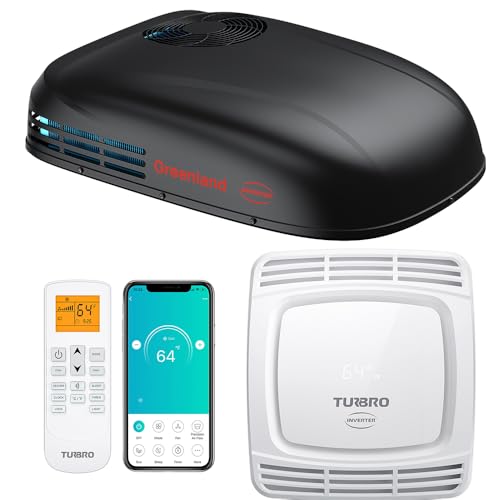
The TURBRO Inverter unit is a standout with its energy-saving inverter compressor, offering up to 30% greater efficiency than traditional systems. This technology also ensures a smooth, quiet start and operation, eliminating the need for an additional soft starter. Its slim, low-profile design not only looks sleek but also improves fuel efficiency by reducing air resistance – a smart choice for the environmentally conscious RVer.
-
Key Features:
- Energy-Saving Inverter Compressor (up to 30% greater efficiency, no soft starter needed)
- Year-round Comfort (13,500 BTU cooling & heating; heat pump 4x output of electric heaters)
- Slim Rooftop Unit (10.0″ thickness, reduces air resistance)
- Enhanced User Experience (atmosphere lamp, remote, smart app control)
- Universal Compatibility (fits 14.25″ x 14.25″ opening, modular ducting)
- Works in 19.4℉ to 109.4℉ environments
-
Pros:
- Superior energy efficiency reduces power consumption and costs
- Inverter technology ensures quiet and smooth operation
- No need for an expensive soft starter
- Low-profile design is aerodynamic and aesthetically pleasing
- Powerful heat pump provides robust heating for various climates
- Smart features and ambient lighting
-
Cons:
- Initial cost might be higher than non-inverter units
- 13,500 BTU might not be enough for very large RVs in extreme heat
-
User Impressions: RVers are particularly impressed with the inverter technology, noting the incredibly quiet startup and operation, as well as the noticeable savings on electricity. The slim design is also a big hit for its look and the reduced drag it offers. Its powerful, consistent heating and cooling performance receive high marks.
FAQs About RV Air Conditioners with Heater
Q1: What exactly is an RV air conditioner with heater?
A: An RV air conditioner with heater is a single rooftop unit designed to provide both cooling during hot weather and supplementary heating during colder times. Most commonly, the heating function comes from a “heat pump,” which is an energy-efficient way to reverse the AC process to warm your RV. Some units might also include electric coil heaters.
Q2: How do I determine the right BTU size for my RV?
A: BTU (British Thermal Unit) measures cooling/heating capacity. Generally, you need about 1,000 BTUs per 50 square feet. For RVs:
* Small RVs (under 20 ft): 8,000 – 10,000 BTUs
* Medium RVs (20-30 ft): 11,000 – 13,500 BTUs
* Large RVs (over 30 ft or very hot climates): 15,000 BTUs or more.
Consider your RV’s insulation, window count, and typical climate zones. If your RV is poorly insulated or you travel to very hot areas, it’s usually better to go with a slightly higher BTU rating.
Q3: What’s the difference between 12V and 120V RV air conditioners with heaters?
A:
* 120V (AC) units run on standard shore power or a generator. They are more common, generally more powerful, and are typically what you’d find in most RVs.
* 12V (DC) units run directly off your RV’s 12-volt battery system. They are ideal for off-grid camping and boondocking, often paired with solar setups, as they don’t require an inverter or generator to operate. They are usually less powerful in terms of BTU but offer excellent energy independence.
Q4: Should I choose a ducted or non-ducted system?
A:
* Ducted systems distribute air through a network of vents in your RV’s ceiling, offering more even cooling/heating and often quieter operation because the main unit is further away. They are typically found in larger, newer RVs.
* Non-ducted systems blow air directly from the rooftop unit into the living space via a ceiling assembly. They are simpler to install, often more affordable, and common in smaller or older RVs. Check your RV’s existing setup or manufacturer recommendations.
Q5: Are heat pumps efficient for RV heating?
A: Yes, heat pumps are generally very energy-efficient for RV heating, especially in mild to moderate temperatures. They work by moving heat rather than generating it, which consumes significantly less electricity than traditional electric coil heaters. However, their efficiency can decrease in extremely cold temperatures (below freezing), where a dedicated RV furnace might be needed as a primary heat source.
Q6: Can I install an RV air conditioner with heater myself?
A: Many RV owners with basic DIY skills can install a new rooftop AC unit, especially if it’s a direct replacement for an existing one. Manufacturers often provide detailed instructions. However, it involves working on the roof, dealing with electrical connections, and ensuring proper sealing to prevent leaks. If you’re unsure or uncomfortable, professional installation is always recommended to ensure safety and proper functionality.
Q7: How do I maintain my RV air conditioner with heater?
A: Regular maintenance is crucial for longevity and efficiency:
* Clean or replace air filters: Do this every few weeks or months, depending on use.
* Clean the condenser and evaporator coils: Annually, using a coil cleaner.
* Check and clean drain holes: Ensure they aren’t clogged to prevent water buildup.
* Inspect the rooftop seal: Look for cracks or deterioration and re-seal as needed to prevent leaks.
* Check electrical connections: Annually, ensure they are tight and free from corrosion.
* Clear debris from the rooftop unit: Keep leaves, twigs, and dirt off the unit for optimal airflow.

