
Hitting the open road in your RV is an unparalleled feeling of freedom, isn’t it? But let’s be real, that freedom can quickly turn into a sweaty struggle if your rolling home isn’t equipped to beat the heat. A reliable rooftop air conditioner for RV isn’t just a luxury; it’s a necessity for comfortable travel, especially during those scorching summer months.
Choosing the right RV air conditioner can feel like a maze. There are so many options, from different BTU capacities to 12V systems ideal for off-grid adventures. How do you find one that’s efficient, quiet, and powerful enough for your specific rig?
Fear not, fellow travelers! We’ve done the legwork for you. In this guide, we’ll dive into 7 top-notch rooftop air conditioner for RV models, breaking down what makes each one tick. We’re talking about everything from robust cooling power and energy efficiency to whisper-quiet operation and easy installation. By the end, you’ll have all the info you need to pick the perfect unit to keep your RV cool and comfortable, no matter where your journey takes you.
1. RV Air Conditioner, 12V 10000 BTU Rooftop Air Conditioner

This 12V 10000 BTU unit is a fantastic choice for those who prioritize rapid cooling and smart control, especially for smaller to medium-sized RVs or off-grid setups. It’s designed to bring you comfort quickly and efficiently, making it a great companion for hot days on the road or at a remote campsite.
Key Features:
– Efficient Cooling: 10,000 BTU AC cools your RV in just 15 minutes for quick comfort.
– Supplementary Heating: 4,500 BTU PTC heater provides warmth for mild temperatures (not a primary heat source in extreme cold).
– Durable & Weather-Resistant: Built with UV-stabilized ABS, EPDM foam gasket, and zinc-coated condenser.
– Quiet Operation: Features brushless copper motor fans and spring-supported mounts for smooth, quiet performance.
– Smart Control: Includes remote control, temperature monitoring, and multiple modes (eco, sleep, turbo).
Pros:
– Delivers rapid cooling, ideal for quick comfort.
– Operates on 12V, perfect for off-grid and battery-powered setups.
– Very quiet operation enhances peace and relaxation.
– Smart control features allow for a personalized climate experience.
– Robust construction ensures longevity in various weather conditions.
Cons:
– The heating function is supplementary and not suitable for very large spaces or extreme cold.
– 10,000 BTU might be insufficient for very large RVs in extremely hot climates.
User Impressions:
Users often praise this unit for its impressive cooling speed and surprisingly quiet performance. The 12V compatibility is a huge plus for boondockers, although some note the heater is best for taking the chill off rather than serious winter warmth. Its ease of use with the remote control also gets frequent mentions.
2. Furrion Chill Cube 18k BTU Variable Speed RV Rooftop Air Conditioner

The Furrion Chill Cube 18k BTU is a powerhouse designed for those needing serious cooling capacity combined with high efficiency and a quiet ride. If you’re tired of those jarring on/off cycles of traditional AC units, its variable speed compressor will be a game-changer, providing consistent comfort and better energy use.
Key Features:
– Easy Installation: Simple bolt-on installation with a clear, step-by-step guide (Note: ADB sold separately).
– Superior Performance: Variable speed compressors for faster, more efficient cooling, providing over one ton of cooling power.
– High Capacity & Efficiency: Higher cooling capacity and more energy-efficient than typical RV ACs, extending battery runtime off-grid.
– Quiet Operation: Constant running variable speed compressors eliminate abrupt starts, stops, and excessive amp draw.
– Compact Design: 72.4 lbs., about 10% lighter, with an aerodynamic rooftop design to reduce drag and improve fuel efficiency.
Pros:
– Provides significant cooling power, ideal for larger RVs or extreme heat.
– Highly energy-efficient, great for extending off-grid battery life.
– Variable speed compressor ensures quieter, more consistent operation.
– Aerodynamic and lightweight design reduces drag and improves gas mileage.
– Straightforward installation process.
Cons:
– ADB (Air Distribution Box) is sold separately, adding to the overall cost.
– 18,000 BTU might be overkill for very small RVs, potentially increasing initial cost.
User Impressions:
Owners frequently highlight the incredible cooling power and the remarkably quiet operation, appreciating that it avoids the loud ‘thunk’ of other units starting up. The energy efficiency is also a significant draw, especially for those spending extended time away from shore power. Some mention the need to purchase the ADB separately as an oversight.
3. Rooftop Air Conditioner for RV 10000 BTU Heating & Cooling

This 10000 BTU rooftop air conditioner for RV is a versatile all-rounder, offering both cooling and heating in a robust, energy-efficient package. Designed for ease of installation through your RV’s skylight, it’s a great option for those looking for a dual-function unit that can handle various weather conditions with minimal fuss.
Key Features:
– Efficient Cooling & Heating: 10,000 BTU cooling and 1000W heating maintains ideal temperatures.
– Energy-Efficient: Designed to significantly reduce power consumption, making it travel-friendly.
– Easy Installation: Installs at the skylight, fitting minimum roof sizes of 12.59″(L) x 9.45″(W).
– Weatherproof ABS Construction: High-strength ABS engineering plastics for exceptional UV and impact resistance.
– Stable 12V Performance: Compatible with 12V AC, ensuring smooth operation with RV electrical systems.
Pros:
– Dual cooling and heating functions provide year-round climate control.
– Focus on energy efficiency helps conserve power during travel.
– Robust ABS construction ensures durability against harsh weather.
– 12V compatibility makes it suitable for most RV systems and off-grid use.
– Designed for easy installation via skylight openings.
Cons:
– Specific minimum roof size requirements need to be checked carefully.
– Cooling/heating air volume might be moderate for very large motorhomes.
User Impressions:
Customers love the convenience of having both heating and cooling in one unit, especially its 12V energy efficiency for longer trips. The installation process is often praised for being straightforward, fitting well into existing skylight openings. Its durable build also gets positive feedback for withstanding the elements.
4. Furrion Chill Cube 18k BTU Variable Speed RV Rooftop Air Conditioner

Yes, it’s that good, it made our list twice! The Furrion Chill Cube 18k BTU continues to impress with its blend of powerful cooling and smart design. This unit stands out for its commitment to both comfort and your RV’s overall performance, offering a superior alternative to standard RV ACs, especially when considering efficiency and driving dynamics.
Key Features:
– Easy Installation: Straightforward bolt-on installation with a step-by-step guide (ADB sold separately).
– Superior Performance: Variable speed compressors ensure faster, more consistent cooling.
– High Capacity & Efficiency: Delivers over one ton of cooling, more energy-efficient for extended off-grid battery runtime.
– Quiet Operation: Eliminates abrupt starts/stops and excessive amp draw due to continuous variable speed operation.
– Compact Design: Lighter at 72.4 lbs and features an aerodynamic profile to reduce drag and improve gas mileage.
Pros:
– Exceptional cooling capacity for larger RVs or extreme temperatures.
– Significantly more energy-efficient than many competitors, saving battery power.
– The quiet, continuous operation enhances the tranquility of your RV.
– Lightweight and aerodynamic design contributes to better RV performance and fuel economy.
– Designed for hassle-free installation.
Cons:
– Air Distribution Box (ADB) must be purchased separately.
– Its premium features might come with a higher price tag compared to basic units.
User Impressions:
Reviewers consistently highlight the quietness and strong cooling performance, often noting how much smoother it runs compared to older AC units. The reduced weight and aerodynamic shape are also appreciated by those concerned with their RV’s handling and fuel consumption. Many find the separate ADB purchase a minor inconvenience for an otherwise excellent product.
5. TMAIRSUS DC 12V RV Air Conditioner Rooftop 8000BTU with…
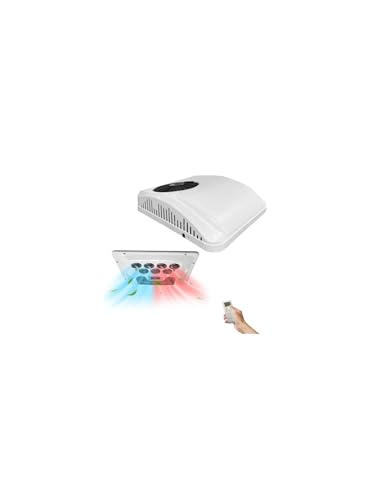
For RVers seeking a low-profile, energy-efficient 12V solution that blends seamlessly with their vehicle, the TMAIRSUS DC 12V 8000BTU unit is an excellent contender. Its ultra-thin design not only looks sleek but also minimizes wind resistance, making it perfect for smaller RVs, vans, or those mindful of vehicle height clearance.
Key Features:
– Powerful 8000BTU Cooling & Efficient Heating: Rapid cooling and electric heating for year-round comfort.
– Ultra Thin & Low Profile Design: Just 6.3 inches thick, minimizing wind resistance and maintaining clearance.
– Easy Installation & Complete Kit: Designed for standard skylight openings (12.6×10.4 to 13.39×11.02 inches) with all hardware included.
– Ultra Quiet & Remote Control: Operates at a peaceful 52dB with convenient remote and wall-mounted control options.
– Energy Efficient 12V DC Operation: Runs directly on your vehicle’s 12V battery system (30-60A) for off-grid use.
Pros:
– Low-profile design reduces drag and maintains vehicle clearance.
– 12V DC operation is ideal for off-grid camping and battery systems.
– Quiet operation (52dB) ensures peaceful rest.
– Includes a complete installation kit for a straightforward setup.
– Dual cooling and heating functions for all-weather climate control.
Cons:
– 8000 BTU capacity may not be sufficient for very large RVs or extremely hot climates.
– Power consumption can be high (30-60A), requiring a robust battery setup for extended use.
User Impressions:
Customers frequently commend its compact, sleek design that doesn’t add much height to their RVs. The quiet operation is a big plus for undisturbed sleep, and the all-inclusive installation kit makes setup manageable. While 8000 BTU is sufficient for many, some larger RV owners wish for a bit more power.
6. 12V RV Air Conditioner with Heat Pump, 11,500 BTU Rooftop…

This 11,500 BTU rooftop air conditioner for RV with a heat pump is engineered for the serious off-grid adventurer. Its direct 12V DC power means no inverter is needed, simplifying your setup and maximizing efficiency. Combined with ultra-quiet operation and a slim profile, it promises comfort without compromise, even in remote locations.
Key Features:
– High-Efficiency 11,500 BTU Cooling: Powerful cooling for RVs, vans, trailers, and campers in scorching temperatures.
– 12V DC Direct Power: Runs directly on your 12V battery system; no AC power or generator required, perfect for solar setups.
– Ultra Quiet Operation: Advanced noise-reduction technology achieves as low as 45dB sound level inside the cabin.
– Slim, Low-Profile Design: Only 7.1 inches high with a streamlined body to reduce wind drag and fit under most RV covers.
– Easy Installation & Wide Compatibility: Fits standard 14.1″x14.1″ rooftop openings with all necessary components included.
Pros:
– Direct 12V DC operation simplifies off-grid power management.
– Very quiet operation (45dB) ensures maximum comfort and relaxation.
– Powerful 11,500 BTU cooling is effective for most RV sizes.
– Slim and aerodynamic design reduces drag and maintains vehicle aesthetics.
– Includes a heat pump for efficient heating in cooler weather.
Cons:
– May require a sufficiently sized 12V battery bank for prolonged use without external charging.
– Initial cost might be higher due to advanced inverter compressor technology.
User Impressions:
Users are consistently impressed by the unit’s quietness, often describing it as barely noticeable. The direct 12V operation and efficient cooling are frequently lauded by off-grid enthusiasts. Installation is generally reported as straightforward, fitting well into standard openings, making it a favorite for DIYers.
7. 12V RV Air Conditioner, 15000 BTU Heat Pump and Cooling
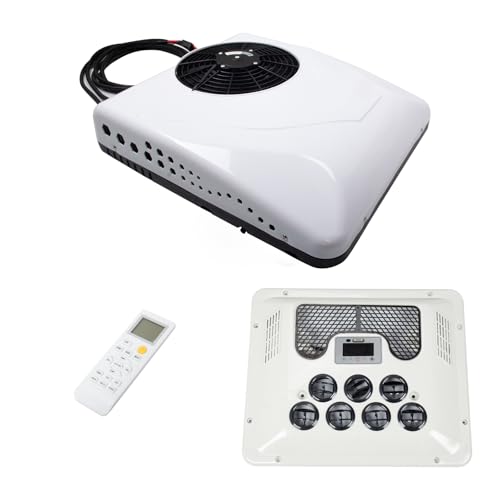
If maximum cooling power, durability, and a stable, quiet operation are at the top of your list, this 15,000 BTU 12V RV air conditioner is a strong contender. Featuring a horizontal compressor for increased stability and an impressive 45dB quiet operation, it’s built to provide year-round comfort and withstand the rigors of the road.
Key Features:
– Stable and Durable: Horizontal compressor provides less vibration, lower center of gravity, and increased stability; fast heat dissipation.
– Cooling and Heating Capacity: 15,000 BTU cooling and heating functions with intelligent frequency conversion for efficiency.
– Quiet Operation: Low noise operation of 45 decibels, distributing cold air evenly and softly.
– Fashionable Appearance: Curved, ultra-thin, light, and streamlined design reduces wind resistance and has excellent UV resistance.
– Wide Compatibility: Suitable for most RVs, light trucks, vans, sedans, and various other vehicles; easy to install.
Pros:
– Very high 15,000 BTU capacity for superior cooling in large RVs or extreme heat.
– Horizontal compressor design enhances stability and durability on bumpy roads.
– Extremely quiet operation (45dB) for undisturbed relaxation.
– Energy-efficient with intelligent frequency conversion technology.
– Sleek, aerodynamic design that is also highly UV resistant.
Cons:
– High BTU might be overkill and less energy-efficient for very small RVs.
– While compatible, verifying roof opening size is crucial before purchase.
User Impressions:
The sheer power of this unit is a consistent highlight for users, quickly chilling even large spaces. Many appreciate the robust build and the stability offered by the horizontal compressor, giving them confidence on diverse terrains. The quietness is often mentioned as a standout feature, making for a much more pleasant RV experience.
Buyer’s Guide: What to Consider When Choosing a Rooftop Air Conditioner for Your RV
Picking the perfect rooftop air conditioner for RV isn’t just about grabbing the first one you see. Here’s a quick rundown of factors to keep in mind:
- BTU Capacity: This is key! It measures cooling power. Smaller RVs (under 20 ft) might be fine with 8,000-10,000 BTUs, while larger rigs (25+ ft) or those in very hot climates will need 13,500 BTUs or even 15,000+ BTUs. Too little, and you’ll struggle to cool down; too much, and it’ll cycle inefficiently.
- Power Source: Do you need 12V DC for off-grid (boondocking) or 120V AC for shore power/generator use? Many newer units are 12V, offering amazing flexibility.
- Noise Level: No one wants a roaring machine on their roof. Look for units with low decibel (dB) ratings, especially if you’re sensitive to noise. Variable speed compressors often provide quieter, more consistent operation.
- Efficiency: For longer trips or off-grid living, energy efficiency (often measured by SEER or EER for home ACs, but implied by features like variable speed compressors for RVs) is crucial to save power and fuel.
- Heating Function: Do you want just cooling, or a unit that can also provide heat (often via a heat pump or supplementary heater)? A heat pump offers more efficient heating than a traditional furnace.
- Dimensions & Weight: Check the unit’s height and footprint to ensure it fits your roof and doesn’t interfere with clearance or add too much weight, impacting fuel efficiency. Low-profile designs are becoming very popular.
- Installation: Some units are designed for easy DIY installation, fitting standard skylight openings. Others might require professional help. Always check if an Air Distribution Box (ADB) is included or sold separately.
- Durability: Your RV AC will face sun, rain, wind, and road vibrations. Look for robust construction materials like UV-resistant ABS and weather-sealed components.
FAQ Section: Keeping Your RV Cool & Comfortable
Q1: How many BTUs do I really need for my RV’s rooftop air conditioner?
A1: The general rule of thumb is:
* Small RVs (under 20 ft): 8,000-10,000 BTUs
* Medium RVs (20-25 ft): 11,000-13,500 BTUs
* Large RVs (25+ ft): 13,500-15,000+ BTUs
However, factors like your RV’s insulation, window count, and the climate you’ll be traveling in can influence this. When in doubt, it’s often better to go slightly higher, especially for hotter climates, but avoid excessive oversizing as it can lead to inefficient cycling.
Q2: What’s the main difference between a 12V and 120V rooftop air conditioner for RVs?
A2: The primary difference is their power source.
* 120V AC units run on standard household current, requiring shore power (hookup at a campground) or a generator. They typically draw more amps and are very common.
* 12V DC units operate directly from your RV’s battery bank. They are ideal for boondocking or off-grid camping as they don’t require an inverter or generator (though they still draw significant power from your batteries). They are generally more energy-efficient for battery use.
Q3: Can I install a rooftop RV air conditioner myself?
A3: Many modern rooftop air conditioner for RV units are designed for relatively straightforward DIY installation, especially if you’re replacing an existing unit that fits a standard 14″x14″ opening. However, it involves electrical wiring, sealing, and lifting a heavy unit onto the roof. If you’re not comfortable with these tasks, it’s always best to consult a professional RV technician.
Q4: How often should I maintain my RV rooftop air conditioner?
A4: Regular maintenance helps prolong your AC’s life and efficiency. You should:
* Clean or replace air filters: Every 2-4 weeks during heavy use.
* Check and clean condenser coils: Annually, especially before peak season.
* Inspect and clear drain holes: Annually to prevent water buildup.
* Check seals and gaskets: Annually to ensure no leaks or air loss.
* Verify electrical connections: Annually for loose wires or corrosion.
Q5: What is a heat pump in an RV air conditioner?
A5: A heat pump in an RV air conditioner acts like a reversible AC unit. In cooling mode, it extracts heat from inside your RV and expels it outside. In heating mode, it reverses the process, extracting heat from the outside air and moving it inside. This is generally more energy-efficient for heating than an electric furnace, especially in mild to moderate cold temperatures.
Q6: How can I make my RV’s cooling more efficient?
A6: Here are a few tips:
* Insulate, insulate, insulate: Improve insulation in walls, ceiling, and windows.
* Shade your RV: Park under trees or use an RV cover/awning to reduce direct sun exposure.
* Use window coverings: Reflective sunscreens or blackout blinds can block heat.
* Ventilation: Use roof vents or fans to exhaust hot air before running the AC.
* Pre-cool: If on shore power, pre-cool your RV before the hottest part of the day.
* Seal leaks: Ensure all windows, doors, and hatches are properly sealed.
Q7: Are all rooftop AC units the same size for installation?
A7: No, while many older and standard RVs use a universal 14″x14″ roof opening, it’s crucial to measure your existing opening (or planned opening) before purchasing. Some newer, larger, or specialty units might require different dimensions. Always double-check the product specifications for exact fitment.
Conclusion
Choosing the perfect rooftop air conditioner for RV life is a crucial step towards making your adventures more enjoyable and comfortable. Whether you prioritize brute cooling power for a massive rig, quiet efficiency for peaceful nights, or 12V compatibility for off-grid freedom, there’s a unit out there for you.
We’ve explored seven fantastic options, each with its own strengths, from rapid cooling to advanced heat pump functionality and aerodynamic designs. Remember to consider your RV’s size, your typical travel destinations, and your power setup before making your final decision.
With the right RV AC unit, you can say goodbye to sweltering interiors and hello to cool, comfortable journeys, no matter how high the mercury climbs. Happy travels, and stay cool out there!

