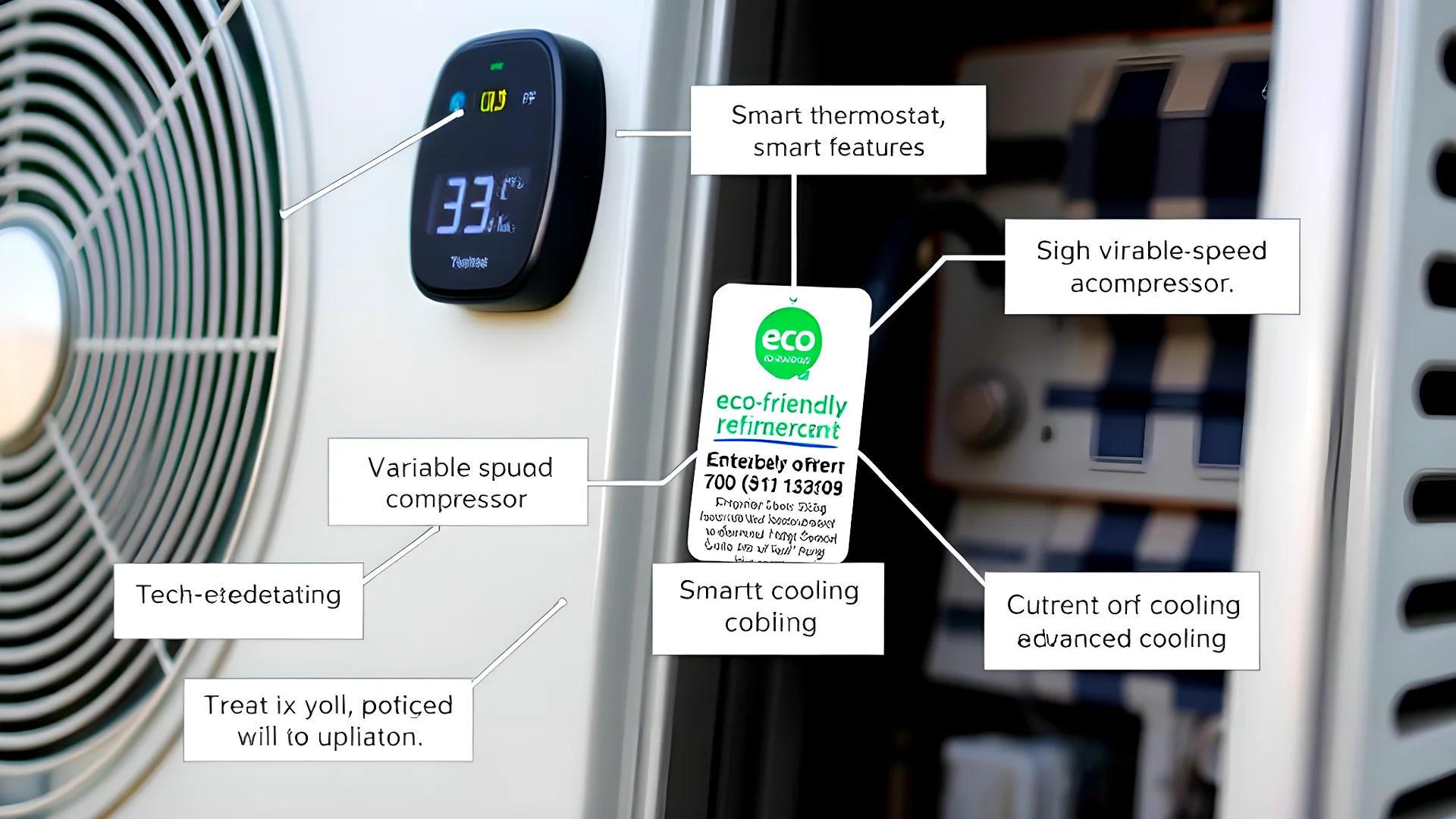
Is your attic feeling more like a sauna than a storage space or extra room? You’re not alone! Attics can get incredibly hot, making them uncomfortable and even damaging to stored items. But don’t sweat it – finding the best air conditioner for an attic can transform this often-overlooked area into a usable, temperate zone. Whether you’re turning it into a home office, a cozy nook, or just want to protect your valuables from extreme heat, the right cooling solution is out there.
We’ve scoured the market to bring you a hand-picked selection of the top 7 air conditioners that are perfect for tackling the unique challenges of attic cooling. We’ll cover everything from powerful portable units to energy-efficient window models and even innovative evaporative coolers. Let’s dive in and find your perfect match!
Why Cooling Your Attic Matters
Before we jump into the reviews, let’s quickly touch on why keeping your attic cool is a smart move. A scorching hot attic doesn’t just make the space unusable; it can also drive up your energy bills by making your entire home’s HVAC system work harder. Plus, extreme temperatures can damage sensitive electronics, wooden items, and other goods stored up there. Proper attic cooling solutions contribute to a more comfortable home and can even extend the life of your roof!
Factors to Consider When Choosing an Attic Air Conditioner
When you’re searching for the best air conditioner for an attic, keep these key points in mind:
- Attic Size (BTUs): BTU (British Thermal Unit) determines cooling power. A general rule of thumb is 20 BTUs per square foot for standard rooms, but attics might need a bit more due to poor insulation or direct sun exposure.
- Insulation & Ventilation: How well insulated is your attic? Good insulation and proper ventilation (like attic fans) can significantly impact how effectively an AC unit performs.
- Window Availability: Do you have a window for a traditional window AC unit or for venting a portable AC? If not, you’ll need to consider ventless options.
- Climate (Humidity): This is crucial. Traditional refrigerant-based ACs dehumidify as they cool. Evaporative coolers (also known as swamp coolers) add humidity and are only effective in dry climates. Using an evaporative cooler in a humid attic can worsen the problem!
- Noise Level: Attics are often close to living spaces, so a quieter unit can be a big plus.
- Installation: Some units are plug-and-play, while others require a bit more setup.
Now, let’s explore our top picks!
The 7 Best Air Conditioners for an Attic
1. Dreo Portable Air Conditioners, 12,000 BTU AC Unit

If you need serious cooling power without a permanent installation, the Dreo Portable Air Conditioner is a fantastic choice. This unit packs a punch with 12,000 BTU ASHRAE cooling capacity, making it a great option for larger attic spaces or those that get particularly warm. What truly makes it shine is its smart functionality and surprisingly quiet operation, ensuring your attic stays cool without feeling like you’re on a factory floor.
- Go Big on Cooling Power: Massive 12,000 BTU ASHRAE capacity, effective up to 16 ft.
- 3-in-1 Mode: Cooling, dehumidifying, and fan modes for versatile comfort.
- Isolate Noise, Amplify Comfort: New noise isolation system reduces sound to a minimum 46dB.
- Drainage-Free System: Self-evaporating design reduces drainage needs by 90% (below 85% humidity).
- Smart Cooling at Your Fingertips: Voice control via Amazon Alexa or Google Home, plus a fully-featured Dreo App.
Pros:
– Very powerful 12,000 BTU for effective cooling.
– Remarkably quiet operation for a portable AC.
– Smart home integration offers convenient control.
– Self-evaporating feature minimizes manual drainage.
– Versatile 3-in-1 functionality.
Cons:
– Requires an exhaust hose to be vented out a window or opening.
– Drainage may still be needed in very high humidity environments.
User Impressions: Customers frequently praise the Dreo for its impressive cooling capability and how quiet it is, especially compared to other portable units. The smart control features are a definite hit, making it easy to manage temperatures from anywhere.
2. Frigidaire 6,000 BTU Window Air Conditioner with Remote

For smaller attic spaces or those with a suitable window, the Frigidaire 6,000 BTU Window Air Conditioner offers reliable and energy-efficient cooling. It’s designed with consistency and quietness in mind, ensuring your attic remains a comfortable temperature without breaking the bank on your energy bill or creating a ruckus. Its straightforward features make it a no-fuss solution for targeted cooling.
- Customizable Cooling: Optimal comfort with custom temperature settings, 6-way directional airflow, and three fan speeds.
- Easy Maintenance: Remote control, plus Clean Filter alerts for easy upkeep of the washable dust filter.
- Energy-Efficient Performance: Eco Mode for energy savings and Sleep Mode for reduced overnight consumption.
- Consistent Comfort: Operates at a quiet 52 dBA, ideal for spaces up to 250 sq. ft.
- Effortless Convenience: 24-hour on/off timer and Dry Mode to remove excess moisture.
Pros:
– Energy-saving Eco and Sleep modes.
– Quiet operation for a window unit.
– Easy to clean and maintain with filter alerts.
– Compact and effective for small to medium attics.
– Includes a helpful Dry Mode for humidity control.
Cons:
– Requires a window for installation.
– 6,000 BTU is only suitable for smaller areas (up to 250 sq. ft.).
User Impressions: Users love this Frigidaire unit for its dependable performance and energy efficiency. Many highlight its quietness as a major advantage, making it a popular choice for bedrooms or dedicated quiet spaces like a reading nook in the attic.
3. CENSTECH 4-IN-1 Portable Air Conditioners, Evaporative Air…

Important Note for Attics: This is an evaporative cooler, NOT a traditional air conditioner. It works by adding moisture to the air. While it’s fantastic for very DRY climates (like the Southwestern US) where it effectively cools and humidifies, it will perform poorly and can even make conditions worse in humid attics by increasing the moisture content. Proceed with caution if your attic tends to be damp.
The CENSTECH 4-IN-1 Portable Evaporative Air Conditioner stands out as a unique, ventless cooling solution, perfect if you’re in a dry climate and lack windows or don’t want the hassle of hoses. Boasting 2025 advanced cooling technology and a whisper-quiet operation, it aims to deliver rapid temperature reduction by leveraging water evaporation, making it a cost-effective and easy-to-use option.
- 2025 Advanced Cooling Technology: Quickly reduces ambient temperatures by 41-49°F through water evaporation.
- 4 Modes & 3 Speeds: Customizable cooling with Cooling, Sleep, Normal, Nature modes and three fan speeds.
- Ventless Air Conditioner: No hoses, no windows, no assembly needed – truly plug and play.
- 15-Hour Smart Timer & Ultra-Quiet: Features a 15-hour timer and operates at a mere 45dB.
- 120° Oscillation Covers up to 300 sq. ft.: Ensures even cooling with strong airflow.
- 2-Gal Larger Water Tank: Provides continuous 20 hours of cooling on one fill.
- 4-IN-1 Evaporative Air Cooler for Dry Climates: Functions as a cooler, humidifier, and fan, ideal for arid regions.
- 2025 Upgraded No-Fill Ice Packs x 4: Includes pre-filled ice packs for enhanced cooling.
Pros:
– No window or hose required, offering ultimate portability.
– Extremely energy-efficient (65W operation).
– Very quiet, ideal for undisturbed work or sleep.
– Large water tank for extended cooling without refills.
– Multiple modes and speeds for personalized comfort.
Cons:
– Only effective in very dry climates; will not cool well in humid attics.
– Adds humidity to the air, which can be detrimental in already damp attics.
– Not a true refrigerant-based air conditioner.
User Impressions: For users in genuinely dry climates, this unit is a game-changer, lauded for its simple setup, quietness, and effective cooling. They appreciate the added humidity in arid environments and the energy savings.
4. Midea 12,000 BTU Smart Inverter Air Conditioner Window Unit

The Midea 12,000 BTU Smart Inverter Window Air Conditioner is a powerhouse of efficiency and comfort. It’s not just an AC; it’s a multi-season solution with powerful cooling, dehumidification, and supplemental heating. Its smart inverter technology ensures it cools your attic quickly while using significantly less electricity, making it an Energy Star certified champ for larger attic spaces up to 550 sq. ft.
- Multi-Season Comfort: 12,000 BTU cooling and dehumidification, plus supplemental heat for cooler months.
- Easy To Use: LED display, 5 modes, 3 speed settings, 24-hr timer, ECO mode, and swing louvers.
- Save Energy Being Cool: Energy Star certified with variable-speed inverter technology, up to 35% energy savings.
- Ultra Low Noise Performance: Operates as low as 45 dBA, barely noticeable.
- Install Specs: Designed for double-hung windows (24″ to 38.5″ width, 14.5″ vertical opening).
Pros:
– High 12,000 BTU suitable for large attics.
– Inverter technology leads to significant energy savings and quieter operation.
– Offers both cooling and supplemental heating.
– Smart control via app, Alexa, and Google Assistant.
– Very quiet (45 dBA) for a window unit.
Cons:
– Requires a compatible window for installation.
– Heat pump function has limitations in very cold outside temperatures.
– Heavier and larger than some other options.
User Impressions: Customers are consistently impressed by the Midea inverter unit’s quietness and its ability to drastically reduce energy bills compared to older ACs. The smart features and the dual heating/cooling functionality are frequently highlighted as major benefits.
5. BLACK+DECKER Portable Air Conditioner, 8,000 BTU (3,950 BTU SACC)

When you need flexibility and solid performance for a smaller to medium-sized attic, the BLACK+DECKER Portable Air Conditioner steps up. This compact 3-in-1 unit effectively cools, dehumidifies, and circulates air. Its ‘Follow Me’ remote control is a particularly handy feature, allowing it to act as a thermostat from wherever you are in the attic, ensuring the temperature is precisely where you want it.
- Three-in-One Unit: 8,000 BTU (3,950 BTU SACC) AC, dehumidifier, and fan.
- Portable AC: Ideal for rooms up to 400 sq. ft.
- Follow Me Remote: Remote acts as a thermostat for precise temperature control.
- Easy Mobility: Casters and side handles allow hassle-free movement.
- Installation Kit: Includes an easy-to-install window kit for the exhaust hose.
Pros:
– Good cooling capacity for its size (up to 400 sq. ft.).
– ‘Follow Me’ remote offers accurate temperature sensing.
– Highly portable with casters and handles.
– Includes a dehumidifier function.
– Relatively straightforward installation with included kit.
Cons:
– Portable AC requires an exhaust hose to be vented out.
– SACC BTU (3,950) is lower than ASHRAE, indicating real-world cooling power.
User Impressions: Reviewers often mention the BLACK+DECKER unit’s effectiveness in cooling smaller spaces quickly. The ‘Follow Me’ remote is a consistent favorite feature, and many appreciate its portability for moving between different areas as needed.
6. Frigidaire 5,000 BTU Window-Mounted Air Conditioner, Cools…

For the smallest attics or even a dedicated small corner within a larger attic space, the Frigidaire 5,000 BTU Window-Mounted Air Conditioner is a simple yet effective solution. It’s designed for effortless, quiet cooling without any complicated features, focusing on consistent comfort for areas up to 150 sq. ft. If you have a small window and just need basic, reliable cooling, this unit gets the job done.
- Effortless Cooling: Customizable temperature settings and two fan speeds with Effortless Temperature Control.
- Easy Maintenance: Easy-to-clean washable filter captures dust for long-lasting performance.
- Undisturbed Comfort: Quiet performance at 52 dBA, ideal for small spaces.
- Effortless Convenience: Auto Restart feature restores settings after a power outage.
- Hassle-Free Operation: Extra-long three-prong power cord and adjustable side panels for secure installation.
Pros:
– Very compact and ideal for tiny attics or specific zones.
– Quiet operation for its size.
– Simple and straightforward to use.
– Washable filter for easy maintenance.
– Auto Restart feature is convenient after power interruptions.
Cons:
– Only 5,000 BTU, so limited to very small areas (up to 150 sq. ft.).
– Requires a window for installation.
– Lacks advanced features like smart control or multiple modes beyond basic cooling.
User Impressions: This unit is consistently praised for being a solid, no-frills option for small rooms. Users find it reliable, surprisingly quiet for its output, and appreciate the ease of installation and maintenance.
7. COOLECH Windowless Air Conditioner w/ 4 Modes & 3 Speeds,…
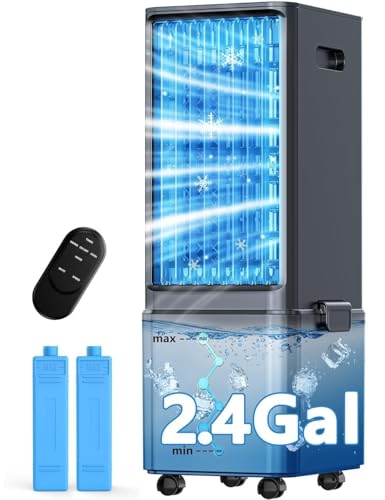
Important Note for Attics: Like the CENSTECH unit, this is an evaporative cooler, not a traditional AC. It adds moisture to the air. It is ONLY suitable for very DRY climates and should be avoided in humid attics to prevent exacerbating moisture issues.
The COOLECH Windowless Air Conditioner (evaporative cooler) is another excellent choice for those in arid climates who need a truly ventless and portable cooling solution for their attic. It offers a powerful 3-in-1 function (fan, humidifier, air cooler) with multiple modes and speeds, all while operating at an incredibly quiet 40 dB. Its larger water tank and smart features make it a convenient and energy-efficient option.
- 3-IN-1 Evaporative Air Cooler: Functions as a fan, humidifier, and air cooler.
- Waterless Alert System: Beeps to remind you when the water level is low, then switches to Natural Wind Mode.
- 4 Modes & 3 Speeds: Customizable climate with Normal, Natural, Sleep, Cooling modes and three wind speeds.
- 2025 Advanced Cooling Technology: Quickly reduces ambient temp by 36-49°F by converting water into an icy mist.
- Smart 12-Hour Timer & Ultra-Quiet: Timer function and ultra-quiet operation at just 40 dB.
- 2.4-Gal Larger Water Tank: Provides continuous 20 hours of cooling on a single fill.
- 70° Wide Oscillation Cooling: Delivers cooling air across a wide angle for areas up to 250 sq. ft.
- Easy Control with LED Touch Display & Remote: User-friendly touch panel and remote with 20ft range.
- Plug and Play, Energy Cost Saving: No hose, no window, no assembly needed, operates at just 65W.
Pros:
– Truly ventless design; no window or hose required.
– Extremely quiet operation (40 dB).
– Large water tank for long periods of cooling.
– Adds beneficial humidity in dry environments.
– Very energy-efficient (65W) compared to traditional ACs.
– Waterless alert system for safety and convenience.
Cons:
– Only effective in very dry climates; unsuitable for humid attics.
– Adds humidity to the air, which can be a problem in humid environments.
– Not a true refrigerant-based air conditioner.
User Impressions: Users living in arid regions rave about the COOLECH unit’s silent operation and its ability to create a noticeably cooler and more comfortable environment. The large water tank and waterless alert are often highlighted as practical features.
Choosing the Right AC for Your Attic: Key Takeaways
Selecting the best air conditioner for an attic really boils down to your specific needs.
– For powerful, traditional cooling in a larger attic where you can vent, the Dreo Portable or Midea Window Inverter are excellent choices.
– For smaller attics with a window, the Frigidaire Window Units offer straightforward, efficient cooling.
– If you’re in a perpetually dry climate and prefer a ventless, energy-saving option, the CENSTECH or COOLECH Evaporative Coolers could be a good fit – just remember their limitations in humid conditions!
No matter which you choose, a cooler attic is a step towards a more comfortable, energy-efficient home.
FAQ Section
Q1: What type of air conditioner is best for an attic?
A1: It depends on your attic’s layout and climate. Portable ACs are great if you don’t have a window for a permanent installation but can vent a hose. Window ACs are cost-effective if you have a suitable window. Mini-split systems offer the most efficient and powerful cooling but require professional installation. Evaporative coolers are only effective in very dry climates.
Q2: How many BTUs do I need for my attic?
A2: A common rule of thumb is 20 BTUs per square foot. However, attics often have poor insulation, direct sun exposure, and heat radiating from the roof, so you might need to err on the side of a slightly higher BTU count. For example, a 250 sq. ft. attic might need 6,000-8,000 BTUs, while a 400-500 sq. ft. attic could require 10,000-12,000 BTUs.
Q3: Are evaporative coolers good for attics?
A3: Evaporative coolers (like the CENSTECH and COOLECH units reviewed) are only suitable for attics in very dry climates. They work by adding moisture to the air to cool it. In humid climates, they are ineffective and can actually increase the humidity, potentially leading to mold or mildew issues in your attic.
Q4: Can I install a window AC unit in my attic window?
A4: Yes, if your attic has a structurally sound, appropriately sized window, a window AC unit can be a great, cost-effective solution. Just ensure the window can support the unit’s weight and that it’s properly sealed to prevent air leaks and maintain efficiency.
Q5: How can I improve my attic’s cooling efficiency?
A5: Beyond an AC unit, consider improving attic insulation, adding reflective barriers, and ensuring proper ventilation (like a ridge vent or attic fan). These measures can significantly reduce heat gain, allowing your AC to work more efficiently and save you money.
Q6: Is it worth cooling an attic?
A6: Absolutely! Cooling your attic isn’t just about comfort in that space. It reduces the heat transfer into the rest of your home, making your main living areas cooler and decreasing the workload on your central air conditioning, potentially lowering your overall energy bills. It also protects anything stored in your attic from heat damage.
Q7: What’s the difference between ASHRAE and SACC BTU ratings for portable ACs?
A7: ASHRAE (American Society of Heating, Refrigerating and Air-Conditioning Engineers) BTU is a theoretical rating that measures total cooling capacity. SACC (Seasonally Adjusted Cooling Capacity) BTU is a more realistic and lower rating mandated by the Department of Energy (DOE) that accounts for factors like heat loss from the exhaust hose and intake of warm air, providing a better indicator of real-world cooling performance. Always check the SACC BTU if available.