When you have a new baby, ensuring their comfort and safety becomes your number one priority. One crucial aspect of this is maintaining the ideal nursery environment, especially when it comes to temperature. As summer heats up or even during unexpected warm spells, finding the best room temperature for infant air conditioner use is a common concern for many parents.
Overheating is a risk for infants, and a comfortable, consistent room temperature can help prevent issues like SIDS and ensure better sleep for your little one (and you!). But what exactly is that ideal temperature, and what kind of air conditioner can help you achieve it reliably and safely?
We’ve delved into the world of air conditioning units suitable for nurseries and baby rooms, focusing on features that matter most to parents: quiet operation, precise temperature control, energy efficiency, and overall safety. Let’s explore some top picks that can help you maintain the perfect environment for your tiny human.
Understanding the Ideal Room Temperature for Your Infant
Before we jump into the AC units, let’s talk about that magic number. Most pediatricians and infant safety organizations recommend keeping your baby’s room at a comfortable temperature between 68°F and 72°F (20°C to 22°C). This range helps prevent overheating while also ensuring your baby isn’t too cold. Remember, babies regulate their body temperature differently than adults, so what feels comfortable to you might be too warm for them.
Using an air conditioner responsibly is key. Avoid directing cold airflow directly onto your baby, ensure proper ventilation, and monitor your baby’s cues (like checking their neck or chest for warmth) to adjust as needed. Now, let’s look at some fantastic air conditioning options to help you hit that sweet spot!
Our Top Picks for Infant-Friendly Air Conditioners
Here are 5 excellent air conditioning units that can help you maintain the best room temperature for infant air conditioner comfort.
1. Midea 8,000 BTU Smart Inverter Air Conditioner Window Unit

This Midea unit isn’t just an air conditioner; it’s a year-round climate control solution designed with modern living (and tiny sleepers!) in mind. What makes it stand out for a nursery is its incredibly low noise level and smart inverter technology, which means ultra-quiet, energy-efficient operation. It’s truly as close as you can get to a mini-split system in a window unit, offering powerful cooling and even supplemental heat for cooler months, making it a versatile choice for maintaining the best room temperature for your infant.
-
Key Features:
- Multi-Season Comfort: 8000 BTU cooling and supplemental heat (above 41°F outside).
- Smart Home Integration: Wi-Fi enabled with SmartHome App, Alexa, and Google Assistant voice control.
- Energy Star Certified: Variable-speed inverter technology for up to 35% energy savings.
- Ultra Low Noise: Operates as low as 45 dBA, ensuring undisturbed sleep.
- 5 Modes (Heat, Auto, Cool, Dry, Fan), 3 speeds, 24-hr Timer, ECO mode.
- Washable filter for easy maintenance.
-
Pros:
- Extremely quiet operation, perfect for nurseries.
- Highly energy-efficient, saving on utility bills.
- Smart controls offer convenience and remote adjustment.
- Heating function adds versatility for year-round comfort.
- Effective for larger rooms up to 350 sq ft.
-
Cons:
- Heat pump functionality is limited by outdoor temperatures.
- Requires window installation, which can be a semi-permanent fixture.
-
User Impressions: Parents consistently rave about how quiet this unit is, often mentioning they “barely notice it’s on.” The smart features and energy savings are also highly praised, making it a favorite for those seeking peace of mind and comfort.
- See it on Amazon here
2. Amazon Basics 5000-BTU Small Window Air Conditioner

Sometimes, simplicity and efficiency are all you need, especially for a dedicated space like a small nursery. The Amazon Basics 5000-BTU window air conditioner delivers straightforward, effective cooling for smaller rooms. It’s a no-frills option that reliably does its job, making it an excellent budget-friendly choice for parents looking to ensure a consistent, cool environment without breaking the bank. Its ease of use and maintenance also make it an attractive option for busy caregivers.
-
Key Features:
- Efficient Cooling: 5000 BTU capacity for rooms up to 150 sq. ft.
- Two-in-One Functionality: Cooling and fan-only modes.
- Customizable Comfort: 7 temperature settings, 2-speed cooling/fan, 2-way air direction.
- Smart Maintenance: Easy-access, washable filter to capture dust and allergens.
- Quiet Operation: Low noise level up to 56 dB.
-
Pros:
- Ideal size and power for most infant nurseries or small bedrooms.
- Simple controls and operation.
- Very affordable, offering great value.
- Washable filter promotes better air quality and easy cleaning.
-
Cons:
- Basic features; lacks smart connectivity or heating options.
- Noise level is higher than inverter models, though still acceptable for many.
-
User Impressions: Customers appreciate this unit’s reliability and straightforward cooling power for smaller spaces. Many highlight it as a great “set it and forget it” option that effectively cools their rooms without fuss.
- See it on Amazon here
3. BLACK+DECKER Smart Portable Air Conditioner with Heat

For parents who need flexibility, the BLACK+DECKER Smart Portable AC offers a fantastic 4-in-1 solution. This unit isn’t tied to a single window, making it perfect for moving between a nursery during naptime and a living area later. Its smart features, including Wi-Fi connectivity and a unique “Follow Me” remote that acts as a thermostat, ensure precise temperature control no matter where your baby is sleeping or playing, helping to maintain the ideal room temperature for your infant with ease.
-
Key Features:
- Four-in-One Unit: AC (12,000 BTU ASHRAE/8,000 BTU SACC), 9,000 BTU Heat, Dehumidifier, and Fan.
- Portable Design: Easily movable between rooms up to 550 sq. ft.
- Smart AC: Wi-Fi connectivity, mobile app control, and voice control via Alexa or Google Assistant.
- Follow Me Remote: Remote acts as a thermostat for accurate temperature sensing.
- Easy-to-install window kit included for exhaust.
-
Pros:
- Exceptional versatility with heating, cooling, fan, and dehumidifying modes.
- Portability allows use in different rooms as needed.
- Smart features and Follow Me remote provide precise and convenient control.
- Suitable for larger rooms or open-plan areas.
-
Cons:
- Portable units typically have a higher noise level than window units (though acceptable).
- Requires exhaust hose installation in a window, limiting full portability within a room.
-
User Impressions: Users love the flexibility and multi-functionality of this unit, praising its ability to cool and heat different rooms effectively. The smart controls and “Follow Me” feature are frequently highlighted as game-changers for personalized comfort.
- See it on Amazon here
4. Portable Air Conditioners, 1400ML Mini Air Conditioner
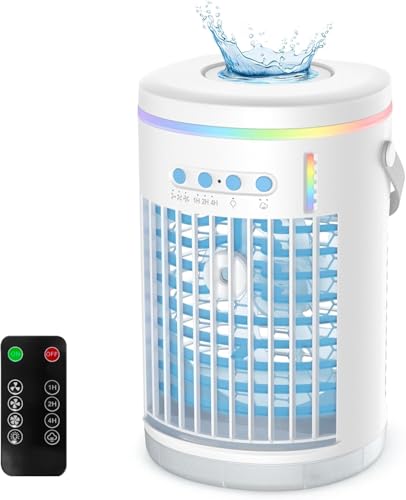
It’s important to clarify that this “mini air conditioner” functions more like an evaporative cooler with a humidifying mist, rather than a traditional refrigerant-based air conditioner. While it won’t drastically lower a whole room’s temperature, it’s an excellent solution for personal cooling, localized comfort, and adding humidity in dry environments. For a baby’s room, it can offer gentle, localized cool air and a soothing mist, which might be ideal for a very small nook or as a supplement to other cooling methods, particularly if the air is too dry. The soft lights and remote control add to its appeal for a nursery setting.
-
Key Features:
- Newest 4-in-1 Air Cooler: Combines air cooling, fan, and humidifying functions using ultrasonic atomization.
- 1400ml Large Water Tank: Provides 8-10 hours of continuous mist/cooling.
- Remote Control & Timer: Easily adjust settings, including 3 optional timers (2-4-8H).
- 3 Wind Speeds & 2 Mist Levels: Customize airflow and humidification.
- Optional Soft Lights: Adjustable, colorful lights in the water tank for a gentle glow.
- 75° Vent Adjustment: Direct airflow precisely where needed.
-
Pros:
- Provides localized cooling and humidification, ideal for dry climates.
- Soft night light feature is great for nurseries.
- Remote control and timer add convenience for parents.
- Portable and compact for easy placement.
- Relatively quiet for a personal cooling device.
-
Cons:
- Not a true air conditioner; will not significantly lower ambient room temperature.
- Requires regular water refills for humidification/evaporative cooling.
- Cooling effect is limited to a small, personal area.
-
User Impressions: Users appreciate its quiet operation, humidifying capabilities, and the gentle cooling mist for personal use. Many find the soft light and remote control particularly useful for nighttime comfort. However, some note its limitations as a primary room cooler.
- See it on Amazon here
5. DOMANKI 14000 BTU Portable Air Conditioner and Heater

When you need serious power and ultimate flexibility for a larger nursery or family living space, the DOMANKI 14000 BTU Portable Air Conditioner and Heater delivers. This robust 4-in-1 unit offers high-capacity cooling and heating, making it suitable for year-round climate control in expansive areas. Its smart design features like automatic evaporation and a super quiet sleep mode (48 dB) are invaluable for maintaining a peaceful and consistent best room temperature for infant air conditioner use, ensuring your little one sleeps soundly.
-
Key Features:
- Efficiency Cooling and Heating: 14,000 BTU ASHRAE (10,000 BTU SACC) cooling and 12,500 BTU heating for 550-700 sq. ft.
- 4-in-1 All-Season Comfort: Heating, Cooling, Fan, and Dehumidifier modes.
- Smart Design: Automatic evaporation system (no manual draining daily), digital display, full-function remote (25 ft range).
- Sleep Mode + 24-Hour Timer: Ultra-quiet 48 dB sleep mode, adjustable timer for energy saving.
- Portable and Convenient: Built-in hidden handle, 360-degree casters, washable double filter, child lock.
-
Pros:
- Powerful enough for large rooms, offering comprehensive climate control.
- Automatic evaporation reduces maintenance; less frequent draining.
- Extremely quiet in sleep mode, ideal for uninterrupted infant sleep.
- Versatile 4-in-1 functionality with numerous smart modes.
- Child lock feature adds an extra layer of safety for curious toddlers.
-
Cons:
- Larger and heavier than smaller portable units.
- Requires window venting for exhaust, limiting placement somewhat.
-
User Impressions: Customers are highly impressed by this unit’s cooling and heating power for large spaces, often remarking on its effectiveness. The quiet sleep mode and the convenience of automatic evaporation are frequently highlighted as standout features.
- See it on Amazon here
Frequently Asked Questions (FAQ)
Keeping your baby comfortable and safe is paramount. Here are some common questions parents have about using air conditioners for their infants.
Q1: What is the ideal room temperature range for an infant’s room?
A1: Most pediatricians recommend keeping an infant’s room between 68°F and 72°F (20°C to 22°C). This range helps prevent overheating, which is a risk factor for SIDS, while also ensuring your baby stays warm enough.
Q2: How can I tell if my baby is too hot or too cold?
A2: Check your baby’s neck or chest. If they feel sweaty or hot, they’re likely too warm. If their skin feels cold, they might be too chilly. Don’t rely solely on their hands or feet, as these are often cooler than the rest of their body. Adjust their clothing or the room temperature as needed.
Q3: Is it safe to use an air conditioner in a baby’s room?
A3: Yes, it is generally safe to use an air conditioner in a baby’s room, provided you follow a few guidelines. Ensure the airflow is not directed straight onto your baby, maintain the recommended temperature range, and keep the unit’s filter clean to promote good air quality.
Q4: Should I use a humidifier with my air conditioner?
A4: Air conditioners can sometimes dry out the air, which might irritate a baby’s delicate respiratory system. If you notice your baby has dry skin, a stuffy nose, or a dry cough, a cool-mist humidifier can help add moisture back into the air. Ensure you clean the humidifier regularly to prevent mold and bacteria growth.
Q5: How can I ensure the air conditioner doesn’t blow directly on my baby?
A5: Position the AC unit or your baby’s crib so that the direct airflow from the unit is diverted away from the baby. Many AC units have adjustable louvers or vents that allow you to direct the air upwards or to another part of the room. Consider using a fan on a low setting (not directly on the baby) to help circulate the cool air evenly.
Q6: What type of air conditioner is best for a nursery: window, portable, or mini-split?
A6:
* Window units (like the Midea and Amazon Basics) are often very efficient and quiet, making them a great permanent solution for a nursery.
* Portable units (like the BLACK+DECKER and DOMANKI) offer flexibility as they can be moved between rooms, but they do require a window for the exhaust hose and can sometimes be a bit louder.
* Mini-splits (not reviewed here, but mentioned as an alternative) are the quietest and most efficient but involve a more complex, permanent installation. The “best” choice depends on your specific needs, budget, and room setup.
Q7: How often should I clean the AC filter in a baby’s room?
A7: For a baby’s room, it’s advisable to clean or replace the AC filter more frequently than standard recommendations, perhaps every 2-4 weeks during peak usage. A clean filter ensures optimal performance, better air quality, and removes dust and allergens, which is crucial for your baby’s developing lungs.
Q8: Can air conditioning cause my baby to get sick?
A8: Air conditioning itself doesn’t typically make a baby sick. However, drastic temperature changes, overly cold temperatures, or poor air quality from a dirty filter can potentially contribute to discomfort or respiratory irritation. Maintaining a consistent, appropriate temperature and ensuring clean filters are key to healthy AC use for infants.
Finding the best room temperature for infant air conditioner comfort is about more than just cooling; it’s about creating a safe, comfortable, and consistent environment for your little one. We hope this guide helps you choose the perfect unit to keep your baby cool, calm, and sleeping soundly through every season!