
Exploring the open road in your RV is an unparalleled adventure, but let’s be real: comfort is key, especially when battling the elements. There’s nothing worse than a sweltering summer day or a surprisingly chilly evening making your mobile home feel less like a sanctuary and more like a sweatbox (or an icebox!). That’s where a reliable 15k RV air conditioner comes into play, offering that sweet spot of power and efficiency for many motorhome, trailer, and fifth-wheel setups.
Finding the right AC unit can feel like a maze, with all the specs, features, and jargon. But don’t sweat it! We’ve done the legwork to bring you a comprehensive review of the best 15,000 BTU RV air conditioners on the market. We’ll dive into what makes each one stand out, helping you choose the perfect climate control companion for your next journey.
Why a 15k BTU RV Air Conditioner?
When you hear “15k BTU,” it refers to 15,000 British Thermal Units, which is a measure of an air conditioner’s cooling power. For many RVs, especially those between 20-35 feet in length, a 15k RV air conditioner hits the sweet spot. It’s powerful enough to cool larger spaces efficiently, but often still manageable for your RV’s electrical system, especially those with lower amp draw capabilities. This capacity ensures you stay comfortable, whether you’re parked in a sunny desert or enjoying a humid lakeside campsite.
Let’s check out our top picks!
1. RecPro RV Air Conditioner 15K Ducted or Non-Ducted

If versatility and efficiency are high on your priority list, the RecPro RV Air Conditioner 15K is a serious contender. This unit is designed to adapt to your RV’s existing setup, whether it’s ducted or non-ducted, making installation straightforward. It truly shines with its low amp draw, meaning you can power your AC without constantly worrying about tripping breakers or draining your off-grid power too quickly. Plus, with whisper-quiet operation and a built-in heat pump, it’s a true four-season solution for keeping your mobile abode comfy.
-
Key Features:
- Low Amp Draw for Energy Efficiency, ideal for off-grid or generator setups.
- Durable, UV-resistant plastic construction with an aerodynamic shape.
- Whisper-Quiet 55.4 dB Operation, comparable to gentle rain.
- Remote and LED Touch Controls for easy mode adjustments (cool, dry, fan, sleep, timer).
- 15K BTU AC with Built-In Heat Pump for four-season climate control.
- Compatible with both ducted and non-ducted RV systems.
-
Pros:
- Extremely energy-efficient, saving power and allowing multiple appliance use.
- Remarkably quiet operation ensures peaceful rest.
- Dual ducted/non-ducted compatibility offers flexible installation.
- Integrated heat pump adds valuable heating capability.
- User-friendly controls enhance convenience.
-
Cons:
- Premium features might mean a higher initial investment.
- Requires proper roof sealing for optimal performance.
-
User Impressions: Users frequently praise this RecPro unit for its surprisingly quiet performance and its ability to keep their RVs consistently cool, even in intense heat. The low power consumption is a huge bonus for boondockers, and the dual cooling/heating function makes it a popular choice for year-round travelers seeking dependable climate control.
2. RecPro RV Air Conditioner 15K | Quiet AC | 110-120V

Another fantastic option from RecPro, this 15k RV air conditioner focuses on delivering a serene interior environment while maintaining robust cooling power. Similar to its counterpart, it boasts an incredibly low amp draw, which is a game-changer for anyone looking to conserve energy or maximize their solar and generator capabilities. The quiet operation is a standout feature, making sure you can enjoy conversations, sleep soundly, or simply relax without the disruptive hum common with many traditional RV AC units. It’s built tough for the road and offers complete climate control with its multi-functional remote and integrated heat pump.
-
Key Features:
- Energy-Efficient Low Amp Draw to power multiple appliances simultaneously.
- Rugged, UV-resistant plastic design built to withstand travel conditions.
- Ultra-Quiet Operation at just 55.4 dB, akin to gentle rain.
- Multi-Function Remote and LED Touch Display for versatile climate control.
- Built-In Heat Pump for supplemental warmth, ensuring 4-season comfort.
- Ducted and Non-Ducted Compatibility for flexible installation options.
-
Pros:
- Exceptional energy efficiency reduces power consumption.
- One of the quietest units available, enhancing relaxation.
- Durable construction promises longevity on the road.
- Versatile controls and heating function for all-year comfort.
- Adapts to various RV airflow systems.
-
Cons:
- Wiring might be complex for DIY first-timers without basic electrical knowledge.
- May require professional installation for proper sealing and electrical hookup.
-
User Impressions: Customers often highlight the profound difference the quiet operation makes, describing it as a luxury. They appreciate the strong cooling performance and the added benefit of the heat pump, which extends their RVing season. The energy efficiency is also a big win, making it a favorite among those who spend a lot of time off-grid.
3. RV Air Conditioner 15K 110-120V, KINGRVER Non-Ducted
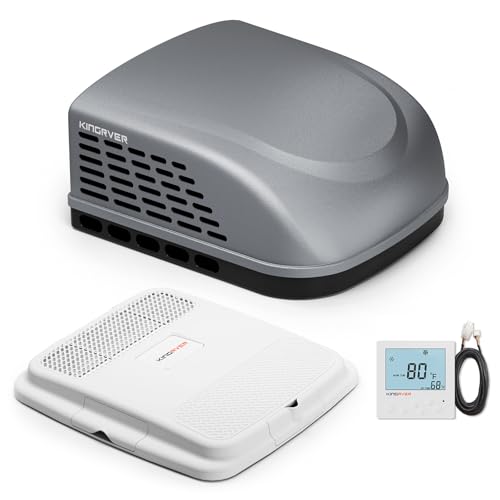
When you need rapid cooling without the hassle, the KINGRVER 15k RV air conditioner steps up to the plate. This non-ducted unit is engineered for speed, promising to cool down your RV’s interior in as little as 10 minutes. It’s a fantastic option if you’re frequently on the move and want quick comfort upon arrival. The robust ABS construction with EPP foam insulation ensures it can handle the bumps and scrapes of travel, while also providing excellent weather resistance. Its straightforward thermostat control means less fiddling and more relaxing, making it a simple yet effective climate control solution for most RVers.
-
Key Features:
- Rapid Cooling with a high-performance compressor and R410A refrigerant.
- Universal Fit for most RVs with standard 14-1/8″ × 14-1/8″ openings.
- Durable and Weather-Resistant Design from high-strength ABS and EPP foam.
- Simple Temperature Control via an intuitive thermostat (61℉ to 88℉ range).
- Quiet Operation (48 dB at low speed to 68 dB at full power).
-
Pros:
- Exceptional rapid cooling capability gets your RV comfortable fast.
- Robust, weather-resistant build ensures long-term durability.
- Easy installation due to universal fit for non-ducted systems.
- Simple and effective temperature management.
-
Cons:
- Only suitable for non-ducted RV systems, limiting versatility.
- Noise level at full power (68 dB) is higher than some competitors.
- Does not include a heating function, strictly for cooling.
-
User Impressions: Reviewers often rave about how quickly this unit chills their RV, particularly after a long day in the sun. The sturdy construction and ease of use are frequently highlighted, making it a popular choice for those prioritizing quick comfort and straightforward operation in their non-ducted RVs.
4. Dometic FreshJet 3 Series, 15K BTU RV Rooftop Air

Dometic is a name synonymous with RV appliances, and their FreshJet 3 Series 15k RV air conditioner continues that legacy with smart innovations. This unit stands out for its lightweight construction, which helps reduce the overall load on your RV’s roof and makes installation easier. A key differentiator is its “E-coated evaporator coils,” a revolutionary design that significantly boosts corrosion resistance and durability, extending the lifespan of your AC unit. It’s also designed to be backward compatible for non-ducted units, meaning you can often upgrade your existing Dometic system with less fuss.
-
Key Features:
- Lightweight Construction reduces roof load and simplifies installation.
- Backward Compatible with existing Dometic ADBs (Air Distribution Boxes) for non-ducted units.
- E-Coated Evaporator Coils for superior corrosion resistance and enhanced durability.
- Flexible epoxy polymer coating engineered specifically for HVAC heat transfer coils.
-
Pros:
- Reduced weight benefits overall RV performance and fuel efficiency.
- Exceptional corrosion resistance ensures a longer product life.
- Easy upgrade path for existing Dometic non-ducted systems.
- Dometic’s reputation for quality and reliability.
-
Cons:
- Feature list provided doesn’t explicitly mention noise levels, heating, or smart controls.
- Primarily focuses on cooling, not a multi-season climate control solution (based on listed features).
-
User Impressions: Customers appreciate the Dometic brand’s reliability and the unit’s lighter weight. The innovative E-coating is seen as a significant advantage for long-term ownership, especially in coastal or humid environments where corrosion is a concern. Many also highlight the ease of upgrading from older Dometic models.
5. TOSOT 16000 BTU GO Cool RV Air Conditioner, Non-Ducted

For those who crave a bit more power and smart convenience, the TOSOT 16000 BTU GO Cool RV Air Conditioner steps just above the 15k mark to offer exceptional climate control. This unit isn’t just about cooling; it’s a true all-weather warrior with a robust 12,500 BTU heating capacity, making it perfect for year-round adventures across diverse climates. Its smart WiFi control means you can manage your RV’s temperature right from your smartphone, adding a layer of modern convenience. Designed for non-ducted systems, it boasts easy installation and a wide operating temperature range to keep you comfortable from chilly mornings to scorching afternoons.
-
Key Features:
- High 16,000 BTU Cooling and Powerful 12,500 BTU Heating capacity, covering up to 600 sq ft.
- Flexible Operation with Smart WiFi Control via the free Gree+ app.
- Versatile Performance in outdoor temperatures from 23°F to 115°F.
- Easy Non-Ducted Installation, fits standard 14.25″ x 14.25″ rooftop openings.
- Accessory Kit included for quick startup.
-
Pros:
- Higher cooling and heating capacity for superior comfort in larger RVs.
- Smart WiFi control offers ultimate convenience and remote management.
- Excellent performance across a very wide range of outdoor temperatures.
- Hassle-free, non-ducted installation with included accessories.
-
Cons:
- Only compatible with non-ducted RV systems.
- Slightly higher BTU might be overkill for very small RVs (though great for larger mid-sized).
- Shipment may arrive in multiple packages, requiring coordination.
-
User Impressions: Users are consistently impressed by the TOSOT’s powerful cooling and heating capabilities, noting its ability to maintain comfort even in extreme weather. The WiFi control is a frequently praised feature, providing modern convenience that enhances the RV living experience. Many find the installation straightforward, making it a popular choice for those wanting a feature-rich and robust climate solution.
Buying Guide: What to Look for in a 15k RV AC Unit
Choosing the right 15k RV air conditioner means considering a few key factors to ensure it perfectly fits your travel style and rig.
- BTU Capacity & RV Size: While we’re focusing on 15k BTU units, remember this capacity is best suited for RVs typically between 20-35 feet. If your RV is much smaller, a 13.5k BTU might suffice. Larger RVs might require dual units or a higher single BTU (like the 16k TOSOT we reviewed).
- Ducted vs. Non-Ducted: This is crucial.
- Ducted systems distribute air through channels in your RV’s ceiling, offering more even cooling and often quieter operation within the living space.
- Non-ducted units blow air directly from the rooftop unit into the cabin. They are simpler to install and often found in older or smaller RVs. Make sure the unit you choose matches your RV’s setup.
- Noise Level: An RV is your home on wheels. A loud AC can quickly become irritating. Look for units with low dB (decibel) ratings, especially if you’re sensitive to noise or enjoy quiet evenings. Units around 55 dB or lower are considered very quiet.
- Energy Efficiency (Low Amp Draw): If you frequently boondock, rely on solar power, or have a smaller generator, a unit with a low amp draw is invaluable. It helps prevent overloading your system and conserves precious battery power.
-
Additional Features:
- Heat Pump: Many modern RV ACs include a heat pump for supplemental heating, offering true four-season comfort. This can reduce your reliance on a furnace, especially in milder cool weather.
- Smart Controls: WiFi connectivity, remote controls, and intuitive touch displays enhance user convenience.
- Durable Construction: Look for UV-resistant plastics and corrosion-resistant components to ensure your unit withstands harsh weather and road vibrations.
-
Installation: Consider if you’ll DIY or hire a professional. Many units fit standard 14.25″ x 14.25″ roof openings, but electrical wiring and proper sealing are critical.
Conclusion
Picking the perfect 15k RV air conditioner can significantly upgrade your mobile lifestyle. Whether you prioritize whisper-quiet operation, energy efficiency for off-grid adventures, rapid cooling, or smart climate control, there’s a fantastic option out there for you. We’ve reviewed some of the best, each bringing unique strengths to the table. By considering your specific needs, your RV’s setup (ducted or non-ducted!), and the features that matter most to you, you’re sure to find an AC unit that keeps you cool, comfortable, and ready for whatever the road throws your way. Happy travels!
FAQ Section
Q1: What does “15k BTU” mean for an RV AC, and is it the right size for my RV?
A1: “15k BTU” stands for 15,000 British Thermal Units, which measures the cooling power of the air conditioner. This capacity is generally recommended for RVs ranging from 20 to 35 feet in length. For smaller RVs (under 20 feet), a 13.5k BTU unit might suffice, while larger RVs (over 35 feet) or those frequently in extreme heat might benefit from a dual AC setup or a higher single BTU unit like 16k.
Q2: What’s the main difference between ducted and non-ducted RV air conditioners?
A2: A ducted RV air conditioner distributes cool air through a system of vents and ducts built into your RV’s ceiling, leading to more even temperature distribution and often quieter operation in the living space. A non-ducted RV air conditioner blows air directly from the ceiling assembly where the unit is installed. Non-ducted units are typically easier to install and common in older or smaller RVs, while ducted systems are prevalent in newer and larger motorhomes.
Q3: Can I install a 15k RV air conditioner myself?
A3: If you have basic DIY skills, electrical knowledge, and are comfortable working on your RV’s roof, installing a 15k RV air conditioner yourself is possible, especially non-ducted units that fit standard openings. However, ensuring proper electrical hookup, robust sealing to prevent leaks, and safe handling of the heavy unit on the roof are crucial. If unsure, professional installation is always recommended for safety and optimal performance.
Q4: How important is low amp draw in an RV air conditioner?
A4: A low amp draw is very important, especially if you frequently boondock, rely on solar power, or use a smaller portable generator. Units with low amp draw consume less electricity, which helps prevent tripping circuit breakers, extends battery life, and allows you to run other appliances simultaneously without overloading your RV’s electrical system. It significantly improves energy efficiency for off-grid living.
Q5: Do 15k RV air conditioners also provide heat?
A5: Many modern 15k RV air conditioners come with a built-in heat pump function, offering both cooling and supplemental heating. This feature allows for four-season comfort, as the unit can reverse its refrigeration cycle to provide warmth. While typically not as powerful as a dedicated RV furnace, a heat pump is very efficient for moderate cold weather and can help save on propane usage.
Q6: What noise level (dB) is considered acceptable for an RV air conditioner?
A6: The acceptable noise level for an RV air conditioner is subjective, but generally, units operating at 60 dB or lower are considered comfortable for most people. Units around 55 dB are often described as “whisper-quiet” or comparable to a gentle rain, making for a much more pleasant experience, especially during sleep. Noise levels above 65-70 dB can become quite disruptive.
Q7: How can I make my RV air conditioner more efficient?
A7: To improve efficiency, make sure your RV is well-insulated, keep windows and vents closed when the AC is running, and use reflective covers on windows, especially those facing the sun. Regularly clean or replace air filters, keep the exterior coils free of debris, and ensure your seals around the AC unit are in good condition to prevent air leaks. Parking in the shade can also significantly reduce the load on your 15k RV air conditioner.

