The 3.5 ton Carrier air conditioner is a powerful, energy-efficient solution designed for medium to large homes, typically cooling spaces between 1,800 and 2,200 square feet. Known for reliability, quiet operation, and advanced technology, Carrier’s 3.5-ton units deliver consistent comfort while helping reduce energy bills.
When it comes to keeping your home cool and comfortable during the sweltering summer months, choosing the right air conditioner is crucial. Among the top contenders in the HVAC market, the 3.5 ton Carrier air conditioner stands out as a reliable, high-performance option for medium to large homes. Whether you're building a new house, upgrading an old system, or simply looking for better energy efficiency, understanding what this unit offers can make all the difference in your comfort and long-term savings. For more on this, see our guide on how to choose the right air conditioner for.
Carrier, a brand with over a century of innovation in climate control, has earned a reputation for quality, durability, and cutting-edge technology. Their 3.5-ton air conditioners are engineered to deliver powerful cooling without sacrificing efficiency or quiet operation. These units are especially popular in regions with hot, humid summers—like the southern United States—where consistent indoor comfort is non-negotiable. But beyond just cooling, modern Carrier systems offer smart features, eco-friendly refrigerants, and designs that blend seamlessly into your home’s exterior.
In this comprehensive guide, we’ll dive deep into everything you need to know about the 3.5 ton Carrier air conditioner. From understanding what “3.5 tons” actually means to exploring the latest models, energy ratings, installation tips, and maintenance best practices, we’ve got you covered. Whether you're a homeowner, a renter considering a split system, or a contractor advising clients, this article will equip you with the knowledge to make an informed decision. For more on this, see our guide on are air conditioner brackets required in nyc.
Key Takeaways
Ideal Home Size: A 3.5 ton Carrier air conditioner is best suited for homes ranging from 1,800 to 2,200 square feet, depending on climate and insulation.
Energy Efficiency: Many models feature high SEER ratings (up to 25 SEER), translating to lower electricity usage and reduced utility bills.
Advanced Cooling Technology: Carrier units often include variable-speed compressors, smart thermostats, and multi-stage cooling for precise temperature control.
Quiet Operation: With sound levels as low as 58 decibels, these units operate quietly, minimizing indoor and outdoor noise disruption.
Durability and Warranty: Built with corrosion-resistant materials and backed by comprehensive warranties, including 10-year compressor coverage on select models.
Smart Home Integration: Compatible with Wi-Fi thermostats and home automation systems for remote control and scheduling via smartphone apps.
Professional Installation Required: Proper sizing, ductwork evaluation, and installation by certified HVAC technicians ensure peak performance and longevity.
📑 Table of Contents
- What Does “3.5 Ton” Mean in Air Conditioning?
- Why Choose a Carrier 3.5 Ton Air Conditioner?
- Top Features of the 3.5 Ton Carrier Air Conditioner
- Energy Efficiency and Cost Savings
- Installation and Maintenance Tips
- Electrical and Ductwork Requirements for 3.5 Ton Units
- Troubleshooting Common Issues with 3.5 Ton Carrier Units
- Comparing Carrier 3.5 Ton Models
- Carrier vs. Competitor Brands at 3.5 Tons
- Finding a Certified Carrier Dealer and Getting Quotes
- Is a 3.5 Ton Carrier Air Conditioner Right for You?
What Does “3.5 Ton” Mean in Air Conditioning?
If you’ve shopped for air conditioners, you’ve likely come across terms like “1 ton,” “2.5 ton,” or “3.5 ton.” But what does that number actually represent? In HVAC terminology, “tonnage” doesn’t refer to weight—it measures cooling capacity. One ton of cooling equals the amount of heat required to melt one ton of ice in 24 hours, which is equivalent to 12,000 BTUs (British Thermal Units) per hour. So, a 3.5 ton air conditioner can remove 42,000 BTUs of heat per hour (3.5 x 12,000 = 42,000).
This cooling power makes the 3.5 ton Carrier air conditioner ideal for homes between 1,800 and 2,200 square feet. However, square footage isn’t the only factor. Climate, insulation quality, window size, ceiling height, and even the number of occupants can influence the right size. For example, a well-insulated home in a mild climate might need less cooling than a poorly insulated one in a hot, humid area—even if they’re the same size. For more on this, see our guide on air conditioner vs hvac.
Choosing the correct tonnage is essential. An undersized unit will struggle to cool your home, running constantly and wearing out faster. An oversized unit, on the other hand, will cool the space too quickly, leading to short cycling—frequent on-and-off cycles that reduce efficiency, increase wear, and fail to properly dehumidify the air. This is why a professional load calculation, often called a Manual J calculation, is recommended before purchasing any AC unit.
Manual J Load Calculation: What Contractors Actually Measure
A proper Manual J calculation goes far beyond square footage. The technician measures window orientation and U-values, wall and attic insulation R-values, air infiltration rates, internal heat gains from appliances and occupants, and even duct leakage. In practice, skipping this step is the single most common reason a 3.5-ton unit ends up short-cycling or leaving humidity issues. If your contractor quotes a size without running a Manual J, ask for one—it’s the only way to protect your investment. For help choosing the right capacity, see our guide on how to choose the right air conditioner for your home.
Why Choose a Carrier 3.5 Ton Air Conditioner?

Carrier 3.5-ton outdoor condenser showing WeatherArmor Ultra protective grille
Visual guide about 3.5 Ton Carrier Air Conditioner
Image source: spiff.rit.edu
With so many brands and models on the market, why should you consider a Carrier 3.5 ton air conditioner? The answer lies in a combination of performance, innovation, and reliability. Carrier has been a leader in the HVAC industry since 1915, and their commitment to quality shows in every product they make.
One of the biggest advantages of Carrier units is their energy efficiency. Many 3.5-ton models boast SEER (Seasonal Energy Efficiency Ratio) ratings of 16 to 25, with higher-end units like the Carrier Infinity series reaching up to 25 SEER. The higher the SEER rating, the more efficient the unit—meaning lower energy consumption and reduced utility bills. For example, upgrading from a 10 SEER to a 20 SEER unit can cut your cooling costs in half.
But efficiency isn’t the only benefit. Carrier air conditioners are known for their durability. They’re built with galvanized steel cabinets, powder-coated finishes, and corrosion-resistant components to withstand harsh weather conditions. Some models even feature WeatherArmor™ Ultra protection, which shields the unit from salt air, rain, and debris—perfect for coastal areas.
Another standout feature is quiet operation. Carrier uses advanced sound-dampening technology, including insulated compressor compartments and variable-speed fans, to keep noise levels low. Many 3.5-ton models operate at sound levels between 58 and 68 decibels—quieter than a normal conversation. This means you can enjoy cool, comfortable air without the constant hum disrupting your peace.
2026 Refrigerant Transition: What Buyers Should Know
As of 2026, Carrier’s 3.5-ton lineup is transitioning to lower-GWP refrigerants such as R-454B and R-32 to meet the EPA’s AIM Act phasedown schedule. R-410A remains available for servicing existing equipment, but new factory-charged units increasingly ship with R-454B. The practical difference for homeowners is minimal—both refrigerants deliver comparable cooling capacity—but R-454B has roughly one-third the global warming potential. If you’re replacing an R-22 system, confirm with your dealer that the new line set is compatible or plan for a flush/replace. The U.S. EPA’s refrigerant transition page has the current regulatory timeline.
Top Features of the 3.5 Ton Carrier Air Conditioner
Carrier doesn’t just make air conditioners—they make smart, responsive systems designed for modern living. The 3.5 ton Carrier air conditioner comes packed with features that enhance comfort, convenience, and efficiency.
Variable-Speed Compressor Technology
One of the most advanced features in Carrier’s lineup is the variable-speed compressor. Unlike traditional single-stage compressors that run at full power or not at all, variable-speed models adjust their output to match your home’s cooling needs. This means smoother temperature control, fewer hot and cold spots, and better humidity management. It also reduces energy use by avoiding constant full-power cycles.
Two-Stage and Multi-Stage Cooling
Many 3.5-ton Carrier units offer two-stage or multi-stage cooling. In two-stage systems, the compressor runs at a lower speed most of the time, only ramping up during extreme heat. This provides more consistent comfort and improved efficiency. Multi-stage systems take it a step further with multiple output levels for even finer control.
Smart Thermostat Compatibility
Carrier air conditioners are designed to work seamlessly with smart thermostats like the Carrier Cor or Infinity Touch. These thermostats allow you to control your system remotely via smartphone, set schedules, monitor energy usage, and even receive maintenance alerts. Some models can even learn your preferences and adjust automatically for optimal comfort and savings. Integration with Google Home, Amazon Alexa, and Apple HomeKit is standard on Infinity-series controls, letting you adjust temperature with voice commands or automations.
Advanced Filtration and Air Quality
Indoor air quality matters, and Carrier addresses this with optional high-efficiency air filters and air purifiers. The Carrier Infinity Air Purifier, for example, uses Captures & Kills™ technology to trap and inactivate viruses, bacteria, and other airborne pathogens. When paired with a 3.5-ton AC unit, it ensures your home stays cool and healthy.
Eco-Friendly Refrigerants
Carrier is committed to environmental responsibility. Their newer models use R-410A or the newer R-32 refrigerant, which has a lower global warming potential (GWP) compared to older refrigerants like R-22. This not only reduces environmental impact but also ensures compliance with current regulations.
Weather-Resistant Design
Outdoor units face the elements year-round. Carrier designs their 3.5-ton condensers with rugged, weather-resistant features like louvered steel panels, protective grilles, and rust-resistant fasteners. This extends the lifespan of the unit and reduces the need for frequent repairs.
Zoning System Compatibility
For larger homes, Carrier’s 3.5-ton Infinity and Performance units support zoning panels that split the ductwork into independently controlled zones. Each zone gets its own thermostat and damper, so you’re not cooling empty rooms. In practice, zoning can cut cooling energy use by 20–30% in two-story homes where upstairs overheats while downstairs stays comfortable. Ask your dealer about the Infinity Zoning System or compatible third-party panels.
Superior Dehumidification Performance
Variable-speed and two-stage Carrier units excel at latent capacity—removing moisture—because they run longer at lower speeds. A 3.5-ton Infinity unit can pull 15–20 pints per hour in humid climates, often eliminating the need for a standalone dehumidifier. If humidity control is a priority (common in Gulf Coast and Southeast regions), specify the variable-speed model and confirm the dealer sets the airflow to 350–400 CFM per ton for maximum latent removal.
Energy Efficiency and Cost Savings
One of the biggest concerns for homeowners is the cost of running an air conditioner—especially during peak summer months. The good news? A 3.5 ton Carrier air conditioner can actually help you save money over time, thanks to its high energy efficiency.
As mentioned earlier, SEER ratings are a key indicator of efficiency. The U.S. Department of Energy requires a minimum SEER of 14 in most regions, but Carrier offers models with SEER ratings up to 25. For example, the Carrier Infinity 25 Central Air Conditioner (3.5-ton model) delivers up to 25 SEER, making it one of the most efficient units on the market.
To put this into perspective, let’s say your current AC has a SEER of 12 and costs $200 per month to run during summer. Upgrading to a 20 SEER unit could reduce that cost to around $120 per month—saving you $80 per month, or $960 per year. Over a 10-year lifespan, that’s nearly $10,000 in savings, not including potential rebates or tax credits.
Many utility companies and government programs offer incentives for upgrading to high-efficiency systems. For instance, the federal government may offer tax credits for ENERGY STAR-certified units, and local utilities often provide rebates for installing efficient HVAC systems. These incentives can significantly reduce your upfront cost, making a Carrier 3.5-ton unit more affordable.
2026 Federal Tax Credit (Section 25C)
For systems placed in service in 2026, the federal 25C tax credit covers 30% of project cost (equipment + labor) up to $600 for qualifying central air conditioners. To qualify, the unit must meet the highest ENERGY STAR tier (typically ≥16 SEER2 / ≥12 EER2 for split systems). Carrier’s Infinity 17 and higher meet this threshold. The credit is non-refundable but carries forward. Keep your itemized invoice and AHRI certificate—the IRS requires both. See ENERGY STAR’s federal tax credit summary for current details.
It’s also worth noting that efficient units often qualify for financing options through Carrier’s dealer network, allowing you to spread out the cost over time while still enjoying immediate energy savings. For more on optimizing settings, review the best air conditioning settings for energy efficiency.
Installation and Maintenance Tips
Even the best air conditioner won’t perform well if it’s not installed or maintained properly. A 3.5 ton Carrier air conditioner is a significant investment, and getting the most out of it starts with professional installation and regular upkeep.
Professional Installation is a Must
Installing a central air conditioner is not a DIY project. It requires knowledge of electrical systems, refrigerant handling, ductwork, and local building codes. Carrier recommends using a certified HVAC contractor who is trained and authorized to install their products. These professionals can perform a Manual J load calculation to confirm the 3.5-ton size is right for your home, inspect your ductwork for leaks, and ensure proper refrigerant charge and airflow.
Improper installation can lead to reduced efficiency, frequent breakdowns, and even safety hazards. For example, incorrect refrigerant levels can damage the compressor, while poor airflow can cause ice buildup on the evaporator coil. A qualified installer will also register your unit for warranty purposes, ensuring you’re covered if something goes wrong. For a step-by-step overview, see our central AC installation guide.
Regular Maintenance Keeps It Running Smoothly
To keep your 3.5 ton Carrier air conditioner in top shape, schedule annual maintenance with a licensed technician. This typically includes cleaning the coils, checking refrigerant levels, inspecting electrical connections, lubricating moving parts, and testing system performance.
Homeowners can also do their part by:
Changing air filters every 1–3 months, depending on usage and filter type.
Keeping the outdoor unit clear of leaves, dirt, and debris.
Ensuring at least 2 feet of clearance around the condenser for proper airflow.
Checking that indoor vents are not blocked by furniture or curtains.
Monitoring thermostat settings and avoiding extreme temperature swings.
Regular maintenance not only extends the life of your unit but also helps maintain efficiency and indoor air quality. Many HVAC companies offer maintenance plans that include biannual service visits and priority scheduling. For a seasonal checklist, refer to our seasonal air conditioning maintenance tips.
Winterizing Your 3.5-Ton Unit
In regions with freezing winters, take these steps each fall: (1) Turn off the disconnect at the outdoor unit. (2) Gently hose down the coil (fin-side only) and let dry. (3) Cover the top 6–8 inches with a breathable mesh guard—not a plastic tarp, which traps moisture and accelerates corrosion. (4) Verify the condensate drain line is clear so meltwater doesn’t back up. A common mistake is wrapping the entire condenser in plastic; that invites rust and voids the cabinet warranty on some Carrier models.
Electrical and Ductwork Requirements for 3.5 Ton Units
A 3.5-ton split system typically draws 18–24 amps at 240 V, requiring a dedicated 30- or 40-amp double-pole breaker and 10/2 or 8/2 NM cable per local code. The outdoor disconnect must be within sight of the condenser. Undersized wiring is a frequent callback cause—verify voltage drop stays under 3% on runs over 50 feet.
Ductwork must deliver roughly 1,200–1,400 CFM (350–400 CFM/ton). Existing ducts sized for a 2.5- or 3-ton unit are often restrictive; a duct static pressure test should read ≤0.5 in. w.c. total external static. If pressure is higher, plan for trunk upsizing, additional returns, or a variable-speed blower that can overcome the resistance. Leaky ducts in unconditioned attics can waste 20–30% of cooling capacity—seal with mastic or Aeroseal before startup. Our AC installation guide covers duct sizing in more detail.
Troubleshooting Common Issues with 3.5 Ton Carrier Units
Even well-maintained systems develop symptoms. Here are the most frequent calls we see on 3.5-ton Carrier equipment and the first diagnostic steps:
| Symptom | Likely Cause | First Check |
|---|---|---|
| Short cycling (runs <5 min) | Oversized unit, dirty coil, low refrigerant, bad capacitor | Verify charge with subcooling/superheat; clean outdoor coil |
| Insufficient cooling upstairs | Undersized returns, duct leakage, no zoning | Measure delta-T at supply/return; inspect duct integrity |
| High indoor humidity | Airflow too high (>450 CFM/ton), short cycling | Reduce blower speed; confirm staging logic |
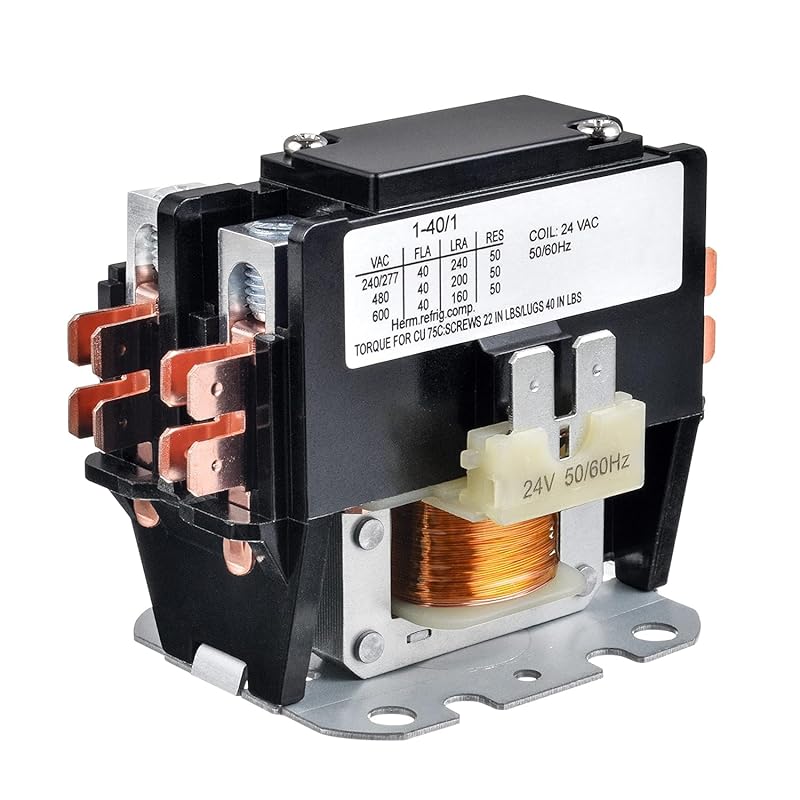
| Compressor won’t start | Contactor pitted, capacitor failed, open internal overload | Ohmmeter on capacitor; check 24 V control circuit |
| Loud vibration/rattle | Loose fan blade, missing isolators, debris in fan shroud | Power off; spin fan by hand; inspect mounts |
For deeper diagnostics on condenser-side faults, see our AC condenser troubleshooting guide. If the system blows warm air entirely, our troubleshoot AC blowing warm air walkthrough covers the control-board and refrigerant-side checks.
Comparing Carrier 3.5 Ton Models
Carrier offers several series of 3.5-ton air conditioners, each tailored to different needs and budgets. Here’s a quick comparison of their most popular lines:
Carrier Infinity Series
The top-of-the-line option, the Infinity series features up to 25 SEER, variable-speed compressors, and advanced humidity control. It’s ideal for homeowners who want maximum comfort, efficiency, and smart features. Models like the Infinity 25 offer Wi-Fi connectivity and compatibility with the Infinity Touch thermostat.
Carrier Performance Series
A mid-range option with SEER ratings up to 17.5, the Performance series offers two-stage cooling and quiet operation. It’s a great balance of affordability and performance, suitable for most homes.
Carrier Comfort Series
The most budget-friendly line, the Comfort series provides reliable cooling with SEER ratings up to 16. It’s a solid choice for those looking for dependable performance without the premium price tag.
When choosing a model, consider your climate, home size, budget, and desired features. A local Carrier dealer can help you compare options and find the best fit. For a broader market view, see what are the best HVAC air conditioning systems for residential use.
Carrier vs. Competitor Brands at 3.5 Tons
Carrier isn’t the only player at this capacity. Here’s how it stacks up against the other major residential lines in 2026:
| Brand | Top SEER2 (3.5 ton) | Variable Speed? | Typical Installed Range | Notable Feature |
|---|---|---|---|---|
| Carrier Infinity | 25 | Yes | $7,500–$11,000 | Greenspeed Intelligence, 10-yr compressor warranty |
| Trane XV20i | 22 | Yes | $7,800–$11,500 | Spine Fin coil, communicating ComfortLink II |
| Lennox SL28XCV | 28 | Yes | $8,000–$12,000 | Highest published SEER2, Quantum Coil |
| Rheem Prestige RA20 | 20.5 | Yes | $6,800–$9,500 | EcoNet smart, PlusOne service access |
| Daikin Fit | 18 | Inverter | $6,200–$8,500 | Side-discharge compact footprint |
In practice, Carrier’s dealer network depth and parts availability give it an edge for long-term serviceability, especially outside major metros. Lennox leads on paper efficiency; Trane’s coil design resists formicary corrosion well. Rheem and Daikin often come in lower on installed cost. Get three bids from certified dealers of different brands—price spread for the same spec can hit 20%.
Finding a Certified Carrier Dealer and Getting Quotes
Carrier’s “Factory Authorized Dealer” (FAD) program requires NATE-certified techs, background-checked employees, and ongoing training. FADs can offer the 10-year parts / 10-year compressor limited warranty (registration required within 90 days). Non-FAD installs typically revert to 5-year parts / 5-year compressor.
When requesting quotes, ask each dealer for:
- Manual J report (not just a rule-of-thumb size)
- AHRI certificate matching the exact condenser/coil/furnace combo
- Itemized line items: equipment, labor, permits, duct modifications, electrical, refrigerant, startup/commissioning
- Warranty registration process—who submits it and timeline
- Financing options and 25C tax credit paperwork assistance
A common mistake is comparing only the bottom-line price. A $500 lower bid that skips duct sealing or uses a non-communicating thermostat will cost more in energy and comfort within two seasons. For more on evaluating installer quality, see our split AC installation guide.
Is a 3.5 Ton Carrier Air Conditioner Right for You?
Deciding whether a 3.5 ton Carrier air conditioner is the right choice depends on several factors. Start by evaluating your home’s square footage, insulation, and climate. If your home is between 1,800 and 2,200 square feet and located in a hot or humid region, a 3.5-ton unit is likely a good match.
Also consider your current system’s performance. If your existing AC struggles to cool your home, runs constantly, or leads to high energy bills, it may be time for an upgrade. A 3.5-ton Carrier unit could provide the power and efficiency you need.
Finally, think about long-term goals. Are you planning to stay in your home for many years? Do you value smart home integration and energy savings? If so, investing in a high-efficiency Carrier system could pay off in comfort, convenience, and cost savings.
In conclusion, the 3.5 ton Carrier air conditioner is a smart, reliable choice for homeowners seeking powerful cooling, energy efficiency, and advanced features. With proper installation and maintenance, it can keep your home comfortable for over a decade—making it a worthwhile investment in your family’s comfort and well-being.
Ready to move forward? Request a Manual J load calculation and three itemized quotes from Carrier Factory Authorized Dealers in your area—it’s the fastest way to lock in 2026 tax credits and a right-sized system.
Frequently Asked Questions
How many square feet can a 3.5 ton Carrier air conditioner cool?
A 3.5 ton Carrier air conditioner is typically suitable for homes between 1,800 and 2,200 square feet. However, factors like climate, insulation, and ceiling height can affect the ideal size, so a professional load calculation is recommended.
What is the SEER rating of a 3.5 ton Carrier air conditioner?
SEER ratings for 3.5-ton Carrier units range from 16 to 25, depending on the model. Higher-end models like the Infinity series offer up to 25 SEER for maximum energy efficiency.
Is a 3.5 ton air conditioner too big for my home?
An oversized unit can cause short cycling, poor humidity control, and higher energy bills. If your home is under 1,500 square feet, a smaller unit may be more appropriate. Always consult an HVAC professional for proper sizing.
How much does a 3.5 ton Carrier air conditioner cost?
Prices vary by model, features, and installation complexity, but a 3.5-ton Carrier unit typically ranges from $3,500 to $7,000 installed. High-efficiency models and smart features can increase the cost.
Can I install a 3.5 ton Carrier air conditioner myself?
No, professional installation is required. Improper installation can void the warranty, reduce efficiency, and pose safety risks. Always use a certified HVAC contractor.
How often should I service my Carrier 3.5 ton air conditioner?
Schedule professional maintenance at least once a year, preferably before the cooling season begins. Homeowners should also change air filters every 1–3 months and keep the outdoor unit clean.
What electrical circuit does a 3.5-ton Carrier unit need?
Most 3.5-ton split systems require a dedicated 240 V, 30–40 A double-pole breaker with 10/2 or 8/2 copper conductors. Exact sizing depends on the model’s MCA/MOP ratings on the nameplate—always follow the manufacturer’s spec and local code.
Does Carrier’s 10-year warranty transfer to the next homeowner?
Yes, the registered limited warranty transfers once to a subsequent owner if the transfer is recorded within 90 days of closing. The transferee must submit a warranty transfer form and proof of purchase; a $50–$100 fee may apply. Unregistered units carry only the base 5-year coverage, which also transfers.