
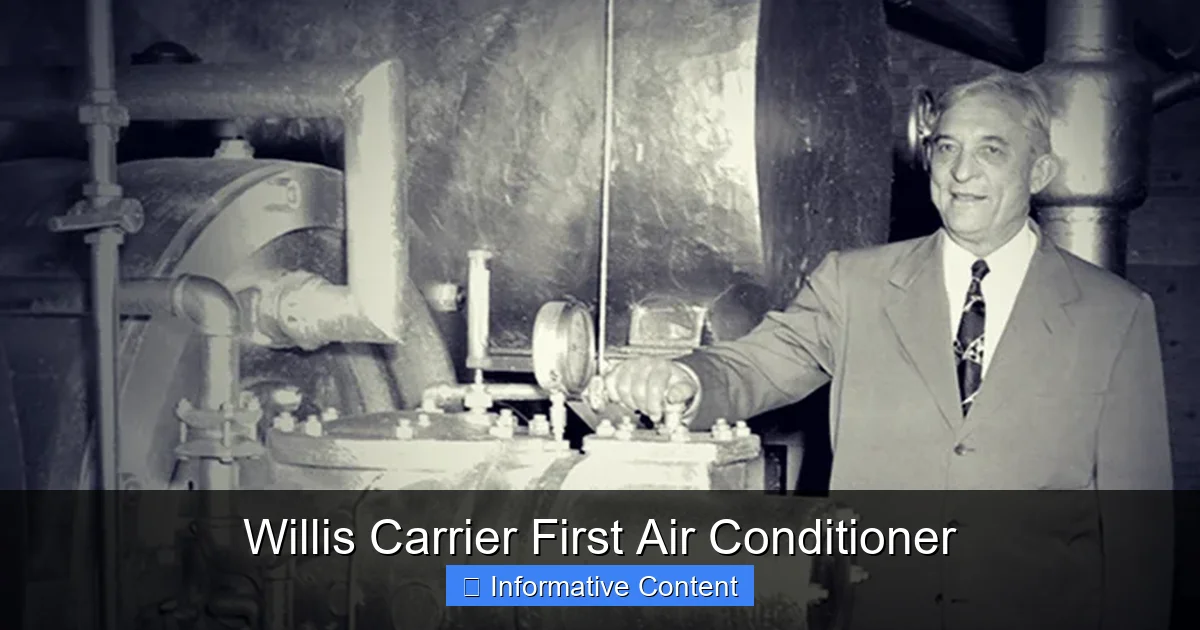
Willis Carrier invented the first modern air conditioner in 1902 to solve a humidity problem at a printing plant. What started as an industrial solution sparked a global transformation in comfort, health, and technology, paving the way for today’s climate-controlled world.
Imagine a sweltering summer day in 1902. You’re in Brooklyn, New York, working in a printing plant where the heat is unbearable and the humidity makes paper warp and ink smear. Print quality is suffering, deadlines are missed, and frustration runs high. Now picture a young engineer named Willis Haviland Carrier walking through those same doors, notebook in hand, determined to solve a problem no one had ever tackled scientifically: controlling indoor humidity. That moment marked the birth of the first modern air conditioner—an invention that would eventually reshape how we live, work, and even survive in extreme climates.
At first glance, it might seem surprising that air conditioning wasn’t invented to cool people. But Carrier wasn’t thinking about comfort—he was thinking about consistency. The Sackett & Wilhelms Lithographing and Printing Company was struggling with paper expansion and contraction due to fluctuating humidity. This caused misalignment in multi-color printing, ruining thousands of dollars in materials. Carrier, then a 25-year-old engineer at the Buffalo Forge Company, was tasked with finding a solution. After months of research and experimentation, he developed a system that could precisely control temperature and humidity by passing air over chilled coils. This not only solved the printing issue but also laid the groundwork for the entire HVAC (Heating, Ventilation, and Air Conditioning) industry.
What makes Carrier’s invention so remarkable isn’t just the technology—it’s the mindset. He approached the problem like a scientist, using data, physics, and engineering principles to create a repeatable, reliable system. He didn’t just cool the air; he controlled it. And in doing so, he opened the door to a world where indoor environments could be designed, not just endured. From hospitals and offices to movie theaters and homes, the impact of his work rippled across industries and continents. Today, air conditioning is so common we barely think about it—but it all started with one man’s determination to solve a very specific, very sticky problem.
Key Takeaways
- Willis Carrier invented the first modern air conditioner in 1902 to control humidity in a Brooklyn printing plant, not for human comfort.
- The invention stabilized paper and ink alignment by regulating temperature and moisture, improving print quality dramatically.
- Carrier’s system used chilled coils and fans to dehumidify and cool air—a principle still used in today’s AC units.
- His work led to the founding of Carrier Engineering Corporation in 1915, now a global leader in HVAC technology.
- Air conditioning transformed industries like film, food storage, manufacturing, and later, homes and offices.
- Modern air conditioning owes its foundation to Carrier’s scientific approach and engineering precision.
- Today, over 4 million air conditioners are sold daily worldwide, a legacy rooted in one man’s solution to a printing problem.
📑 Table of Contents
The Problem That Sparked a Revolution
In the early 1900s, industrial processes were highly sensitive to environmental conditions. Printing, in particular, was vulnerable to humidity. Paper absorbs moisture from the air, causing it to expand. When humidity drops, the paper contracts. This constant swelling and shrinking made it nearly impossible to align colors accurately in multi-pass printing. The result? Blurry images, wasted paper, and frustrated clients.
Sackett & Wilhelms, a leading printing company in Brooklyn, was losing money and reputation due to these issues. They turned to the Buffalo Forge Company, which specialized in heating and ventilation equipment, for help. That’s where Willis Carrier came in. As a recent graduate of Cornell University with a degree in engineering, Carrier was already known for his analytical mind and attention to detail. He was assigned to develop a system that could stabilize the printing environment.
Carrier didn’t start with cooling. Instead, he focused on humidity control. He realized that by cooling air below its dew point, moisture would condense out of it—effectively drying the air. This process, known as dehumidification, could be achieved by passing air over cold surfaces. But Carrier didn’t stop there. He also understood that temperature and humidity were linked. By controlling both, he could create a stable environment ideal for printing.
His breakthrough came on a foggy night in Pittsburgh. Standing on a train platform, watching the mist rise from the tracks, Carrier had an epiphany: if nature could cool air and remove moisture through condensation, so could a machine. This moment of inspiration led him to design a system that mimicked natural processes using mechanical components.
The Science Behind the Solution
Carrier’s invention was based on the principles of psychrometrics—the study of air and water vapor mixtures. He used a psychrometric chart to calculate how much moisture needed to be removed from the air to achieve the desired humidity level. His system involved blowing air over a series of chilled pipes filled with cold water or refrigerant. As the air cooled, its ability to hold moisture decreased, causing water vapor to condense on the coils. The drier, cooler air was then circulated back into the printing room.
This process not only reduced humidity but also lowered the temperature, creating a more comfortable environment for workers. However, comfort was a side effect—the primary goal was precision. By maintaining a constant temperature of 72°F and humidity at 55%, Carrier ensured that paper remained stable and ink dried evenly. The results were immediate: print quality improved dramatically, waste decreased, and production efficiency soared.
From Industrial Tool to Global Necessity
While Carrier’s first air conditioner was designed for a printing plant, its potential was quickly recognized across industries. In the 1910s and 1920s, textile mills, pharmaceutical companies, and tobacco manufacturers began adopting similar systems to protect sensitive materials and improve working conditions. The ability to control indoor climate opened new possibilities for production, storage, and innovation.
For example, in the film industry, air conditioning allowed studios to maintain consistent temperatures for film stock, which was highly sensitive to heat and moisture. In food storage, it enabled the development of refrigerated warehouses and later, home refrigerators. Even hospitals benefited, as controlled environments reduced the spread of infection and improved patient recovery.
But the real turning point came in the 1920s, when air conditioning began moving from factories into public spaces. The first major non-industrial installation was at the Rivoli Theater in New York City in 1925. The system used centrifugal chillers—a more efficient version of Carrier’s original design—to cool the entire auditorium. Moviegoers flocked to the theater not just for the films, but for the refreshing escape from summer heat. This marked the beginning of air conditioning as a tool for human comfort.
The Birth of Modern Air Conditioning
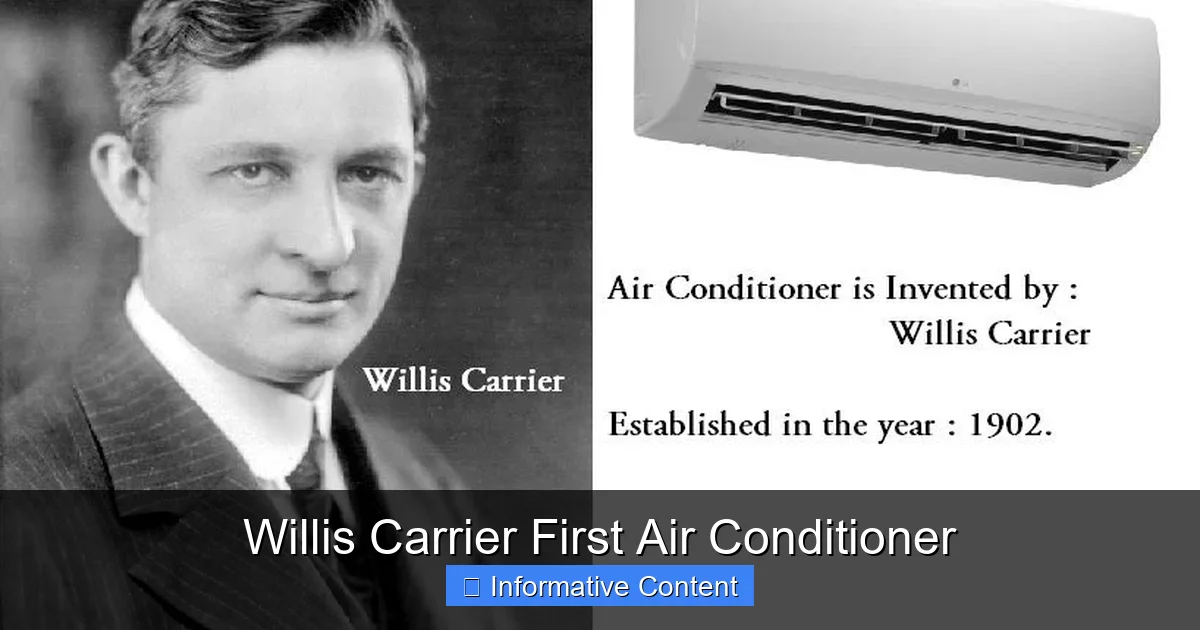
Visual guide about Willis Carrier First Air Conditioner
Image source: i.pinimg.com
Willis Carrier’s 1902 invention is widely recognized as the first modern air conditioner because it was the first system to mechanically control both temperature and humidity with precision. Unlike earlier attempts at cooling—such as blowing air over ice or using evaporative coolers—Carrier’s design was based on scientific principles and could be scaled for industrial use.
His original system, installed at Sackett & Wilhelms, consisted of a fan that drew air through a series of coils filled with cold water. The coils were connected to a refrigeration unit that cooled the water using a compressor and condenser. As air passed over the cold coils, moisture condensed and was collected in a drain pan, while the cooled, dried air was released back into the room.
This process was revolutionary because it was repeatable, measurable, and controllable. Carrier could adjust the temperature of the water in the coils to fine-tune the humidity level. He also introduced the concept of air circulation, ensuring that cooled air was evenly distributed throughout the space. These features made his system far more effective than any previous cooling method.
The Role of the Psychrometric Chart
One of Carrier’s most important contributions was the development and use of the psychrometric chart. This graphical tool allowed engineers to visualize the relationship between temperature, humidity, air density, and enthalpy (heat content). By plotting conditions on the chart, Carrier could predict how changes in one variable would affect others.
For example, if the air was too humid, he could determine exactly how much it needed to be cooled to reach the desired moisture level. This level of precision was unprecedented and became the foundation for modern HVAC design. Today, the psychrometric chart is still used by engineers and technicians to design and troubleshoot air conditioning systems.
Patents and Commercialization
In 1906, Carrier received his first patent for the “Apparatus for Treating Air,” which described his method of controlling humidity through cooling and dehumidification. Over the next decade, he continued to refine his designs, earning additional patents for improvements in refrigeration, air circulation, and control systems.
In 1915, Carrier co-founded the Carrier Engineering Corporation with six other engineers. The company’s mission was to advance the science of air conditioning and make it accessible to industries and, eventually, the public. Under Carrier’s leadership, the company developed more efficient compressors, better refrigerants, and user-friendly controls.
One of the company’s early successes was the installation of air conditioning in the J.L. Hudson Department Store in Detroit in 1924. This was one of the first large-scale commercial applications in a retail setting. Shoppers were delighted by the cool, comfortable environment, and sales increased during the summer months. This proved that air conditioning could boost business—not just improve working conditions.
Impact on Industry and Daily Life
The adoption of air conditioning transformed multiple industries almost overnight. In manufacturing, it allowed for tighter tolerances in metalworking and electronics. In food processing, it enabled year-round production and longer shelf life. In healthcare, it reduced the spread of airborne diseases and improved surgical outcomes.
But perhaps the most profound impact was on urban development and population growth. Before air conditioning, cities in hot, humid climates like Phoenix, Houston, and Miami were difficult to live in during the summer. People avoided moving there, and businesses hesitated to expand. With air conditioning, these cities became livable—and eventually, thriving metropolises.
The Rise of the Sun Belt
The term “Sun Belt” refers to the southern and western regions of the United States, characterized by warm climates. In the mid-20th century, air conditioning played a key role in the rapid growth of cities like Atlanta, Dallas, and Los Angeles. As homes, offices, and schools became air-conditioned, people were no longer limited by the weather. Migration to the Sun Belt accelerated, reshaping the demographic and economic landscape of the country.
This shift also influenced architecture. Buildings could now be designed with larger windows, open floor plans, and glass facades—features that would have been uncomfortable without climate control. The modern skyscraper, with its sealed glass envelopes, would not have been possible without air conditioning.
Air Conditioning and Social Change
Air conditioning also had social implications. In the 1930s and 1940s, it became a symbol of modernity and luxury. Theaters, department stores, and office buildings advertised their air-conditioned environments as a draw for customers and employees. Over time, as systems became more affordable, air conditioning spread to middle-class homes.
During World War II, air conditioning was used in military hospitals and aircraft factories, improving recovery rates and production efficiency. After the war, returning veterans sought comfort in their homes, and the demand for residential air conditioning surged. By the 1950s, window units and central air systems were becoming common in American households.
Legacy of Willis Carrier
Willis Carrier passed away in 1950, but his legacy lives on in every air conditioner, refrigerator, and climate-controlled building. He is often called the “Father of Air Conditioning,” not just for inventing the technology, but for pioneering the science behind it.
His company, now known as Carrier Global Corporation, remains a leader in HVAC innovation. It continues to develop energy-efficient systems, smart thermostats, and sustainable refrigerants. The principles Carrier established—precision control, scientific measurement, and user-centered design—are still at the heart of modern air conditioning.
Carrier’s Lasting Influence
Today, air conditioning is essential to life in many parts of the world. It protects vulnerable populations from heatwaves, enables global food supply chains, and supports critical infrastructure like data centers and hospitals. Without it, modern life as we know it would be impossible.
Carrier’s work also inspired future innovations. The development of heat pumps, which can both heat and cool spaces, is a direct evolution of his technology. Smart thermostats, which learn user preferences and adjust temperatures automatically, build on his vision of precise environmental control.
Moreover, Carrier’s approach to problem-solving—using science to improve human conditions—remains a model for engineers and inventors. He didn’t just build a machine; he created a system that changed the world.
Modern Air Conditioning: From Carrier’s Vision to Today
While the basic principles of air conditioning remain the same—cooling air by removing heat and moisture—modern systems are far more advanced than Carrier’s original design. Today’s units use eco-friendly refrigerants, variable-speed compressors, and digital controls to maximize efficiency and comfort.
Central air systems, ductless mini-splits, and portable units offer flexibility for different spaces and needs. Smart thermostats allow users to control their climate remotely, saving energy and money. In commercial buildings, building automation systems integrate air conditioning with lighting, security, and energy management for optimal performance.
Energy Efficiency and Sustainability
One of the biggest challenges in modern air conditioning is energy consumption. Air conditioners account for a significant portion of global electricity use, especially in hot climates. To address this, manufacturers are developing more efficient systems and promoting best practices for use.
For example, regular maintenance—like cleaning filters and checking refrigerant levels—can improve efficiency by up to 15%. Using programmable thermostats and shading windows can reduce cooling loads. In new construction, passive cooling techniques like insulation, reflective roofing, and natural ventilation can minimize the need for mechanical cooling.
The Future of Cooling
As climate change increases global temperatures, the demand for cooling will continue to rise. Researchers are exploring new technologies, such as magnetic refrigeration, evaporative cooling, and solar-powered systems, to create more sustainable solutions.
Carrier’s vision of precise, reliable climate control remains the goal. But today’s engineers are also focused on reducing environmental impact, improving accessibility, and ensuring that everyone—regardless of income or location—can stay safe and comfortable in a warming world.
Conclusion
Willis Carrier’s first air conditioner was more than a machine—it was a milestone in human innovation. What began as a solution to a printing problem evolved into a technology that reshaped industries, cities, and daily life. From the printing presses of Brooklyn to the skyscrapers of Dubai, Carrier’s legacy is everywhere.
His story reminds us that great inventions often come from solving real-world problems with creativity and science. He didn’t set out to change the world; he just wanted to make paper stay flat. But in doing so, he gave us the power to control our environment, improve our health, and build a more comfortable future.
Today, as we enjoy cool, dry air on a hot summer day, we owe a debt of gratitude to Willis Carrier—the quiet engineer whose genius continues to shape the modern world.
Frequently Asked Questions
What problem did Willis Carrier’s first air conditioner solve?
Willis Carrier invented the first modern air conditioner to solve a humidity problem at a Brooklyn printing plant. The fluctuating moisture caused paper to warp and ink to smear, ruining print quality. His system stabilized the environment by controlling temperature and humidity.
Was the first air conditioner made for human comfort?
No, the first air conditioner was not designed for comfort. It was created to protect paper and ink in a printing facility. Human comfort became a benefit later, as the technology spread to theaters, offices, and homes.
How did Carrier’s air conditioner work?
Carrier’s system used fans to blow air over chilled coils filled with cold water or refrigerant. As the air cooled, moisture condensed on the coils and was drained away, reducing humidity and temperature. This process is still the basis of modern AC units.
When was the Carrier Engineering Corporation founded?
The Carrier Engineering Corporation was founded in 1915 by Willis Carrier and six other engineers. It became a global leader in HVAC technology and continues to innovate in climate control today.
How did air conditioning change cities?
Air conditioning made hot, humid cities livable, leading to population growth in places like Phoenix, Houston, and Miami. It also influenced architecture, enabling glass skyscrapers and open floor plans that rely on climate control.
Is Willis Carrier’s original design still used today?
Yes, the core principles of Carrier’s design—cooling air by removing heat and moisture—are still used. Modern systems have improved with better refrigerants, energy efficiency, and smart controls, but the foundation remains the same.