
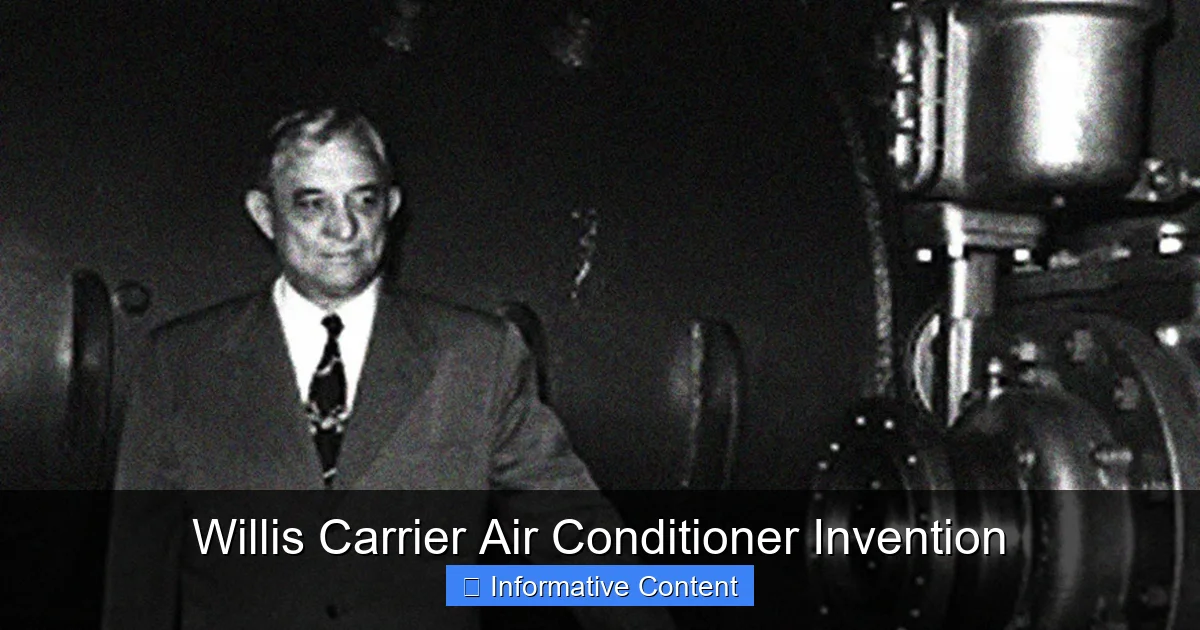
Willis Carrier invented the first modern air conditioning system in 1902 to solve a humidity problem at a printing plant. His breakthrough not only improved industrial processes but also paved the way for climate-controlled homes, offices, and hospitals, reshaping how we live and work.
Key Takeaways
- Willis Carrier invented the first electrical air conditioning unit in 1902 to control humidity in a Brooklyn printing plant. This innovation solved paper expansion and ink misalignment issues caused by moisture.
- His invention was initially industrial, not residential. Early air conditioners were used in factories, not homes, to improve product quality and worker efficiency.
- Carrier’s work laid the foundation for modern HVAC systems. His company, Carrier Engineering Corporation, continues to lead in climate control technology today.
- Air conditioning transformed industries like film, food, and medicine. It enabled year-round movie production, food preservation, and sterile hospital environments.
- The widespread adoption of AC changed urban development and migration patterns. Cities in hot climates like Phoenix and Dubai became more livable and economically viable.
- Carrier’s invention had environmental and social impacts. While improving comfort, it also increased energy use and contributed to urban heat islands.
- Today, air conditioning is essential for health and productivity in many parts of the world. Over 1.6 billion units are in use globally, with numbers growing rapidly in developing nations.
📑 Table of Contents
- The Birth of a Cool Idea: Willis Carrier’s Breakthrough
- From Factory to Everyday Life: The Evolution of Air Conditioning
- How Willis Carrier’s Invention Works: The Science Behind the Cool
- Impact on Society, Industry, and Urban Development
- Environmental and Economic Considerations
- Legacy of Willis Carrier and the Future of Cooling
The Birth of a Cool Idea: Willis Carrier’s Breakthrough
Imagine a hot, sticky summer day in 1902. You’re standing in a Brooklyn printing plant, watching paper warp and ink smear because of the humidity. Frustrated, a young engineer named Willis Haviland Carrier stared out the window, not at the weather, but at the problem. He wasn’t trying to cool people—he was trying to control moisture. That moment sparked one of the most important inventions of the 20th century: the air conditioner.
Carrier, then 25 years old and working for the Buffalo Forge Company, was tasked with solving a quality control issue at the Sackett-Wilhelms Lithographing and Publishing Company. The humidity in the air caused paper to expand and contract, making it impossible to align colors accurately during printing. The result? Wasted materials, delayed deadlines, and unhappy clients. Carrier knew there had to be a better way.
After months of research and experimentation, he developed a system that controlled both temperature and humidity. His design used coils cooled by chilled water to remove moisture from the air while lowering its temperature. This wasn’t just cooling—it was climate control. On July 17, 1902, Carrier installed the first modern air conditioning system at the printing plant. It worked. The paper stayed flat, the ink aligned, and production improved.
This wasn’t about comfort. It was about precision. But as Carrier refined his invention, he realized its potential went far beyond printing. He had created a tool that could regulate the indoor environment—something that would eventually change how we live, work, and even where we choose to live.
From Factory to Everyday Life: The Evolution of Air Conditioning
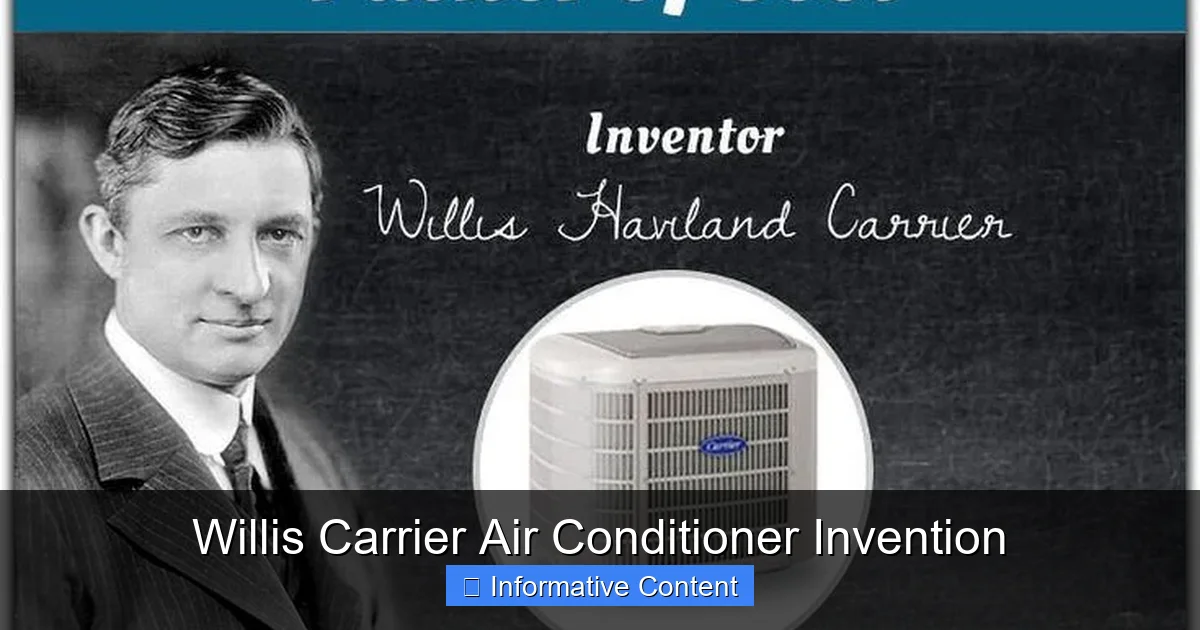
Visual guide about Willis Carrier Air Conditioner Invention
Image source: i.pinimg.com
At first, air conditioning was a luxury for industry, not individuals. Factories in textiles, tobacco, and pharmaceuticals adopted Carrier’s system to improve product quality. For example, in textile mills, humidity control prevented thread from breaking during weaving. In pharmaceutical labs, it helped maintain stable conditions for drug production. These early applications proved that controlling the air could boost efficiency and reduce waste.
But the real turning point came in 1906, when Carrier patented his “Apparatus for Treating Air.” This patent outlined a system that could heat, cool, humidify, and dehumidify air—essentially the blueprint for modern HVAC (heating, ventilation, and air conditioning) systems. He didn’t stop there. In 1911, he published the “Rational Psychrometric Formulae,” a scientific paper that became the foundation for calculating humidity, temperature, and air density. This work gave engineers the tools to design climate control systems with precision.
By the 1920s, air conditioning began moving into public spaces. The first major non-industrial installation was at the New York Stock Exchange in 1903, but it wasn’t until the 1920s that theaters and department stores started using it to attract customers. Imagine going to a movie in the middle of a sweltering summer—cool air flowing through the theater made it a refreshing escape. The Rivoli Theater in New York, equipped with Carrier’s system, became a sensation. Moviegoers flocked to “cool” theaters, and soon, air conditioning became a selling point for businesses.
The Rise of Residential Air Conditioning
Residential air conditioning didn’t take off until after World War II. Early home units were expensive, bulky, and inefficient. The first window air conditioner, the “Weathermaker,” was introduced by Carrier in 1931, but it cost as much as a new car—about $10,000 in today’s money. Only the wealthy could afford it.
Everything changed in the 1950s. As electricity became more affordable and manufacturing improved, air conditioners became smaller, cheaper, and more reliable. Central air systems were developed, allowing entire homes to be cooled. Suburban housing booms in the U.S., especially in the South and Southwest, were fueled by the ability to live comfortably in hot climates. Families could now move to places like Florida, Texas, and Arizona without suffering through unbearable summers.
By the 1970s, air conditioning was standard in most new American homes. Today, over 90% of U.S. households have some form of air conditioning. What started as a solution for a printing problem became a necessity for modern life.
How Willis Carrier’s Invention Works: The Science Behind the Cool
So, how does an air conditioner actually work? At its core, it’s based on a simple principle: moving heat from one place to another. Air conditioners don’t create cold air—they remove heat from indoor air and release it outside. This process relies on a refrigerant, a special chemical that easily changes between liquid and gas states.
Here’s a step-by-step breakdown:
1. **Evaporation**: Warm indoor air is pulled into the unit by a fan. It passes over cold evaporator coils containing refrigerant. The refrigerant absorbs heat from the air, cooling it down. As the refrigerant heats up, it turns from a liquid into a gas.
2. **Compression**: The gaseous refrigerant is then compressed by a compressor, which increases its pressure and temperature. This hot, high-pressure gas moves to the condenser coils outside the building.
3. **Condensation**: Outside, a fan blows air over the hot condenser coils. The refrigerant releases its heat into the outdoor air and condenses back into a liquid.
4. **Expansion**: The high-pressure liquid refrigerant passes through an expansion valve, which reduces its pressure and temperature. It returns to the evaporator coils as a cold liquid, ready to absorb more heat.
This cycle repeats continuously, keeping indoor spaces cool and comfortable.
The Role of Humidity Control
One of Carrier’s key insights was that comfort isn’t just about temperature—it’s also about humidity. High humidity makes hot days feel even hotter because sweat doesn’t evaporate easily. Air conditioners remove moisture from the air as part of the cooling process. When warm, humid air passes over the cold evaporator coils, water vapor condenses into droplets, just like dew on a cold drink. This water is drained away, reducing indoor humidity.
Modern air conditioners often include humidity sensors and settings to maintain optimal comfort. Some systems can even dehumidify without cooling, which is useful in humid but mild weather.
Energy Efficiency and Modern Innovations
Early air conditioners were energy hogs. They used large amounts of electricity and relied on refrigerants that were harmful to the environment, like chlorofluorocarbons (CFCs). In the 1980s, scientists discovered that CFCs were depleting the ozone layer, leading to international agreements like the Montreal Protocol to phase them out.
Today’s air conditioners are far more efficient and eco-friendly. They use safer refrigerants like R-410A or R-32, and many have high SEER (Seasonal Energy Efficiency Ratio) ratings. Smart thermostats, inverter technology, and variable-speed compressors allow systems to adjust output based on demand, saving energy and money.
For example, an inverter air conditioner doesn’t turn on and off like older models. Instead, it ramps up or down to maintain a steady temperature, using less power and reducing wear and tear. Some systems even integrate with home automation, letting you control cooling from your phone.
Impact on Society, Industry, and Urban Development
Willis Carrier’s invention didn’t just change how we cool buildings—it changed the world. Its impact spans industries, health, culture, and even geography.
Revolutionizing Industries
Air conditioning enabled entire industries to thrive. In the film industry, studios could now shoot movies year-round, regardless of the weather. Before AC, summer filming in places like Hollywood was nearly impossible due to heat and humidity. With climate control, production schedules became more reliable, and studios could invest in larger, more complex sets.
In food production and storage, air conditioning made refrigeration more efficient. Supermarkets could keep perishable goods fresh, and restaurants could operate in hot climates. The rise of frozen foods and global supply chains wouldn’t have been possible without reliable cooling.
Healthcare also benefited greatly. Hospitals use air conditioning to maintain sterile environments, control infection, and regulate temperature for patients. Operating rooms, laboratories, and intensive care units rely on precise climate control to ensure safety and effectiveness.
Shaping Cities and Migration
Perhaps the most surprising impact of air conditioning is on where people live. Before AC, cities in hot, humid regions like the American South were less desirable. Summers were oppressive, and many businesses closed during the hottest months. But with air conditioning, these areas became more livable.
Cities like Phoenix, Houston, and Atlanta experienced rapid growth in the mid-20th century. Suburbs expanded, and air-conditioned shopping malls became cultural hubs. The “Sun Belt”—a region stretching from the Southeast to the Southwest—became a major economic and population center in the U.S.
Internationally, air conditioning has enabled the growth of megacities in tropical climates. Dubai, Singapore, and Mumbai rely heavily on cooling to support dense populations and modern infrastructure. Without air conditioning, these cities would be far less habitable.
Social and Cultural Changes
Air conditioning also changed daily life. Families could stay indoors during heatwaves, reducing heat-related illnesses. Schools and offices remained open year-round, improving education and productivity. The rise of 24/7 entertainment—movie theaters, arcades, and later, indoor malls—was made possible by climate control.
In some ways, air conditioning has altered human behavior. People spend more time indoors, which has implications for physical activity and social interaction. On the other hand, it has made extreme weather more survivable, especially for vulnerable populations like the elderly and those with health conditions.
Environmental and Economic Considerations
While air conditioning has brought immense benefits, it also comes with challenges—especially environmental ones.
Energy Consumption and Carbon Emissions
Air conditioning is a major consumer of electricity. In the U.S., cooling accounts for about 12% of household energy use. In hot countries like India and Saudi Arabia, that number can exceed 50%. As global temperatures rise and more people gain access to AC, energy demand is expected to soar.
This increased demand puts pressure on power grids and contributes to greenhouse gas emissions, especially in regions that rely on fossil fuels for electricity. In 2023, the International Energy Agency (IEA) reported that air conditioning and electric fans already account for nearly 20% of global electricity use in buildings.
Urban Heat Islands
Ironically, air conditioning can make cities hotter. When AC units release heat outdoors, they contribute to the “urban heat island” effect—where cities are significantly warmer than surrounding rural areas. This creates a feedback loop: hotter cities need more cooling, which generates more heat, making the problem worse.
To combat this, cities are exploring green roofs, reflective pavements, and better building insulation. Some are also investing in district cooling systems, which centralize air conditioning for multiple buildings, improving efficiency.
Economic Access and Inequality
Access to air conditioning is not equal. In wealthy countries, most people can afford to cool their homes. But in developing nations, millions still lack access—even as temperatures rise due to climate change. This creates a dangerous gap: those most vulnerable to heat are often the least able to protect themselves.
Efforts are underway to make cooling more affordable and sustainable. Innovations like solar-powered air conditioners and passive cooling designs (using shade, ventilation, and thermal mass) offer low-energy alternatives. Governments and NGOs are also working to provide cooling access in hospitals, schools, and emergency shelters.
Legacy of Willis Carrier and the Future of Cooling
Willis Carrier passed away in 1950, but his legacy lives on. In 1915, he co-founded the Carrier Engineering Corporation, which remains a global leader in HVAC technology. The company continues to innovate, developing energy-efficient systems, smart controls, and sustainable refrigerants.
Carrier’s work earned him over 80 patents and the title “Father of Air Conditioning.” In 1965, he was posthumously inducted into the National Inventors Hall of Fame. His original 1902 system is now preserved as a National Historic Mechanical Engineering Landmark.
Today, over 1.6 billion air conditioning units are in use worldwide, and that number is expected to reach 5.6 billion by 2050, according to the IEA. As climate change brings more frequent and intense heatwaves, the demand for cooling will only grow.
But the future of air conditioning isn’t just about more units—it’s about smarter, greener solutions. Researchers are exploring new technologies like magnetic cooling, thermoelectric systems, and advanced materials that can cool without electricity. Some buildings are using natural ventilation, underground cooling, and phase-change materials to reduce reliance on mechanical systems.
In the end, Willis Carrier didn’t just invent a machine—he invented a new way of living. His simple solution to a printing problem became a cornerstone of modern civilization. From hospitals to homes, from factories to film sets, air conditioning has reshaped our world. And as we face the challenges of a warming planet, Carrier’s legacy reminds us that innovation can cool more than just the air—it can cool the future.
Frequently Asked Questions
Who invented the air conditioner?
Willis Haviland Carrier, an American engineer, invented the first modern air conditioning system in 1902. He developed it to solve a humidity problem at a printing plant in Brooklyn, New York.
Was the first air conditioner used in homes?
No, the first air conditioner was used in industrial settings. It wasn’t until the 1950s that residential air conditioning became common in homes, especially in the United States.
How does an air conditioner remove humidity?
Air conditioners remove humidity by cooling air below its dew point. As warm, moist air passes over cold evaporator coils, water vapor condenses into droplets and is drained away, reducing indoor moisture.
What impact did air conditioning have on cities?
Air conditioning made hot climates more livable, leading to population growth in cities like Phoenix, Houston, and Dubai. It also enabled the development of skyscrapers, shopping malls, and year-round businesses.
Is air conditioning bad for the environment?
Traditional air conditioners consume a lot of energy and use refrigerants that can harm the ozone layer. However, modern systems are more efficient and use eco-friendly refrigerants to reduce environmental impact.
What is the future of air conditioning?
The future includes smarter, more energy-efficient systems, solar-powered units, and passive cooling designs. Innovations aim to meet growing global demand while reducing carbon emissions and environmental harm.