
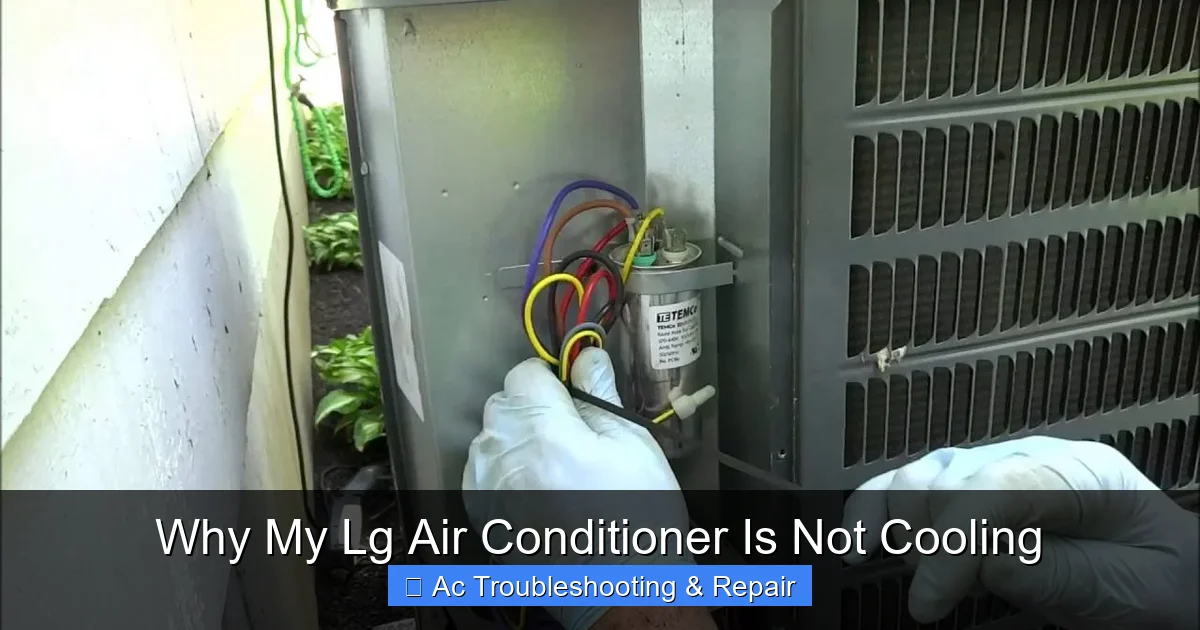
If your LG air conditioner is not cooling, it could be due to clogged filters, low refrigerant, or thermostat issues. Many problems are simple to fix with basic maintenance or professional help.
Key Takeaways
- Dirty air filters restrict airflow: Clogged filters are the #1 reason for poor cooling—clean or replace them every 1–3 months.
- Low refrigerant levels reduce efficiency: Refrigerant leaks require professional repair; never attempt to recharge it yourself.
- Thermostat settings matter: Ensure the thermostat is set to “Cool” mode and the temperature is lower than the room’s current reading.
- Blocked condenser coils hinder heat release: Outdoor units need clear space and clean coils to function properly.
- Frozen evaporator coils stop cooling: Ice buildup usually signals airflow or refrigerant problems—turn off the unit and let it thaw.
- Faulty capacitors or motors need expert attention: Electrical components like start capacitors often fail with age and require replacement by a technician.
- Regular maintenance prevents most issues: Schedule annual servicing to keep your LG AC running efficiently year after year.
📑 Table of Contents
- Why Is My LG Air Conditioner Not Cooling? A Complete Guide
- 1. Dirty or Clogged Air Filters
- 2. Thermostat Settings and Calibration Issues
- 3. Low Refrigerant Levels
- 4. Blocked or Dirty Condenser Coils
- 5. Frozen Evaporator Coils
- 6. Electrical Issues and Component Failures
- When to Call a Professional
- Preventative Maintenance Tips
- Conclusion
Why Is My LG Air Conditioner Not Cooling? A Complete Guide
It’s a hot summer afternoon, and you’ve just come home after a long day. You rush to turn on your LG air conditioner, hoping for instant relief—but instead of cool, refreshing air, you’re met with lukewarm breezes or nothing at all. Frustrating, right? You’re not alone. Thousands of homeowners face this exact problem every year, especially during peak cooling season.
LG air conditioners are known for their reliability, energy efficiency, and smart features. But like any complex appliance, they can develop issues over time. The good news? Most causes of an LG air conditioner not cooling are fixable—and many don’t require a costly service call. Whether you’re dealing with weak airflow, warm air blowing from the vents, or the unit simply refusing to start, understanding the root cause is the first step toward restoring comfort.
In this guide, we’ll walk you through the most common reasons your LG AC might not be cooling, how to diagnose them safely, and when it’s time to call in a professional. From simple DIY fixes like cleaning filters to more complex issues like refrigerant leaks, we’ve got you covered. By the end, you’ll have a clear action plan to get your AC back to peak performance.
1. Dirty or Clogged Air Filters
One of the most frequent—and easiest to fix—reasons your LG air conditioner is not cooling is a dirty air filter. Think of the air filter as your AC’s lungs. It pulls in room air, removes dust, pollen, and other particles, and sends clean air back into your home. But when that filter gets clogged with debris, airflow slows dramatically.
How Dirty Filters Affect Cooling
When airflow is restricted, the evaporator coil inside your indoor unit can’t absorb heat effectively. This leads to reduced cooling power, longer run times, and higher energy bills. In severe cases, the coil may even freeze over, completely blocking airflow and shutting down the system.
For example, imagine trying to breathe through a thick scarf—it’s hard work, and you don’t get enough oxygen. That’s exactly what happens to your AC when the filter is clogged.
Visual guide about Why My Lg Air Conditioner Is Not Cooling
Image source: sophiethinksthoughts.com
How to Check and Replace Your Filter
Most LG air conditioners have a washable or replaceable filter located behind the front panel of the indoor unit. Here’s how to check it:
- Turn off the AC and unplug it for safety.
- Open the front panel and remove the filter.
- Hold it up to the light—if you can’t see through it, it’s time to clean or replace it.
- For washable filters, rinse with lukewarm water and let it dry completely before reinstalling.
- For disposable filters, replace with a new one of the same size and type.
Pro tip: Mark your calendar to check the filter every month during heavy use seasons (summer and winter). Even if it looks clean, replace it every 1–3 months depending on usage and air quality.
Why This Fix Works
Cleaning or replacing the filter restores proper airflow, allowing the evaporator coil to function efficiently. In most cases, you’ll notice improved cooling within minutes of reinstalling a clean filter. It’s a simple step that can save you hundreds in energy costs and prevent more serious damage down the line.
2. Thermostat Settings and Calibration Issues
Sometimes, the problem isn’t with the AC unit itself—it’s with how it’s being controlled. Your LG air conditioner relies on the thermostat to tell it when to cool and when to stop. If the settings are wrong or the thermostat is malfunctioning, your AC might not cool at all—or it might cool too little.
Common Thermostat Mistakes
Many homeowners accidentally set their thermostat to “Fan” or “Heat” mode instead of “Cool.” Others set the temperature too high, so the AC never kicks on. For instance, if your room is 80°F and you set the thermostat to 85°F, the AC won’t activate because it thinks the room is already cooler than desired.
Another common issue is placing the thermostat near a heat source—like a window, lamp, or kitchen appliance. Sunlight or heat radiating onto the thermostat can trick it into thinking the room is warmer than it actually is, causing the AC to run longer than needed or not turn on at all.
How to Fix Thermostat Problems
Start by double-checking the basics:
- Ensure the mode is set to “Cool” (not “Auto,” “Fan,” or “Heat”).
- Set the temperature 5–7 degrees lower than the current room temperature.
- Check that the fan setting is on “Auto” (not “On”) to prevent continuous airflow without cooling.
- If your LG unit has a remote, make sure the remote’s temperature sensor isn’t blocked or covered.
When the Thermostat Is Faulty
If the settings are correct but the AC still won’t cool, the thermostat itself might be malfunctioning. Older mechanical thermostats can lose calibration over time, while digital models may have software glitches or dead batteries.
Try this quick test: Turn the thermostat down to its lowest setting. Listen for a clicking sound—this indicates the thermostat is sending a signal to the AC. If you don’t hear it, or if the AC still doesn’t respond, the thermostat may need recalibration or replacement.
For smart LG models with Wi-Fi connectivity, check the app for error messages or connectivity issues. Sometimes a simple reboot of the thermostat or the AC unit can resolve communication problems.
3. Low Refrigerant Levels
Refrigerant is the lifeblood of your air conditioner. It absorbs heat from indoor air and releases it outside, enabling the cooling cycle. If your LG air conditioner is not cooling, low refrigerant levels could be the culprit—especially if the unit was working fine before and suddenly started underperforming.
How Refrigerant Works
LG air conditioners use a sealed refrigerant system, typically filled with R-410A or R-32 gas. Under normal conditions, refrigerant doesn’t get used up—it circulates continuously. So if levels are low, it almost always means there’s a leak.
Signs of low refrigerant include:
- Warm air blowing from vents
- Ice buildup on the indoor or outdoor unit
- Hissing or bubbling sounds near the refrigerant lines
- Higher-than-normal electric bills
- The AC runs constantly but never cools the room
Why You Shouldn’t Recharge Refrigerant Yourself
Some homeowners try to fix low refrigerant by buying a DIY recharge kit. This is a big mistake. Refrigerant handling requires EPA certification, specialized tools, and knowledge of proper charging procedures. Overcharging or undercharging can damage the compressor—the most expensive part of your AC.
Plus, recharging without fixing the leak is like putting a bandage on a broken pipe. The refrigerant will just leak out again, and the problem will return.
What to Do If You Suspect a Refrigerant Leak
If you notice any of the signs above, turn off your AC and call a licensed HVAC technician. They’ll use electronic leak detectors or UV dye to locate the leak, repair it, and recharge the system to the correct level.
Prevention tip: Schedule annual maintenance to check refrigerant levels and inspect lines for wear or damage. Catching a small leak early can save you from a costly repair later.
4. Blocked or Dirty Condenser Coils
Your LG air conditioner has two sets of coils: the evaporator coil (indoor) and the condenser coil (outdoor). While the evaporator absorbs heat, the condenser releases it to the outside air. If the condenser coils are dirty or blocked, heat can’t escape, and your AC can’t cool your home.
Why Condenser Coils Get Dirty
The outdoor unit is exposed to dirt, leaves, grass clippings, pollen, and even pet hair. Over time, this debris builds up on the fins of the condenser coil, acting like insulation and trapping heat.
Imagine trying to cool a pot of water by blowing on it—but your breath is blocked by a thick blanket. That’s what happens when condenser coils are clogged.
How to Clean the Condenser Coils
Before cleaning, turn off power to the outdoor unit at the breaker box. Then:
- Remove any large debris (leaves, sticks) by hand.
- Use a garden hose with a gentle spray to rinse the coils. Never use a pressure washer—it can bend the delicate fins.
- For stubborn grime, use a soft brush or a coil cleaner spray (available at hardware stores).
- Straighten any bent fins with a fin comb to restore proper airflow.
Ensure Proper Clearance Around the Unit
LG recommends at least 2 feet of clearance on all sides of the outdoor unit. Trim back shrubs, vines, or grass that might block airflow. Avoid placing objects like grills, storage boxes, or furniture near the unit.
Good airflow around the condenser is essential for efficient heat exchange. A well-ventilated unit runs cooler, uses less energy, and lasts longer.
5. Frozen Evaporator Coils
If your LG air conditioner is running but blowing warm air—or no air at all—you might have frozen evaporator coils. Ice buildup on the indoor coil is a common symptom of underlying issues, not the root cause itself.
Why Coils Freeze
The evaporator coil gets cold as refrigerant absorbs heat from indoor air. But if airflow is restricted (due to a dirty filter or blocked vents) or refrigerant levels are low, the coil can get too cold and freeze moisture from the air.
Once ice forms, it acts as an insulator, preventing heat absorption and blocking airflow. The AC may shut off automatically to prevent damage.
How to Thaw Frozen Coils
If you see ice on the indoor unit:
- Turn off the AC immediately.
- Switch the fan to “On” to help melt the ice (this circulates room air over the coil).
- Wait 4–6 hours for the ice to melt completely.
- Check and clean the air filter.
- Ensure all vents and returns are open and unobstructed.
- Restart the AC and monitor for refreezing.
When to Call a Technician
If the coils refreeze after thawing, there’s likely a deeper issue—like a refrigerant leak or a faulty blower motor. Don’t keep restarting the unit; this can damage the compressor. Call a professional to diagnose and fix the problem.
6. Electrical Issues and Component Failures
Sometimes, your LG air conditioner is not cooling because of electrical problems. Over time, components like capacitors, contactors, and motors can wear out, especially in older units or those exposed to power surges.
Common Electrical Failures
– **Start capacitor:** Helps the compressor and fan motor start. A failed capacitor may cause the unit to hum but not start.
– **Contactor:** Switches power to the compressor and fan. A worn contactor may cause intermittent operation or no cooling.
– **Blower motor:** Circulates air through the ducts. If it fails, airflow drops, and the AC can’t cool effectively.
Signs of Electrical Problems
- The AC turns on but the compressor or fan doesn’t start
- Clicking sounds from the outdoor unit
- Burning smell or visible damage to wiring
- Frequent tripping of the circuit breaker
Why DIY Repairs Are Risky
Electrical components carry high voltage, even when the unit is off. Attempting to replace a capacitor or motor without proper training can result in electric shock, fire, or further damage to the system.
Always turn off power at the breaker and consult a licensed technician for electrical repairs. They have the tools and expertise to safely diagnose and replace faulty parts.
When to Call a Professional
While many AC issues can be resolved with simple maintenance, some problems require expert intervention. Here’s when to pick up the phone:
- You suspect a refrigerant leak
- The unit makes unusual noises (grinding, screeching)
- There’s a burning smell or smoke
- The AC trips the breaker repeatedly
- Ice keeps forming after cleaning and thawing
- Your unit is over 10 years old and cooling has declined
A qualified HVAC technician can perform a full system inspection, test electrical components, check refrigerant levels, and ensure your LG air conditioner is operating safely and efficiently.
Preventative Maintenance Tips
The best way to avoid an LG air conditioner not cooling is to keep it well-maintained. Here’s a simple seasonal checklist:
- Spring: Clean filters, inspect outdoor unit, trim vegetation, schedule professional tune-up.
- Summer: Check filters monthly, ensure vents are open, monitor performance.
- Fall: Clean outdoor unit, cover if necessary (optional), inspect for damage.
- Winter: Keep the area around the outdoor unit clear of snow and debris.
Regular maintenance not only prevents breakdowns but also extends the life of your AC and improves energy efficiency.
Conclusion
An LG air conditioner not cooling can be frustrating, but in most cases, the solution is within reach. Start with the basics: check your air filter, verify thermostat settings, and inspect the outdoor unit for blockages. These simple steps resolve the majority of cooling issues.
For more complex problems—like refrigerant leaks, frozen coils, or electrical failures—don’t hesitate to call a professional. Attempting DIY fixes on sealed systems or high-voltage components can be dangerous and may void your warranty.
By staying proactive with maintenance and addressing issues early, you’ll keep your LG air conditioner running smoothly for years to come. Stay cool, save energy, and enjoy the comfort your AC was designed to deliver.
Frequently Asked Questions
Why is my LG AC running but not cooling?
This is often due to a dirty air filter, blocked condenser coils, or low refrigerant. Check and clean the filter first, then inspect the outdoor unit for debris. If the problem persists, call a technician.
Can I recharge the refrigerant in my LG air conditioner myself?
No. Refrigerant handling requires EPA certification and specialized tools. Only licensed HVAC professionals should recharge or repair refrigerant systems to ensure safety and compliance.
How often should I clean my LG air conditioner’s filter?
Clean or replace the filter every 1–3 months, especially during heavy use seasons. A clogged filter restricts airflow and reduces cooling efficiency.
Why is ice forming on my LG AC unit?
Ice buildup usually indicates restricted airflow (from a dirty filter) or low refrigerant. Turn off the AC, let it thaw, and address the underlying cause to prevent refreezing.
What should I do if my LG AC won’t turn on at all?
Check the thermostat settings, ensure the unit is plugged in, and verify the circuit breaker hasn’t tripped. If it still won’t start, there may be an electrical issue requiring professional repair.
How can I improve my LG air conditioner’s cooling performance?
Keep filters clean, ensure proper ventilation around the outdoor unit, close windows and doors when cooling, and schedule annual maintenance to keep the system in top condition.