
If your LG portable air conditioner isn’t cooling, it’s often due to simple issues like clogged filters, improper setup, or blocked vents. This guide walks you through the most common problems and step-by-step solutions to get your unit blowing cold air again—no technician required.
Key Takeaways
- Dirty or clogged air filters restrict airflow and reduce cooling efficiency—clean them monthly.
- Incorrect temperature settings or mode selection can make the unit appear broken when it’s just misconfigured.
- Blocked exhaust hose or improper venting prevents hot air from escaping, causing the AC to work harder and cool less.
- Low refrigerant levels or system leaks require professional repair but often show signs like ice buildup or weak airflow.
- Room size vs. unit capacity mismatch means your AC may be undersized for the space it’s trying to cool.
- Frozen evaporator coils usually result from poor airflow or low refrigerant and need immediate attention.
- Electrical issues or faulty sensors can disrupt operation—check power supply and reset the unit if needed.
📑 Table of Contents
- Why Is My LG Portable Air Conditioner Not Cooling? A Complete Troubleshooting Guide
- Common Causes of Poor Cooling in LG Portable Air Conditioners
- Advanced Issues: When Basic Fixes Don’t Work
- Preventive Maintenance Tips to Keep Your LG Portable AC Cooling Efficiently
- When to Call a Professional
- Conclusion: Stay Cool with Confidence
Why Is My LG Portable Air Conditioner Not Cooling? A Complete Troubleshooting Guide
You’ve just come home on a sweltering summer afternoon, eager to escape the heat. You press the power button on your LG portable air conditioner, hear it hum to life—and then… nothing. Or worse, it blows air that’s barely cooler than the room. Frustrating? Absolutely. But before you panic or call a technician, know this: most cooling issues with LG portable ACs are fixable at home with a little know-how.
LG portable air conditioners are known for their sleek design, quiet operation, and reliable performance—but like any appliance, they can run into problems. The good news is that many of these issues stem from routine maintenance oversights, user errors, or environmental factors rather than major mechanical failures. In this comprehensive guide, we’ll walk you through the most common reasons your LG portable AC might not be cooling, how to diagnose them, and what you can do to fix them yourself. Whether you’re dealing with weak airflow, warm air output, or a unit that won’t start cooling at all, we’ve got you covered.
Common Causes of Poor Cooling in LG Portable Air Conditioners
Understanding why your LG portable air conditioner isn’t cooling starts with knowing how these units work. Unlike window units or central AC systems, portable ACs use a self-contained refrigeration system that cools indoor air while expelling hot exhaust air outside through a hose. If any part of this cycle is disrupted—air intake, cooling, or exhaust—the entire system suffers.
Visual guide about Why Is My Lg Portable Air Conditioner Not Cooling
Image source: i.ytimg.com
The root causes typically fall into one of several categories: airflow obstruction, incorrect settings, refrigerant issues, or mechanical faults. Many of these are preventable with regular care, while others may require a bit of hands-on troubleshooting. Let’s break down each major cause so you can pinpoint what’s going wrong with your unit.
1. Clogged or Dirty Air Filters
One of the most frequent—and easiest to fix—reasons your LG portable AC isn’t cooling is a dirty air filter. Over time, dust, pet hair, and other airborne particles accumulate on the filter, blocking airflow into the unit. When air can’t flow freely, the evaporator coils can’t absorb heat effectively, leading to reduced cooling power—or even freezing over.
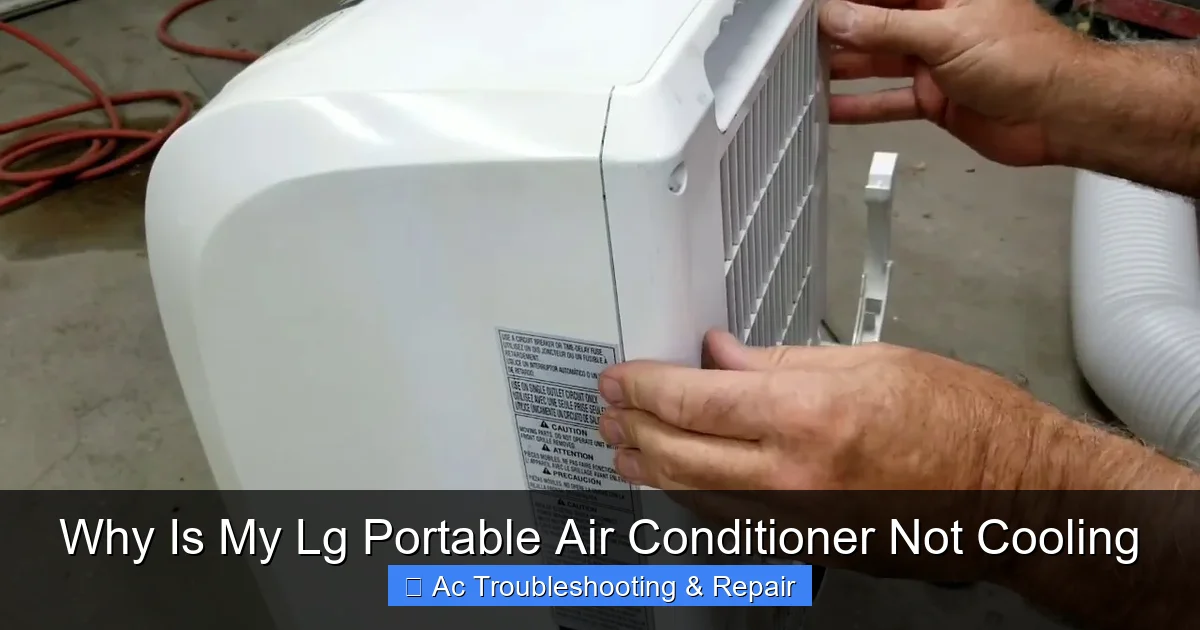
LG recommends cleaning the air filter every two weeks during heavy use and at least once a month otherwise. If you’ve skipped this step for a while, it’s likely the culprit. To check, simply remove the front grille (usually held by clips), pull out the filter, and inspect it. If it looks gray or clogged, it’s time for a wash.
How to fix it: Rinse the filter under lukewarm water, gently scrubbing with a soft brush if needed. Let it air-dry completely before reinstalling. Never run the unit with a wet filter—it can damage internal components or promote mold growth. Pro tip: Keep a spare filter on hand so you can swap it out while cleaning the other.
2. Improper Venting or Blocked Exhaust Hose
Portable air conditioners must expel hot air outside to function properly. This is done via a flexible exhaust hose that vents through a window, sliding door, or wall. If this hose is kinked, disconnected, or blocked, hot air gets trapped inside the unit, causing it to overheat and lose cooling efficiency.
Many users make the mistake of routing the hose through a poorly sealed window kit, allowing hot outdoor air to seep back in. Others coil the hose too tightly or run it over sharp edges, which can restrict airflow or even puncture the hose over time.
How to fix it: Inspect the entire length of the exhaust hose for bends, cracks, or obstructions. Ensure it’s securely attached to both the unit and the window kit. Use foam weather stripping or sealant to close any gaps around the window bracket. Ideally, the hose should have a slight downward slope away from the unit to prevent condensation buildup. If your hose is damaged, replace it with a compatible LG model—don’t try to patch it with tape.
3. Incorrect Temperature or Mode Settings
It sounds obvious, but sometimes the simplest explanation is the right one: your LG portable AC might not be cooling because it’s not set to cool! These units often have multiple modes—Cool, Fan, Dry (dehumidify), and sometimes Heat. If you accidentally switched to Fan or Dry mode, the compressor won’t engage, and you’ll only get room-temperature air.
Also, check the temperature setting. If you’ve set it to 85°F on a 90°F day, the unit may never kick on because it thinks the room is already cool enough. Or worse, you might have enabled “Energy Saver” or “Sleep” mode, which adjusts temperature gradually and can make cooling seem sluggish.
How to fix it: Press the “Mode” button until “Cool” appears on the display. Set the temperature at least 5–10 degrees below the current room temperature. Avoid extreme settings like 60°F—they won’t cool faster and may cause the unit to freeze up. Reset the remote or control panel if buttons feel unresponsive (remove batteries for 30 seconds, then reinsert).
4. Room Size vs. BTU Capacity Mismatch
Not all portable ACs are created equal. LG offers models ranging from 8,000 to 14,000 BTUs (British Thermal Units), each designed for specific room sizes. If you’re trying to cool a 400-square-foot living room with an 8,000-BTU unit, it’s going to struggle—no matter how well-maintained it is.
Undersized units run constantly, consume more energy, and still can’t lower the temperature significantly. They may also overheat or trip safety switches. Conversely, an oversized unit might cool the room too quickly without removing enough humidity, leaving you feeling clammy.
How to fix it: Check your unit’s BTU rating (usually on the label or in the manual). Use this general guide: 8,000 BTUs for up to 200 sq ft, 10,000 BTUs for 200–300 sq ft, 12,000 BTUs for 300–400 sq ft, and 14,000 BTUs for 400–500 sq ft. If your room is larger than recommended, consider upgrading your unit or using it in conjunction with ceiling fans to improve air circulation.
Advanced Issues: When Basic Fixes Don’t Work
If you’ve cleaned the filter, checked the settings, and ensured proper venting—but your LG portable AC still isn’t cooling—it’s time to look deeper. These next issues are less common but more serious, often involving internal components or system-level problems.
Frozen Evaporator Coils
One telltale sign of a deeper issue is ice buildup on the evaporator coils inside your unit. You might notice reduced airflow, water leaking from the bottom, or the AC shutting off unexpectedly. Frozen coils usually result from restricted airflow (like a dirty filter) or low refrigerant levels.
When coils freeze, they can’t absorb heat, so the AC blows warm air—or stops working altogether. Running the unit in this state can damage the compressor, which is expensive to replace.
How to fix it: Turn off the AC immediately and let it sit for 4–6 hours to thaw completely. Once thawed, clean the air filter and ensure nothing is blocking the intake or discharge vents. If the problem recurs within a day or two, it likely indicates a refrigerant leak or a faulty thermostat sensor—both require professional service. Do not try to chip away ice or force the unit to run.
Low Refrigerant or System Leaks
Refrigerant is the lifeblood of your AC’s cooling system. If levels drop due to a leak, the unit can’t absorb enough heat, leading to weak cooling or warm air output. Unlike car ACs, portable units are sealed systems—refrigerant shouldn’t need topping off under normal conditions. A drop means there’s a leak.
Symptoms include hissing sounds, oily residue near connections, or the unit running constantly without cooling. LG portable ACs use R-32 or R-410A refrigerant, which is environmentally safer but still requires certified technicians to handle.
How to fix it: Unfortunately, refrigerant leaks aren’t DIY-friendly. Contact LG customer support or a licensed HVAC technician. Attempting to recharge the system yourself is illegal in many areas and can void your warranty. If your unit is under warranty, LG may cover the repair or replacement.
Faulty Thermostat or Temperature Sensor
Your LG portable AC relies on internal sensors to monitor room temperature and decide when to cycle the compressor on or off. If the sensor is misaligned, dirty, or malfunctioning, it might “think” the room is already cool—even when it’s not—causing the AC to stop cooling prematurely.
This issue often mimics other problems: the unit runs but doesn’t cool, or it cycles on and off too frequently. You might also notice inconsistent temperature readings on the display.
How to fix it: Locate the temperature sensor (usually a small probe near the evaporator coil). Gently clean it with a dry cloth. Ensure it’s not touching any metal parts, as this can give false readings. If cleaning doesn’t help, the sensor may need calibration or replacement—again, best handled by a professional.
Electrical Problems or Power Issues
Sometimes, the issue isn’t with the cooling system at all—it’s with the power supply. If your LG portable AC isn’t getting consistent voltage, it may fail to start the compressor or shut down unexpectedly. This can happen if you’re using an extension cord (which reduces voltage), plugging into a overloaded circuit, or experiencing brownouts.
Also, check the circuit breaker—if it trips repeatedly when you turn on the AC, there could be an internal short or overload.
How to fix it: Plug the unit directly into a dedicated wall outlet (no extension cords!). Test the outlet with another appliance to confirm it’s working. Reset the circuit breaker if needed. If the problem persists, unplug the unit for 10 minutes to reset its internal electronics, then try again. If it still won’t cool, there may be a wiring issue inside—seek professional help.
Preventive Maintenance Tips to Keep Your LG Portable AC Cooling Efficiently
The best way to avoid cooling problems is to keep your LG portable air conditioner well-maintained year-round. A little effort now can save you from costly repairs—or a sweaty summer—later.
Monthly Maintenance Checklist
- Clean the air filter: Remove and rinse monthly; replace if damaged.
- Inspect the exhaust hose: Check for kinks, cracks, or loose connections.
- Wipe down exterior vents: Use a damp cloth to remove dust from intake and discharge grilles.
- Check drainage: Most LG portables are self-evaporating, but if yours has a drain plug, empty it regularly.
- Test operation: Run the unit for 10 minutes monthly, even in off-seasons, to keep seals lubricated.
Seasonal Deep Cleaning
Before peak summer use, give your unit a thorough cleaning. Unplug it, remove the front panel, and use a soft brush or vacuum attachment to clean around the evaporator and condenser coils. Avoid using water near electrical components. If you’re comfortable, inspect internal wiring for signs of wear—but if in doubt, call a pro.
Proper Storage
When not in use (e.g., winter months), store your LG portable AC in a dry, temperature-controlled space. Drain any remaining water, clean the filter, and cover the unit to prevent dust buildup. Never store it with the exhaust hose attached—this can trap moisture and lead to mold.
When to Call a Professional
While many cooling issues are DIY-friendly, some problems require expert attention. Don’t risk damaging your unit or voiding your warranty by attempting complex repairs yourself. Call a certified technician if you notice:
- Refrigerant leaks (hissing sounds, oily stains)
- Burning smells or smoke
- Repeated tripping of circuit breakers
- Compressor failure (unit hums but doesn’t cool)
- Water leakage despite proper drainage
LG offers excellent customer support and authorized service centers. If your unit is under warranty, always contact them first—they may provide free diagnostics or repairs.
Conclusion: Stay Cool with Confidence
Finding out why your LG portable air conditioner isn’t cooling doesn’t have to be a mystery—or a money pit. In most cases, the solution is as simple as cleaning a filter, adjusting a setting, or fixing a vent hose. By following the steps in this guide, you’ll not only restore cool comfort to your home but also extend the life of your unit.
Remember: regular maintenance is your best defense against performance issues. Treat your portable AC with care, and it will keep you comfortable through even the hottest days. And if all else fails? Don’t hesitate to reach out to LG support—they’re there to help. Stay cool, stay informed, and enjoy the breeze!
Frequently Asked Questions
Why is my LG portable AC blowing warm air?
This is usually due to a clogged filter, blocked exhaust hose, or incorrect mode setting. Check that the unit is in “Cool” mode, clean the air filter, and ensure the exhaust hose isn’t kinked or disconnected.
Can I recharge the refrigerant in my LG portable AC myself?
No—refrigerant recharging requires specialized tools and certification. Attempting it yourself is unsafe, illegal in many areas, and will void your warranty. Contact LG or a licensed technician instead.
How often should I clean the filter on my LG portable air conditioner?
Clean the air filter every two weeks during heavy use (summer) and at least once a month otherwise. A dirty filter restricts airflow and reduces cooling efficiency.
My LG portable AC is making a loud noise—what’s wrong?
Loud noises can indicate loose parts, a failing fan motor, or debris in the unit. Turn it off immediately and inspect for obstructions. If the noise persists, contact customer support.
Will using an extension cord affect my portable AC’s cooling?
Yes—extension cords reduce voltage and can cause the compressor to overheat or fail to start. Always plug your LG portable AC directly into a dedicated wall outlet.
How do I know if my portable AC is the right size for my room?
Match the unit’s BTU rating to your room size: 8,000 BTUs for up to 200 sq ft, 10,000 for 200–300 sq ft, 12,000 for 300–400 sq ft, and 14,000 for 400–500 sq ft. An undersized unit won’t cool effectively.