
If your LG portable air conditioner isn’t blowing cold air, it’s likely due to clogged filters, improper venting, or low refrigerant levels. This guide walks you through troubleshooting steps, maintenance tips, and when to call a professional—so you can stay cool and comfortable all summer long.
Key Takeaways
- Dirty air filters are the #1 cause: Clogged filters restrict airflow, reducing cooling efficiency and potentially freezing the evaporator coil.
- Improper exhaust venting blocks heat release: A kinked or poorly installed hose prevents hot air from escaping, making the unit work harder and blow warm air.
- Incorrect room size or placement matters: Using an AC too small for the space or placing it near heat sources limits its cooling ability.
- Low refrigerant levels require professional help: Unlike central systems, portable units are sealed—refrigerant leaks mean a technician is needed.
- Frost buildup on coils indicates airflow issues: Ice on the evaporator coil usually means restricted airflow or low refrigerant, both needing prompt attention.
- Thermostat settings and mode selection are often overlooked: Ensure the unit is set to “Cool” mode and the temperature is lower than the current room temp.
- Regular maintenance prevents most problems: Clean filters monthly, check vents weekly, and inspect for blockages to keep your LG portable AC running smoothly.
📑 Table of Contents
- Why Is My LG Portable Air Conditioner Not Blowing Cold? A Complete Troubleshooting Guide
- 1. Dirty or Clogged Air Filters Are Blocking Airflow
- 2. Improper or Blocked Exhaust Venting
- 3. Incorrect Room Size, Placement, or Heat Sources
- 4. Frost or Ice Buildup on the Evaporator Coil
- 5. Thermostat Settings, Mode Selection, or Sensor Issues
- 6. Low Refrigerant or Mechanical Failure
- Preventative Maintenance: Keep Your LG Portable AC Running Cool
- Conclusion: Stay Cool with Confidence
Why Is My LG Portable Air Conditioner Not Blowing Cold? A Complete Troubleshooting Guide
You’ve just come home on a sweltering summer afternoon, kicked off your shoes, and rushed to turn on your trusty LG portable air conditioner—only to feel a disappointing puff of lukewarm air. Sound familiar? You’re not alone. One of the most common complaints from LG portable AC owners is that their unit isn’t blowing cold air, even though it’s running.
Don’t panic—this issue is usually fixable without calling in an expensive technician. In fact, many causes are simple oversights or maintenance lapses that you can resolve yourself in under 30 minutes. Whether you own an LG LP1419IVSM, LP0821WSR, or any other model in LG’s portable lineup, the underlying reasons for poor cooling are often similar. This guide will walk you through every possible cause—from the obvious to the overlooked—and give you step-by-step solutions to get your cool air flowing again.
Portable air conditioners are convenient because they don’t require permanent installation, but they do have unique quirks. Unlike window units or central systems, they rely on a dual-hose or single-hose exhaust system to vent hot air outside. They also use built-in evaporators and condensers that need proper airflow and clean components to function efficiently. When something disrupts this delicate balance—like a dirty filter or a blocked vent—the result is often warm or room-temperature air blowing from the front grille.
The good news? Most of these issues are preventable and reversible. By understanding how your LG portable AC works and what can go wrong, you’ll be better equipped to diagnose and fix problems quickly. Let’s dive into the most common reasons your unit might not be cooling—and how to solve them.
1. Dirty or Clogged Air Filters Are Blocking Airflow
Visual guide about Why Is My Lg Portable Air Conditioner Not Blowing Cold
Image source: machineanswered.com
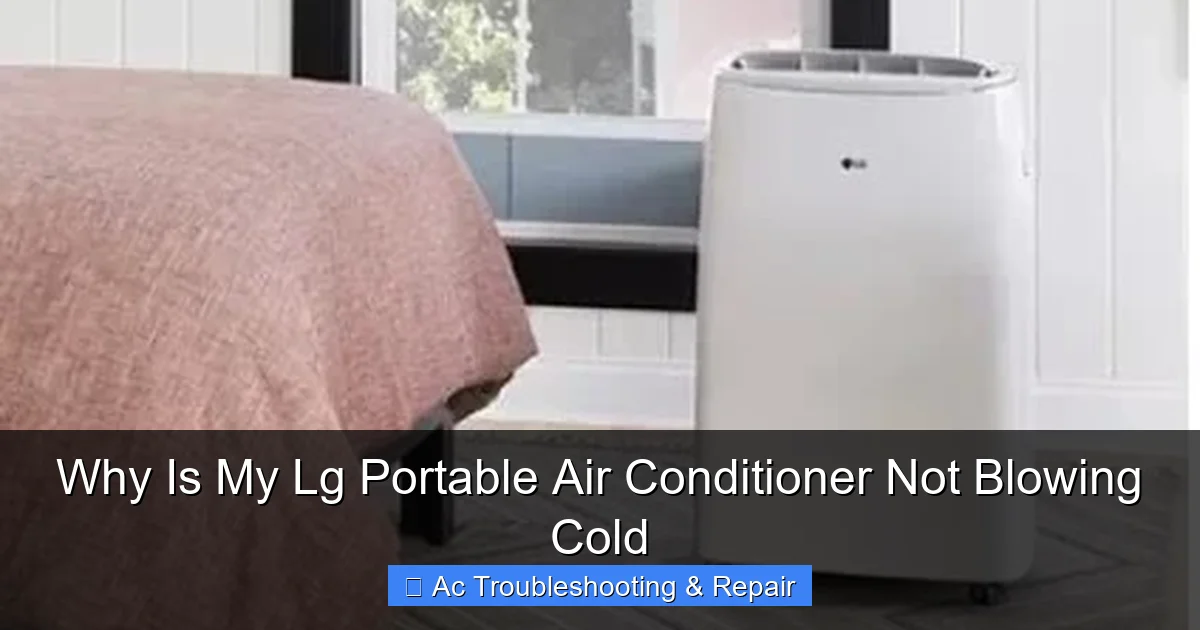
If your LG portable air conditioner isn’t blowing cold air, the very first thing you should check is the air filter. This is hands-down the most frequent culprit—and the easiest to fix.
Over time, dust, pet hair, pollen, and other airborne particles accumulate on the filter. As it gets clogged, it restricts the flow of air through the evaporator coil. When airflow drops, the coil can’t absorb enough heat from the room, and in extreme cases, it may even freeze over. Ironically, a frozen coil will eventually thaw and blow warm air once the ice melts—making it seem like the AC is working, but not cooling.
LG designs its portable units with accessible, washable filters. On most models, you’ll find the filter behind a front panel or grille that snaps off easily. Simply remove it, rinse it under lukewarm water, let it dry completely, and pop it back in. Never use hot water or harsh chemicals—they can damage the mesh.
Pro Tip: Clean your filter at least once a month during heavy use (like summer). If you have pets or live in a dusty area, check it every two weeks. A clean filter not only improves cooling but also extends the life of your unit and reduces energy bills.
How to Check and Clean Your LG Portable AC Filter
1. Turn off and unplug the unit for safety.
2. Locate the filter compartment—usually on the front or side.
3. Gently remove the filter cover and pull out the filter.
4. Shake off loose debris, then rinse with cool water.
5. Let it air-dry for at least 2–3 hours (never reinstall a wet filter).
6. Reinsert the filter and secure the cover.
After cleaning, run the AC for 15–20 minutes. You should notice improved airflow and colder air within minutes. If not, move on to the next troubleshooting step.
2. Improper or Blocked Exhaust Venting
Portable air conditioners work by pulling in warm room air, cooling it over the evaporator coil, and then expelling the hot exhaust air outside through a hose. If that hose is kinked, disconnected, or improperly installed, the hot air can’t escape—and your AC will struggle to cool the room.
Many users make the mistake of routing the exhaust hose through a window kit that’s too tight, or letting the hose sag or bend sharply. Even a small kink can reduce airflow by 50% or more. Additionally, if the window seal isn’t tight, hot outdoor air can sneak back in, counteracting the cooling effect.
LG portable ACs typically come with a single-hose system (on most models), meaning one hose pulls in room air, cools it, and exhausts the heat outside. Some newer models use dual-hose systems, which are more efficient but require two hoses. Either way, proper venting is critical.
Common venting mistakes include:
– Using a hose longer than recommended (usually max 6–8 feet)
– Routing the hose through a door instead of a window (creates gaps)
– Forgetting to secure the window bracket properly
– Letting the hose rest on hot surfaces (like radiators or direct sunlight)
Solution: Inspect the entire length of the exhaust hose. Make sure it’s straight, not crushed, and fully connected at both ends. Reinstall the window kit if needed, ensuring a tight seal with foam or weather stripping. If your hose is damaged or excessively long, consider replacing it with a shorter, high-quality insulated hose designed for portable ACs.
Bonus Tip: Insulate the Hose
In hot climates, the exhaust hose can absorb heat from the outside air, reducing efficiency. Wrap the hose with reflective insulation or foam pipe wrap to keep it cool. This small upgrade can improve cooling performance by up to 10%.
3. Incorrect Room Size, Placement, or Heat Sources
Even a perfectly functioning LG portable air conditioner can’t cool a room effectively if it’s undersized or poorly positioned. Every model has a specific BTU (British Thermal Unit) rating that determines the maximum room size it can cool. For example, an 8,000 BTU unit is ideal for rooms up to 300 square feet, while a 14,000 BTU model can handle up to 500 square feet.
If you’re trying to cool a large living room with a small 8,000 BTU unit, it will run constantly and still blow warm air because it simply can’t keep up with the heat load.
Room size isn’t the only factor—placement matters too. Placing your portable AC near a sunny window, oven, TV, or other heat-generating appliances forces it to work harder. Direct sunlight can raise the room temperature by 10–15°F, overwhelming the unit’s capacity.
Also, avoid placing the AC in a corner or behind furniture. It needs at least 18–24 inches of clearance on all sides for proper airflow. Blocking the intake or discharge grilles restricts air circulation and reduces cooling efficiency.
Quick Checklist for Optimal Placement:
– Choose a central location away from heat sources
– Keep it at least 2 feet from walls and furniture
– Avoid direct sunlight—use curtains or blinds
– Ensure the exhaust hose has a clear path to the window
If your room is too big for your current unit, consider upgrading to a higher-BTU model or using a fan to help circulate the cool air.
Example Scenario:
Sarah has an LG LP0821WSR (8,000 BTU) in her 400 sq. ft. living room. She notices it’s not cooling well, even after cleaning the filter. After measuring, she realizes the room is too large. She either needs to move the AC to a smaller bedroom or upgrade to a 12,000–14,000 BTU model for effective cooling.
4. Frost or Ice Buildup on the Evaporator Coil
Have you noticed frost or ice forming on the front grille or inside the unit? This is a clear sign that something is wrong—and it’s often related to airflow or refrigerant issues.
When the evaporator coil gets too cold (below freezing), moisture in the air condenses and freezes on its surface. While a light coating of frost is normal during startup, thick ice buildup blocks airflow and prevents the coil from absorbing heat. Eventually, the unit may shut off automatically or blow warm air once the ice melts.
Why does this happen?
– Dirty air filter (restricts airflow)
– Low fan speed setting
– Extremely humid environment
– Low refrigerant levels (rare but serious)
The first three causes are easy to fix. Start by turning off the AC and letting the ice melt completely—this can take 1–2 hours. Never chip at the ice with sharp objects; it can damage the coil.
Once thawed, clean the air filter and ensure the fan is set to “High” or “Auto.” Run the unit again and monitor for ice. If it returns quickly, there may be a refrigerant issue.
Important: LG portable air conditioners are sealed systems. If you suspect a refrigerant leak, do not attempt to recharge it yourself. Refrigerant handling requires EPA certification and specialized tools. Contact LG customer support or a licensed HVAC technician immediately.
How to Prevent Frost Buildup
– Clean filters monthly
– Use the fan on medium or high speed
– Avoid running the AC in extremely humid conditions without dehumidifying first
– Ensure proper ventilation and airflow around the unit
5. Thermostat Settings, Mode Selection, or Sensor Issues
Sometimes, the problem isn’t mechanical—it’s a simple setting error. It sounds obvious, but many users accidentally leave their LG portable AC in “Fan” mode instead of “Cool” mode. In Fan mode, the compressor doesn’t run, so no cooling occurs—just air circulation.
Double-check these settings:
– Is the mode set to “Cool” (not “Fan,” “Dry,” or “Heat”)?
– Is the temperature set lower than the current room temperature?
– Is the fan speed appropriate (try “Auto” or “High” for faster cooling)?
Also, some LG models have a “Smart Cool” or “Eco” mode that adjusts cooling based on room conditions. While energy-efficient, these modes may delay cooling if the room is very hot. For immediate relief, switch to “Cool” mode with a low temperature setting.
Another less common issue is a faulty thermostat or temperature sensor. If the unit thinks the room is already cool, it won’t activate the compressor. This can happen if the sensor is blocked by dust or placed near a cold surface (like an AC vent from another unit).
Tip: Use a separate room thermometer to verify the actual temperature. If your LG AC claims the room is 72°F but your thermometer reads 80°F, the sensor may be inaccurate.
Resetting the Unit
If settings seem correct but the AC still won’t cool, try a power reset:
1. Turn off the unit and unplug it.
2. Wait 5–10 minutes (this resets the internal electronics).
3. Plug it back in and restart in “Cool” mode.
This often resolves minor glitches in the control board or sensor readings.
6. Low Refrigerant or Mechanical Failure
If you’ve tried everything—cleaned the filter, checked the vent, verified settings, and ensured proper placement—but your LG portable air conditioner still isn’t blowing cold, the issue may be internal.
The most serious possibility is a refrigerant leak. Refrigerant is the chemical that absorbs heat from the air. Without enough of it, the AC can’t cool, no matter how hard it runs. Signs of low refrigerant include:
– Weak or warm airflow
– Hissing or bubbling sounds (from the leak)
– Ice buildup that returns after defrosting
– Unit runs constantly but never cools
As mentioned earlier, portable ACs are sealed systems. Unlike car ACs or window units, you can’t easily access or recharge the refrigerant. Attempting to do so without proper training is dangerous and illegal in many areas due to environmental regulations.
If you suspect a refrigerant issue, stop using the unit and contact LG support or a certified technician. They can diagnose the leak, repair it, and recharge the system safely.
Other mechanical failures—like a failed compressor, faulty capacitor, or broken fan motor—can also prevent cooling. These components are complex and typically require professional repair or replacement.
When to Call a Pro:
– You hear unusual noises (grinding, clicking, buzzing)
– The unit trips the circuit breaker repeatedly
– There’s a burning smell or smoke
– The compressor doesn’t start (you hear a hum but no cooling)
LG offers warranty support for registered products, so check your model number and purchase date before paying for repairs.
Preventative Maintenance: Keep Your LG Portable AC Running Cool
The best way to avoid cooling problems is regular maintenance. Think of your portable AC like a car—it needs periodic checkups to run smoothly.
Monthly Maintenance Routine:
– Clean the air filter
– Wipe down the exterior with a damp cloth
– Check the exhaust hose for kinks or damage
– Inspect the window seal for gaps
Seasonal Deep Clean (Before and After Summer):
– Vacuum the intake and discharge grilles
– Clean the water collection tray (if your model has one)
– Inspect the evaporator and condenser coils (if accessible)
– Test all modes and settings
Storing the unit properly in winter also helps. Drain any water, clean it thoroughly, and store it in a dry, cool place with the hose disconnected.
Conclusion: Stay Cool with Confidence
Finding out your LG portable air conditioner isn’t blowing cold air can be frustrating—especially during a heatwave. But in most cases, the solution is simpler than you think. Start with the basics: clean the filter, check the vent, verify your settings, and ensure proper placement. These steps resolve over 80% of cooling issues.
If the problem persists, don’t ignore it. Ignoring frost buildup, strange noises, or constant running can lead to bigger—and more expensive—problems down the line. And remember: refrigerant issues and mechanical failures require professional help. There’s no shame in calling a technician when needed.
By staying proactive with maintenance and understanding how your unit works, you’ll enjoy reliable, energy-efficient cooling for years to come. Your LG portable AC is designed to keep you comfortable—don’t let a small issue turn into a summer-long struggle.
So the next time your AC blows warm air, take a deep breath, grab your screwdriver (or just your hands), and start troubleshooting. You’ve got this.
Frequently Asked Questions
Why is my LG portable AC running but not cooling?
This is usually due to a dirty air filter, blocked exhaust hose, or incorrect settings. Clean the filter, check the vent for kinks, and ensure the unit is in “Cool” mode with a temperature lower than the room.
Can I recharge the refrigerant in my LG portable air conditioner?
No. Portable ACs are sealed systems, and refrigerant should only be handled by certified technicians. Attempting to recharge it yourself is unsafe and may void your warranty.
How often should I clean the filter on my LG portable AC?
Clean the filter at least once a month during heavy use. In dusty environments or homes with pets, check and clean it every two weeks to maintain optimal airflow and cooling.
Is it normal for my portable AC to blow warm air at startup?
Yes, briefly. It’s normal for the unit to blow room-temperature air for the first few minutes as the compressor starts up. If warm air continues after 10–15 minutes, there’s likely an issue.
Can I use my LG portable AC in a bathroom or kitchen?
Avoid using it in high-humidity areas like bathrooms unless necessary. Excess moisture can cause ice buildup on the coils. In kitchens, keep it away from stoves and ovens to prevent overheating.
What should I do if my portable AC keeps shutting off?
Frequent shutoffs may indicate overheating, a full water tank (on models with auto-drain), or a faulty sensor. Check the filter, ensure proper ventilation, and consult the manual for error codes.