
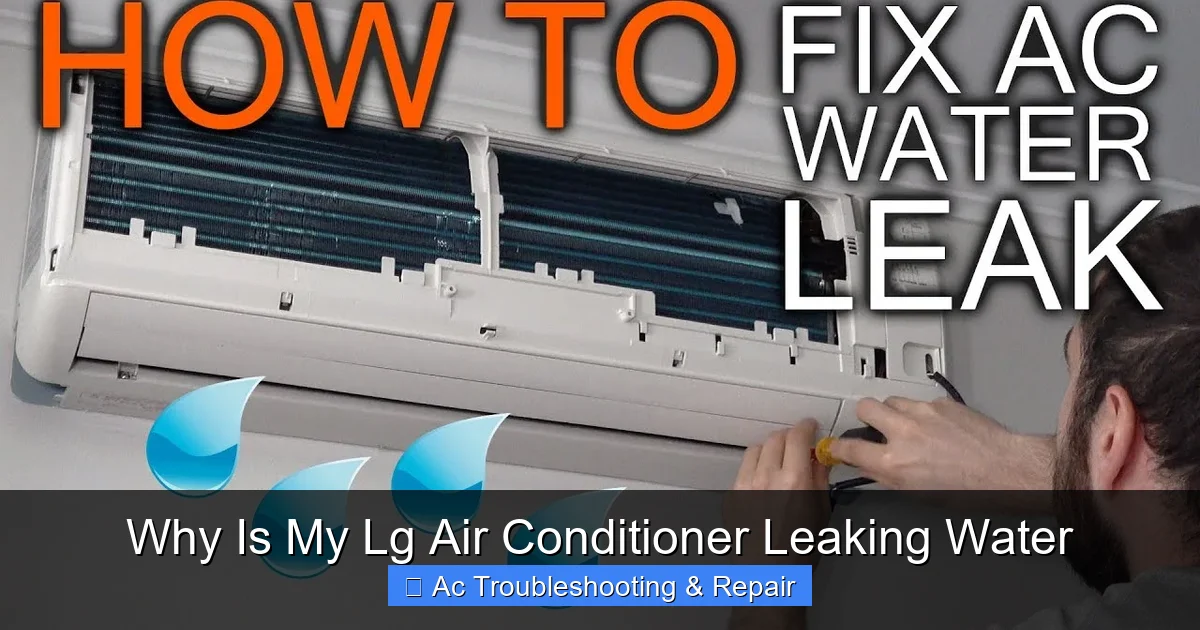
If your LG air conditioner is leaking water, it’s usually due to a clogged drain line, dirty air filter, or frozen evaporator coil. This common issue can often be resolved with simple maintenance, but ignoring it may lead to water damage or reduced cooling efficiency.
Key Takeaways
- Clogged condensate drain line: The most common cause of water leaks; debris and algae buildup block proper drainage.
- Dirty or clogged air filter: Restricts airflow, leading to frozen coils that eventually thaw and overflow.
- Frozen evaporator coil: Ice buildup melts during operation, overwhelming the drain pan.
- Improper installation or leveling: If the unit isn’t level, water can pool and leak instead of draining properly.
- Damaged or cracked drain pan: Over time, the pan can rust or crack, allowing water to escape.
- High indoor humidity: Excess moisture in the air increases condensation, potentially overwhelming the system.
- Refrigerant issues: Low refrigerant levels can cause coils to freeze and lead to water leakage when they thaw.
📑 Table of Contents
Why Is My LG Air Conditioner Leaking Water? A Complete Guide
You walk into your living room on a hot summer afternoon, looking forward to the cool breeze from your LG air conditioner—only to find a puddle of water on the floor beneath the unit. Your heart sinks. “Why is my LG air conditioner leaking water?” you wonder. It’s a frustrating and common problem, but the good news is that in most cases, it’s fixable without calling a technician.
Water leaks from your LG AC aren’t just annoying—they can lead to mold growth, damaged flooring, and even electrical hazards if left unchecked. But before you panic, understand that air conditioners are designed to produce condensation. In fact, it’s a normal part of the cooling process. However, when that water doesn’t drain properly, it starts to leak inside your home. The key is identifying the root cause and taking action quickly.
In this comprehensive guide, we’ll walk you through the most common reasons your LG air conditioner might be leaking water, how to diagnose the issue, and what you can do to fix it. Whether you’re dealing with a clogged drain line, a frozen coil, or a simple installation error, we’ve got you covered. Let’s dive in and get your AC back to cooling—not flooding—your space.
Understanding How Your LG Air Conditioner Handles Condensation
To understand why your LG air conditioner is leaking water, it helps to know how it’s supposed to manage moisture. Air conditioners don’t just cool the air—they also dehumidify it. As warm, humid air passes over the cold evaporator coil inside your unit, moisture in the air condenses into water droplets. This is similar to how a cold drink “sweats” on a hot day.
Visual guide about Why Is My Lg Air Conditioner Leaking Water
Image source: supertechhvac.com
This collected water drips into a shallow pan called the condensate drain pan, located beneath the evaporator coil. From there, it travels through a small plastic or PVC pipe—the condensate drain line—and exits your home, usually near the outdoor unit or into a floor drain. This entire system is designed to handle the normal amount of condensation produced during cooling.
Why Condensation Builds Up
Under normal conditions, the amount of water produced is manageable. But several factors can increase condensation or disrupt the drainage process:
- High humidity levels: On muggy days, your AC has to work harder to remove moisture, producing more water.
- Extended run times: During heatwaves, your AC runs constantly, increasing condensation output.
- Dirty coils or filters: These reduce efficiency, causing the system to overwork and produce excess moisture.
When the drainage system can’t keep up—whether due to blockages, damage, or improper setup—water begins to back up and leak into your home. That’s when you notice the telltale puddle near your indoor unit.
The Role of the Drain Pan and Drain Line
The drain pan and drain line are your AC’s first line of defense against leaks. The pan collects water, and the line carries it away. Over time, however, these components can become compromised:
- Algae and mold growth: The dark, moist environment inside the drain line is a breeding ground for organic buildup.
- Dust and debris: Airborne particles can enter the system and clog the drain.
- Improper slope: If the drain line isn’t angled correctly, water won’t flow out efficiently.
Even a small clog can cause water to overflow the pan and leak into your home. That’s why regular maintenance is essential—especially in humid climates or during peak cooling seasons.
Top 6 Causes of Water Leaks in LG Air Conditioners
Now that you understand how condensation works, let’s explore the six most common reasons your LG air conditioner might be leaking water. Each cause has its own symptoms and solutions, so identifying the right one is the first step to fixing the problem.
1. Clogged Condensate Drain Line
The condensate drain line is the most frequent culprit behind AC water leaks. Over time, algae, mold, dust, and mineral deposits can build up inside the narrow pipe, creating a blockage. When water can’t flow out, it backs up into the drain pan and eventually overflows.
Signs of a clogged drain line:
- Water pooling around the indoor unit
- Gurgling sounds from the drain line
- Musty odors near the AC (indicating mold growth)
How to fix it:
- Turn off the AC at the thermostat and circuit breaker for safety.
- Locate the drain line—usually a white PVC pipe near the indoor unit.
- Find the access point (often a T-shaped fitting or cleanout port).
- Use a wet/dry vacuum to suck out the clog, or flush the line with a mixture of water and vinegar.
- For stubborn clogs, use a plumber’s snake or call a professional.
Pro tip: Prevent future clogs by pouring a cup of distilled white vinegar into the drain line every 3–6 months. This kills algae and keeps the line clear.
2. Dirty or Clogged Air Filter
Your air filter plays a crucial role in maintaining airflow through the evaporator coil. When it becomes clogged with dust, pet dander, or debris, airflow is restricted. This causes the coil to get too cold and freeze over. Once the ice melts during operation, it can produce more water than the drain pan can handle, leading to leaks.
Signs of a dirty filter:
- Reduced cooling performance
- Ice buildup on the evaporator coil or refrigerant lines
- Higher energy bills
How to fix it:
- Turn off the AC.
- Locate the air filter—usually behind the front panel of the indoor unit.
- Remove the filter and inspect it. If it’s gray or clogged, replace it.
- Install a new filter of the same size and type.
- Turn the AC back on and monitor for leaks.
Maintenance tip: Check your filter every 30 days and replace it every 1–3 months, depending on usage and air quality.
3. Frozen Evaporator Coil
A frozen evaporator coil is often a symptom of another issue—like a dirty filter or low refrigerant—but it can directly cause water leaks. When the coil freezes, ice builds up and blocks airflow. Once the system cycles off or the ice begins to melt, the excess water can overwhelm the drain pan.
Signs of a frozen coil:
- Ice or frost on the copper refrigerant lines
- Warm air blowing from the vents
- AC frequently turning on and off (short cycling)
How to fix it:
- Turn off the AC and let the coil thaw completely (this may take several hours).
- Check and replace the air filter if dirty.
- Ensure vents and return air grilles are not blocked.
- Inspect the refrigerant lines—if you suspect a leak, call a technician.
- Once thawed, restart the AC and monitor for leaks.
Important: Never try to chip away ice from the coil—this can damage the fins and reduce efficiency.
4. Improper Installation or Leveling
If your LG air conditioner wasn’t installed correctly, it might not be level. Air conditioners are designed to tilt slightly toward the drain line so water flows out naturally. If the unit is tilted the wrong way or sits flat, water can pool in the drain pan and leak.
Signs of improper leveling:
- Water collects on one side of the unit
- Leak occurs even when the drain line is clear
- Unit vibrates or makes unusual noises
How to fix it:
- Turn off the AC.
- Use a level to check if the indoor unit is properly aligned.
- If it’s not level, adjust the mounting brackets or shims underneath.
- Ensure the drain line has a slight downward slope (about 1/4 inch per foot).
- Test the system and check for leaks.
Note: If you’re not comfortable adjusting the unit yourself, contact the installer or a licensed HVAC technician.
5. Damaged or Cracked Drain Pan
The drain pan is typically made of plastic or galvanized steel. Over time, especially in older units, it can crack, rust, or degrade—particularly if it’s exposed to constant moisture. A damaged pan can’t hold water, so it leaks directly onto your floor.
Signs of a damaged drain pan:
- Visible cracks or rust spots on the pan
- Water dripping from the bottom of the unit
- Corrosion around the drain outlet
How to fix it:
- Turn off the AC and disconnect power.
- Remove the front panel to access the drain pan.
- Inspect the pan for cracks, holes, or rust.
- If damaged, replace the pan with a compatible LG model.
- Seal any joints with waterproof HVAC tape or silicone.
Replacement tip: Drain pans can be purchased online or from HVAC supply stores. Make sure to get the exact model number for your LG unit.
6. Low Refrigerant Levels
Refrigerant is the lifeblood of your air conditioner. If levels are low—due to a leak or improper charging—the pressure in the system drops. This causes the evaporator coil to get too cold and freeze. When the ice melts, it can lead to water leaks.
Signs of low refrigerant:
- Ice on the refrigerant lines
- Weak cooling performance
- Hissing or bubbling sounds (indicating a leak)
- Higher-than-normal electric bills
How to fix it:
- Turn off the AC.
- Do not attempt to add refrigerant yourself—this requires EPA certification.
- Contact a licensed HVAC technician to inspect for leaks and recharge the system.
- Once repaired, monitor for leaks and ensure proper cooling.
Important: Adding refrigerant without fixing the leak is a temporary fix. The leak must be located and sealed to prevent future issues.
Preventing Future Water Leaks in Your LG Air Conditioner
Now that you know the common causes of water leaks, let’s talk about how to prevent them from happening again. A little proactive maintenance can save you time, money, and headaches down the road.
Regular Maintenance Checklist
Set a reminder to perform these tasks every 1–3 months:
- Check and replace the air filter: A clean filter ensures proper airflow and prevents coil freezing.
- Inspect the drain line: Look for clogs, cracks, or algae buildup. Flush with vinegar if needed.
- Clean the evaporator coil: Use a soft brush or coil cleaner to remove dust and debris.
- Check the drain pan: Look for cracks, rust, or standing water.
- Ensure proper leveling: Use a level to confirm the unit is tilted correctly.
- Clear debris around the outdoor unit: Keep leaves, dirt, and grass away from the condenser.
Seasonal AC Tune-Ups
Before the summer cooling season begins, schedule a professional HVAC inspection. A technician can:
- Check refrigerant levels
- Clean coils and fins
- Inspect electrical connections
- Test drainage and safety controls
- Verify proper airflow and thermostat operation
Many LG dealers offer maintenance plans that include annual inspections and priority service.
Use a Condensate Drain Pan Treatment
To prevent algae and mold growth in the drain line, use a commercial drain pan treatment tablet or liquid. These are designed to dissolve slowly and keep the line clear for months. Simply drop one in the drain pan or pour it into the line every 3–6 months.
Monitor Indoor Humidity
High humidity increases condensation. Use a hygrometer to check indoor humidity levels—ideally between 30% and 50%. If it’s too high, consider using a dehumidifier or ensuring your AC runs long enough to remove moisture (avoid frequent on/off cycling).
When to Call a Professional
While many water leaks can be fixed with DIY solutions, some issues require expert help. Call a licensed HVAC technician if:
- You suspect a refrigerant leak
- The drain pan is severely damaged and hard to access
- The unit is under warranty and DIY repairs could void it
- You’ve tried basic fixes but the leak continues
- There’s electrical damage or water near wiring
Ignoring a persistent leak can lead to mold, structural damage, or system failure. It’s always better to be safe than sorry.
Conclusion
Finding water under your LG air conditioner can be alarming, but it’s rarely a sign of a major breakdown. In most cases, the issue stems from a clogged drain line, dirty filter, or frozen coil—problems that are often easy to fix with a little know-how and regular maintenance.
By understanding how your AC manages condensation and staying on top of routine care, you can prevent leaks before they start. Check your filter monthly, clean the drain line periodically, and keep an eye out for ice buildup or unusual sounds. And if you’re ever unsure, don’t hesitate to call a professional.
Your LG air conditioner is designed to keep you cool and comfortable—not to flood your home. With the right care, it will continue to do just that for many summers to come.
Frequently Asked Questions
Why is my LG air conditioner leaking water from the front?
This usually indicates a clogged drain line or overflowing drain pan. Check the condensate drain for blockages and ensure the unit is level. If the pan is cracked, it may need replacement.
Can a dirty air filter cause my LG AC to leak water?
Yes. A dirty filter restricts airflow, causing the evaporator coil to freeze. When the ice melts, it can overwhelm the drain pan and lead to leaks.
How often should I clean the condensate drain line?
Flush the drain line with vinegar every 3–6 months to prevent algae and mold buildup. Do this more frequently if you live in a humid climate.
Is it normal for my LG air conditioner to drip water outside?
Yes. A small amount of water dripping from the outdoor unit is normal and part of the condensation process. However, water inside your home is not normal and should be addressed.
Can low refrigerant cause water leaks?
Yes. Low refrigerant causes the evaporator coil to freeze. When the ice melts, it can produce excess water that leads to leaks.
Should I turn off my LG AC if it’s leaking water?
Yes. Turn off the unit to prevent further water damage and electrical hazards. Then identify and fix the cause before restarting.