
If your LG portable air conditioner keeps shutting off, it’s usually due to overheating, clogged filters, or drainage issues. This guide walks you through the most common reasons and practical solutions to restore reliable cooling.
You’re relaxing on the couch, enjoying the cool breeze from your LG portable air conditioner—then suddenly, it shuts off. No warning. No error code. Just silence. Frustrating, right? You’re not alone. Many LG portable AC owners experience this exact issue, especially during hot summer months when the unit is working hardest. But before you panic or call a technician, know this: most shutdown problems are fixable with a little troubleshooting.
LG portable air conditioners are designed with smart safety features to protect both the machine and your home. When something goes wrong—like overheating, water buildup, or electrical hiccups—the unit automatically powers down. While this might seem like a defect, it’s actually a sign that your AC is doing its job: preventing damage. The key is understanding *why* it’s shutting off so you can address the root cause quickly and get back to cool, comfortable air.
In this guide, we’ll walk you through the most common reasons your LG portable air conditioner keeps shutting off—and how to fix them yourself. From simple maintenance tasks like cleaning filters to checking drainage systems and electrical connections, you’ll learn practical, step-by-step solutions. We’ll also cover less obvious culprits like room size, thermostat settings, and even software glitches. By the end, you’ll have the knowledge and confidence to keep your portable AC running smoothly all season long.
Key Takeaways
- Dirty air filters: Clogged filters restrict airflow, causing the unit to overheat and shut down automatically.
- Improper drainage: If the condensate tank is full or the drain hose is blocked, the AC will stop to prevent water damage.
- Overheating protection: Built-in thermal sensors turn off the unit when internal temperatures get too high—often from poor ventilation.
- Incorrect thermostat settings: Setting the temperature too low or using eco mode can trigger premature shutdowns.
- Electrical issues: Faulty power cords, tripped breakers, or unstable voltage can interrupt operation.
- Room size mismatch: An undersized unit working overtime may overheat and cycle off frequently.
- Software glitches: Occasionally, a simple reset or firmware update resolves unexplained shutdowns.
📑 Table of Contents
Common Causes of Unexpected Shutdowns
When your LG portable air conditioner turns off without warning, it’s almost always a protective response. These units are packed with sensors and safety mechanisms designed to shut down the system if conditions become unsafe. While this can be annoying, it’s actually a good thing—it means your AC is protecting itself (and your home) from potential damage. Let’s break down the most frequent triggers.
One of the top reasons for sudden shutdowns is overheating. Portable ACs generate heat during operation, and if that heat can’t escape properly, internal components can overheat. This triggers the thermal overload protector, which cuts power to prevent motor burnout or fire hazards. Overheating often stems from blocked vents, dirty filters, or placing the unit in a poorly ventilated space.
Another common cause is drainage issues. Portable air conditioners remove moisture from the air, which collects in an internal tank or drains through a hose. If the tank fills up or the hose gets kinked or clogged, the unit will shut off to avoid water leaks. LG models often have a float switch that detects high water levels and stops the compressor automatically.
Electrical problems also play a role. A tripped circuit breaker, loose power cord, or voltage fluctuations can interrupt power supply, causing the AC to turn off unexpectedly. Sometimes, the issue isn’t with the unit itself but with the outlet or wiring in your home.
Finally, user settings can unintentionally cause shutdowns. For example, setting the thermostat too low in a large room may cause the unit to run continuously until it overheats. Or, using energy-saving modes like “Eco” might cause the compressor to cycle off prematurely if the room isn’t cooling fast enough.
Understanding these common causes is the first step toward fixing the problem. In the next sections, we’ll dive deeper into each issue and show you exactly how to resolve it.
How Safety Features Trigger Shutdowns
LG portable air conditioners come equipped with multiple safety features that monitor temperature, humidity, and electrical performance. These aren’t flaws—they’re safeguards. For instance, the thermal overload protector monitors the compressor and fan motor. If either gets too hot, the system shuts down to prevent damage. Similarly, the float switch in the condensate tank detects when water reaches a certain level and cuts power to avoid overflow.
These features are designed to activate quickly, often before you even notice a problem. That’s why your AC might shut off seemingly out of nowhere. It’s not broken—it’s being cautious. The challenge is figuring out which sensor triggered the shutdown so you can fix the underlying issue.
Signs It’s a Safety Shutdown (Not a Malfunction)
How can you tell if your AC shut down due to a safety feature rather than a mechanical failure? Look for these clues:
– The unit turns off after running for 10–30 minutes (common with overheating).
– You hear a clicking sound before it shuts off (often the thermal protector engaging).
– The display shows an error code like “E1” or “F1” (indicating water full or sensor issues).
– The room feels warm, but the AC isn’t making noise or blowing air.
If you notice these signs, it’s likely a safety shutdown—and usually fixable with basic maintenance.
Dirty or Clogged Air Filters
Visual guide about Why Does My Lg Portable Air Conditioner Keep Shutting Off
Image source: pickcomfort.com
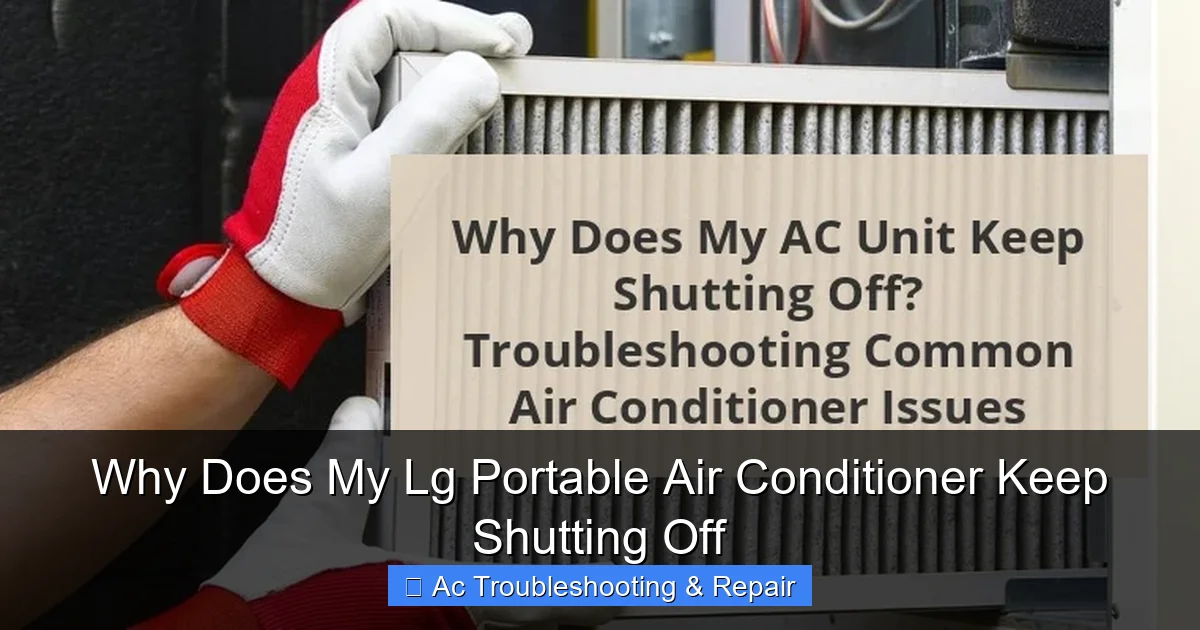
One of the simplest yet most overlooked causes of AC shutdowns is dirty air filters. Over time, dust, pet hair, and debris accumulate on the filter, blocking airflow. When air can’t flow freely through the unit, the evaporator coil can’t absorb heat efficiently. This causes the system to work harder, leading to overheating and automatic shutdown.
LG portable air conditioners typically have a washable mesh filter located behind the front panel. If this filter is clogged, the internal temperature rises, triggering the thermal protection system. You might also notice reduced cooling performance, louder operation, or ice buildup on the coils—all signs of restricted airflow.
Cleaning the filter is one of the easiest fixes. Most LG models allow you to remove the filter in seconds—no tools required. Simply slide it out, rinse it under warm water, and let it air dry completely before reinstalling. For best results, clean the filter every 2–4 weeks during heavy use.
How to Clean Your LG Portable AC Filter
Follow these steps to clean your filter safely:
1. Turn off and unplug the unit.
2. Open the front panel (usually by pressing tabs or removing screws).
3. Gently pull out the filter.
4. Rinse it under lukewarm water—avoid hot water, which can warp the mesh.
5. Use a soft brush to remove stubborn dirt if needed.
6. Let the filter dry completely (at least 2–4 hours).
7. Reinsert the filter and close the panel.
Pro tip: Mark your calendar to clean the filter monthly. If you have pets or live in a dusty area, check it every two weeks.
What Happens If You Ignore the Filter?
Skipping filter maintenance doesn’t just cause shutdowns—it can shorten your AC’s lifespan. A clogged filter forces the fan and compressor to work harder, increasing wear and tear. It also reduces energy efficiency, raising your electricity bill. In extreme cases, restricted airflow can cause the evaporator coil to freeze, leading to water leaks and further damage.
Drainage and Water Tank Issues
Portable air conditioners remove moisture from the air as part of the cooling process. This moisture collects as condensate, which must be drained to prevent overflow. LG portable ACs use one of two drainage methods: a built-in water tank or a continuous drain hose. If either system fails, the unit will shut off to avoid water damage.
The most common drainage problem is a full water tank. Most LG models have a float switch inside the tank that rises as water fills up. When the tank is full, the switch triggers a shutdown and may display an “E1” or “F1” error code. This is your AC’s way of saying, “I’m full—please empty me!”
Another issue is a clogged or improperly installed drain hose. If you’re using continuous drainage, the hose must slope downward and be free of kinks. A blocked hose prevents water from exiting, causing it to back up into the tank and trigger the float switch.
How to Check and Empty the Water Tank
To check the tank:
1. Turn off and unplug the unit.
2. Locate the water tank—usually at the back or bottom of the unit.
3. Slide it out carefully (some models have a release button).
4. Pour out the water and wipe the tank clean.
5. Reinsert the tank until it clicks into place.
If your model uses a drain hose, ensure it’s connected securely and draining into a floor drain, sink, or bucket. Never let the hose rest in standing water, as this can cause backflow.
When to Use Continuous Drainage
If you run your AC for long periods (e.g., all day), consider using continuous drainage instead of relying on the tank. This prevents frequent shutdowns and reduces maintenance. Simply attach the drain hose and direct it to a suitable outlet. Some users even connect a small pump for automated drainage in hard-to-reach areas.
Overheating and Ventilation Problems
Overheating is a major cause of shutdowns in portable air conditioners. These units generate significant heat during operation, especially the compressor and condenser. If that heat can’t escape, internal temperatures rise, triggering the thermal overload protector.
Poor ventilation is often the culprit. Portable ACs need space to breathe. If you place the unit in a corner, behind furniture, or too close to walls, hot air can’t circulate properly. The exhaust hose must also be vented correctly—kinked, blocked, or overly long hoses restrict airflow and cause heat buildup.
Room size also matters. If your AC is undersized for the space, it will run continuously trying to cool the room. This constant operation generates excess heat, increasing the risk of overheating and shutdown.
Proper Placement for Optimal Airflow
To prevent overheating:
– Place the unit at least 12–18 inches away from walls and furniture.
– Keep the front and rear vents clear of obstructions.
– Ensure the exhaust hose is straight, short (under 5 feet if possible), and vented through a window or wall.
– Avoid placing the AC in direct sunlight or near heat sources like ovens or radiators.
Signs of Overheating
Watch for these warning signs:
– The unit feels hot to the touch (especially near the back).
– It shuts off after 15–30 minutes of operation.
– You smell a burning odor (stop use immediately and unplug).
– The fan runs but no cool air comes out.
If you notice these symptoms, turn off the AC, let it cool for 30 minutes, and check ventilation and filters.
Thermostat and Settings Misconfigurations
Sometimes, the reason your LG portable air conditioner keeps shutting off isn’t mechanical—it’s a settings issue. Incorrect thermostat settings or energy-saving modes can cause the unit to cycle off prematurely or struggle to maintain temperature.
For example, setting the thermostat too low (like 60°F) in a hot room may cause the compressor to run nonstop. Eventually, it overheats and shuts down. Similarly, using “Eco” or “Sleep” mode can reduce compressor output to save energy. While helpful for efficiency, these modes may not provide enough cooling in extreme heat, leading to frequent on/off cycles.
Another common mistake is placing the remote control or thermostat sensor near a heat source (like a lamp or window). This can cause the AC to think the room is cooler than it actually is, shutting off too soon.
Recommended Thermostat Settings
For most homes, set the thermostat between 72°F and 78°F. This range balances comfort and efficiency. Avoid extreme settings, especially during peak heat. If your room feels too warm, improve airflow with fans or close curtains to block sunlight.
Using Modes Wisely
– **Cool Mode:** Best for active cooling. Use during the day or when you need rapid temperature drops.
– **Fan Mode:** Circulates air without cooling. Great for mild days or improving airflow.
– **Dry Mode:** Reduces humidity without heavy cooling. Ideal for humid climates.
– **Eco Mode:** Saves energy but may reduce cooling power. Use only if your room cools quickly.
Avoid using Eco mode in large rooms or during heatwaves—it may cause the unit to shut off prematurely.
Electrical and Power Supply Issues
Electrical problems can also cause your LG portable air conditioner to shut off unexpectedly. These issues range from simple (a tripped breaker) to more complex (voltage fluctuations or faulty wiring).
Portable ACs draw a lot of power—often 10–15 amps. If your home’s electrical circuit is overloaded (e.g., running a microwave, space heater, or hair dryer on the same outlet), the breaker may trip, cutting power to the AC. Similarly, a loose or damaged power cord can cause intermittent connections, leading to sudden shutdowns.
Voltage instability is another concern. If your home experiences frequent brownouts or surges, the AC’s internal electronics may shut down to protect themselves. This is especially common in older homes or areas with unreliable power grids.
How to Check Your Power Supply
1. Make sure the AC is plugged into a dedicated outlet (not a power strip or extension cord).
2. Check the circuit breaker—if it’s tripped, reset it and avoid overloading the circuit.
3. Test the outlet with another device to confirm it’s working.
4. Inspect the power cord for fraying, burns, or loose connections.
If the outlet works but the AC still shuts off, consider using a surge protector or consulting an electrician.
When to Call a Professional
If you’ve ruled out filters, drainage, and settings, and the AC still shuts off, there may be an internal electrical issue—like a faulty capacitor, relay, or control board. These require professional diagnosis and repair. Never attempt to open the unit yourself, as it contains high-voltage components.
Room Size and Unit Capacity Mismatch
Using an undersized air conditioner for your room is a recipe for trouble. If your LG portable AC isn’t powerful enough to cool the space, it will run continuously, overheat, and shut down frequently.
LG portable air conditioners are rated by BTUs (British Thermal Units). A 10,000 BTU unit, for example, is suitable for rooms up to 450 square feet. If you try to cool a 600-square-foot room with that same unit, it will struggle, leading to overheating and shutdowns.
How to Match BTUs to Room Size
Use this general guide:
– 7,000 BTU: Up to 300 sq ft
– 10,000 BTU: Up to 450 sq ft
– 12,000 BTU: Up to 550 sq ft
– 14,000 BTU: Up to 700 sq ft
Measure your room and choose a unit with adequate capacity. If you’re between sizes, go up—not down.
Improving Cooling Efficiency
Even with the right size unit, you can boost performance by:
– Closing doors and windows to contain cool air.
– Using curtains or blinds to block sunlight.
– Adding ceiling or floor fans to improve air circulation.
– Sealing gaps around windows and doors.
These steps reduce the workload on your AC, helping it run longer without overheating.
Software Glitches and Reset Solutions
Sometimes, your LG portable air conditioner keeps shutting off due to a software glitch—not a hardware problem. Like any smart appliance, these units have internal firmware that can occasionally freeze or malfunction.
A simple reset often resolves these issues. Unplugging the unit for 5–10 minutes allows the system to reboot and clear temporary errors. This is especially effective if the AC shuts off randomly without any obvious cause.
How to Perform a Hard Reset
1. Turn off the AC using the remote or control panel.
2. Unplug it from the wall outlet.
3. Wait 5–10 minutes (this drains residual power from capacitors).
4. Plug it back in and turn it on.
After the reset, test the unit for 30 minutes. If it runs normally, the glitch is likely fixed.
When to Update Firmware
Some newer LG models support firmware updates via Wi-Fi or USB. Check the user manual or LG’s support website to see if your model is eligible. Updates can fix bugs, improve performance, and resolve unexplained shutdowns.
Conclusion
If your LG portable air conditioner keeps shutting off, don’t panic—it’s usually a solvable issue. From dirty filters and full water tanks to overheating and incorrect settings, most shutdowns are caused by preventable problems. By following the troubleshooting steps in this guide, you can restore reliable cooling and extend the life of your unit.
Start with the basics: clean the filter, empty the tank, and ensure proper ventilation. Check your thermostat settings and power supply. If the problem persists, consider room size or consult a professional for electrical issues. With a little maintenance and attention, your portable AC will keep you cool all summer long.
Remember, these shutdowns are often your AC’s way of protecting itself. Listen to those signals, address the root cause, and enjoy peace of mind knowing your unit is working safely and efficiently.
Frequently Asked Questions
Why does my LG portable air conditioner shut off after 10 minutes?
This is typically due to overheating or a full water tank. The unit’s thermal protector or float switch triggers a shutdown to prevent damage. Clean the filter, empty the tank, and ensure proper ventilation.
What does the “E1” error code mean on my LG portable AC?
The “E1” code usually indicates a full condensate tank. Empty the water tank and ensure the drain hose (if used) is not blocked. Reset the unit after clearing the tank.
Can a dirty filter really cause my AC to shut off?
Yes. A clogged filter restricts airflow, causing the evaporator coil to overheat. This triggers the thermal protection system, shutting down the unit to prevent damage.
How often should I clean the filter on my LG portable air conditioner?
Clean the filter every 2–4 weeks during heavy use. If you have pets or live in a dusty area, check it every two weeks to maintain optimal performance.
Is it safe to use an extension cord with my portable AC?
No. Portable ACs require a dedicated outlet. Extension cords can overheat and cause power interruptions. Always plug directly into a grounded wall outlet.
My LG portable AC keeps shutting off in Eco mode. Why?
Eco mode reduces compressor output to save energy. In hot or large rooms, this may not provide enough cooling, causing the unit to cycle off prematurely. Switch to Cool mode for better performance.