
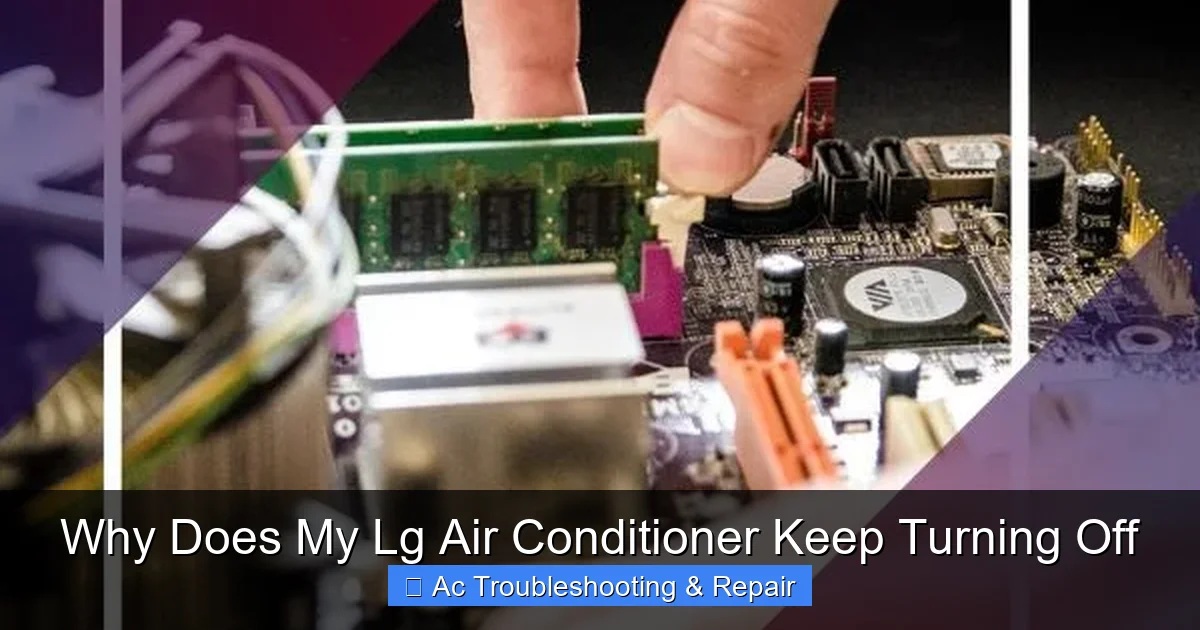
If your LG air conditioner keeps turning off, it’s often due to dirty filters, thermostat issues, or refrigerant leaks. These problems can trigger safety shutdowns or poor performance. With simple troubleshooting and regular maintenance, you can restore reliable cooling and avoid costly repairs.
Key Takeaways
- Dirty or clogged air filters restrict airflow, causing the AC to overheat and shut down automatically.
- Thermostat malfunctions can send incorrect signals, leading to frequent on-and-off cycling.
- Refrigerant leaks reduce cooling efficiency and may trigger low-pressure safety switches that turn off the unit.
- Frozen evaporator coils block airflow and cause the system to shut off as a protective measure.
- Electrical issues like loose wiring or a failing capacitor can interrupt power and cause unexpected shutdowns.
- Overheating due to poor ventilation around the outdoor unit forces the compressor to shut down to prevent damage.
- Outdated firmware or control board errors in smart LG models may cause erratic behavior and sudden power-offs.
📑 Table of Contents
Why Does My LG Air Conditioner Keep Turning Off?
You’re enjoying a hot summer day, and your LG air conditioner is doing its job—cooling your home, keeping you comfortable. Then, suddenly, it shuts off. No warning. No explanation. You wait a few minutes, turn it back on, and it runs for a little while before shutting down again. Sound familiar?
This frustrating cycle is more common than you might think. LG air conditioners are known for their reliability and smart features, but like any complex appliance, they can develop issues over time. When your AC keeps turning off, it’s not just an inconvenience—it’s a sign that something isn’t right. Ignoring it could lead to bigger problems, higher energy bills, or even complete system failure.
The good news? Most of the reasons your LG air conditioner keeps turning off are fixable. Whether it’s a simple filter change or a deeper electrical issue, understanding the root cause is the first step toward a solution. In this guide, we’ll walk you through the most common causes, how to diagnose them, and what you can do to get your AC back to running smoothly—without calling a technician every time.
Common Causes of Sudden Shutdowns in LG Air Conditioners
Visual guide about Why Does My Lg Air Conditioner Keep Turning Off
Image source: jmairnheat.com
When your LG air conditioner turns off unexpectedly, it’s usually doing so as a safety measure. Modern AC units are designed with built-in protections to prevent damage from overheating, electrical faults, or refrigerant issues. But these safety features can make it tricky to pinpoint the exact cause.
Let’s break down the most frequent culprits behind sudden shutdowns:
1. Dirty or Clogged Air Filters
One of the simplest yet most overlooked causes is a dirty air filter. Over time, dust, pet dander, and debris accumulate in the filter, blocking airflow. When air can’t flow freely through the system, the evaporator coil can’t absorb heat properly. This leads to the coil freezing up, which in turn triggers the AC’s safety controls to shut the unit down.
For example, imagine your filter is so clogged that only a trickle of air passes through. The coil gets cold—too cold—and ice forms. Once the ice builds up, the system detects restricted airflow and shuts off to prevent damage. You might notice reduced cooling, ice on the indoor unit, or the AC turning off after just a few minutes of operation.
The fix? Check your filter monthly and replace it every 1–3 months, depending on usage and air quality. LG recommends using genuine filters for optimal performance. A clean filter not only prevents shutdowns but also improves indoor air quality and energy efficiency.
2. Thermostat Problems
Your thermostat is the brain of your air conditioning system. If it’s malfunctioning, it can send incorrect signals to the AC, causing it to turn on and off at the wrong times. This is known as “short cycling,” and it’s a common reason your LG air conditioner keeps turning off.
Thermostat issues can stem from several sources:
– **Incorrect placement**: If your thermostat is near a window, heat source, or in direct sunlight, it may read the temperature inaccurately and shut off prematurely.
– **Dust buildup**: Over time, dust can interfere with the thermostat’s internal sensors.
– **Wiring problems**: Loose or corroded wires can disrupt communication between the thermostat and the AC unit.
– **Battery failure**: Many thermostats, especially smart models, rely on batteries. A low battery can cause erratic behavior.
For instance, if your thermostat thinks the room is already cool when it’s actually still hot, it will tell the AC to turn off—even if you’re sweating. Or, if the thermostat is stuck in a loop, it might cycle the AC on and off every few minutes.
To test your thermostat, try setting it to a temperature lower than the current room temperature. If the AC doesn’t turn on, or if it turns off too quickly, the thermostat may be the issue. Cleaning the interior, replacing batteries, or relocating the unit can often solve the problem.
3. Refrigerant Leaks
Refrigerant is the lifeblood of your air conditioner. It absorbs heat from inside your home and releases it outside. If there’s a leak in the refrigerant line, the system won’t have enough coolant to function properly. This leads to poor cooling, increased strain on the compressor, and—eventually—automatic shutdowns.
LG air conditioners are equipped with low-pressure switches that detect when refrigerant levels drop too low. When this happens, the system shuts down to prevent compressor damage. A refrigerant leak is not something you can fix yourself—it requires a licensed HVAC technician to locate the leak, repair it, and recharge the system.
Signs of a refrigerant leak include:
– Hissing or bubbling sounds near the indoor or outdoor unit
– Ice buildup on refrigerant lines
– Reduced cooling performance
– Higher-than-normal energy bills
If you suspect a leak, don’t ignore it. Running your AC with low refrigerant can cause the compressor to overheat and fail, which is a costly repair. Schedule a professional inspection as soon as possible.
4. Frozen Evaporator Coils
Frozen coils are a classic sign that something is blocking airflow or cooling is going wrong. As mentioned earlier, dirty filters are a common cause, but low refrigerant, blocked vents, or a malfunctioning blower fan can also lead to ice buildup.
When the evaporator coil freezes, it acts like a block of ice inside your AC. Air can’t pass through, and the system can’t cool your home. Eventually, the AC will shut off to protect itself. You might notice water dripping from the unit (as the ice melts) or a complete lack of cool air.
To check for frozen coils, turn off the AC and let the ice melt completely—this can take several hours. Then, inspect the filter, vents, and outdoor unit for blockages. If the problem persists after cleaning, it could indicate a deeper issue like a refrigerant leak or faulty fan motor.
5. Electrical Issues
Your LG air conditioner relies on a complex network of electrical components to function. If any of these fail, the system may shut down unexpectedly. Common electrical problems include:
– **Faulty capacitor**: The capacitor helps start the compressor and fan motors. If it’s weak or burned out, the motors may struggle to start or stop working altogether.
– **Loose wiring**: Over time, vibrations and temperature changes can loosen connections inside the unit.
– **Blown fuses or tripped breakers**: These are safety devices that cut power when there’s an overload or short circuit.
For example, if the capacitor is failing, you might hear a clicking sound when you try to turn on the AC, but the unit won’t start. Or, the fan might run, but the compressor won’t kick in. In some cases, the AC will turn on briefly before shutting off.
Electrical issues can be dangerous to diagnose and repair without proper training. If you suspect an electrical problem, turn off the power at the breaker and contact a qualified technician.
6. Overheating Due to Poor Ventilation
Your outdoor unit—also known as the condenser—needs plenty of space to release heat. If it’s surrounded by debris, plants, or enclosed in a tight space, it can’t dissipate heat effectively. This causes the compressor to overheat, triggering a thermal overload switch that shuts off the unit.
Imagine your outdoor unit is buried under leaves or blocked by a fence. Hot air can’t escape, so the compressor runs hotter than normal. After a few minutes, the safety switch trips, and the AC turns off. Once it cools down, it may restart—only to shut off again in a cycle.
To prevent this, keep at least 2 feet of clearance around the outdoor unit. Trim back vegetation, remove leaves and dirt, and ensure nothing is blocking the top or sides. A clean, well-ventilated outdoor unit runs more efficiently and is less likely to overheat.
How to Diagnose the Problem Yourself
Before calling a technician, you can perform some basic checks to narrow down the cause of your LG air conditioner turning off. Here’s a step-by-step troubleshooting guide:
Step 1: Check the Air Filter
Turn off the AC and locate the air filter—usually behind a front panel on the indoor unit. Remove it and hold it up to the light. If you can’t see through it, it’s time to replace it. A clean filter improves airflow and prevents many common issues.
Step 2: Inspect the Thermostat
Make sure the thermostat is set to “cool” and the temperature is lower than the current room temperature. Check the batteries if it’s a battery-powered model. If you have a smart thermostat, ensure it’s connected to Wi-Fi and not in a power-saving mode.
Step 3: Look for Ice or Water
Check the indoor unit for ice buildup on the coils or refrigerant lines. Also, look for water pooling around the base—this could indicate a clogged drain line or melted ice.
Step 4: Examine the Outdoor Unit
Go outside and inspect the condenser unit. Is it dirty? Blocked by plants or debris? Is the fan spinning when the AC is on? If the fan isn’t running, it could be a sign of a faulty motor or capacitor.
Step 5: Listen for Unusual Noises
When you turn on the AC, listen for clicking, buzzing, or grinding sounds. These could indicate electrical issues or mechanical problems.
Step 6: Check the Circuit Breaker
Go to your electrical panel and see if the breaker for the AC has tripped. If it has, reset it and monitor the unit. If it trips again, there’s likely an electrical fault.
Step 7: Use the LG ThinQ App (if applicable)
If you have a smart LG air conditioner, download the LG ThinQ app. It can provide error codes, maintenance reminders, and remote diagnostics. Some models will even alert you when the filter needs changing or if there’s a system error.
Preventive Maintenance Tips to Avoid Future Shutdowns
The best way to stop your LG air conditioner from turning off unexpectedly is to keep it well-maintained. Regular care not only prevents breakdowns but also extends the life of your unit and improves energy efficiency.
Change the Air Filter Regularly
Set a reminder to check your filter every month. During peak usage (summer and winter), replace it every 4–6 weeks. Use a high-quality filter that matches your LG model.
Clean the Coils and Fins
Over time, the evaporator and condenser coils collect dirt, reducing efficiency. Use a soft brush or coil cleaner to gently remove debris. Be careful not to bend the delicate fins on the outdoor unit.
Clear the Drain Line
The condensate drain line can clog with algae or mold, causing water to back up and potentially trigger a safety switch. Flush it monthly with a mixture of water and vinegar.
Schedule Annual Professional Maintenance
Even with regular DIY care, it’s wise to have a technician inspect your system once a year. They can check refrigerant levels, test electrical components, clean internal parts, and catch small issues before they become big problems.
Keep the Area Around the Unit Clear
Maintain at least 2 feet of clearance around the outdoor unit. Trim plants, remove leaves, and avoid placing furniture or storage near the unit.
Update Firmware (for Smart Models)
LG occasionally releases firmware updates for smart air conditioners. These updates can fix bugs, improve performance, and resolve shutdown issues. Check the LG ThinQ app or LG’s support website for updates.
When to Call a Professional
While many issues can be resolved with simple fixes, some problems require expert attention. Don’t hesitate to call a licensed HVAC technician if:
– You suspect a refrigerant leak
– The AC trips the circuit breaker repeatedly
– You hear loud or unusual noises
– The unit smells like burning or chemicals
– You’ve tried basic troubleshooting and the problem persists
Attempting to repair electrical or refrigerant systems without proper training can be dangerous and may void your warranty. A professional has the tools and knowledge to diagnose and fix complex issues safely.
Conclusion
If your LG air conditioner keeps turning off, it’s not just annoying—it’s a signal that something needs attention. From dirty filters to electrical faults, the causes are varied but often preventable. By understanding how your AC works and performing regular maintenance, you can keep it running smoothly all season long.
Start with the basics: check the filter, inspect the thermostat, and ensure proper airflow. If the problem continues, don’t ignore it. Addressing issues early saves money, improves comfort, and protects your investment.
Remember, your LG air conditioner is designed to keep you cool and comfortable. With a little care and attention, it will do just that—reliably and efficiently—for years to come.
Frequently Asked Questions
Why does my LG air conditioner turn off after 5 minutes?
This is often due to a dirty air filter or frozen evaporator coils. Restricted airflow causes the system to overheat and shut down as a safety measure. Check and replace the filter, and let any ice melt before restarting.
Can a bad capacitor cause my LG AC to shut off?
Yes. A failing capacitor can prevent the compressor or fan from starting properly, causing the unit to turn on briefly and then shut off. You may hear a clicking sound. This requires professional replacement.
How do I reset my LG air conditioner after it shuts off?
Turn off the AC at the thermostat, wait 5–10 minutes, then turn it back on. If the unit has a reset button, press it. Also, check the circuit breaker and ensure it hasn’t tripped.
Is it normal for my LG AC to cycle on and off frequently?
Frequent cycling (short cycling) is not normal and indicates an issue like a dirty filter, thermostat problem, or refrigerant leak. It can increase wear and reduce efficiency.
Can low refrigerant cause my LG air conditioner to turn off?
Yes. Low refrigerant triggers low-pressure safety switches that shut off the unit to protect the compressor. This requires a technician to locate and repair the leak and recharge the system.
Why does my LG AC turn off when it gets hot outside?
High outdoor temperatures can cause the compressor to overheat, especially if the outdoor unit is dirty or poorly ventilated. Clean the unit and ensure proper airflow to prevent shutdowns.